

The utopia of enter projects is a method of construction
What if Utopia could it be measured by the way a wall is put together or by the hands that shape it? Across Southeast Asia and beyond, Enter Projects Asia approaches this question through construction itself, testing how architecture can change environmental and social conditions through the materials it chooses and the people it employs.
While the design studio’s work moves through airports, restaurants, factories and galleries, a consistent logic unites these spaces. Rattan curves into columns, ceilings have woven textures and structural systems emerge from plant-based materials grown in close proximity to the spaces they shape.

image by Ar. Ekansh Goel © Studio Recall
hand-crafted details on an infrastructure scale
The issue of scale becomes more visible in the Kempegowda International Airport Terminal, developed by Enter Projects Asia along with Skidmore, Owings & Merrill. Here, the design studio it contributes to an environment that handles large passenger flows while maintaining a connection with plant materials and handcrafted surfaces.
Inside the terminal, natural elements and constructed forms work together to shape movement. Gardens, light and material transitions lead travelers through a series of spaces that feel fluid and continuous. The presence of handcrafted materials at this scale of infrastructure suggests that even with projects that serve thousands of people every day, design with attention to craftsmanship and natural materials is possible.
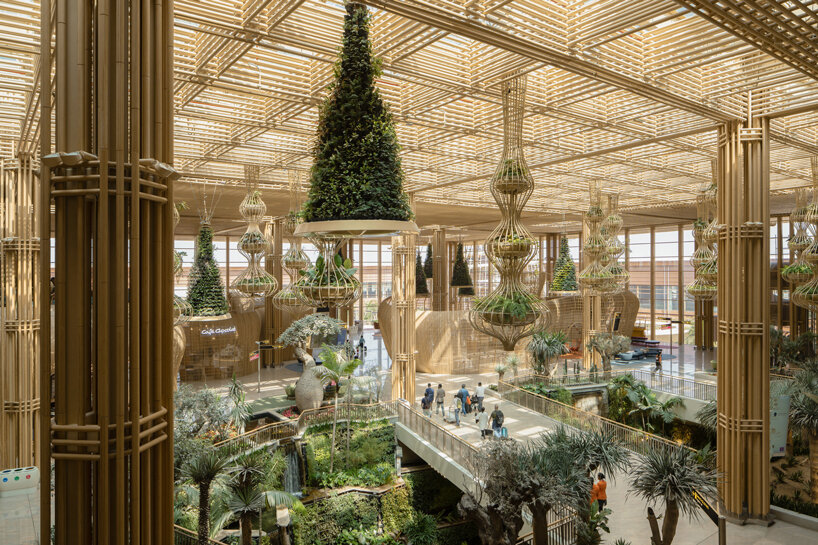
image by Ar. Ekansh Goel © Studio Recall
weaving space through the body
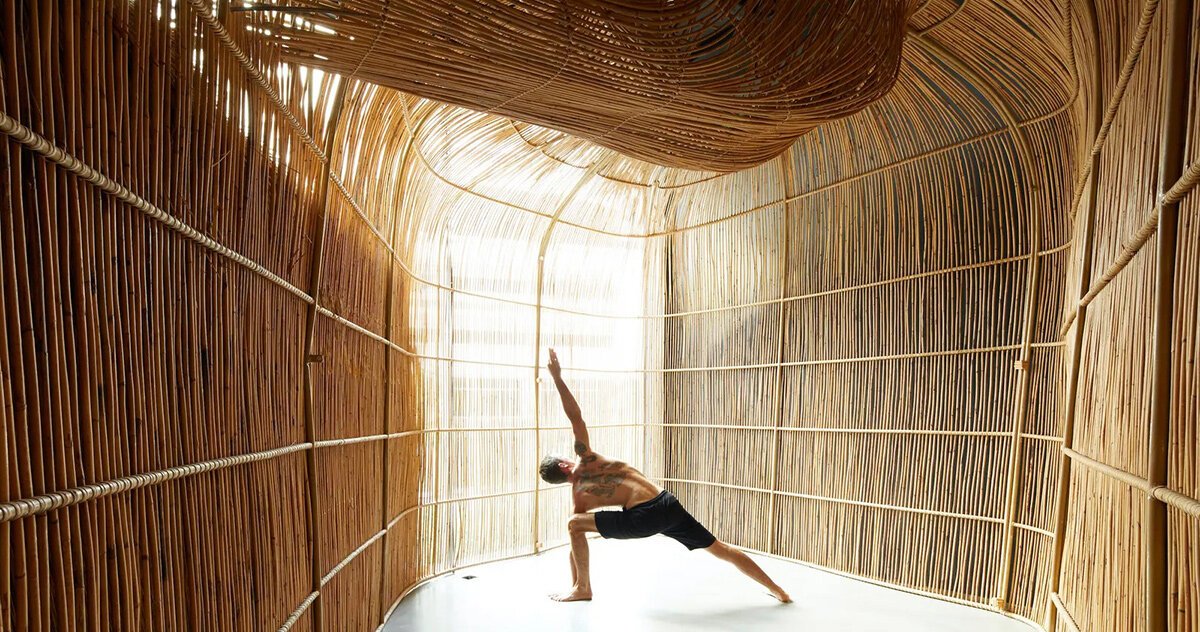
Enter Projects Asia explores a much more intimate scale with the design of a yoga studio in Bangkok. The interiors are again shaped by rattan, which wraps around the ceilings and partitions to form continuous surfaces that filter light and sound. The space reads as a field rather than a sequence of rooms, as air and movement pass through layers of woven material. Movement within the studio is coordinated with the softness of these surfaces, with light shifting across the fibers during the day.
The work carries the same material intelligence seen on a larger scale, translated into a more personal setting. Practice rooms, circulation routes and rest areas are shaped through density and openness, allowing the architecture to guide pace and attention without rigid boundaries. Read more here.

image © Edmund Sumner
construction and exhibition in the same context
In Chiang Mai, the studio art gallery offers a more concrete example of how utopia can be shaped through process. The space combines exhibition and construction, with rattan structures forming both the screen and the enclosure. Visitors encounter works of art within a frame that reveals its own construction, where joints, fibers and curvature remain visible.
The gallery functions as both a working environment and a cultural space, proposing a model where production and presentation remain closely linked. Materials and techniques change according to the needs of each installation, allowing the space to evolve while maintaining a consistent architectural language. Read more here.

Image courtesy of Enter Projects
dining room in a structure field
This approach extends to hospitality with an indoor restaurant in Bangkok, where vertical bundles of rattan rise through the dining space. These columns gather light and shadow while also having a structural intent, showing how a renewable material can take on architectural weight. Visitors move between them with a sense of rhythm, guided by density and distance rather than walls.
The interior shapes how people occupy the room, with seating positioned in relation to these vertical elements. Architecture frames conversation and movement, creating moments of openness and enclosure through material rather than separation. Read more here.
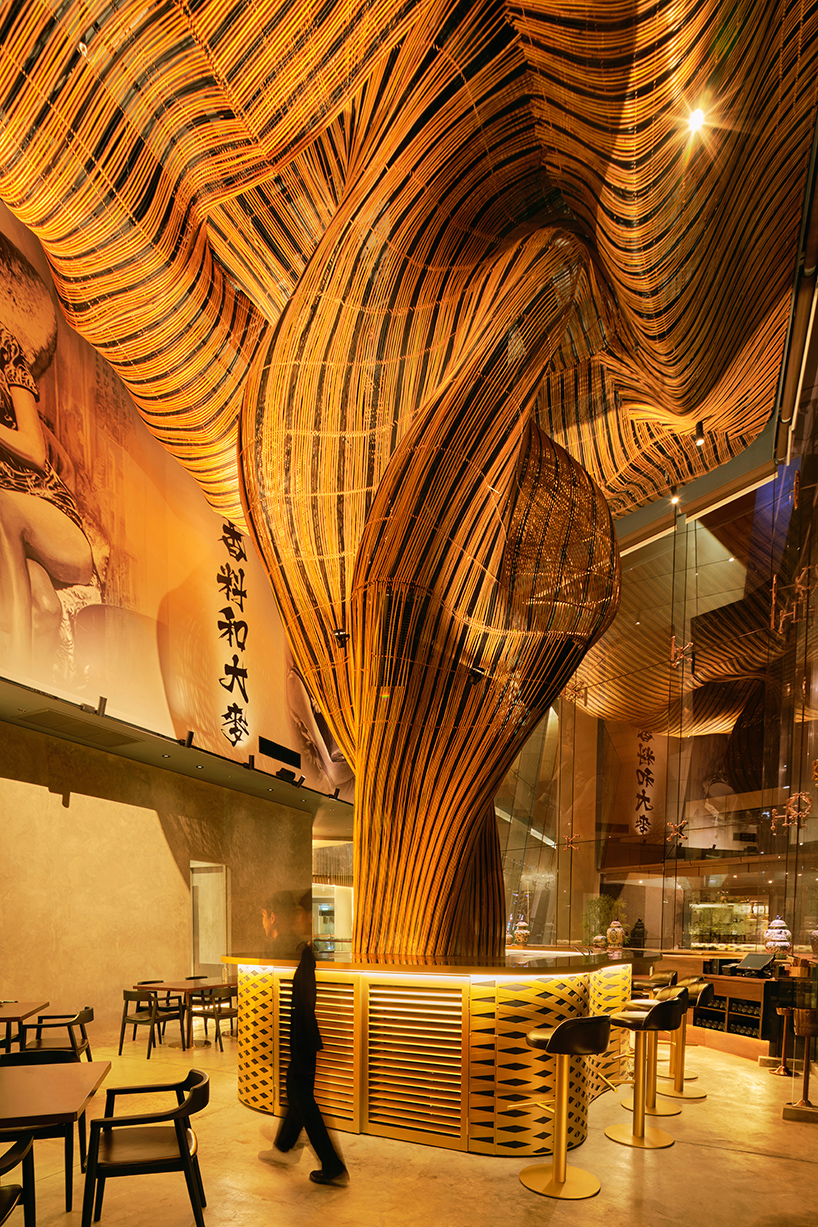
image from William Barrington-Binns
industrial space recalibration
In Belgium, the conversion of a factory introduces cane into a context defined by machinery and scale. The intervention brings a tactile presence to an environment shaped by industrial production, allowing the material to soften large volumes while maintaining a sense of precision.
The project suggests how utopia can be extended to work environments, where material choices affect atmosphere as much as performance. Through these changes, Enter Projects Asia continues to test how architecture can function as a method, adapting familiar spaces through the integration of craft, labor and material systems.

image © Edmund Sumner
utopia as a method of construction
In these works, the studio builds a practice that treats utopia as something tested through repetition and adaptation. The sourcing, fabrication and assembly of materials become sites of experimentation, where each project refines the way natural materials can perform structurally and spatially.
This approach also reshapes the relationships between designers and manufacturers. Artisans participate in the development of systems that evolve from project to project, transferring knowledge and adapting it to new conditions. The project proposes a future where architecture draws from local circles of skills and materials, forming networks that extend beyond individual buildings.
What emerges from Enter Projects Asia is a way of thinking about architecture that starts with what is already present. Fibers, hands and techniques become the starting point for new spatial possibilities, allowing utopia to take shape through processes that remain visible in the finished work.



