

Layered Boxes Form a Vertical Light by Studioninedots
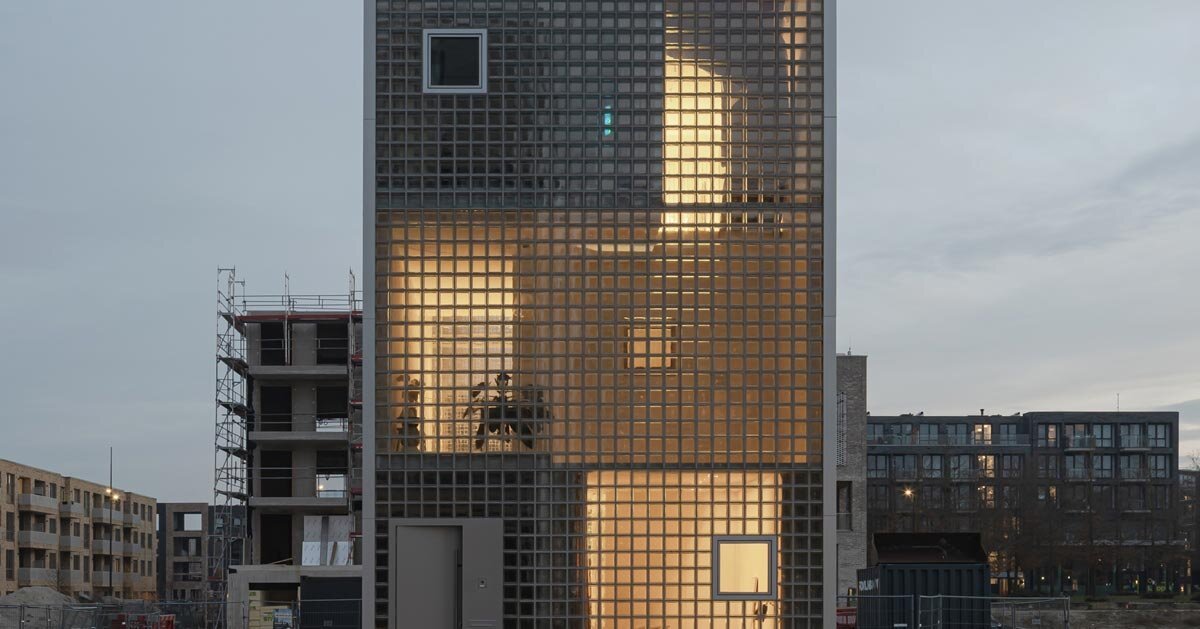
The Light House is one residential work by Studioninedots located in Centrumeiland, a newly developed neighborhood in Amsterdam characterized by its ambitions for sustainability and the culture of self-building. The house is conceived as a vertical composition of stacked volumes, organizing domestic life through a system of spatially distinct but interconnected ‘boxes’.
Rather than concentrating key functions on a single level, the design distributes activities such as cooking, eating, gathering and resting across multiple volumes. Each program is assigned to an individual box, which is placed within the overall structure to create a multi-level spatial arrangement. This configuration produces a series of platforms, voids and interstitial spaces that extend habitability beyond the enclosed interior spaces to include surfaces above and below each volume.
Circulation within the house is defined by this provision. Movement takes place through a network of open passages and compressed zones, where scale shifts create varied spatial conditions. Smaller, enclosed areas provide space for focused activities, while larger voids introduce visual connections at different levels. This organization challenges the conventional distinctions between above and below, as well as between inside and outside.

all images from Sebastian van Dam
Light House’s vertical box system allows for reconfiguration
THE design team in Studioninedots organizes the layout in order to accommodate change over time. While each box is initially associated with a specific function, the system allows for reconfiguration as household needs evolve. A suspended volume above the kitchen forms a more enclosed space for activities such as reading or resting, while the upper level contains a larger, open room defined by arched openings on either side. This space is connected to an outdoor terrace and frames the view towards the IJmeer lake. The lower part of the house is enclosed by a facade of square glass blocks. This surface filters daylight inside while diffusing visibility from outside, balancing openness with privacy. A similar square geometry is expressed in the steel grid elements along the rear facade, contributing to a consistent formal language throughout the building.
Materials-wise, the project combines industrial components in a variety of finishes, including raw, reflective and translucent surfaces. These materials interact with changing light conditions, creating variations in appearance throughout the day. The structural system consists of a lightweight steel frame combined with prefabricated timber elements, allowing for a modular and adaptable construction approach. This system supports disassembly and reuse, aligning with circular design principles.
In response to Centrumeiland’s environmental demands, the project incorporates on-site water management strategies. Through its spatial organization, choice of materials and construction logic, the Light House proposes a flexible residential model that integrates environmental performance with a redefined approach to domestic space.

stacked volumes organize the house as a vertical system

Individual “boxes” define separate household functions



