
Modern people like to think we have it all figured out — mostly, anyway. With the invention of the printing press, philosophers worried that our thoughts would sink to the pages, leaving us unprepared for original thought. Each subsequent iteration—the radio, the television, and now the smartphone—has brought unprecedented convenience and optimization to our lives. However, good design often asks: just because we can, does that mean we should? EXTERIORS with studio lije and Amorf Praxis leans into this tension, reframing our collective need to be present to the public through a redefinition of disappearing third spaces.
Acting as both a feasibility study and a material exploration, the exhibition uses public seating as a means to question how we sit and what we prioritize in shared environments. Rather than treating outdoor furniture as a static infrastructure, both studios propose adaptable systems that challenge current convention through modularity, reuse and location sensitivity.

Daring lije studio is an exploration of how we envision space in cities and public spaces, where moments of reflection and connection are increasingly rare. If there’s nowhere to sit, there’s nowhere to think—and sometimes, that absence is by design.

Drawing from the principles of proxemics – the study of how we relate to personal space – Venture becomes a place-sensitive system in response to both spatial and social needs. Developed in dialogue with landscape architects, the bench prioritizes flexibility, using curved and straight steel tubes as both structure and identity. The result is a funky form that flows in response to its unique urban environment.

Lampposts and staircases have long served as informal places to lean in, anyway, in state, but studio lije formalizes that inclination. Industrial piping, usually reserved for oil infrastructure, is repeated here as a soft, continuous gesture, supporting curved seating elements that invite passers-by to commit to the seat. With no fixed back or set direction, users are free to sit as they choose — alone or together, facing in or out. Clever L-shapes promote privacy when needed, while leaving room for socializing if desired.

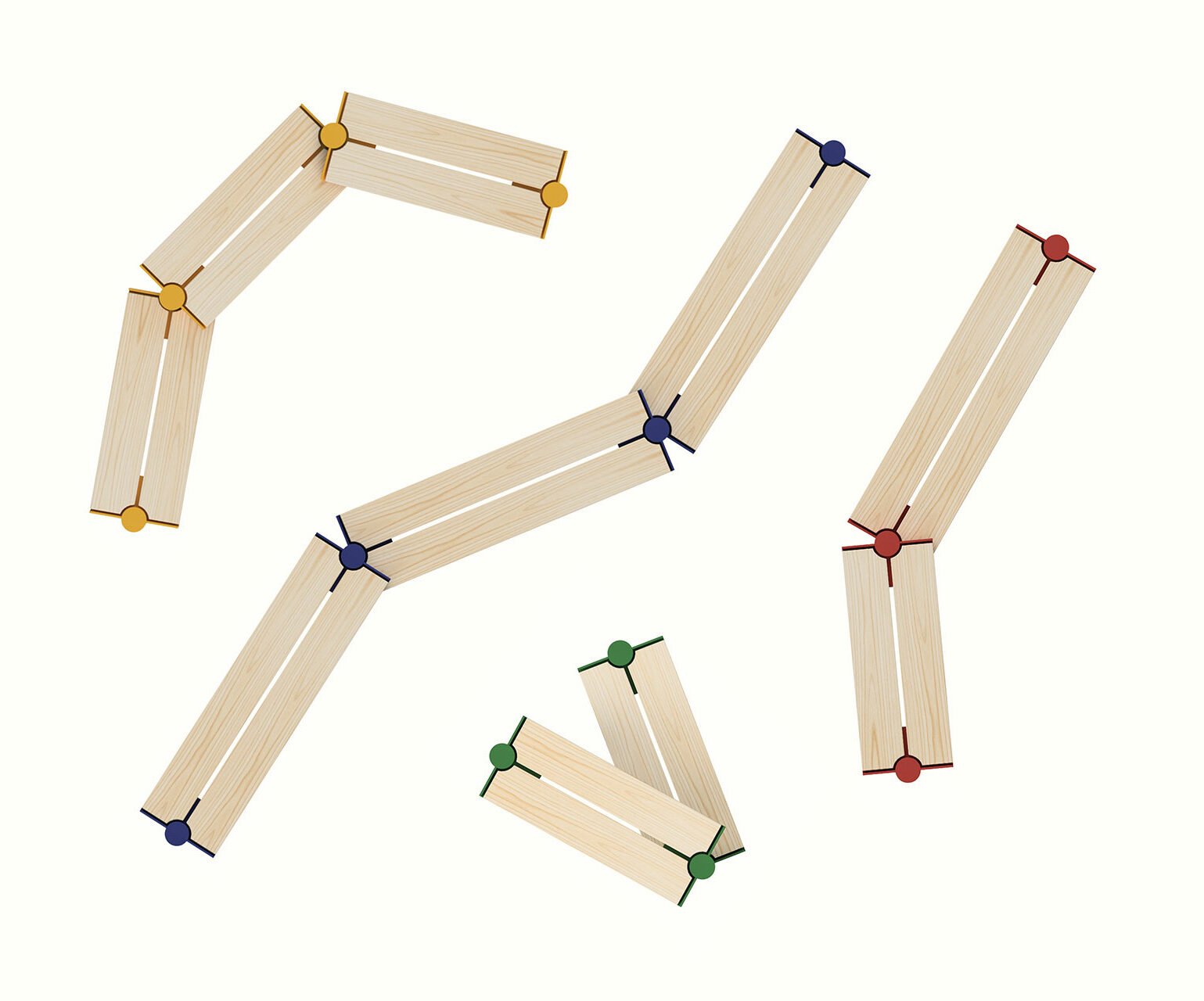
Kloppof Amorf Praxis, approaches the same question from a different angle: how and where can we take a moment for ourselves within overlooked, everyday spaces? Ease of installation and adaptability are key here, firmly grounding the project in its context.

Named after a “swamp bridge”—a simple, two-plank structure that spans wetlands while protecting the ecosystem below—Klopp acts as both a link and an intervention. Its modular system consists of varying bench lengths, pivots and adjustable heights, allowing it to respond to rough terrain, winding trails or extreme site conditions.

Constructed with pipe connectors and low-stock materials, the bench can be easily transported, assembled, disassembled and reused. It slips into forgotten, liminal and residual spaces as a quiet invitation to pause.
Both Venture and Klopp come from a brief pose in the Oslo School of Architecture and Designon proxemics and public positions. As we continue to navigate our new normals surrounding third spaces, questions of usability, adaptability, and true circular design seem less theoretical and more urgent. OUTSIDERS may not offer a definitive answer, but it sets the stage for us to pause long enough to consider them.

To learn more about OUTSIDERS and the creative studios behind them, visit lijestudio.com and amorfpraxis.com.
Photo courtesy of lije studio and Amorf Praxis.