
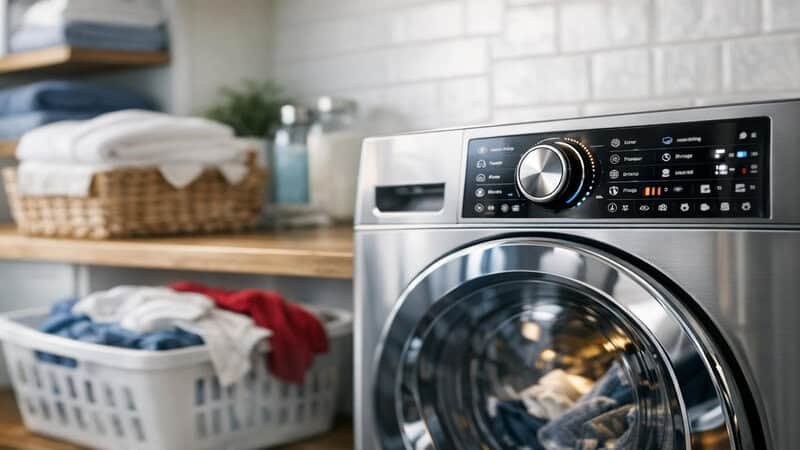

1. Normal or cotton circle

The Normal or Cotton cycle is designed for everyday fabrics such as cotton and linen. This cycle uses hot water combined with high agitating and spinning speeds to effectively clean moderately soiled items such as t-shirts, underwear and bedding. Compared to specialized cycles, the Normal cycle offers a balanced approach suitable for regular laundry loads. For more detailed information on washing machine settings, you can refer to Whirlpool’s guide to washing machine cycles. (whirlpool.com)
2. Delicates or Gentle Cycle

The Delicates or Gentle cycle is designed to protect delicate fabrics such as silk, underwear and lace. Using lower agitation and cooler temperatures, this cycle minimizes stress on these materials, reducing the risk of damage. Compared to the Normal cycle, the Delicate cycle offers a gentler washing process, preserving the quality and longevity of your delicate garments. For more information on washing cycles and settings, you can check out The Spruce’s guide to delicate settings. (thespruce.com)
3. Heavy duty cycle

The Heavy Duty cycle is designed for bulky or heavily soiled items such as towels, jeans and work equipment. This cycle uses longer wash times and higher agitation to effectively remove tough stains and dirt. Although it provides a thorough clean, it’s important to use this cycle wisely to save energy and water. For more information on laundry best practices, you can refer to the Energy Star guidelines. (energystar.gov)
4. Quick wash cycle

The Quick Wash cycle is designed for lightly soiled clothes or small loads, providing a faster cleaning process. Although it offers the convenience of shorter wash times, it can use more energy per minute compared to standard cycles. This exchange is ideal when you need fresh clothes quickly, but should be used judiciously to balance performance and power consumption. For more details on this cycle, see LG’s explanation of washing machine cycles. (lg.com)
5. Permanent Press Circle

The Permanent Press cycle is designed to minimize wrinkling in synthetic fabrics such as polyester, nylon and acrylic. Using hot water and a slower spin cycle, it helps to relax fabric fibers and reduce creasing, making it ideal for items such as shirts, blouses and trousers. Unlike the Normal cycle, which uses high agitating and spinning speeds, the Permanent Pressure cycle offers a gentler approach to wrinkle prevention. For a comprehensive overview of washing machine cycles, you can check out the Consumer Reports guide. (customersreports.org)
6. Bulky/Circle Bedding

The Bulky or Bedding cycle is specially designed for large, bulky items such as quilts, blankets and pillows. This cycle increases rinse time and water usage to ensure heavy fabrics are thoroughly cleaned and rinsed. Using a higher water level and lower spin speeds, it accommodates the weight and size of bulky loads, preventing damage to both items and the washing machine. For more details on this cycle, you can refer to Maytag’s official guide to washing large items. (maytag.com)
7. Circle of Whites

The Whites cycle is specially designed to clean and brighten white fabrics, effectively removing stubborn stains. This cycle typically uses hot water and extended wash times to ensure thorough cleaning. It is important to note that while hot water can help remove stains, it may not be suitable for all fabrics. For more information on washing whites, see GE Appliances tips for washing whites. (bestbuy.com)
8. Rinse and spin cycle

The Rinse and Spin cycle is designed to rinse clothes and remove excess water without a full wash. It is ideal for removing detergent residues or for refreshing hand-washed clothes. This cycle fills the drum with clean water to rinse the clothes and then spins at high speed to extract moisture, reducing drying time. For more details on this cycle, you can refer to the Samsung washing machine cycle descriptions. (samsung.com)
9. Hand washing cycle

The Hand Wash cycle is designed to mimic gentle hand washing, making it suitable for delicate items such as wool, cashmere or beaded garments. This cycle typically uses cold water, low agitation and a lower spin speed to protect fragile fabrics from damage. Unlike the Delicate cycle, which uses slightly higher spin speeds, the Hand Wash cycle offers an even gentler approach. For more information on washing cashmere, you can check out Good Housekeeping’s guide. (goodhousekeeping.com)
10. Disinfection or allergy cycle

The Sanitize or Allergy cycle uses very hot water or steam to kill bacteria and allergens, making it particularly beneficial for baby clothes, household bedding and items owned by people with allergies. This cycle ensures a higher level of cleanliness by effectively removing harmful microorganisms. For complete clothing hygiene guidelines, see the CDC’s recommendations for cleaning and disinfecting your home. (cdc.gov)
11. Eco or Energy Saving Cycle

The Eco or Energy Saving cycle is designed to reduce energy and water consumption, making it ideal for lightly soiled laundry. This cycle typically uses lower temperatures and extended wash times to achieve cleaning efficiency while saving resources. However, hedging is of longer duration compared to standard cycles. For more information on efficient laundry practices, you can refer to the EPA Energy Efficiency Guidelines. (epa.gov)
12. Sportswear or Activewear Cycle

The Sportswear or Activewear cycle is designed specifically for technical fabrics and sportswear. This cycle uses lower spin speeds and unique agitation patterns to gently clean items made from materials such as microfiber, ensuring they retain their functional properties. Unlike standard cycles, it focuses on effectively removing sweat and odors without compromising fabric integrity. For more details on this cycle, you can refer to Bosch’s explanation of washing programs. (bosch-home.com)
13. Circle wool

The Wool cycle is specially designed to gently clean wool garments, minimizing the risk of pilling and shrinkage. This cycle typically uses lower water temperatures and gentle agitation to protect the delicate wool fibers. It is important to use a mild detergent suitable for wool and avoid overloading the washing machine to ensure effective cleaning. For more detailed information on washing hair, you can refer to The Woolmark Company’s guide. (woolmark.com)
14. Steam Refresh or Steam Cycle

Steam Refresh or Steam Cycle is designed to refresh lightly worn clothing and reduce wrinkles without the need for detergent. By introducing steam into the wash process, this cycle effectively removes odors and revitalizes fabrics, making it ideal for clothes that require a quick refresh rather than a full wash. For more information on using the steam function on LG washing machines, you can refer to the official LG guide. (lg.com)
15. Pre-wash or pre-soak cycle

The Pre-Wash or Pre-Soak cycle is designed to tackle heavily soiled items by providing an initial wash before the main cycle. This preliminary step helps loosen and remove dirt and stains, improving overall cleaning performance. It is especially useful for clothes such as sports uniforms, work clothes or children’s clothes that are excessively dirty. To use this feature, add detergent to the prewash compartment of your washing machine. For more information on using the prewash cycle, you can refer to the GE Appliances guide. (geappliances.com)
Conclusion

Understanding and selecting the appropriate washing cycle for each load of laundry is essential to achieving optimal cleanliness and efficiency. By adjusting the correct cycle to your clothes, you can ensure effective cleaning while maintaining the quality of the fabric. It is recommended to consult your device’s manual, as cycle names and settings may vary between brands and models. This practice will help you get the most out of your washing machine and extend the life of your clothes. (whirlpool.com)



