
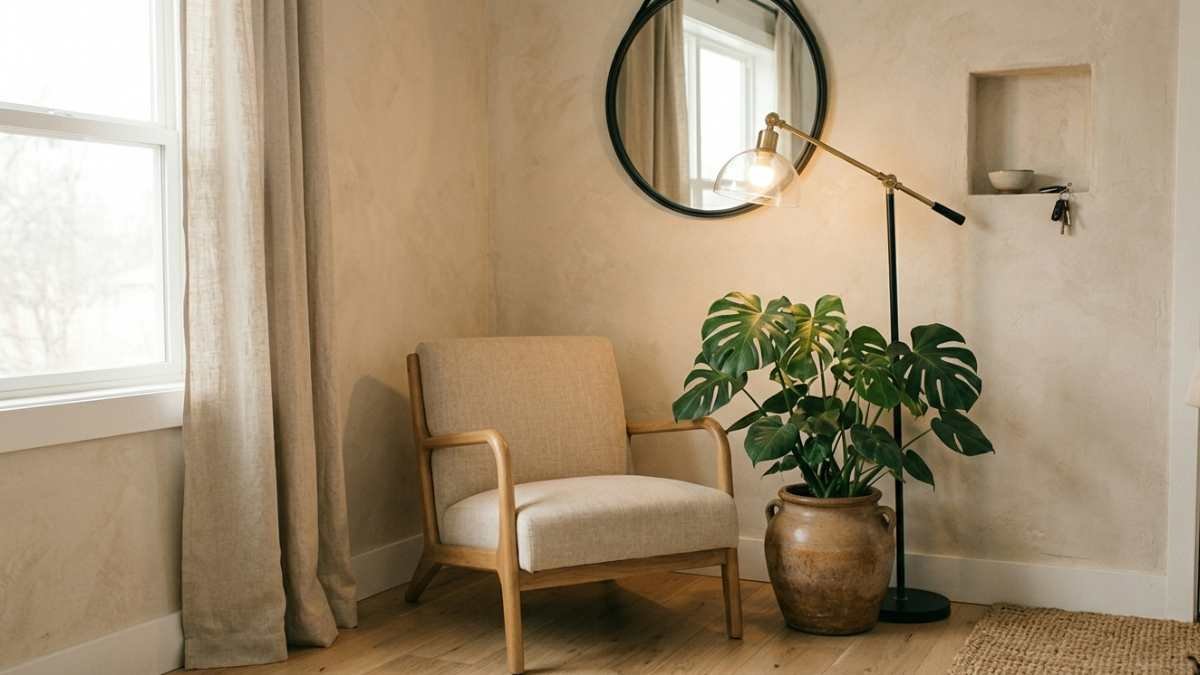

In every home there is that “dead spot” that often gets us into trouble: a corner of the living room that is left bare, a niche in the entrance or the space next to the window that seems pointless. Many make the mistake of overloading these areas with too many small objects, resulting in only a sense of visual clutter. The secret of professional interior designers lies in rule of three: balanced composition consisting of support base, vertical element and light point. This trio not only fills the void, but creates a micro-stage capable of giving character and depth to the entire environment, turning an architectural boundary into a style detail.
The first fundamental is a support surface which defines the area. It doesn’t necessarily have to be a bulky piece of furniture. a small console inside Canaletto walnuta sculptural ceramic stool or coffee table Black metal they are perfect for this purpose. The choice of base determines the rest of the composition: on a colored background wall Pearl Greya natural wooden coffee table immediately warms the atmosphere, while in an environment with light tones such as Sanda metallic element adds a contemporary and defining touch. This base acts as a visual anchor, giving a sense of stability and purpose to the entire corner.
The importance of verticality and plant life
The second essential ingredient is thevertical elementnecessary to streamline the composition and connect the furniture with the rest of the wall. The most effective and popular solution on Pinterest is to include an elegant indoor plant. A Sansevieria with its stiff and thin leaves or a Fig. Lyrata with large sculpted leaves are ideal for adding height without taking up too much side space.

The green of the plant creates a vivid color contrast, especially when placed against a back wall Terracotta or Whale Blue. If you don’t have a green thumb, a valid alternative is a large floor mirror or a painting placed directly on the table, which adds depth through reflection and color.
To harmonize the plant with the chosen piece of furniture, it is necessary to carefully choose the pot cover. In a corner with a Scandinavian flavor, a jar inside Raw terracotta or cement adds a material texture that goes well with light wood. If you are looking for a more luxurious effect, a jar inside Satin brass it will reflect natural light, illuminating the corner even during the day.
Verticality serves to break the monotony of bare walls, guiding the eye upwards and making ceilings appear higher, a particularly useful trick in modern, small-sized apartments.
The bright spot: creating atmosphere and depth
The third and final element, often overlooked but critical, is the dedicated bright spot. A well-furnished but dark corner will lose all its charm once the sun goes down. The inclusion of a table lamp with a sophisticated design or a small adjustable floor lamp turns the micro composition into a welcoming and soft area. The light must be warm (about 2700K) to wrap the other two elements in a luminous embrace.
By placing the light source so that it hits the plant’s leaves from the side, you will cast fascinating shadows on the wall, adding a third visual dimension which makes the angle deep and magnetic.
In a reading corner, for example, the combination of a small armchair White Bouclé fabrichis plant Strelitzia and a lamp with a stem Anthracite creates an irresistible material contrast.
The color combinations are endless: you can play with tone on tone for a relaxing effect or go bold with an accent color on the back wall only in the corner, like a colored rectangle Salviato frame your three items. Remember that simplicity is key: when these three elements (base, vertical and light) interact with each other with style and proportion, this once forgotten corner will inevitably become the most wonderful and photographed spot in your home.



