
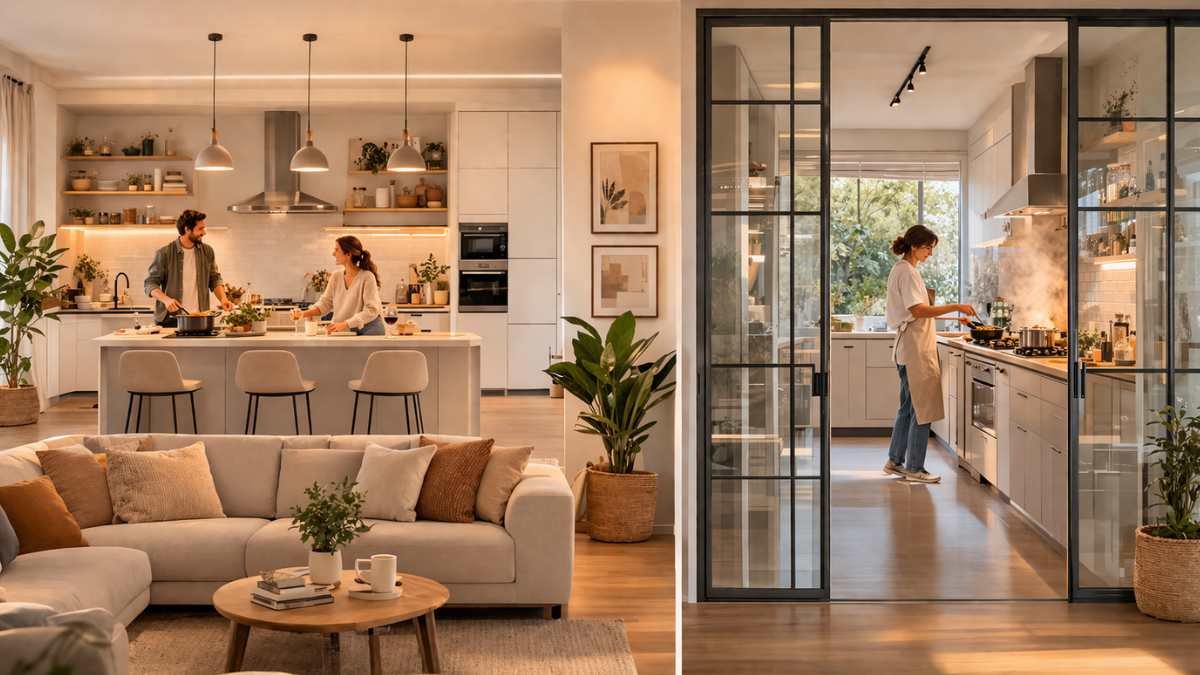

The choice between an open kitchen and a separate kitchen is not just an aesthetic or fashionable question. It’s a decision that deeply affects how you make it he lives the house every day. In recent years, open spaces have gained space in modern projects for an idea of pleasure and fluidity, but this solution is not always the most suitable for everyone.
The point is not to figure out which is the absolute “right” choice, but which is the best according to your habits. Cooking, hosting guests, managing odors and noises: every home only really works when it reflects those who live in it. The difference between an open kitchen and a separate kitchen should be read, first of all, in terms of everyday life.
The real issue: sociability versus hands-on management
The open kitchen was created to eliminate barriers and turn meal preparation into shared moment. Whoever cooks is no longer isolated, but part of the conversation. This makes the space more dynamic, especially when receiving visitors.
On the other hand there is practical management: smells, vapors and noises. An open kitchen does not filter anything and everything that happens during preparation spreads out into the living room. So the question that must be asked is: how much weight these aspects have in your everyday life.
When the open kitchen really works
The open kitchen is ideal for those who live their home in style informal and continuous. This works well when cooking is part of a social moment and when order is consistently maintained. It is an option that enhances small spaces, eliminating partitions and increasing space perception of width and brightness.
However, caution is needed: an open kitchen always needs attention, as any small mess or dirty surface becomes immediately visible to anyone in the living room.
When is a separate kitchen better?
The separate kitchen is a solution extremely functional. It is ideal for those who cook a lot, use intensive ingredients or prefer a clear distinction between household activities. Separating the rooms allows you to contain smells and noises by “hiding” the tools of the trade during preparation.
This configuration does it more relaxed day-to-day managementas everything doesn’t have to be perfect all the time. It also works well when the living room has a more formal role or when you want more privacy.
The intermediate solutions that change everything
Today there are hybrid solutions that offer the best of both options: sliding doors, windows and light dividers. It is no longer a matter of choosing between open or permanently closed, but of shaping the space according to the needs of the moment.
A stained glass window, for example, maintains visual continuity but blocks odors. A pocket door can be left open during the day and closed when needed. They are smart answers for a flexible lifestyle.
The right choice is the one that simplifies your daily life
Ultimately the difference is not in the style, but in the way the space is inhabited. The real question to ask yourself is simple: do you want to experience cooking as one common space or as a working environment and confidential?
The answer lies not in current trends, but in everyday habits. It is precisely from this realization that a house capable of really functioning is born.



