


the cinema drifts into the dream
Cinema begins to change when it no longer guarantees that one thing follows another for a reason. Narrative usually ensures this relationship. It tells us why something happens, what it leads to, who it belongs to. But there is a set of films where that chain loosens, to replace causation with correlation, repetition and displacement. In these films, meaning is not arrived at through development. It accumulates from proximity, stretching the plot until it begins to lose its shape and begins to resemble dream state.
In films by filmmakers such as Luis Buñuel, David LynchIngmar Bergman and Charlie Kaufman, this change occurs gradually, in the way scenes return without consequence, identities hesitate or overlap, and reality becomes something that can no longer be clearly located.
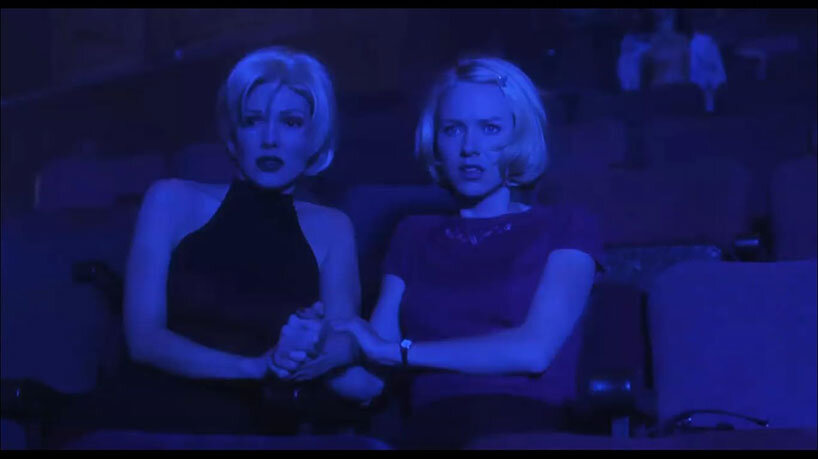
David Lynch, Mulholland Drive, 2001
Buñuel’s circular time meets the unstable reality of lynching
What changes first is time. Not in the obvious sense of flashbacks or jumps, but more subtly, in the way the scenes relate to each other. A moment returns, but slightly altered, as if remembered rather than repeated. The difference is small, but it negates certainty. If the same event can happen twice without confirmation, then time no longer advances. It circulates. This is where Buñuel’s logic comes in: repetition without consequences. A situation restarts, but nothing is learned or transferred. Cause and effect aren’t broken, they’re just no longer required.
But repetition doesn’t behave the same way in these films. In Lynch, it produces instability. A scene is familiar because it exists in more than one version at once. Identity follows the same pattern. A character doesn’t turn into someone else, it seems to occupy several places at once. The result is not a transformation, but an overlap. The viewer is left holding two incompatible realities that do not resolve into one.

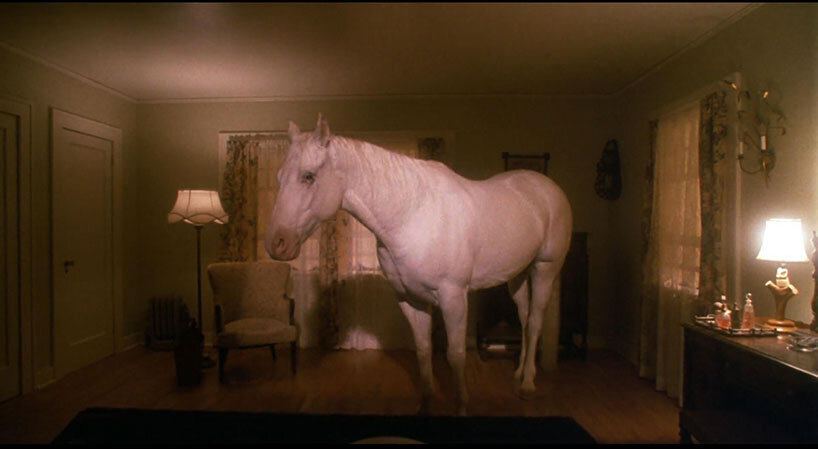
Luis Buñuel, The Subtle Charm of the Bourgeoisie, 1972
from Bergman’s dissolving self to Kaufman’s retrospective loops
Bergman furthers this by reducing the space in which identity can exist. When the frame tightens around the face, when silence spreads and language begins to fail, the boundary between one person and another begins to erode. In Persona, this happens through proximity. Two figures begin to mirror each other so precisely that the distinction becomes difficult to maintain. The image merges and the identity is compressed until it becomes unstable.
Kaufman takes that same volatility and turns it inward. Instead of overlapping realities, it constructs retrospective ones. Memory, imagination and present experience fold into each other. A scene can be remembered, imagined, or happening, but these states are indistinguishable because they are structured in the same way. What differs is the level at which the image is experienced.

Ingmar Bergman, Persona, 1966 | image via THE BAD
Ambience replaces certainty as the images refuse to settle
In all of this, the boundary between reality and fantasy becomes less useful. Not because the movies deliberately conflate the two, but because they refuse to tell the difference. As Susan Sontag observes regarding Bergman, visions appear with the same weight and texture as anything “real.” There is no visual cue to guide the viewer how to read an image. Cinema does not turn into a dream. It was already working there.
What holds these structures together is the atmosphere. Sound plays a key role. A low hum continues through the cuts, ignoring spatial logic. The silence expands until it feels like pressure rather than absence. The music enters without emotional justification, interrupting rather than guiding.
The spaces are composed with a precision that seems slightly exaggerated, creating environments that are controlled and unreliable. A room looks stable, but its symmetry becomes oppressive. A face is held close enough to lose familiarity. Light isolates rather than reveals. These are not expressive choices in the usual sense. They are ways of reorganizing perception, so that the viewer realizes that what he sees cannot fully make sense.
David Lynch, Twin Peaks Fire Walk With Me, 1992
when movies stop analyzing and start holding tension
What these filmmakers share is not a style, but their refusal to resolve time into sequence, identity into unity, or reality into a fixed category, making films that operate on the same logic as a dream, where images are linked by tension, memory and association, resulting in a different kind of viewing, which no longer questions “what is happening”, but “how is it happening”. And the answer is, not through consistency, but through persistence. Images persist, return and interfere with each other. The meaning never fully arrives. Cinema produces an unstable reality and then leaves the viewer inside, without the tools that would normally allow them to get out.

Kate Winslet and Jim Carrey in Eternal Sunshine of the Spotless Mind | image via Focus features

When Bergman staged his one-act play Woodcut, which has many similarities to The Seventh Seal, on the stage of the Malmö Municipal Theater in 1954, Bengt Eckerot (Death) played the knight. While Gunnar Björnstrand played his later film role as a skier. Photo: Louis Huch © AB Svensk Filmindustri
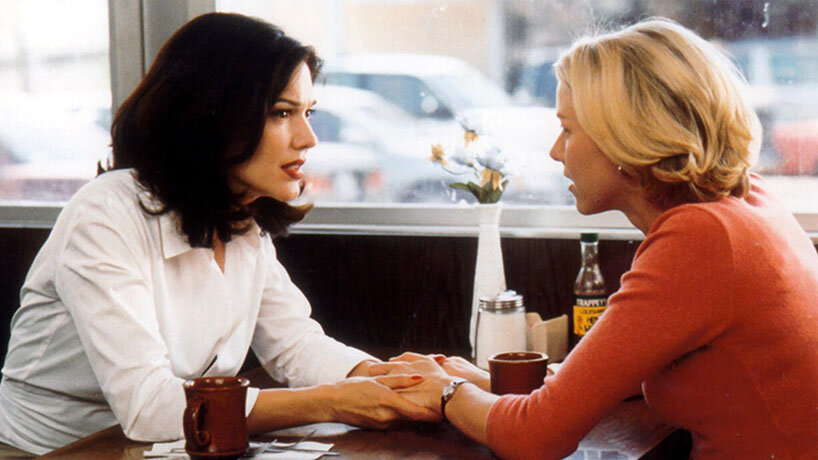
David Lynch, Mulholland Drive, 2001
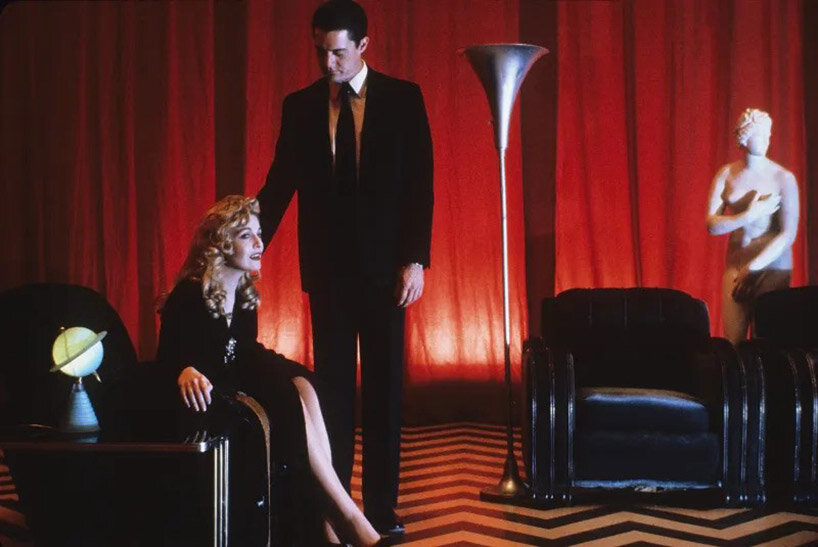
David Lynch, Twin Peaks Fire Walk With Me, 1992

Luis Buñuel, The Subtle Charm of the Bourgeoisie, 1972

David Lynch, Mulholland Drive, 2001

In the script for PersonalityBergman writes the following about the prologue: “I imagine the transparent ribbon of film rushing through the projector. Cleared of signs and images, it produces a reflected light that flickers off the screen.” Photo: Sven Nykvist © AB Svensk Filmindustri

David Lynch, Rabbits, 2002
This article is part of designboom’s Dreams in Motion chapter, exploring what happens when we treat our dreams and daydreams as an active, radical rehearsal for impending material realities. Explore more related stories here.



