
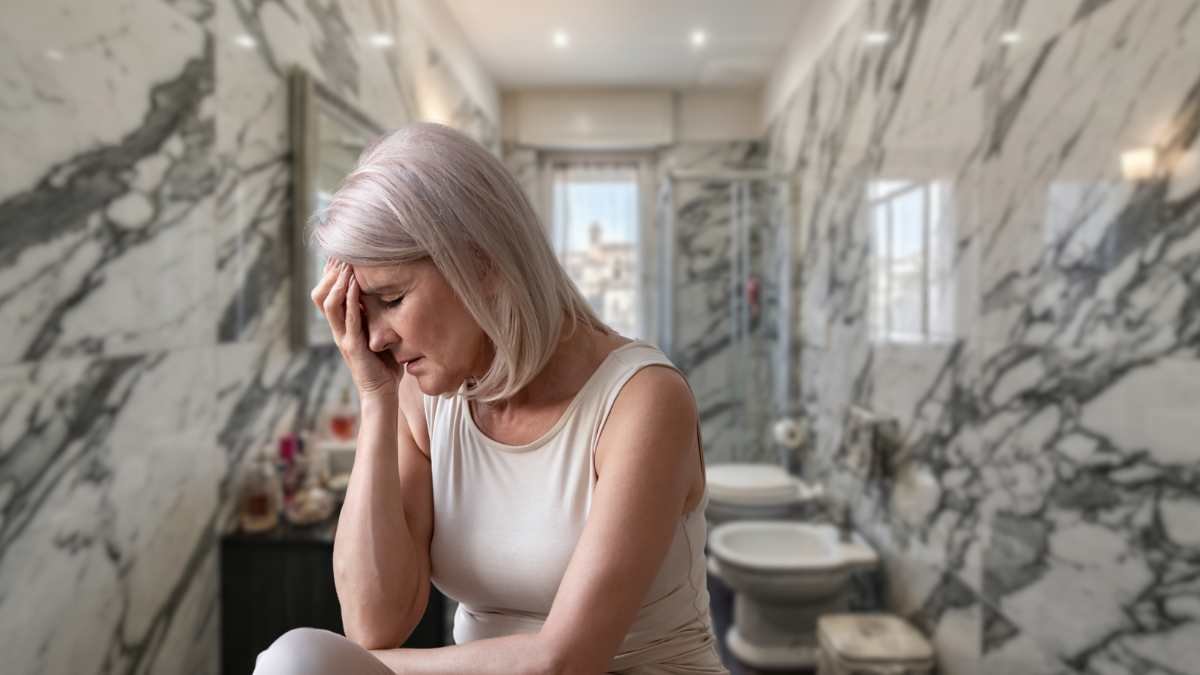

There are options that look perfect on paper. You see them in the photos, in the showrooms, in the perfect renderings: shiny surfaces, clear reflections, an almost “luxury hotel” effect. However, once they get home, the outcome changes. The bathroom is losing balance, it seems colder, sometimes even messyeven if each element is carefully selected.
The problem, in most cases, is one: the glossy tiles with marble, especially in white or gray shades with marked veins. They are among the most loved because they immediately convey elegance, but they are also among the most difficult to actually manage.
Because polished marble tiles don’t always work
The issue is not the material itself, but how it interacts with the space. The shiny surfaces they reflect light very directly and this, in a small environment like the bathroom, can become a problem.
Veins, often very prominent, create visual movement. If repeated on entire walls, especially on multiple sides, they create a genre “noise” that breaks the harmony. Instead of expanding the space, they fragment it.
Added to this is another aspect: artificial light. In domestic bathrooms there is rarely perfect lighting. The lights, often too cold or badly placed, highlight the concerns and make the surfaces even harder, almost sharp.
The result is an environment that looks elegant in theory, but is inhospitable in practice.
Combinations that worsen the effect
The problem is compounded when these tiles are combined with other elements that do not communicate with them.
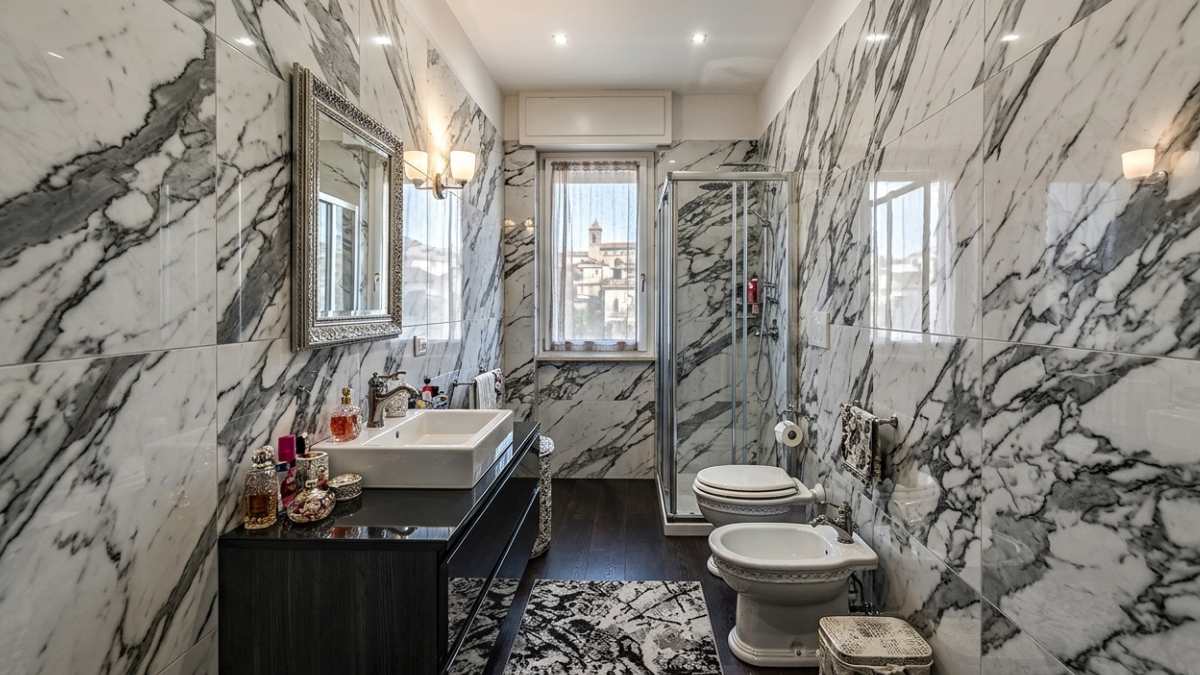
One of the most common mistakes is combining them with very modern and minimal furniture, perhaps in glossy lacquer. In this case a excess reflective surfaces which makes everything flat and unreadable.
Even the contrast with very dark colors, such as matte black or charcoal, can become very strong. Instead of strengthening the marble, it makes it even more so “cold” and distant.
Another crucial combination is with very decorative sanitary ware or taps. The veins already present in the tiles visually compete with the other elements, creating a chaotic result.
When they can work (but with caution)
This type of tile should not be avoided at all, but should be used sparingly.
Works much better when limited to a single wallmaybe the one in the shower or behind the sink. Thus it becomes a focal point and not a dominant element.
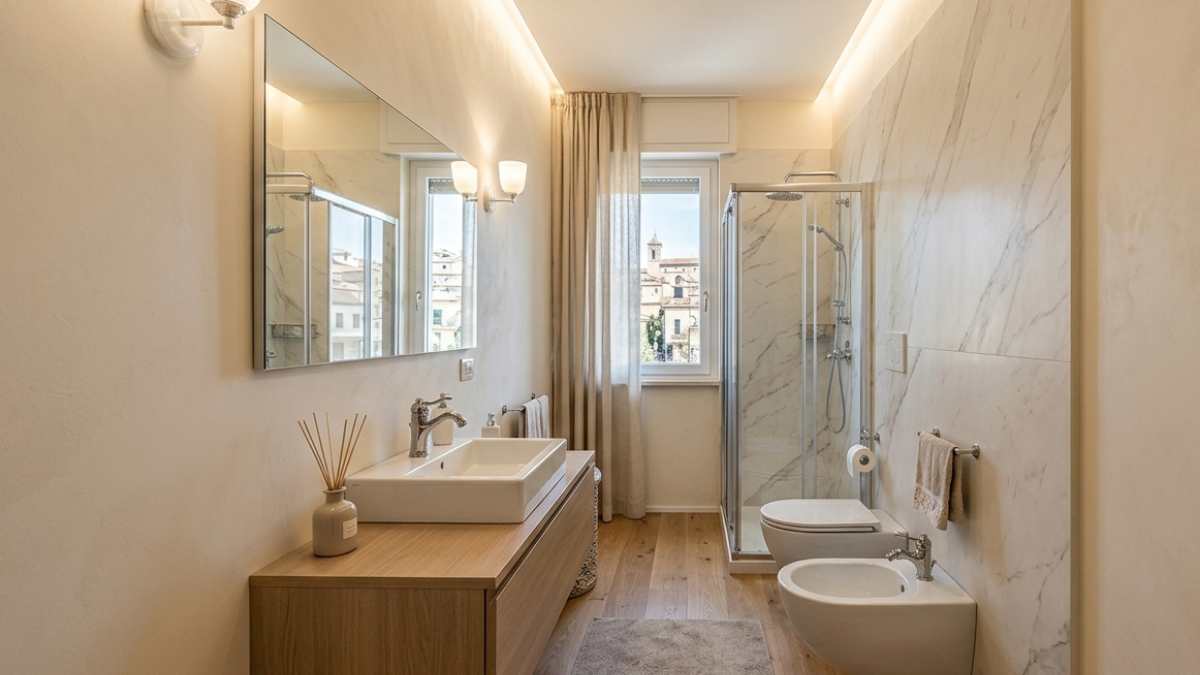
The choice of grains is also fundamental. The more there are thin and lightthe more elegant and less invasive the result will be. Versions that are too strong, however, run the risk of becoming too much of a protagonist.
The combination with opaque materials can help balance. A light wood furniture or a material finish softens the rigidity of the gloss and makes the environment more balanced.
The alternatives that work best today
If the goal is to create a stylish yet sustainable bathroom, trends are moving in that direction softer and less reflective surfaces.
Matte tiles, even the effect of stone or concrete, have a more subtle presence. They are not aggressively reflective and allow light to diffuse better.
Even the slightly material surfaceswith barely perceptible texture, they take up more and more space. They add depth without creating visual clutter.
Another very effective solution is his large uniform plateswith few escapes. This creates continuity and makes the bathroom look tidier and larger.
The real secret is balance, not hardware
The point is not to choose the “right” or “wrong” materials, but to understand how they behave in real space. Polished marble tiles still have their charm, but they demand attention, balance and above all awareness.
When used without specific planning, they risk dominating the environment. However, when entered in moderation, they can become an interesting detail.
The difference, as is often the case, lies not in the choice itself, but in how it is managed.



