
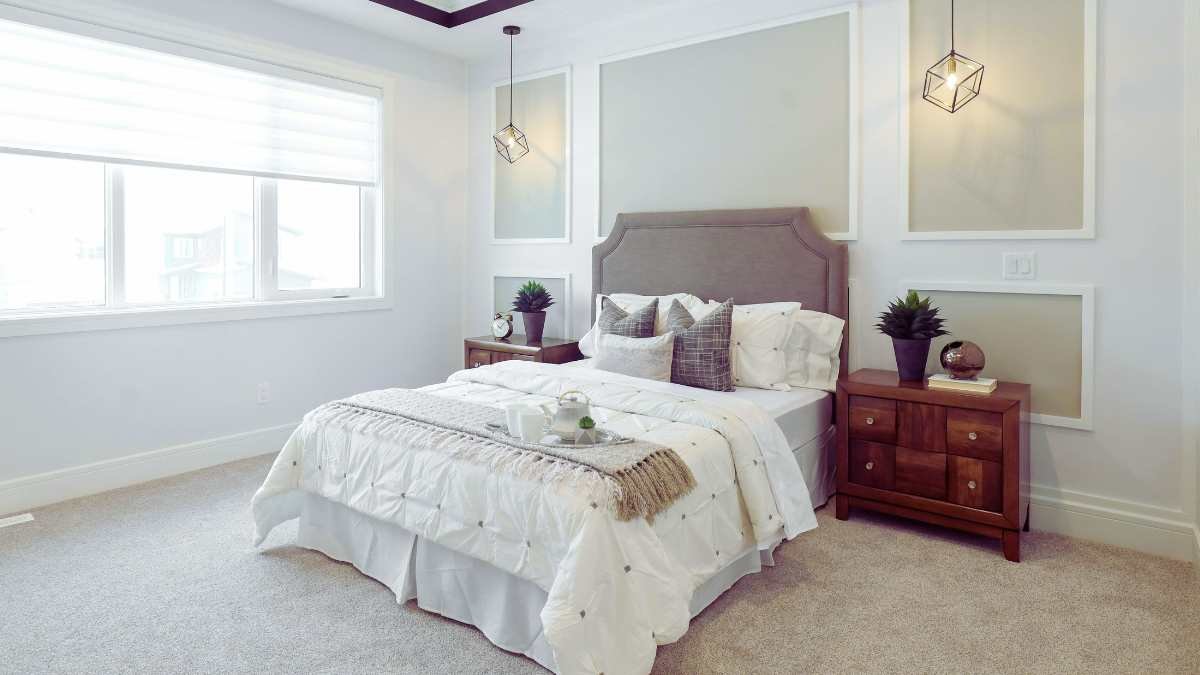

A nondescript bedroom isn’t necessarily a bad thing. It is simply a space that does not communicate anything, that does not invite you to stay, that does not convey that feeling of comfort and care that characterizes hotel rooms or high-end suites. However, the transition from “normal” to “luxury” does not depend on large interventions or expensive furniture, but on a series of details that work together.
True luxury today is not ostentatious, but visual coherence, right materials and atmosphere. And it is precisely in these elements that you can intervene even with a very limited budget.
The basis of everything: the bed should look important
If there’s one element that really defines the room, it’s the bed. In anonymous rooms it is often very simple, poorly structured, almost “flat”. In the suites, however, it is always the focus.
The difference is not in the bed itself, but in how it is dressed. Sheets tightly stretched, duvet cover with noticeable texture, two or three pillows more than needed. Even just adding a different pillow case or a slightly more material fabric it completely changes the perception.
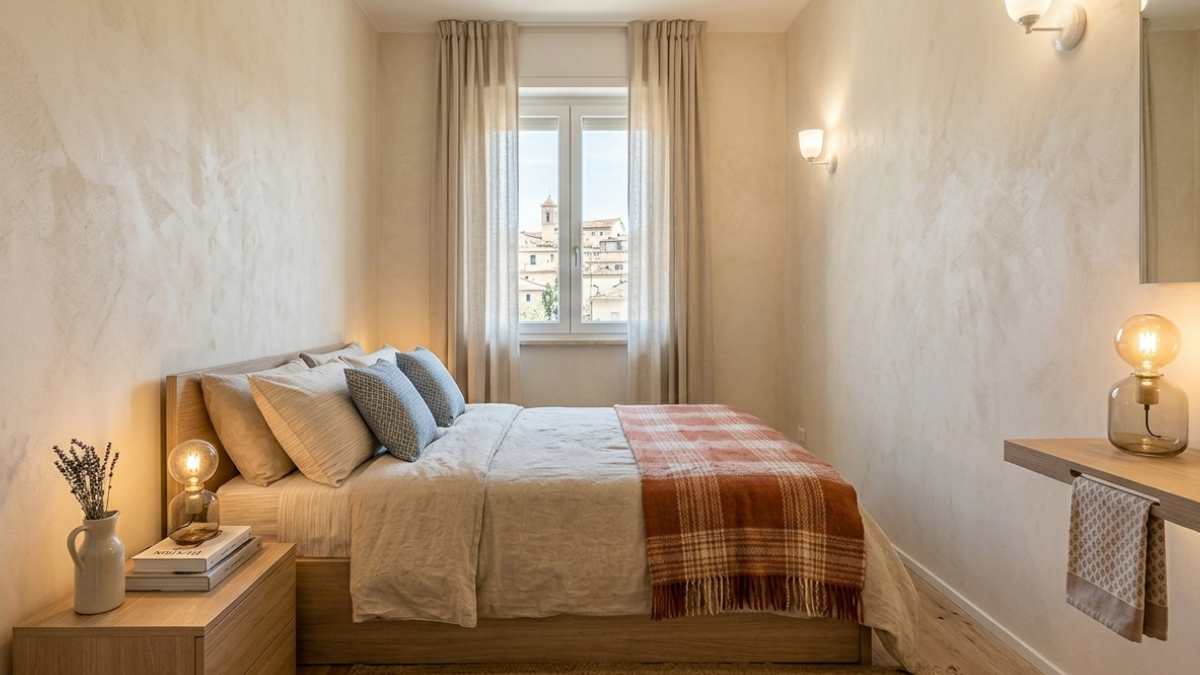
A plaid placed at the foot of the bed, chosen with minimal care, instantly creates itlayered effect characteristic of the most sophisticated environments. You don’t need much: just avoid too thin or anonymous fabrics and focus on something that gives depth.
Light is what really transforms the atmosphere
One of the most common mistakes is to rely on a single central light, which is often cold and unwelcoming. It’s the exact opposite of what you find in a suite.
The transformation goes through a softer, more diffused light placed at different heights. Even without changing the system, just install a bedside lamp with warm light or a small secondary light source to completely change the atmosphere of the room.
Light should accompany, not invade. When it’s too strong or direct, it flattens everything. When calibrated, it creates depth and makes materials more interesting.
Fabrics make the difference more than any piece of furniture
Another element that distinguishes an anonymous room from a more sophisticated one is the presence of fabrics. Not many, but well chosen.
Curtains, for example, are often underrated. Even a simple curtain, if it has a good fall and a color consistent with the rest of the room, completely changes the effect. The same goes for one light carpet under the bed or next to it, which helps define the space and makes it more inviting.
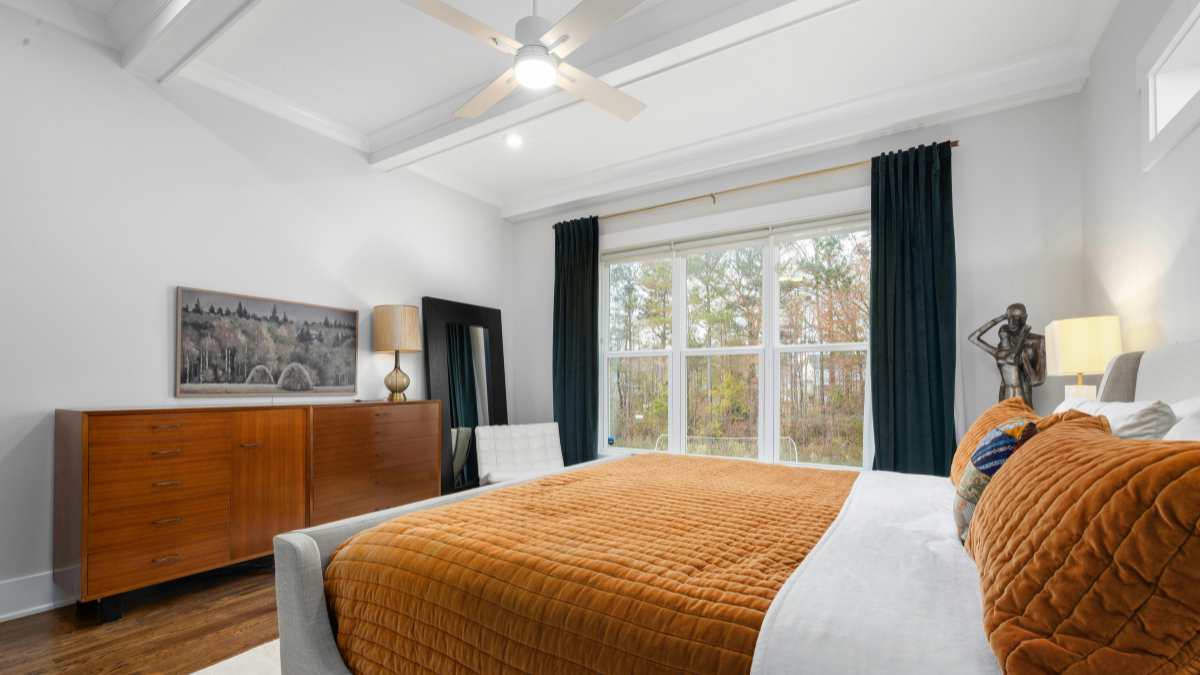
Textiles serve to “wet” the environment, remove stiffness. Without these, the the room remains flatthough well furnished.
The details that really make the visual difference
Luxury is seen in the details, but it should never look manufactured. A room full of stuff isn’t stylish, it’s just cluttered.
Fewer elements are better, but well placed. A tray on the nightstand, a candle, a book, a small decorative object. Everything must it seems natural, but it is actually studied.
Surfaces also matter. An overly crowded or messy bedside table immediately ruins the effect. When instead objects are few and coherentthe room acquires order and character.
Color: less contrast, more continuity
Anonymous rooms often suffer from inharmonious contrasts or colors chosen without logic. In the suites, however, everything follows an exact palette.
It doesn’t mean using only one color, but keeping one continuity. Neutral, warm, slightly varied tones work much better than very clean combinations.
Even small changes, like replacing a blanket that’s too bright or adding a pillow in a more cohesive shade, help build a more elegant ensemble.
How to get a “suite” effect without really breaking the bank
The interesting thing is that all this does not require large investments. Indeed, small targeted interventions are often enough.
A pair of new pillowcases, a carefully chosen throw, a lamp with a warmer light, a softer curtain. They are affordable elements, but if combined in the right way they completely change the perception of the room.
The secret is not to think in terms of individual objects, but as a whole. Each element must contribute to building aconsistent atmosphere.



