

Not all houseplants are the same, and most of all they don’t work the same way in every environment. They are often chosen for aesthetic reasons, following instinct or trends, but the result is that some grow badly, others go unnoticed and others weigh down the space instead of enhancing it.
The point is that a plant is not just decoration: it is an element that dialogues with light, materials and proportions of the room. When it’s right, it really improves the environment. When it’s wrong, you can see it right away.
Living room: structured plants that give presence
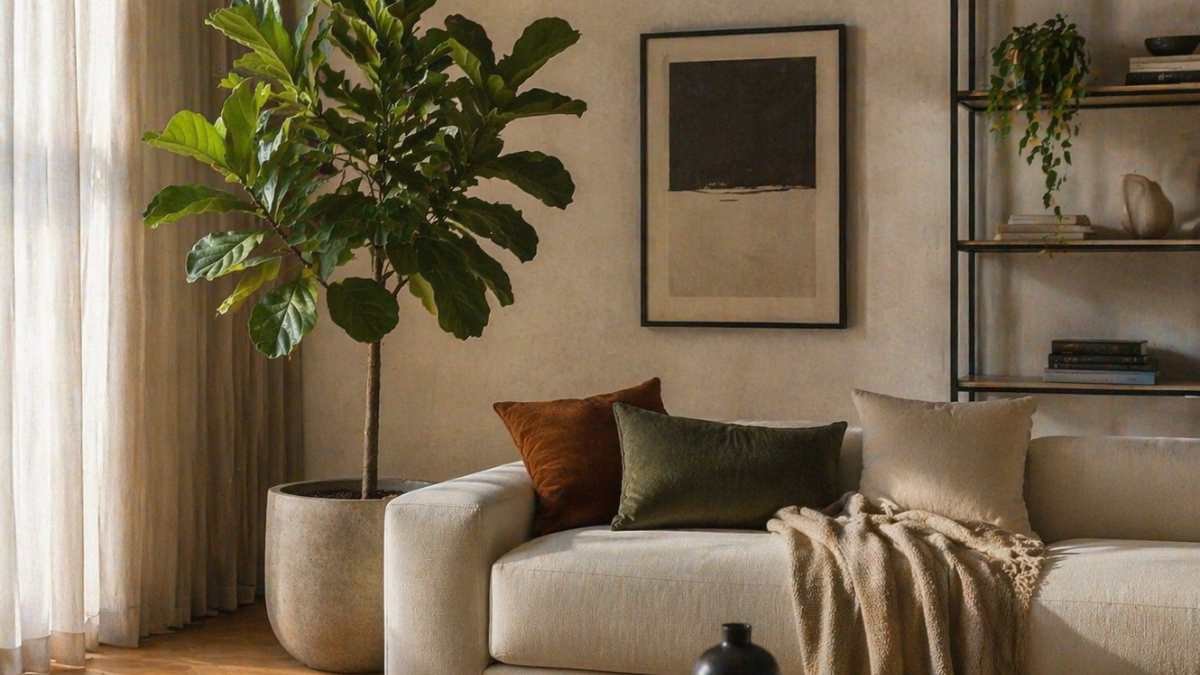
In the living room the plant must have a clear role, almost architectural. Plants like the ficus lyrata, the strelitzia or a large ficus elasticaall with broad leaves and well-defined structure. They should not be hidden, but placed in obvious places, such as next to the sofa, near a window or in a corner that would otherwise be left empty.
In a contemporary environment with neutral palettes, a plant of this type creates an elegant and natural contrast. If the living room is light, with beige, sand or warm white, green becomes a strong but balanced accent. The vase is a must: in matte ceramic, light concrete or terracotta if you want a warmer effect. In a more modern style, a matte black vase can also work, especially if it picks up other details in the room.
Bedroom: soft and relaxing green
In the bedroom, the logic changes completely. Here you don’t need an imposing plant, but something that they accompany the atmosphere without invading. Plants like the sansevieria, spathiphyllum or a small kentia they work very well because they have a discreet presence and clean shape.
The ideal position is near the window or on a larger bedside table, but also on the floor, in a corner if the room allows. The important thing is to avoid overcrowding the sleeping area. Colors should remain consistent: light vases, natural fabrics, soft palettes such as sage, dove gray, warm white. In a well-balanced room, the plant should not attract attention, but contribute to it feeling of calmness.
Kitchen: useful and light plants
The kitchen is a dynamic space, so plants should be as practical as they are beautiful. They work very well here aromatic herbs such as basil, rosemary, thyme, but also light plants such as passionflower or ivy, especially if placed high up.
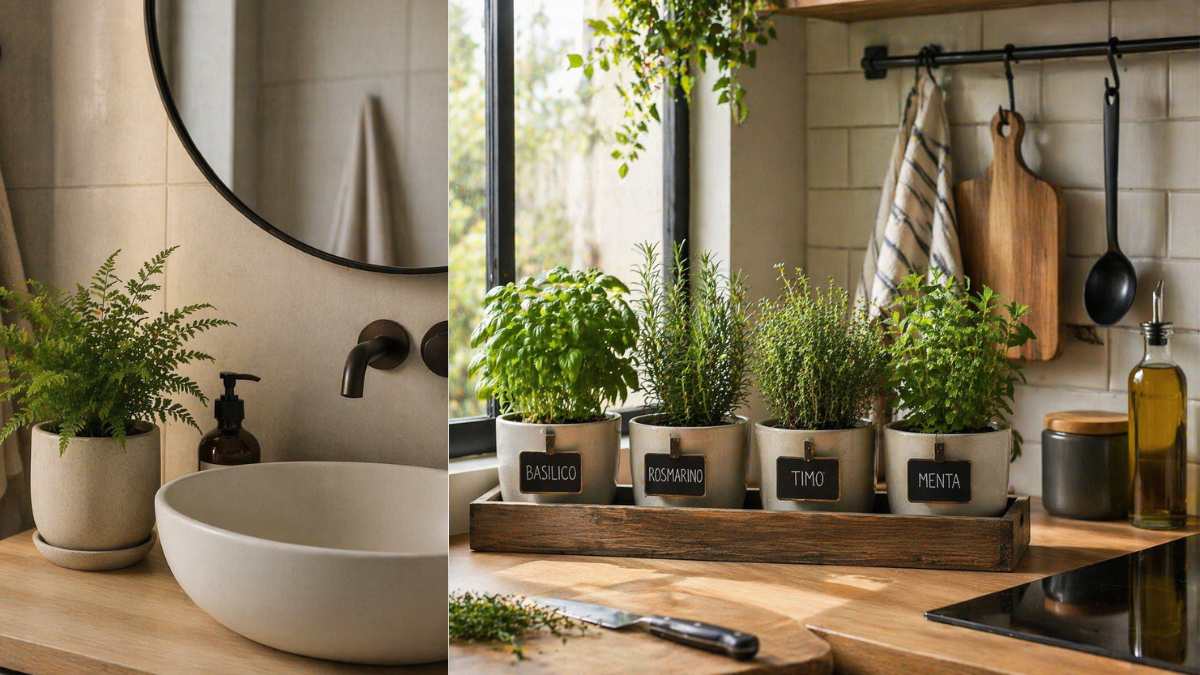
The best place is on a windowsill or shelf near the light. Plants can be placed in small ceramic, glass or metal vases, maintaining a style that matches the kitchen. In modern settings, white or black vases are perfect. in warmer kitchens, terracotta or natural materials are better. The end result should be orderly, never random. Three or four well-placed plants work much better than many randomly distributed.
Bathroom: Plants that love moisture
The bathroom is one of the most underrated environments, but also one of those where plants can work best. Constant humidity favors species such as e.g ferns, calathea, orchids or bamboo.
Here it is important to take advantage of the vertical spaces. A plant on a shelf, on the edge of the bathtub or next to the sink can completely change the perception of the environment. A hanging plant can also be an interesting solution, especially in small bathrooms. Colors play a fundamental role. In a light colored bathroom, with white or neutral tiles, green creates a direct contrast. In darker environments, however, a plant with glossy leaves helps reflect light and make the space more alive.
Enter: plants that give instant character
The entryway is the first space you see upon entering the home, so the floor plan should have a immediate but controlled impact. A zamioculcas or a dracaena is perfect because they stand well even in low light and have a neat shape.
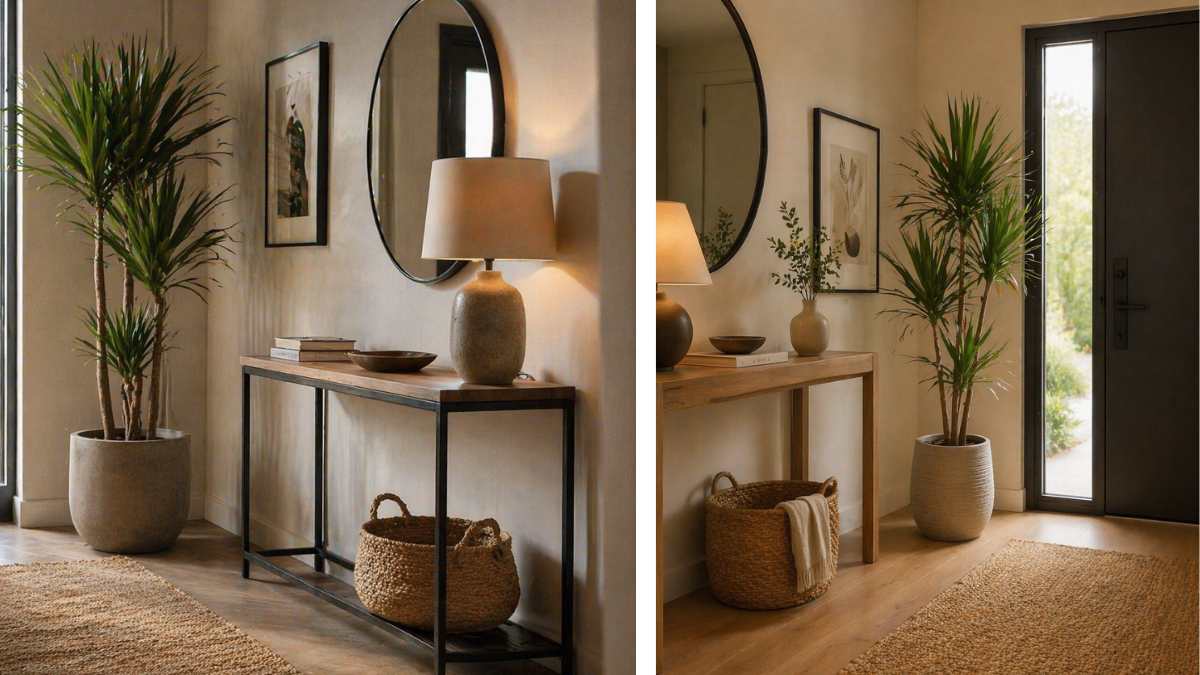
The ideal location is next to a console, near the door or in a free corner. Here the plant becomes part of the composition: it can dialogue with a mirror, a lamp or a low piece of furniture. The jar should be in line with the general stylebecause it is very visible. In a modern entryway, minimal ceramic or concrete vases work well. In a warmer space, natural materials or softer finishes are best.
When the plant is really the right one
The difference between a house with plants and a house designed with plants lies in the cohesion. It’s not about adding green, it’s about putting it in the right way.
Every room has different needs for light, space and atmosphere. When the plant respects these conditions and is integrated with materials and colors, it ceases to be an accessory and it becomes part of the environment. And that’s where the green really comes into play.



