
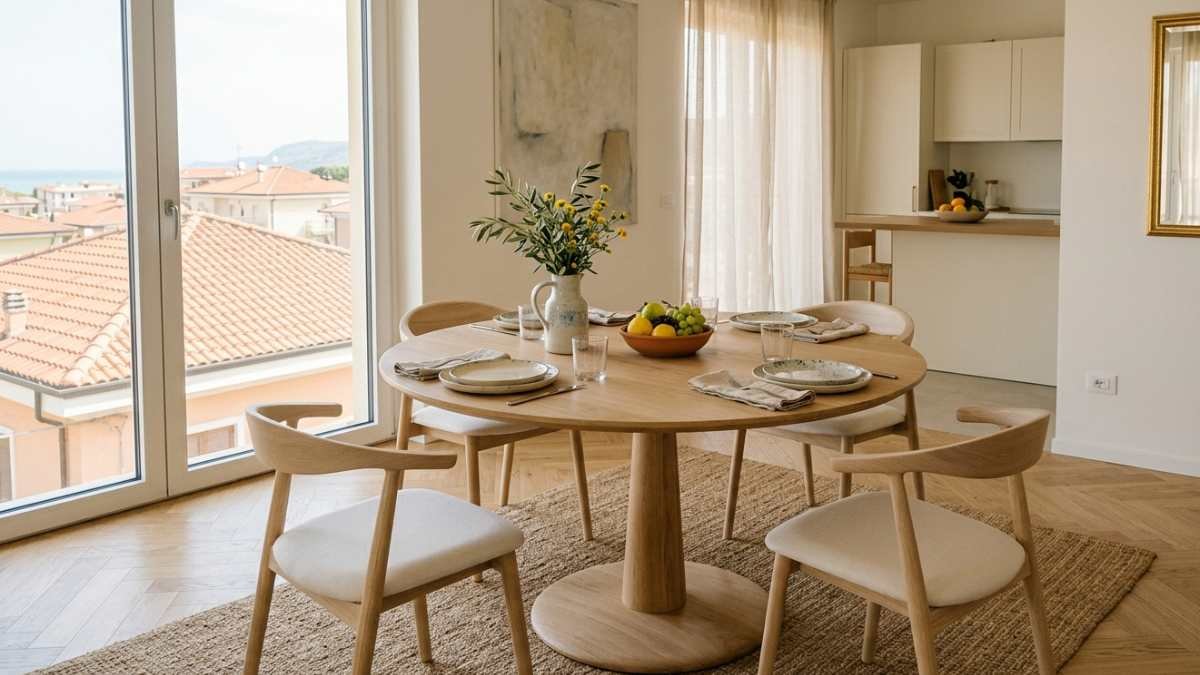

For years it was sidelined, considered less practical than the classic rectangular table. Today, however, the round table is back in focus and it’s not just a matter of aesthetics. More and more people choose it because it manages to do something that other furniture can’t: it changes the perception of space without interfering with the structure of the room.
It’s not just a trend. It is a precise design choice, which works particularly well in modern homes, where every centimeter counts and where the fluidity of environments has become fundamental.
Because the round table makes the room look bigger
The reason is very simple, but often underestimated: it has no corners. This seemingly insignificant detail completely changes the way the eye reads space.
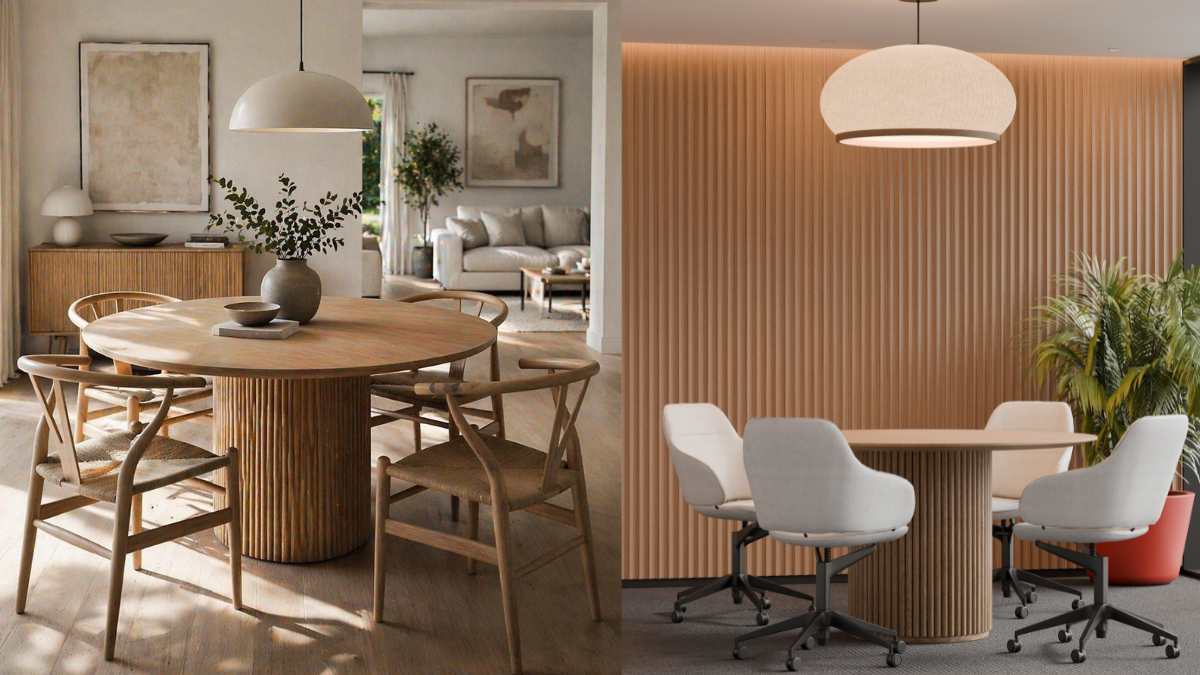
A rectangular table creates rigid lines, interrupts passages and clearly defines areas. The round table, on the other hand, lets the eye roll. It does not visually block the room, but makes it more continuous.
The result is immediate. Even in a small dining roomthe space seems more airy, less crowded. There is a sense of greater freedom of movement, even when the table occupies the same surface area as a rectangle.
Then there is another key aspect: routes become smoother. Without edges, you can move around the table better and this enhances the perception of spaciousness.
When it really works (and where it makes a difference)
The round table is at its best in all those environments where space is limited or where spaces are shared. In an open space, for example, it helps to separate without separating. It defines the dining room, but without creating it visual barrier between kitchen and living room. This is why it is increasingly chosen in modern homes.
In a small kitchen, it works even better. A rectangular table risks taking up too much space and making movements more complicated. The round table, on the other hand, fits naturally, leaving more freedom all around.
Even in irregular environments, where the walls are not perfectly aligned, it is a smart solution. Not having a forced direction, it adapts better and does not highlight the flaws of the room.
The visual result: less rigidity, more harmony
There is also an aesthetic question. Curved shapes are perceived as softer, more welcoming. A round table “softens” the environment, especially if the rest of the furniture is too linear.
In a dining room with square furnituresmooth surfaces and neutral colors, the round table breaks the rigidity without creating chaos. It introduces a variation that makes the space more interesting.
This effect is even more evident if the right materials are chosen. A light wooden top, for example, amplifies the light and makes everything lighter. A central baseinstead of four legs, it helps keep the structure clean and avoid visual clutter.
More enjoyable (and more practical than you think)
Then there is an aspect that is often forgotten: the round table also changes the way the space is experienced.
Everyone is at the same distance, there are no “head of the table”, the conversation is more natural. This makes it ideal not only for dinners, but also for more informal everyday moments.
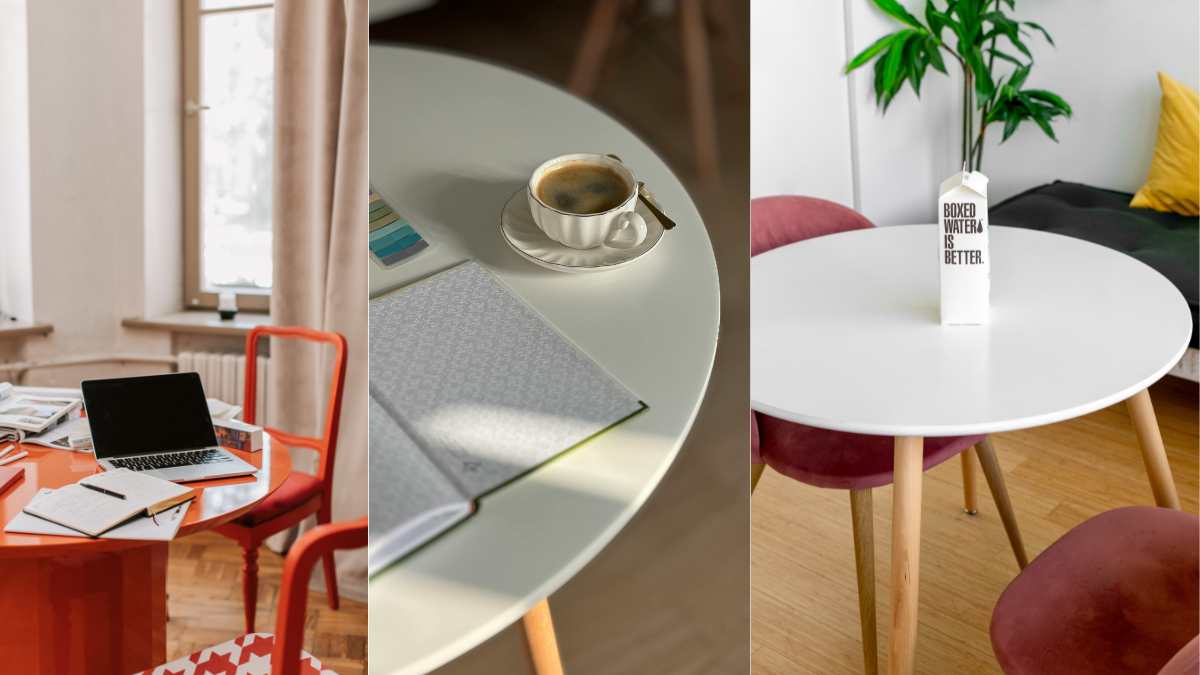
From a practical point of view, moreover, it is much more flexible. In many cases, it allows you to add an extra chair without problems, precisely because it has no rigid corners to respect.
How to choose the right one (without making mistakes)
To really get the effect of lightness, it’s important not to weigh it down. Better to avoid models that are too bulky or have too bulky bases. The ideal is to focus on clean lines, with a top proportional to the room and a structure that goes away visual space sub.
Color also plays a role. Light or natural shades help maintain the airy effect, while finishes that are too dark can reduce the perception of space, especially in small rooms.
Finally, context must always be considered. The round table works when communicates with the rest of the room. Light chairs, stable materials, well-made pallets: these are the elements that really make the difference.



