
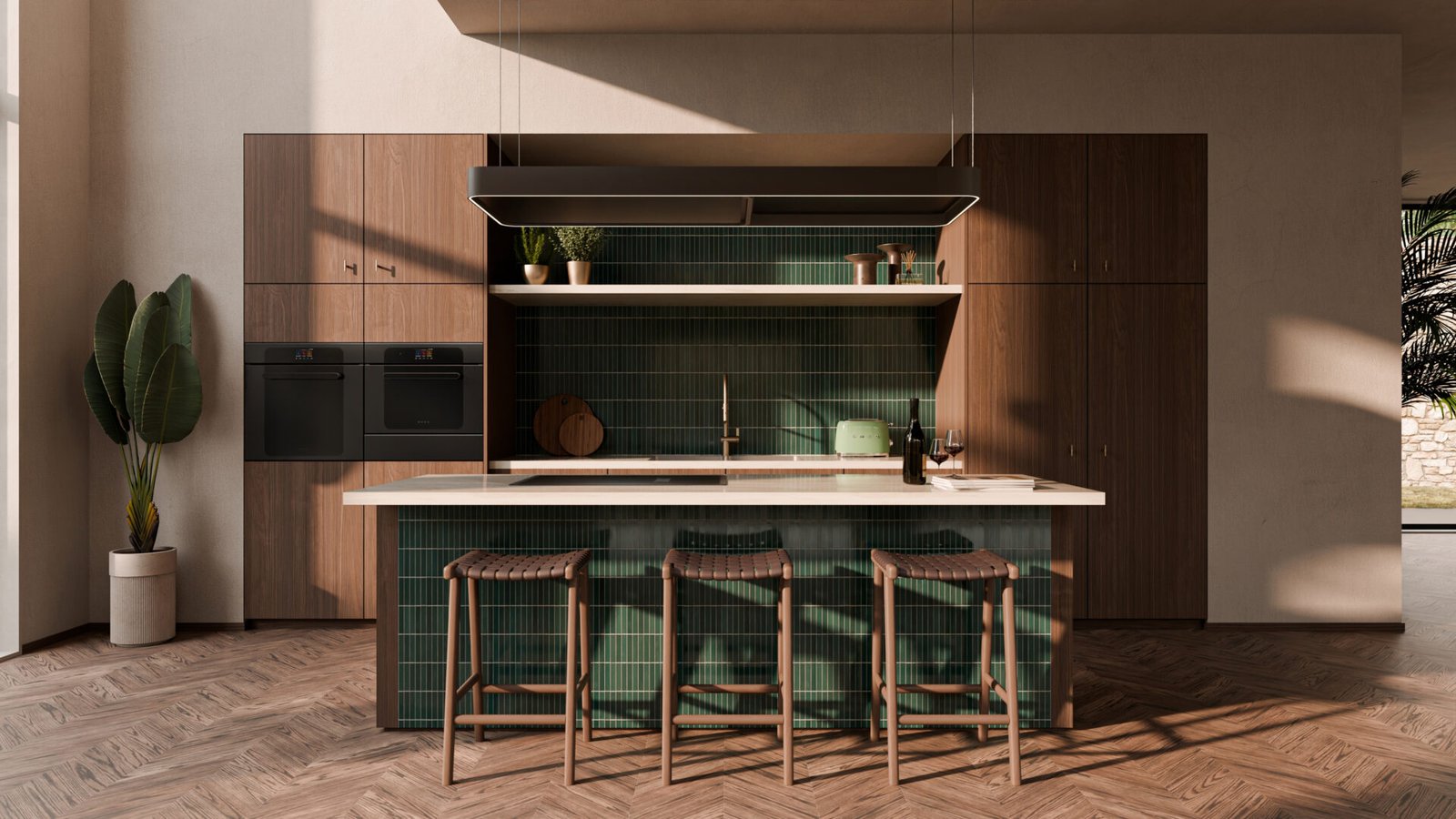

Borromeo DeSilva collaborations with SMEG in the Musa space within a wider reflection on the role of the kitchen today – no longer a purely functional system, but a multi-layered environment where technology, identity and domestic rituals intersect. In this context, the devices are asked to take a place, which either dissolves into the architecture or is reasserted as authorial objects.
Founded in Emilia-Romagna in 1948, SMEG He consistently followed the second path, building a recognizable language of soft geometries, controlled surfaces and precise details. The collection developed with the design studio joins this trajectory as a calibrated intervention, with a project that works through reduction, refining proportions and components, starting with the built-in oven. The door becomes a single continuous volume, merging the control panel and the glass, while a porthole-like radial opening and a restrained matte and gloss palette articulate a presence that is measured rather than statement.

Musa by Borromeo de Silva ©SMEG

Musa by Borromeo de Silva ©SMEG

Collection Hero, Musa by BorromeodeSilva ©SMEG

Musa by Borromeo de Silva ©SMEG

Musa by Borromeo de Silva ©SMEG
Musealong with other new collections, such as Isola with Stefano Boeri Interiors or the ABSOLUTELY DISGUSTING finish, to be presented by SMEG during Salone del Mobile 2026within EuroCucina 2026 and the wider Milan Design Week 2026.
Here, the brand extends its established identity rather than revising it, using collaborations as a way to experiment with its design language without watering it down. Carlo Borromeo, half of the studiodescribes a process based on continuity and precision, where form, finish and proportion are used to shape the object’s presence in space – integrated into the architecture, yet deliberately readable.
Your work often moves between formal control and expressive tension: how do you build a recognizable language today without becoming self-referential, and what, in your view, makes a dialogue with a context or a brand truly fruitful and not just strategic?
Carlo Borromeo:
“Open mindedness and inclusiveness. The open mind stems from the experience we have built up over 15 years in the automotive sector and our ability to enable true cross-pollination in different sectors. The automotive industry was our testing ground – it gave us a realistic, multicultural approach that we now incorporate into every new context, offering a lateral, never-predictable view.
Participation is an essential value for us because it implies dialogue. Design is not just a technical answer. it is the construction of an authentic narrative in which the client and their vision is central. Every project has different conditions, actors, places and ambitions: our role is to embrace all these elements and amplify them, filtering them through our creative lens. In this way, we highlight both our strengths and those of the brands we work with, without one overpowering the other, creating synergies that are each time unique, meaningful and shared.“
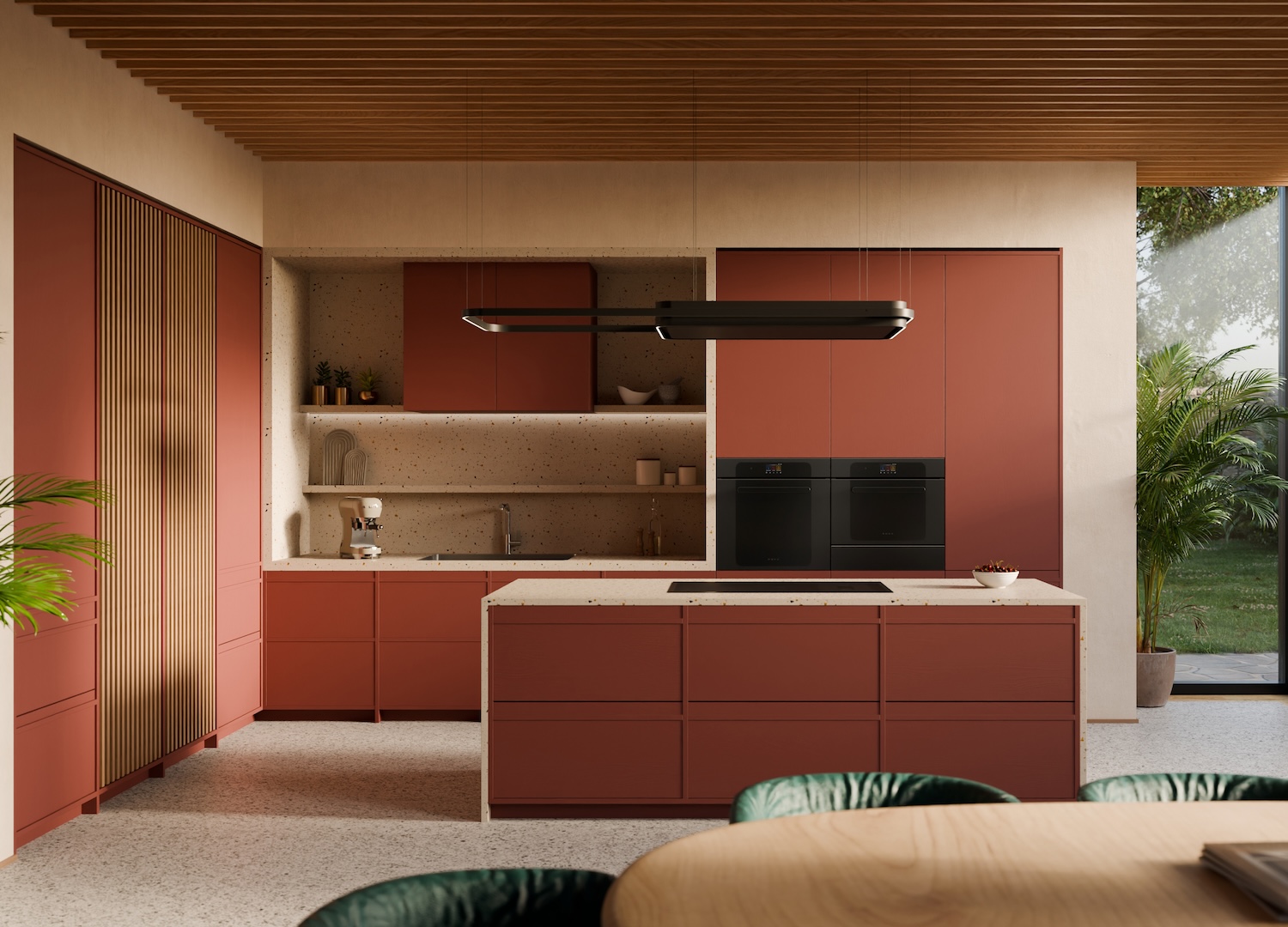
Musa, a project based on highly calibrated signboards, is presented as an evolution of SMEG’s language. Where did you see room for intervention?
Carlo Borromeo:
“Musa’s goal was to bring character back to products that today tend to be standardized by industrial logics. In an increasingly diverse and adaptable kitchen market, the challenge was to create a product that was both versatile and expressive. Starting with the built-in oven, we set Musa’s stylistic guidelines by redefining the door and its fittings.
We started by working on the proportions of the object, removing the typical separation between the control panel and the glass. By materially merging these two areas, we created continuity in volumes that elongate the window: the result is a notch with an unusual proportion, a kind of porthole with radial edges that invites you to come closer and look inside. Circularity and lightness also define the physical elements, designed with an aesthetic that is both minimal and decorative, such as handles, knobs, graphics and finishes that become interpreters of SMEG’s DNA. The result is an evolution with a modern, technological design that nevertheless conveys a strong personality and the characteristic formal warmth of the brand.“
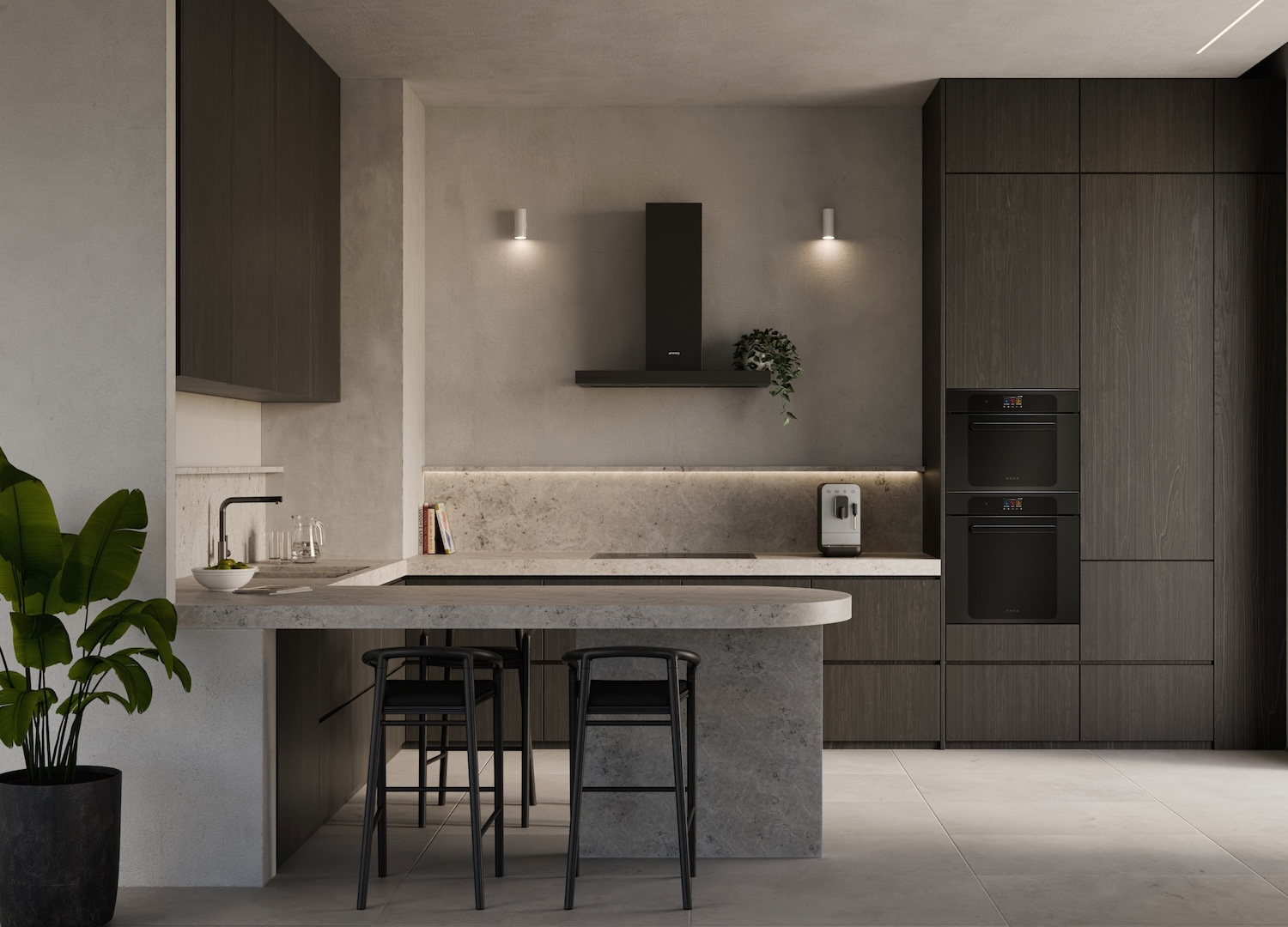
Throughout the collection, there is a balance between presence and subtlety, where monochrome and gloss/matte contrasts work through controlled, almost architectural elements. How complicated was it to define a signature that is distinctive without becoming intrusive in the domestic space?
Carlo Borromeo:
“Finding this balance required painstaking work, in which our automotive experience proved invaluable. In many of our projects we face constraints: where possible we act on form. where not, the effect is achieved through materials and finishes. These elements are often considered secondary, yet it’s impressive how much a finish or material can turn a piece on or off, giving it prominence or making it recede.
For the Musa we focused on radial, rounded lines reminiscent of SMEG styling, with refinements that keep the look contemporary. To manage the volumes we used matte materials along the perimeter and glossy in the fill, maintaining the outline while visually lightening the masses. Through graphics and decoration, we emphasized the refinement that characterizes the Italian design tradition and the brand. We developed a pattern that invites discovery: the closer you get, the more details emerge. As a finish, we chose an anthracite metallic rich in reflections, allowing the product to feel alive in domestic spaces, changing with the light.“

For SMEG, the device has always been a design object, therefore recognizable. With Musa how did you balance your authorial eye with the need to fit such a structured aesthetic?
Carlo Borromeo:
“We typically balance our authorial perspective with a respectful analytical approach, delving into the stylistic codes of the brand or product and starting with what needs to be preserved. We aim to understand the cultural impact of past works and capitalize on their iconicity and legacy, intervening where elements can be enhanced or reinterpreted through our vision. Our approach is deeply rooted in the Italian context and its excellence, aware that we operate in an era where it is necessary to participate and compete globally.“
Looking ahead, do you see this collaboration opening up a wider evolution in the language of devices or remaining an episode limited to SMEG’s identity?
Carlo Borromeo:
Our intention is always to celebrate stylistic expression and creativity in a broader sense. SMEG gave us this opportunity and the result came from a very natural process. We believe that our philosophy aligns perfectly with the brand, while we also recognize that SMEG is a unique reality, one that has made creativity its true strength.



