
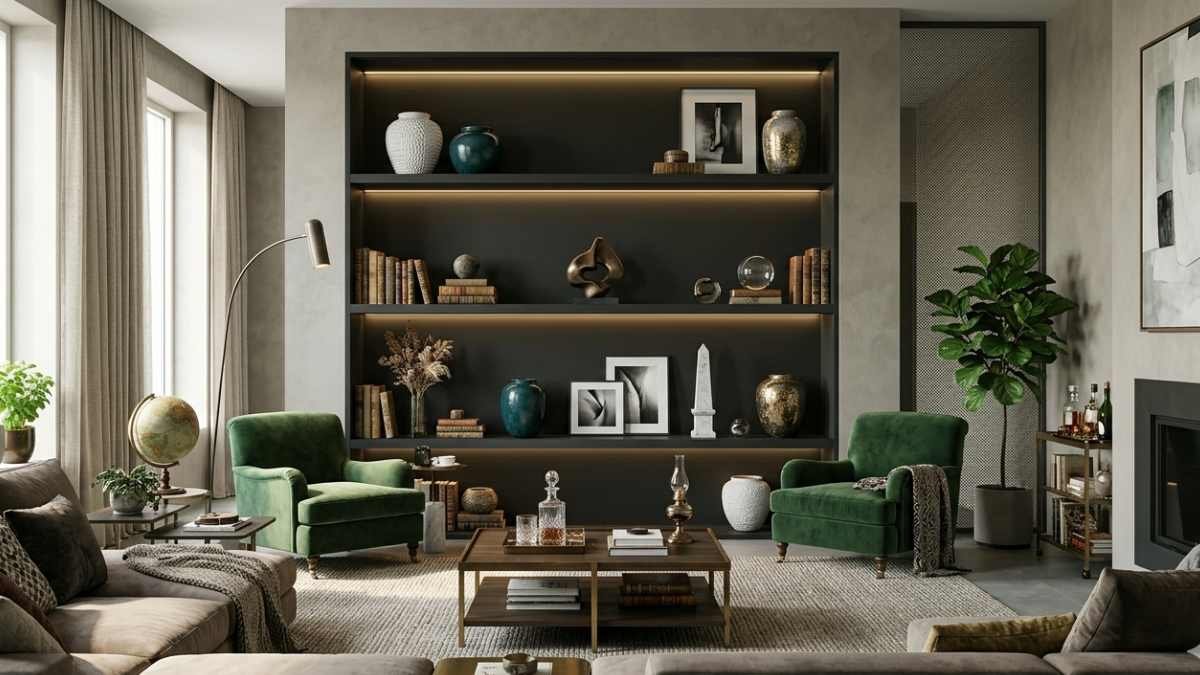

There is a pervasive fear when it comes to furniture: the idea that black, or any very dark color, can “eat” light and make spaces feel smaller. If this may be the case for a tiny room entirely painted in charcoal, the situation changes radically when we use the color in a surgical way.
Il “Deep Black” makeup. it consists of exactly this: using dark shades exclusively in alcoves, niches or behind shelves to create an optical illusion of discovery. The result? The wall seems to move away, the perceived space doubles and the style of the room undergoes an immediate transformation.
The infinity illusion: how dark color tricks the eye
Why does this trick work so well? The answer lies in how our brain interprets shadows. In nature, what is dark is perceived as distant or deep. Painting the inside of a niche midnight blue, forest green or smoky blackwe tell our eye that that part of the room has no nearby bottom. The wall is no longer a flat and limited surface, but becomes a dynamic volume. It is the same principle used in theaters to give depth to the scene: darkness creates a void that the eye fills with imagination.
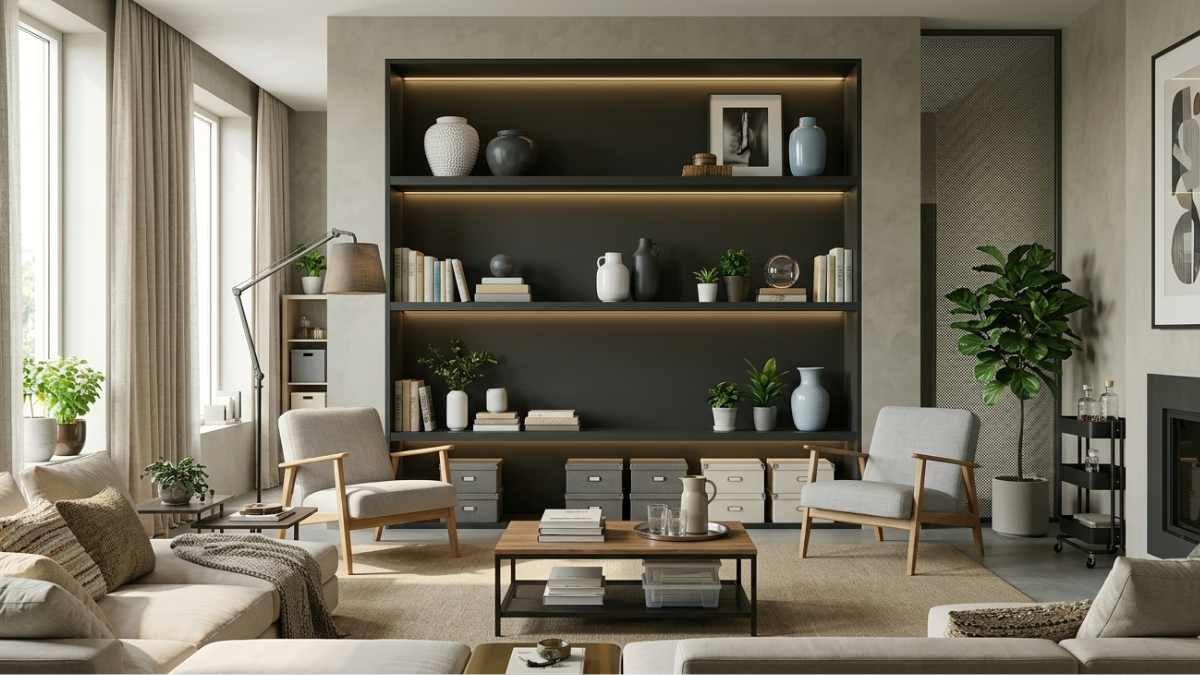
This “reset” effect is especially useful in narrow corridors or not very large living rooms. A dark recess breaks the monotony of the light-colored wall, creating an attention-grabbing vanishing point and visually expands the boundaries of the environment. It’s not just painting, it’s a real architectural intervention at almost zero cost that changes the hierarchy of the space without having to knock down a single brick.
Enhance objects: when background becomes spotlight
In addition to the spatial advantage, the “Deep Black” trick is the best ally of your furniture items. Imagine a white ceramic vase, a book with a colorful cover or a lush plant against a white wall: they often end up blending into the background. If, however, you place the same objects inside a dark place, magic happens: colors become more vivid, profiles clearer, and materials can be seen suddenly more valuable. The dark color absorbs the light around the object, making it stand out as if it were under the spotlight in an art gallery.
To get a really professional result, the tip is to focus on extra matte finishes. A gloss or satin paint would reflect light, yesmasking the true proximity of the wall and breaking the depth spell. A velvety and “flat” finish, however, makes the color dense and absorbent, creating that sense of elegant emptiness we’re after. Whether it is a wall bookcase or a small niche in the entrance, this clear contrast between the light frame and the dark heart is the signature of a sophisticated and modern design.
Strategic lighting for nighttime “Wow” effect.
If during the day the effect is architectural, at night the “Deep Black” make-up can become purely theatrical thanks to artificial light. The interference of a small adjustable headlight or an LED strip hidden in the upper edge of the recess turns the alcove into a soft light source. The light falling from above will only hit the front of the objects, leaving the background in darkness: this contrast further emphasizes the depth and creates an intimate and sophisticated atmosphere throughout the room.
Don’t be afraid to venture even with colors that aren’t pure black. A blackboard gray or a very dark burgundy can provide the same visual advantage but adding a hint of color that can be reminiscent of the fabrics of the sofa or rugs. Introducing dark color into alcoves is the safest and most reversible way to experiment with bold colors: a small change that gives your home the depth of a luxury loft and the visual class of a professional environment.



