
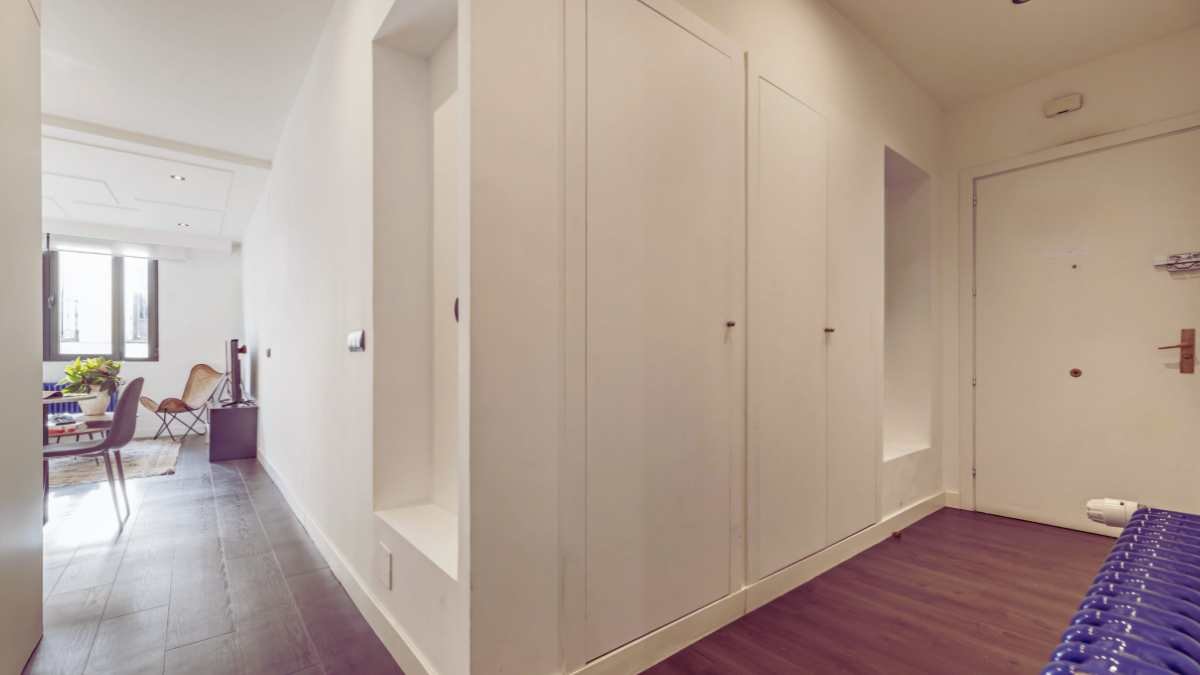

You walk into the house and you don’t see anything out of place and it’s a great feeling. No bulky furniture, no rows of doors, no wardrobes interrupting the space. Only clean, continuous, almost essential walls. However, everything is there, hidden but perfectly organized.
This is the power of wall-mounted wardrobes: they don’t add furniture, they eliminate it. It is one of those solutions that completely change the way you live and perceive your home, because eliminate visual clutter without sacrificing functionality. It is not just an aesthetic choice, but a different way of designing spaces, more fluid, cleaner, more modern.
But just because they look so perfect, it’s important to understand the other side of the coin. Because it’s not always the right solution for everyone.
The advantages: when the wardrobe is no longer a mess
The first effect is immediate and almost surprising. The space looks bigger, even when it isn’t. This is because the eye does not encounter interruptions: the the wall remains continuous and the environment looks more tidy and airy.
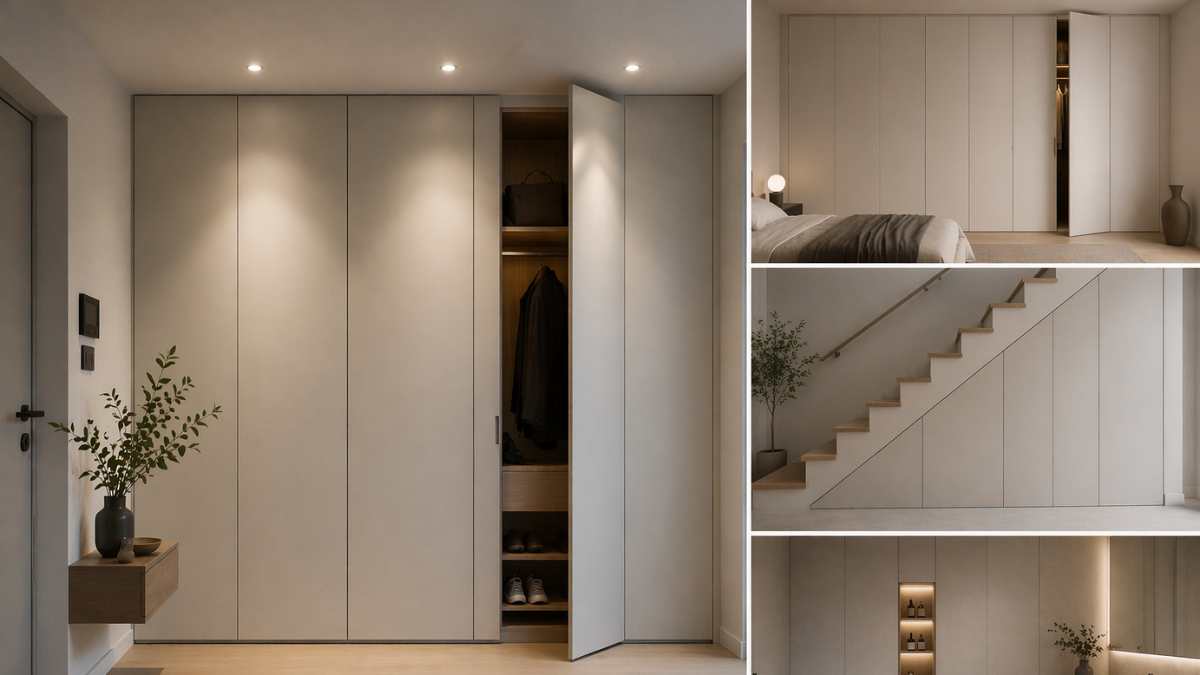
Then there is a very definite advantage in day-to-day management. Everything finds its place, but nothing stands out. Jackets, shoes, objects, linens and accessories disappear behind clean surfaces, making the house tidier. Even from an aesthetic point of view, it is an extremely flexible solution. It works in modern, minimalist environments, but also in warmer and more contemporary environments, simply by changing finishes and materials. The wardrobe ceases to be an element “in itself” e.g it becomes an integral part of the architecture.
Another aspect that is often underestimated is the possibility of exploiting difficult spaces. Niches, alcoves, under stairs, the walls become irregular perfect containers without creating visual discontinuity.
The limits: what is not seen (but must be considered)
Precisely because everything is hidden, access also becomes less direct than in a traditional wardrobe. Handleless doors, often with pressure opening, are aesthetically clean but less practical in some cases, especially in faster daily use.
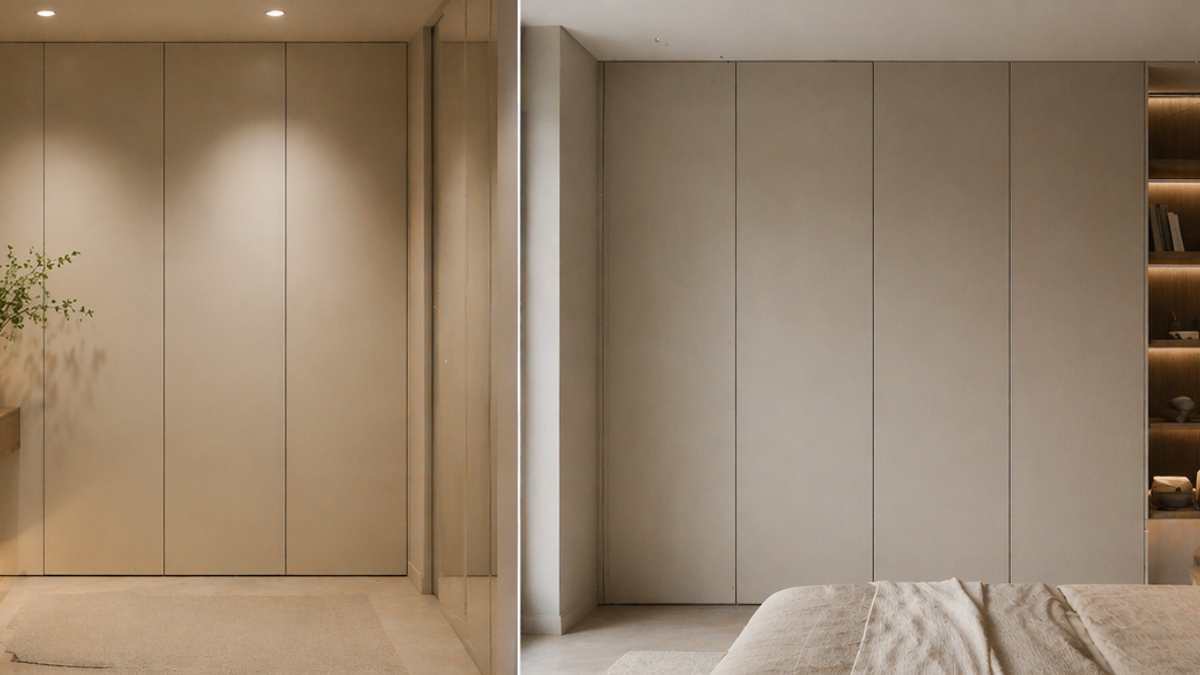
Another point concerns flexibility. A wall-mounted wardrobe, especially a custom-made one, is designed for that space. It is not an item that can be easily moved or adjusted over time. It is one more definitive choice compared to a traditional piece of furniture. Costs can also be higher, especially when aiming for seamless integration. You’re not just paying for the furniture, you’re paying for the work design, alignment and finishing which allows you to get this invisible effect.
Finally, there is a practical aspect linked to internal organization. Just because everything on the outside is uniform, it is necessary that the interior is well designed. Otherwise you risk having a beautiful “tidy void” outside and a less functional mess inside.
An aesthetic choice, but also a design one
Wardrobes that run along the wall really work when we think of them with the space and not add them afterwards. This is what makes the difference between a finished effect and simply trying to hide a piece of furniture. When the the work is done wellthe effect is powerful: the house looks cleaner, bigger, more cohesive.
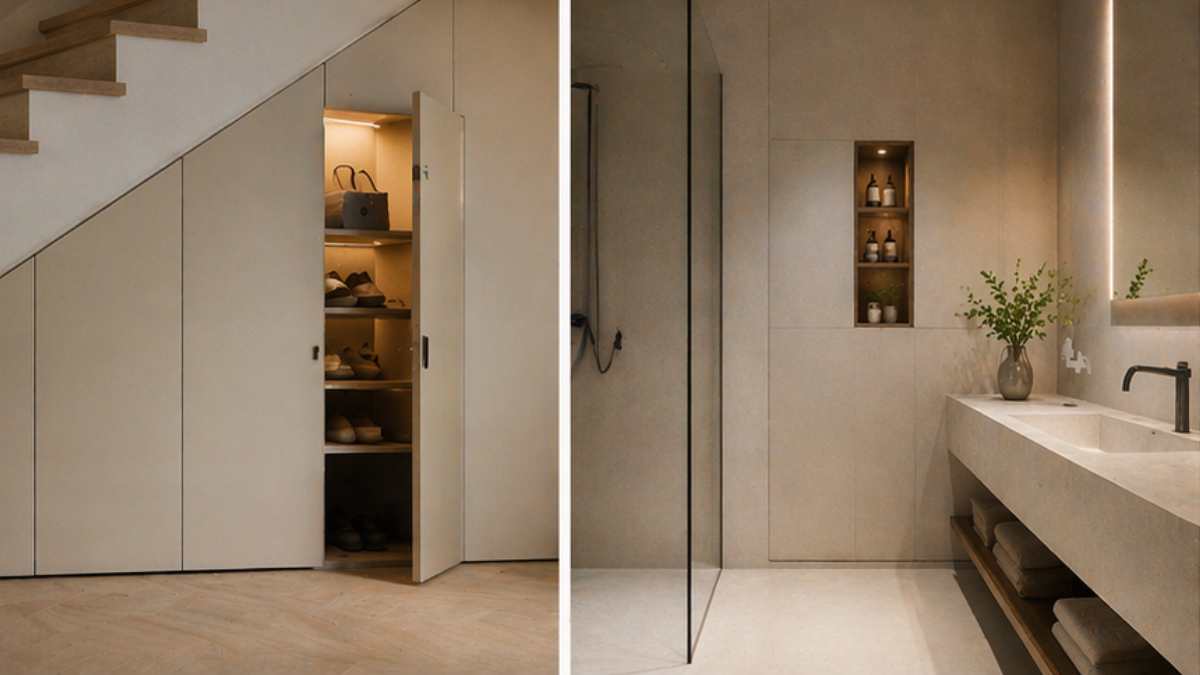
However, when it’s improvised, you risk achieving the opposite effect, with impractical or visually forced solutions. After all, it’s not just a matter of concealment. It’s a matter of balance. Because disappearing a wardrobe doesn’t mean disappearing it, but make part of the space so natural that you no longer feel its visual weight.
How to really achieve the “invisible” effect
It is not enough to choose a wardrobe without handles. The flush-to-the-wall effect is achieved by working several elements together. The doors must be perfectly aligned with the wallwithout protrusions. Opening systems are often under pressure or with an integrated groove, precisely to avoid visual elements that interrupt the surface.
Color is also fundamental. When the wardrobe matches exactly the shade of the wall, the eye stops perceiving it as a separate object. In some cases, material finishes or decorative panels are also used that turn the wardrobe into a true continuous wall. It’s detail work, not just furniture.
Custom or off-the-shelf solution?
To get a truly complete result, the The personalized solution remains the best. It allows you to take advantage of every centimeter and perfectly adapt the wardrobe to the available space.
There are also more affordable solutions, such as modular systems or ready-made doors that slide onto the wall, but they still require good planning to avoid the “furniture resting” effect. The difference is seen above all in the finishes and alignments. More of it the job is accuratethe more the wardrobe disappears.
Why are they becoming so widespread
The reason is simple: they solve two problems at once. On the one hand, they increase the storage space, on the other hand reduce visual clutter. At a time when we are looking for cleaner, more essential and easier to live environments, these solutions perfectly meet the current needs. It’s not just about concealment, it’s about integration.
And when the integration is done well, something interesting happens: the space looks bigger, neater and more designed, even without actually changing the square footage. After all, the real point is not to have more furniture, but to dispose of them in the right way.



