
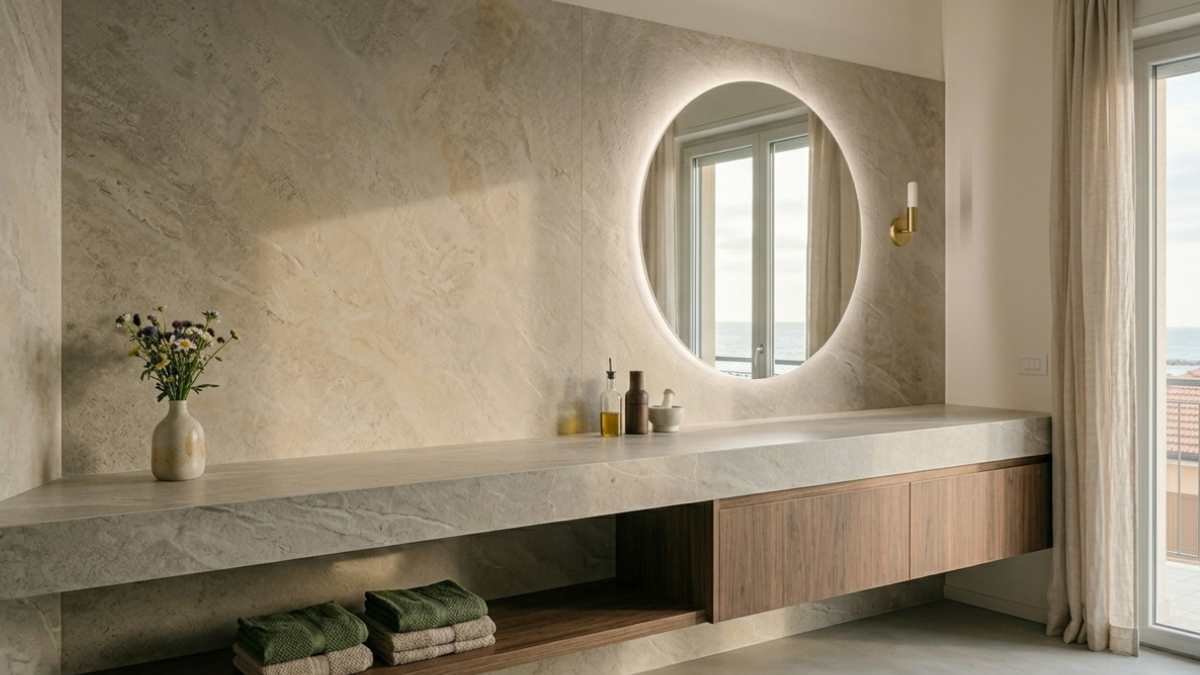

At Design Week 2026 one thing is immediately noticeable: surfaces are no longer “perfect”. They are not smooth, they are not uniform, they cannot be traced to a specific material. From a distance they look like stone, up close they change completely. That’s exactly what it is ambiguity to make them interesting.
Among the most photographed installations and the most refined interiors, the same type of finish always returns: hybrid, material, almost imperfect surfaceswhich is not clear whether they are natural or artificial. It’s not wood, it’s not marble, it’s not concrete. It’s a material made to feel familiar, but with a different depth.
What material it really is
It is not a single material, but a family of finishes that all work in the same direction. The most common result from procedures based on resin and advanced plastersit is applied by hand with techniques that create irregular movements and never the same shades. Sometimes the surface appears cloudy, with slight variations reminiscent of polished stone. Other times it is warmer, almost dusty, with an effect similar to a freshly processed natural plaster.
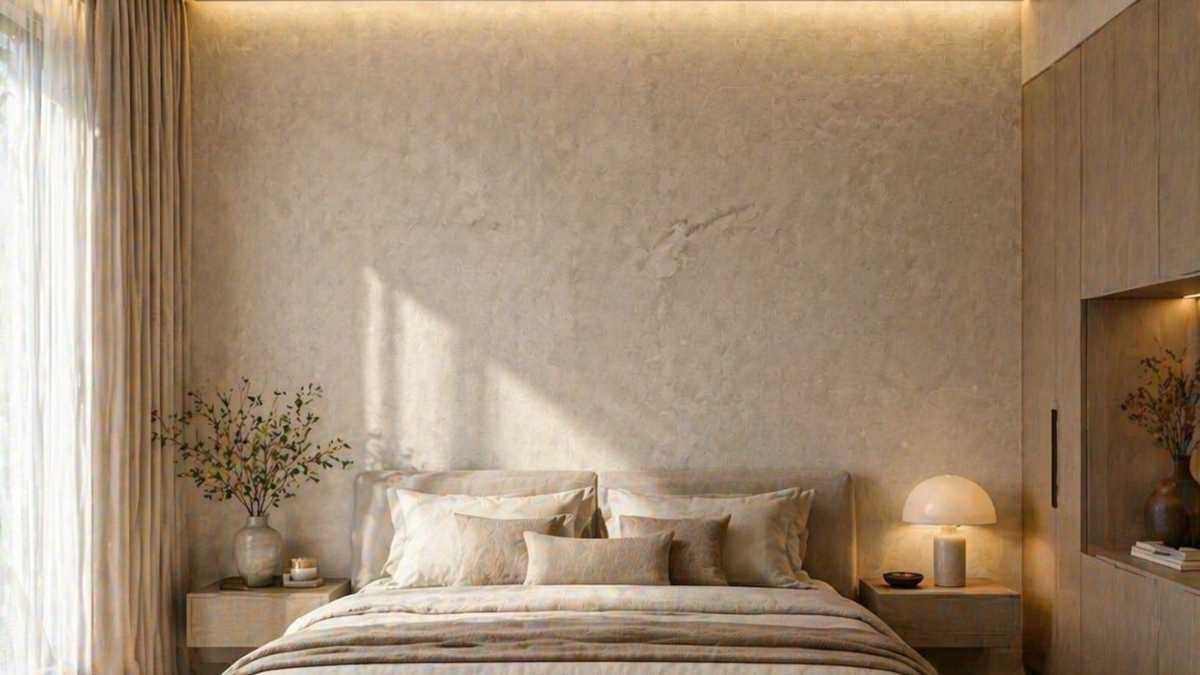
Also the microcementwhich in recent years was colder and more industrial, today it is reinterpreted in a softer way. Tones warm up, surfaces lose rigidity and gain depth. In some cases, pigments, sands and powders they are mixed directly into the material to create even more complex effects, where the color is not uniform but vibrates slightly depending on the light. The result is never the same from one wall to another. And that’s exactly the point.
How it presents itself in contexts
At Design Week this material is not used as a detail, but as main area. Entire walls, headboards, alcoves, even furniture. In a bedroom, for example, the wall behind the bed is no longer simply painted. Become one continuous surfaceslightly irregular, which changes depending on the light.
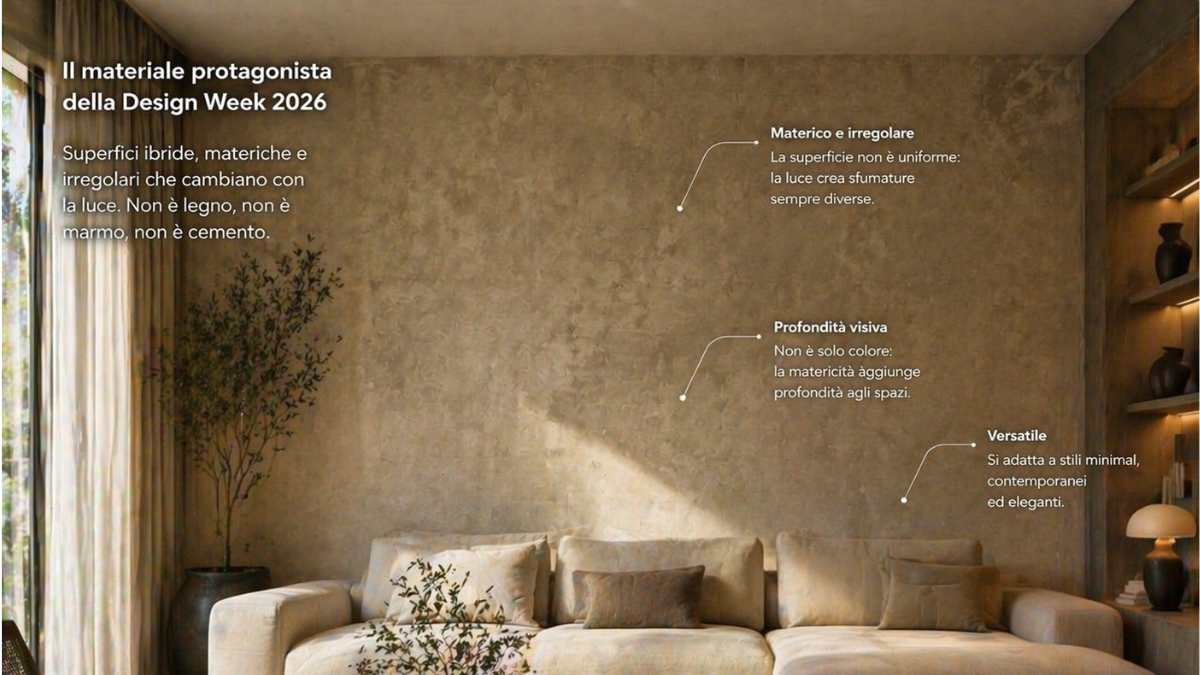
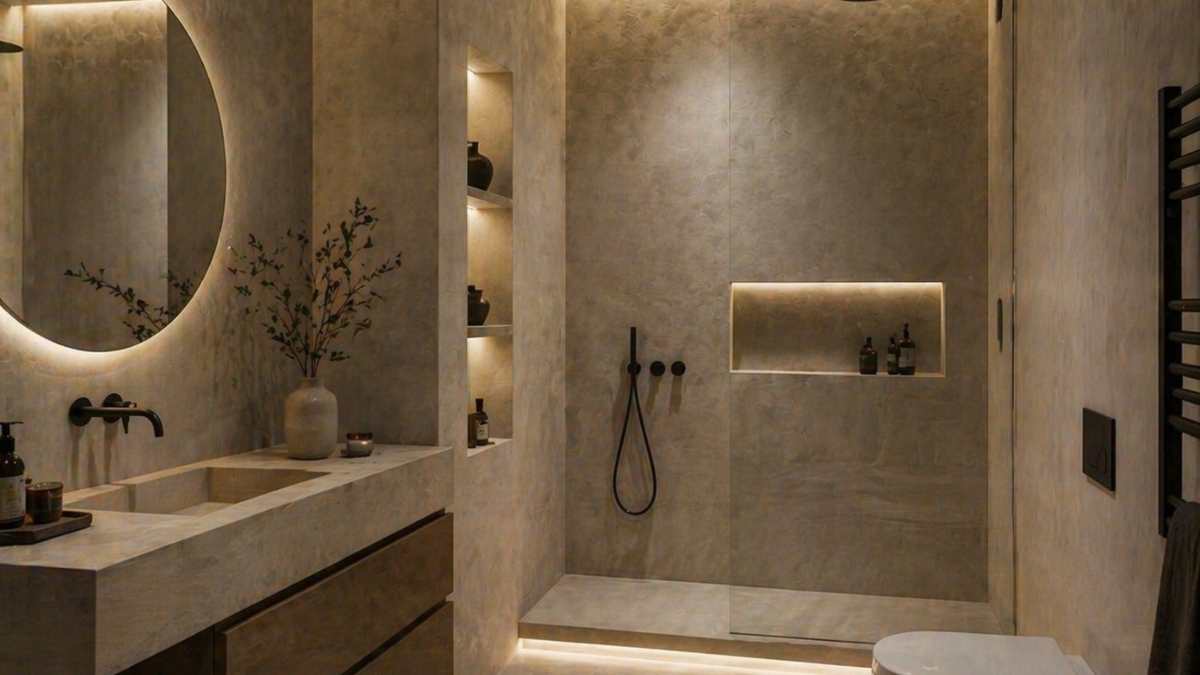
In a living room, it is often used behind the sofa or on a central wall. The eye stops there, without needing anything else. In the bathroom, completely replaces tiles. The absence of joints makes the space more fluid, more continuous and even the volumes appear softer.
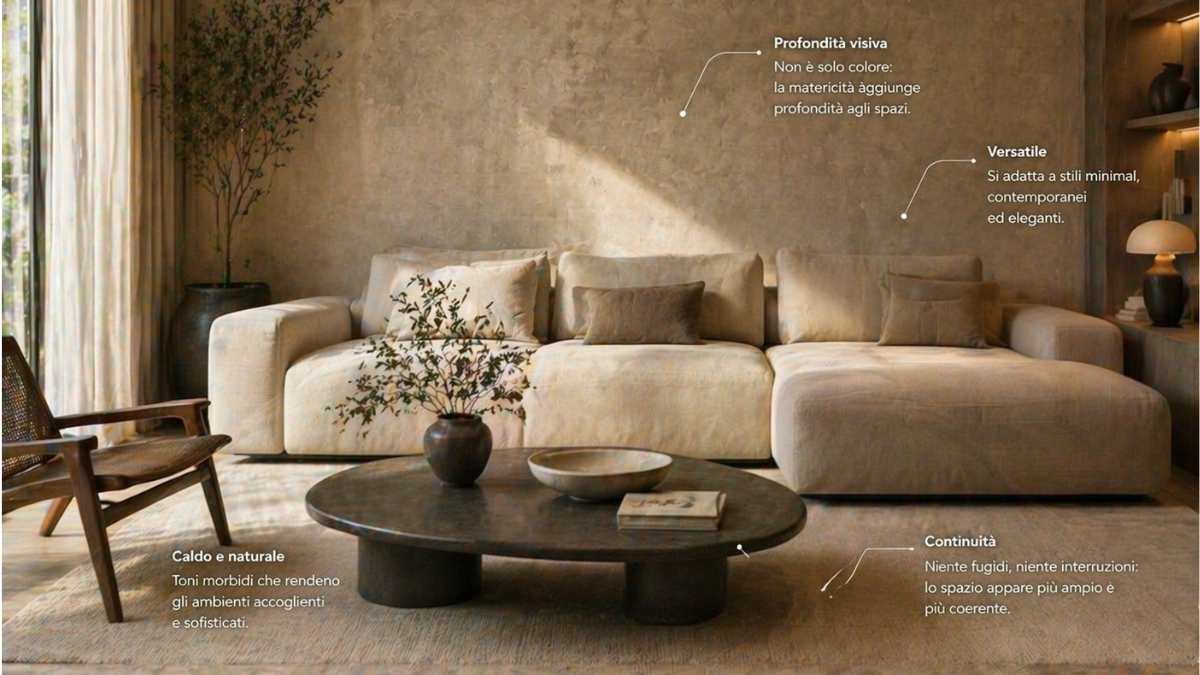
Because it replaces wood and marble
Wood and marble continue to exist, but they have a limit: they are instantly recognizable and often over-define the space. This new type of surface, however, is more neutral but at the same time richer. It does not impose exact styles, but adapts to the environment. In addition, eliminates visual interruptions. There are no obvious joints, no repeating patterns. The space appears more continuous, more coherent, more thought out.
The styles that enhance it the most
In minimal environments, this material avoid the vacuum effect. A room with few details risks looking cold, but a material wall introduces depth without adding objects. In contemporary spaces, it creates an interesting contrast without being bulky. Even in the most elegant interiors it works very well, because replaces more classic materials without losing improvement. The result is less predictable, more timely.
The most common mistake
Treat it like a simple decorative color. This type of surface works when viewed as part of the project, not as a last-minute addition. It must have a precise space, a studied light, a coherent frame. Another mistake is choosing finishes that are too uniform. If the surface is very “perfect”you lose exactly that depth that makes it interesting.
How much does it cost and when is it worth it?
It’s not a cheap solution like a simple paint job, but it doesn’t even come close to the cost of some stone or marble cladding. The price varies by build, but generally falls within one medium rangeespecially when the work is done by hand. It is convenient when you want to get a continuous effect, without interruptions and withstrong but not intrusive identity.
The end result
At Design Week 2026, this type of surface is not a detail, but an exact choice. Houses are no longer looking for recognizable materials, but surfaces that they change with time, with light and with the gaze. It is not wood, it is not marble, and this very vagueness makes it one of the most interesting elements of the moment.



