
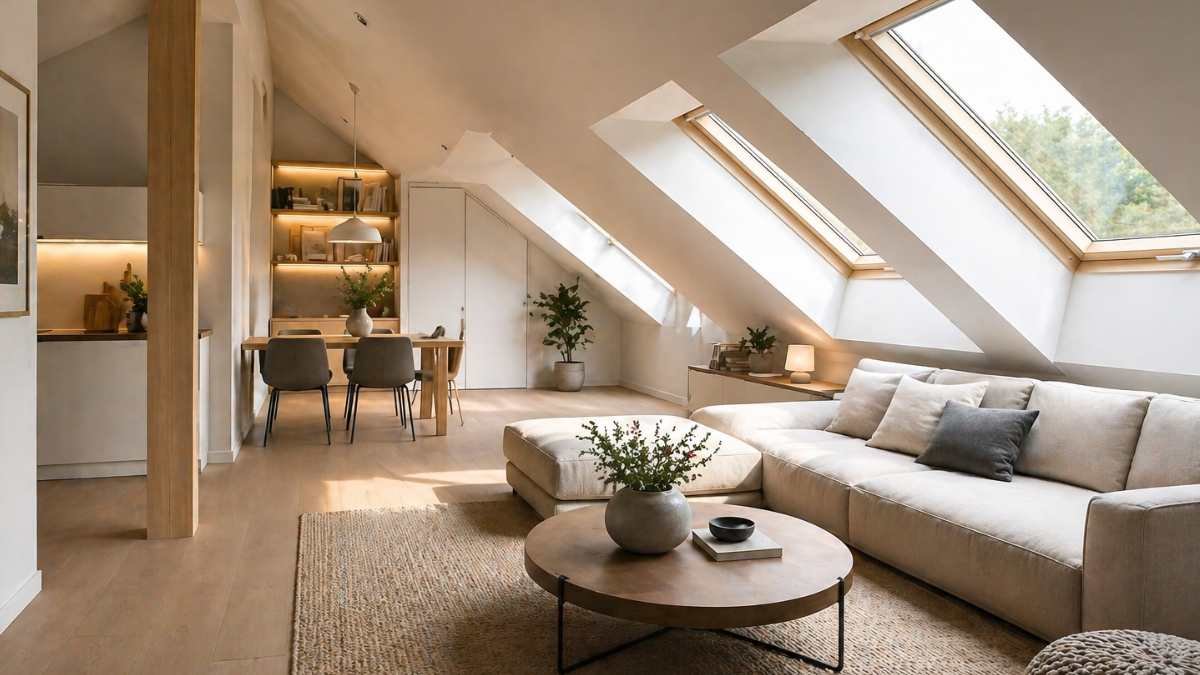

The loft has an immediate charm, but also an obvious limitation: the space is never orderly. Walls come down, heights change, corners become difficult to manage. The result, when not designed properly, is a room that looks smaller than it really is, not because there is a lack of space, but because it is being used poorly.
Here it is not enough to choose “smaller” furniture. You must understand how to take advantage of the room’s true proportionsbecause it is precisely from there that the perception of width arises.
Where the wall goes down, not everything should be filled
The most common mistake is trying to use every inch available, especially in the lower areas. Furniture, containers and personalized solutions are introduced along the entire sloping wall, with the idea of reclaiming space. The problem is that this produces the opposite effect. When the lower part is completely filled, the eye immediately perceives the height limit. The room looks cramped and the ceiling line becomes even more prominent.
By leaving some areas free or using very low and visually light furniture, it allows the space to “breathe”. Even a single section of empty wall, in the most critical area, helps to reduce the feeling of closure.
Furniture should follow the height, not force it
In a loft, not all furniture works the same way. A tall, formal wardrobeplaced on a sloping area, it interrupts the roof line and creates a visually heavy point. Elements that respect the actual height of the room work best. Low furniture in the lower areas, more vertical elements where the ceiling rises. This distribution creates continuity and makes the space more readable.
A specific example is the bed. Place it under the sloped partBy keeping the higher areas free for wardrobes or bookcases, it allows you to use the space in a more natural way without creating visual clutter.
The color should accompany the structure
The color in an attic cannot be chosen as in a normal room. If you use different shades between the walls and the sloping ceiling, you highlight the structure and break up the space. However, when walls and ceilings are treated uniformly or with very slight variations, the perception changes completely. Lines soften and the environment appears more continuous.
Using light colors also helps, but it’s not just about brightness. It is the fact that there are no clear breaks to enlarge the space.
The light must compensate for the heights
Light in an attic is often uneven. There are areas that are very brightly lit and others that are more in the shadows, especially where the roof falls.
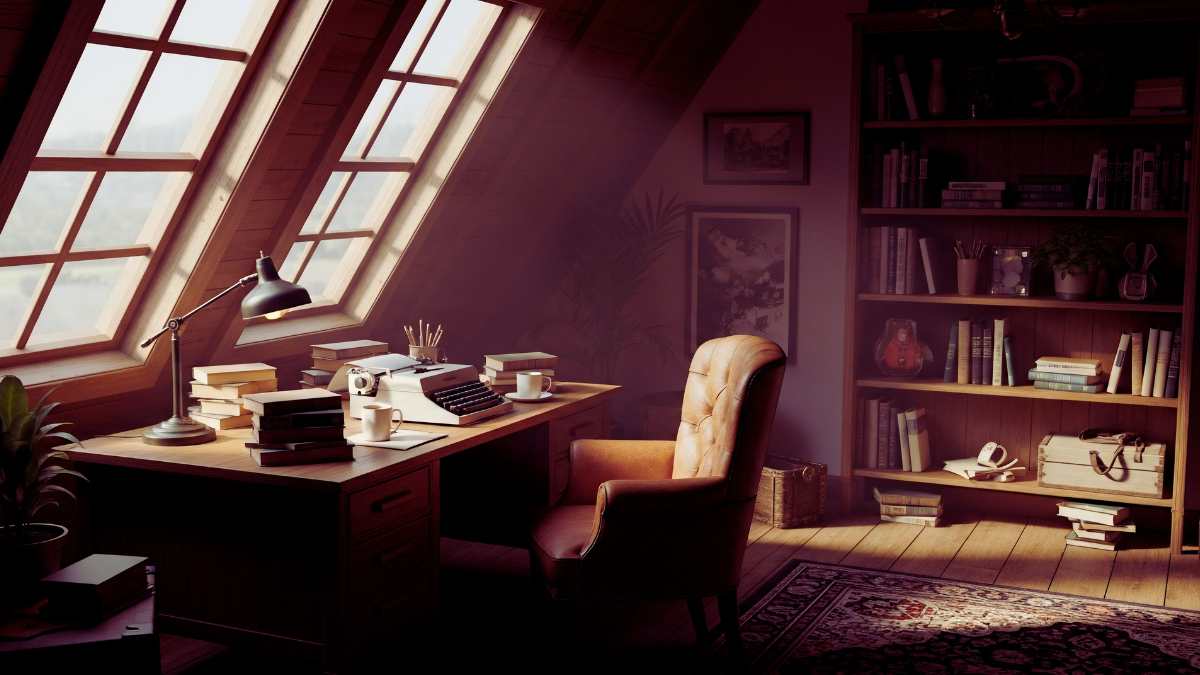
Introducing strategically placed bright spots is a must. A central light is not enough. It is necessary to work with multiple levels: floor lamps, indirect lights, bright spots in the lower areas. When the light is even, height differences are also less noticeable. The space becomes more balanced and less “broken”.
Hanging furniture brightens everything
One of the most effective ways to make a loft appear larger is to clean the floor. Hanging furniture, even small ones, create an immediate effect. A wall-mounted bedside table, a shelf instead of a full piece of furniture, a small hanging bookcase: these are simple options, but they make the space seem lighter.
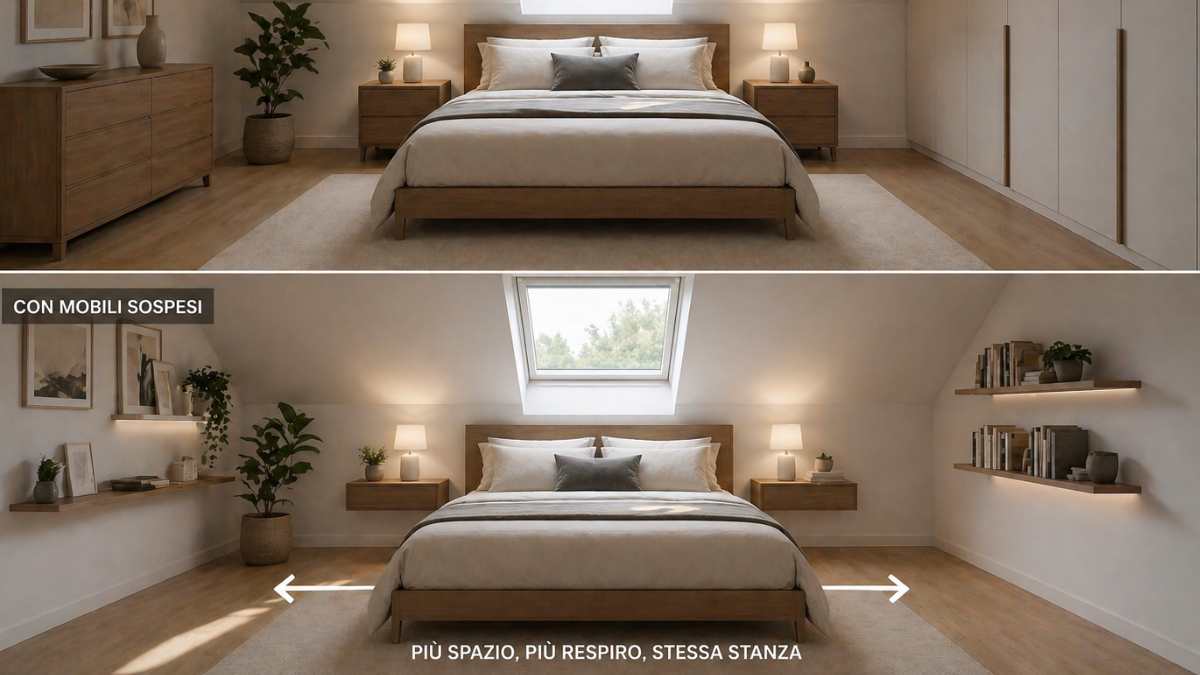
When the floor remains visible, the room appears larger even without changing the actual dimensions.
The mistakes that make the loft smaller
Filling every available corner is the most obvious mistake. Although it seems like a practical solution, it visually reduces the space. Using furniture that is too tall or out of scale compared to available heights creates points of tension that break up the environment. Even choosing colors that have a lot of contrast between the walls and the ceiling highlights the structure and emphasizes the sense of limit. Finally, ignoring natural light and not compensating it with good artificial lighting leaves certain areas in the shade, making the loft less welcoming and smaller.
When the attic really seems bigger
The attic works when it stops being perceived as a “difficult” space and becomes a cohesive space. When the heights are respected, the furniture follows the structure and the light is evenly distributed, the perception changes. It is not a matter of square meters, but of balance. And when that balance is in place, even a small loft can seem much larger than it really is.



