
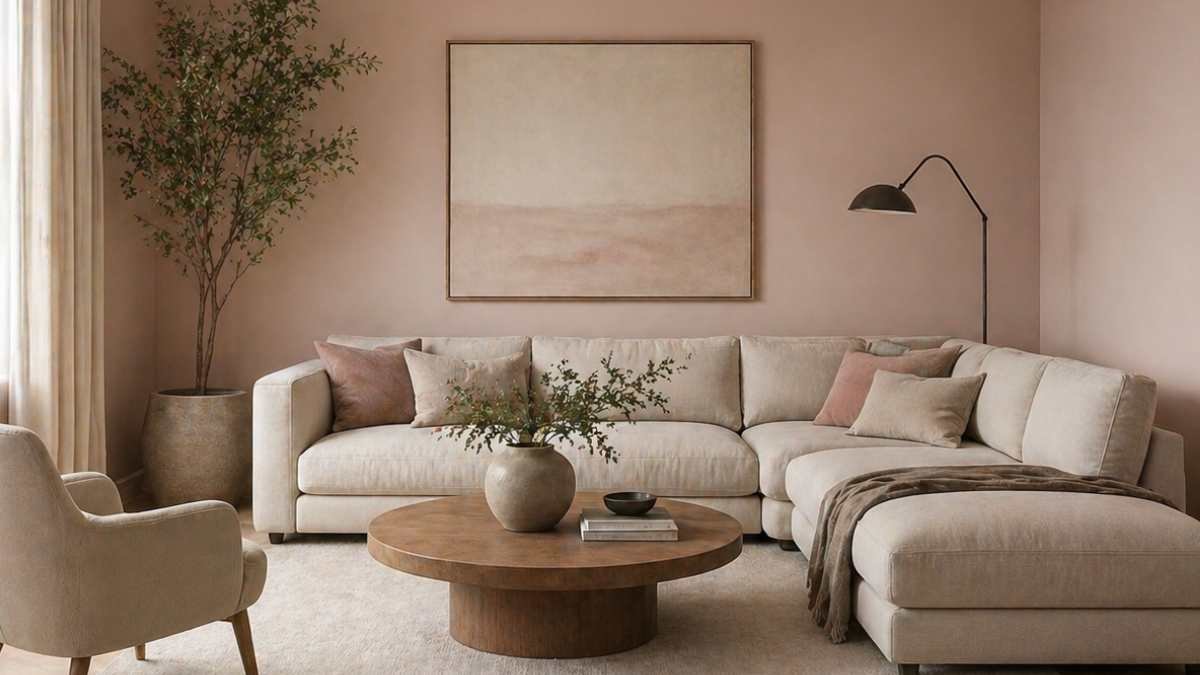

The color of the walls is not just an aesthetic choice. It is a tool that directly modifies the perception of space. A room can look bigger, taller or more intimate without changing an actual centimeter, just by changing the color.
It’s not a case of “light widens, darkness narrows.” It is a simplification that often leads to mistakes. The real point is to understand how color interacts with light, surfaces and proportions of the room.
When light walls make everything look bigger
Light walls work because they reflect light. This means that the room appears brighter and the surfaces seem to move apart visually. In a small living room, with only one window, using a warm white or a very light beige allows it light to spread better. Shadows are reduced, contrasts are softened and the space appears more open.
But the real effect is achieved when everything is coherent. Light walls, light ceiling and maybe even furniture in similar shades create a visual continuity which eliminates “cuts”. The room no longer has clear boundaries and seems larger. However, if the walls are light but the ceiling is very different or there are strong contrasts with doors and furniture, the effect is reduced.
Dark walls don’t always shrink (if used well)
Dark color behaves differently. Therefore, it absorbs light instead of reflecting it creates depth. In a long, narrow room, for example, using a darker color on the back wall can visually bring it closer. The result is that the space looks more proportional, less “corridors”.
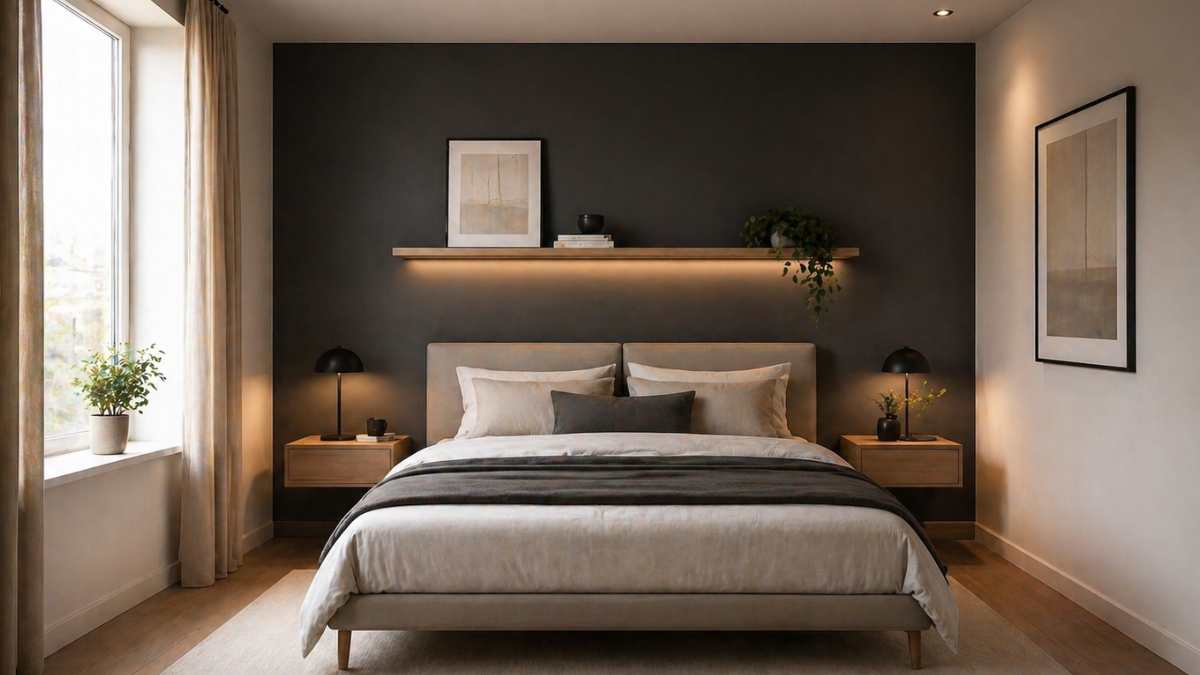
In a bedroom, a dark wall behind the bed creates a ambient effect. It doesn’t really reduce the space, but makes it more focused and defined. If the rest of the room remains open, the contrast becomes a point of balance rather than a boundary. The problem arises when dark color is used on all the walls in an already small and poorly lit room. In this case, yes, the space is closing.
Visually lift the ceiling with color
The ceiling is one of the most underrated elements. Leaving it white all the time can work, but it’s not the only solution. To make a room appear taller, it is effective bring the color of the walls up slightlywithout interrupting it abruptly. Even a few centimeters above the traditional line create a continuity effect that “pushes” the ceiling upwards.
Another solution is to use a very similar shade between the walls and the ceiling. When the contrast disappears, it becomes difficult to perceive the exact point where the walls end and the height seems greater. Conversely, a very dark or very detached ceiling visually lowers the space.
Enlarge or narrow a room with a single wall
You don’t have to paint the whole room to get an effect. Even a single wall can change the proportions. If you want to visually enlarge a narrow space, it is useful to keep the side walls light and work on the back. If it remains light, the room seems larger. If it gets darker or more intense, shortens and becomes more balanced.
In a square room, however, using the same color on all walls creates uniformity. Introducing a different wall introduces depth and breaks the static.
The role of light in the final result
Color never works alone. The light completely changes the effect. A light wall in a dimly lit room can still look dull. A dark wall, if well lit, can result elegant and deep.
Natural light is what makes the biggest difference. A south-facing room can offer more intense colors without losing brightness. A north-facing room needs warmer shades to avoid the cold effect. Artificial light also has an impact. A warm light it enhances soft and ambient colors, while too cold light can make everything stiffer.
The most common mistakes
Using white believing that it always solves everything is one of the most common mistakes. If it is not accompanied by good light and a coherent choice of furniture, it can look flat. Choosing dark colors without considering the available light also leads to closed and lifeless spaces. Another mistake is creating too much contrast between the walls, ceiling and details. Any visual interruption reduces the perception of continuity.
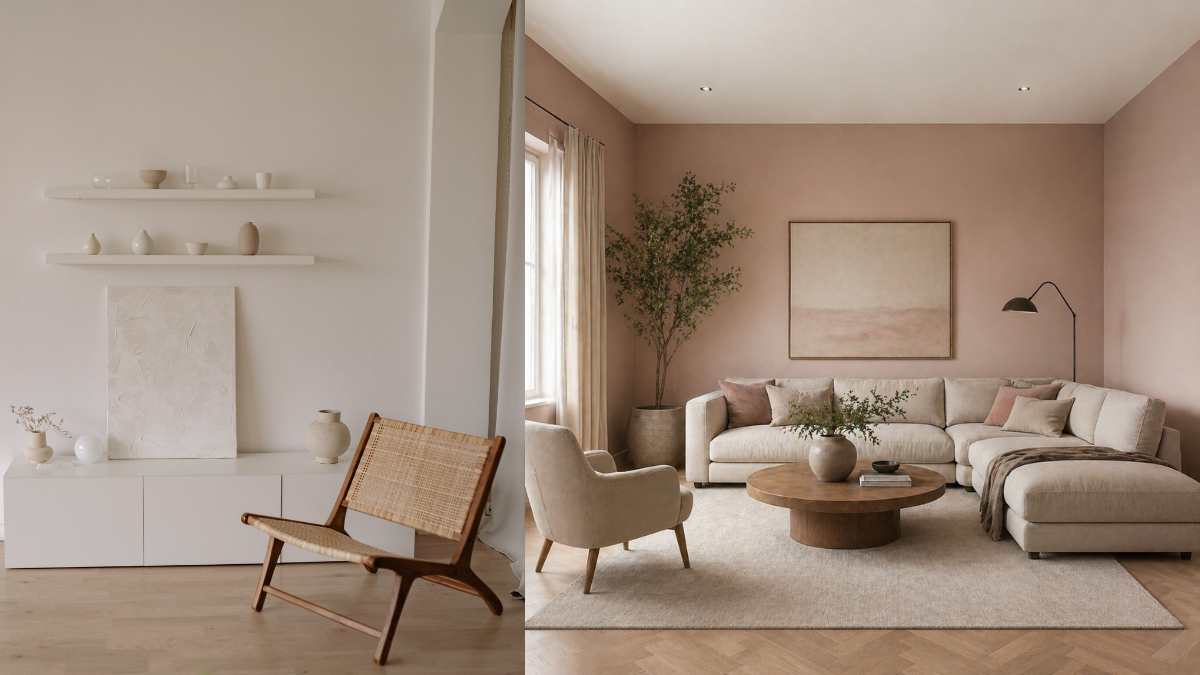
When color really changes the space
Color works when it is consistent with the shape of the room and the light passing through it. It’s not about choosing a pretty shade, but about use it in the right place. When this happens, the room really changes. Not because it grows, but because it reads differently. And often just one wall is enough to achieve an effect that looks much more complex.



