
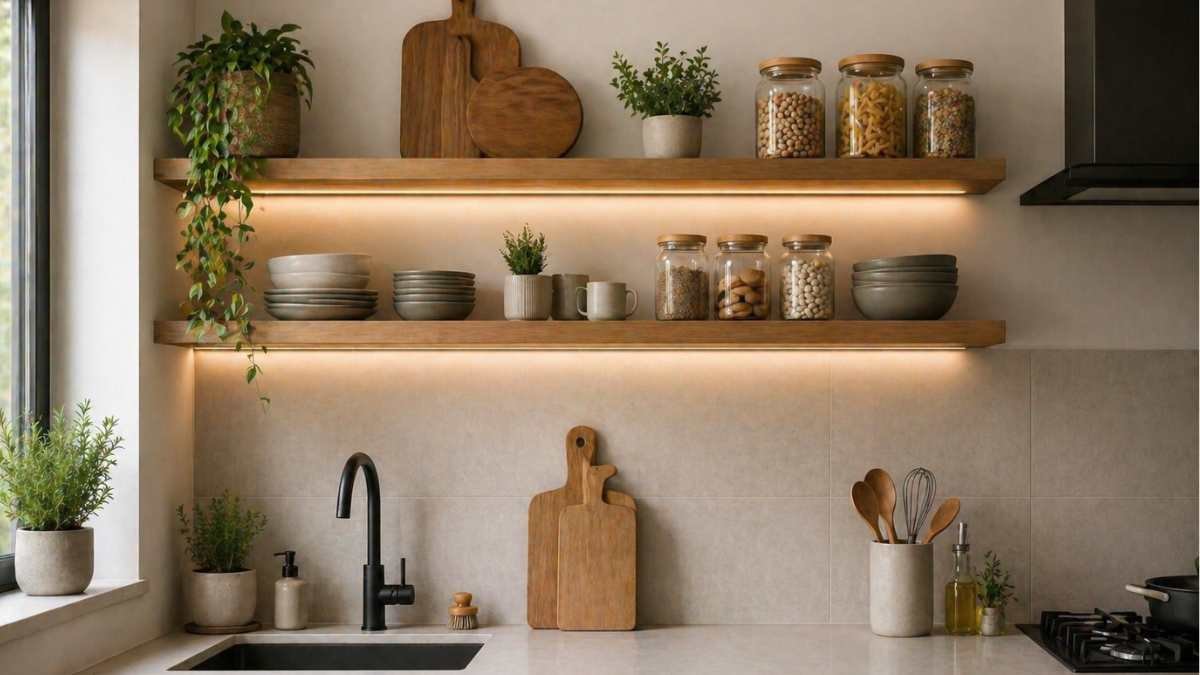

Shelves in the kitchen seem like a simple choice. They are assembled, filled and immediately become part of the environment. The problem is that they are often placed without precise logic, following more aesthetics than actual use. The result can be seen after a few days: objects that are difficult to reach, spaces that are inconvenient to use or shelves that interfere with the desktop.
The difference between a shelf that works and one that causes annoyance is almost always one height issue. There is no universal measurement that applies to everyone, but there are precise proportions that avoid mistakes and make cooking really more practical.
The distance from the desktop is the most sensitive point
The space above the kitchen counter is where mistakes are most often made. If the shelf is too low, it interferes with daily movements. Preparing food, using small appliances or even putting something down becomes uncomfortable. However, if it is too high, it completely loses its function. Items become difficult to obtain and you end up using them sparingly.
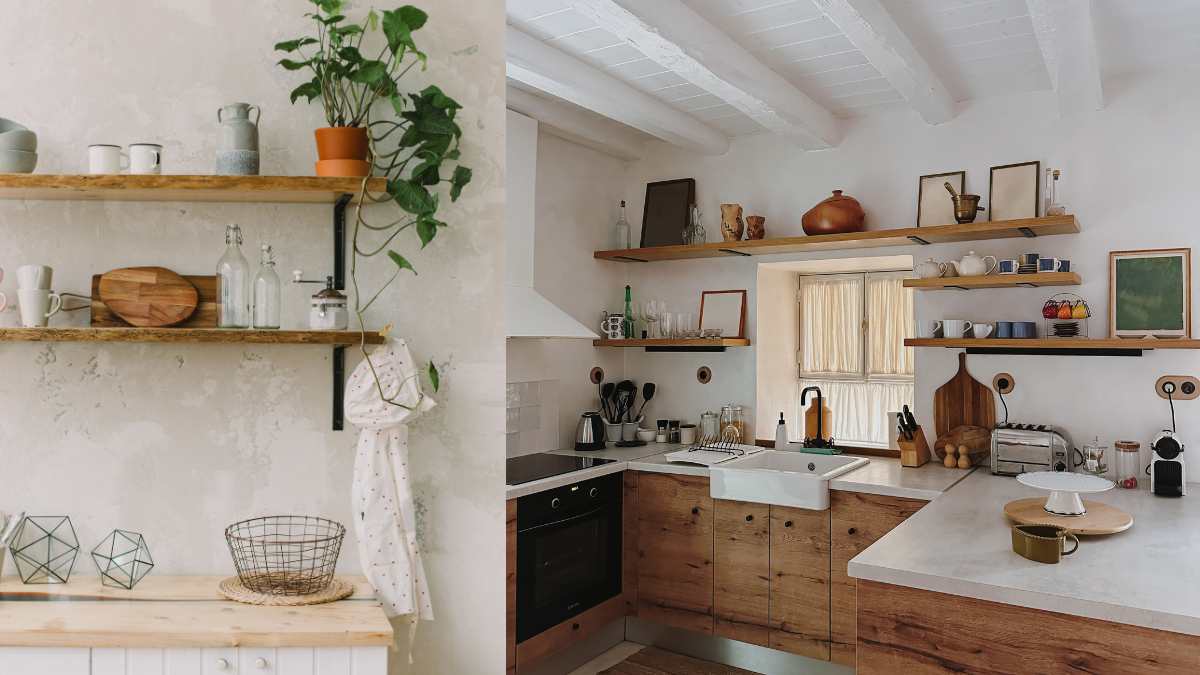
THE The most balanced distance is between 45 and 55 centimeters from the desktop. In this space, the shelf remains accessible without being an obstacle. It is a size that allows you to insert vases, plates or small appliances without compromising freedom of movement. In a typical kitchen with a counter about 90 cm from the ground, this means that the shelf is between 135 and 145 cm. It is a height that works in most cases, but should always be adjusted to the actual height of the person using the kitchen.
Above the sink and burners even more attention is needed
There are areas where the shelf needs to be studied even more precisely. Over the sink, for example, water and splashes can become a problem. A shelf that is too low gets dirty easily and requires constant maintenance. Here it is better to go up slightly, holding one distance closer to 55–60 cm. That way it remains usable, but less exposed.
Above the fires, however, the situation changes completely. Heat and steam make this area less suitable for low shelves. If there are, they should be placed higher and accommodate only objects that are not afraid of heat, such as decorative containers or less used elements.
The depth should be consistent with the height
Another common mistake is not taking into account the depth of the shelf. The deeper a shelf is, the higher it should be placed. If it is too low and deep, it invades the visual space and becomes cumbersome to even look at. For everyday use, one depth between 20 and 25 cm it is more than enough. It allows you to insert plates, vases or small containers without creating a heavy visual block. If you increase the depth, for example to create a more confined space, it is best to increase the height as well to maintain balance.
Objects determine height, not the other way around
A shelf works when it is designed around what it should hold. You don’t assemble it first and fill it later. If the idea is to use it for everyday vases, it needs to be easily accessible without standing on tiptoes or using a chair. However, if it needs to accommodate less used items, it can be placed higher.
A concrete example: a shelf with jars of pasta, rice or coffee should fit just above eye levelso that they are taken with a natural gesture. A shelf with decorative items or spare containers can sit higher without causing problems.
Visual continuity makes the kitchen tidier
When there are several shelves, their height must be fixed. Minor differences may seem negligible, but visually they create confusion. Two or three aligned shelves, with regular spacing between them, create a much cleaner effect. And here, size matters: a space between 25 and 35 cm between one shelf and another allows you to insert items without compressing the space. If the distances are too short, the shelves become useless. If they are too wide, their compactness is lost.
The mistakes are immediately visible
Install a shelf that is too low above the desktop is the most obvious error. It is immediately noticeable because it interferes with every gesture. Another mistake is to place it too high just for aesthetics. In this case it ceases to be a useful space and becomes only decorative. Ignoring the ratio between height, depth and actual use also leads to impractical results. A shelf should first of all be comfortable.
A well-placed shelf integrates into the kitchen without being too noticeable. Objects are accessible, the desktop remains free and the space looks more organized. It’s not about style, it’s about size. And when the proportions are right, even a simple solution like a shelf really changes the way you use the kitchen.



