
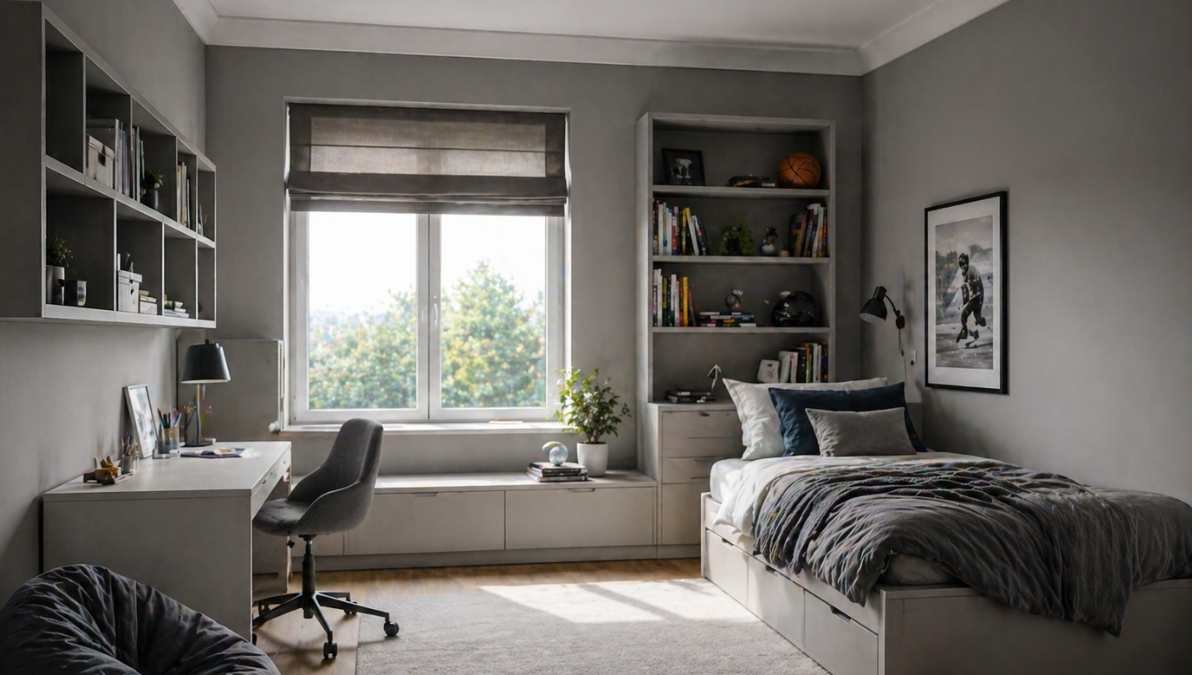

When designing a child’s bedroom, one of the main goals is to create an environment that promotes calm, safety and well-being. It’s not just about aesthetics, it’s about balance: a space in which the little ones can play, concentrate and above all relax without being constantly stimulated or, on the contrary, “cooled” by an unwelcoming atmosphere. This is precisely why the choice of colors becomes central. In recent years, cold gray has been adopted more and more often, because it is perceived as elegant and modern, but it is not always suitable for a room designed for children.
Cold gray, especially in the very light shades tending towards blue, has a precise characteristic: it reflects light in a neutral way, but without heat. It can work in a living room or office, because it communicates order and visual cleanliness. In a bedroom, however, it can create the opposite effect from the desired one. The environment seems composed, but also distant, not much of an environment. And this, over time, affects children’s perception of space, who tend to feel less “comfortable” in a room that does not return heat.
Because cold gray can be a bad choice
The problem is not the gray itself, but its temperature. Cold shades, if used dominantly, can make the space more rigid and less emotionally stimulating. In a bedroom this translates into an environment that does not accompany moments of relaxation, but makes them more difficult.
In addition, cold gray has another little-studied effect: tends to flatten contrastsespecially if combined with white furniture or neutral surfaces. The result is a visually tidy but depthless room where everything looks uniform. For a child, this can mean less visual stimulation and an overall sense of monotony.
Light also plays a decisive role. In a room with little exposure or with poorly calibrated artificial lighting, cool gray can emphasize the feeling of “fixed shadow”, making the environment less welcoming, especially in the evening hours.
Colors that really work in the bedroom
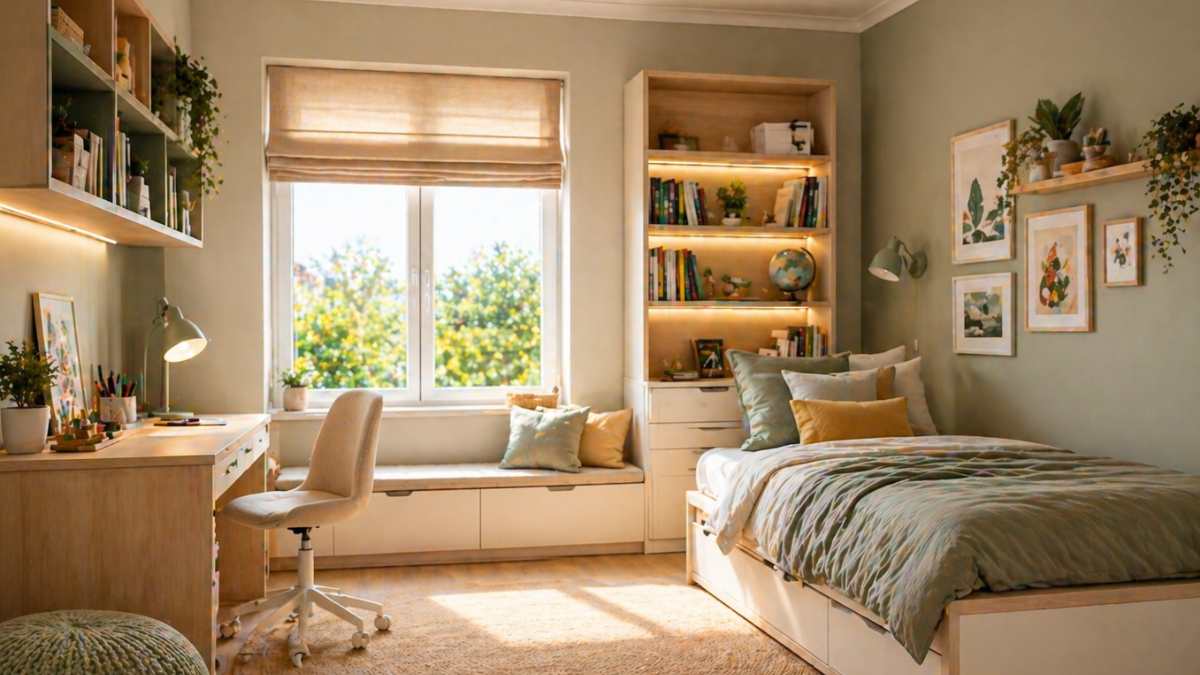
To achieve a relaxing but not dull atmosphere, it is necessary to focus on shades that have an inherently warm or natural component. You don’t need bright or intrusive colors, but shades that can convey balance and depth. Among the most effective solutions stand out warm beige and soft dove gray, which act as a neutral but extremely welcoming base for any type of furniture.
Equally valid are dusty greens or sage, able to promote a sense of deep calm connected to the natural world. If you prefer more classic shades, dusty blue (provided it doesn’t have frosted edges) is much more relaxing than traditional blue, while dusty pink or soft peach manage to add that much-needed warmth without ever being overwhelming or tiring. These shades have the great advantage of not tiring the eyesgently accompanying children in the various phases of the day, from the dynamism of play to the quietness of sleep.
How to use gray without making mistakes
If gray remains the favorite color for a style question, it is not mandatory to eliminate it, but it is necessary to choose it more consciously. A warm gray, slightly beige (so-called “greige”) can work much better compared to a cold and sterile hue.
To prevent the color from becoming too present, you can choose to introduce cool gray only in small, controlled doses, perhaps limiting it to a single piece of furniture, a secondary wall that is not the main one in front of the bed, or simply in the fabric details. In this way the color does not dominate the space, but contributes to the overall visual order without cooling down the room’s atmosphere too much.
Finishes and materials that make the difference
In addition to the choice of color, the consistency of the surfaces also has a significant impact on the final result. Walls that are very smooth and opaque, if combined with cold shades, emphasize the flat and impersonal effect of the environment. To overcome this problem, in the bedroom it is better to choose light material finishes or paints that have a soft reflective component, capable of receiving light rather than rigidly rejecting it.
In this context, natural materials become the best allies. Wood, especially in light and natural spirits, makes it visually balance any color and instill a sense of protection direct. Adding wooden elements, whether it’s flooring or furniture details, is the surest strategy to make even the most minimal room inviting.
Furniture that helps create balance
A successful bedroom results from a harmonious dialogue between walls and furniture. Furniture should never have overly square or rigid lines, instead favoring softer shapes incorporated with natural fabrics such as raw cotton and linen. The use of light-colored carpets is necessary for the physical and visual “warming” of the floorwhile light curtains capable of filtering natural light make the volumes less clean and more relaxing. Even small accessories, such as soft cushions or wall decorations with different textures, help to break the color monotony and create that authentic welcome that every child is looking for in their space.
The real goal: a child-friendly room
The bedroom should not only be beautiful, but viable and reassuring. An environment that is too cold may seem tidy, but it is not relaxing. On the contrary, a balanced room, with well-chosen colors and warm materials, accompanies children at different times of the day, helping them to feel comfortable.
Cool gray may seem like a style choice, but if used carelessly, it risks taking away from exactly what is most needed in a bedroom: warmth, comfort and a feeling of genuine welcome.



