
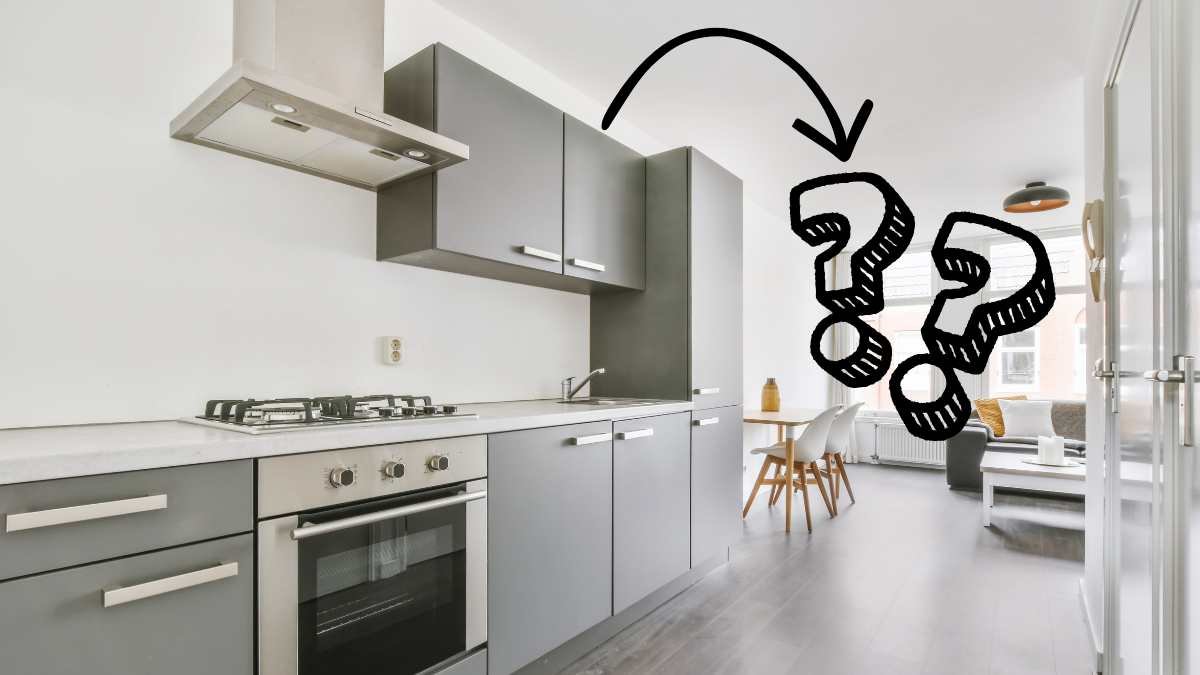

In kitchens with wall units that do not reach the ceiling there is always this empty space. Twenty, thirty centimeters of nothing between the furniture and the ceiling. It usually ends up with dust, a few forgotten boxes, at most a wicker basket bought with the best of intentions. For years he was simply ignored, treated as a architectural defect to be hidden or not examined.
Today this space has become one of the most discussed details in kitchen furniture. And not because someone has found a great way to fill it, but because many people have he stopped wanting to fill it completely.
Short cupboards or no cupboards at all: what’s going on
The kitchen with traditional wall units, those that reach eighty or ninety centimeters in height leaving a significant gap towards the ceiling, is still the most common solution in Italian apartments. It is economical, practical, familiar. But visually it creates a kitchen divided into two zones: the lower one filled with elements, the upper one hanging in the void.
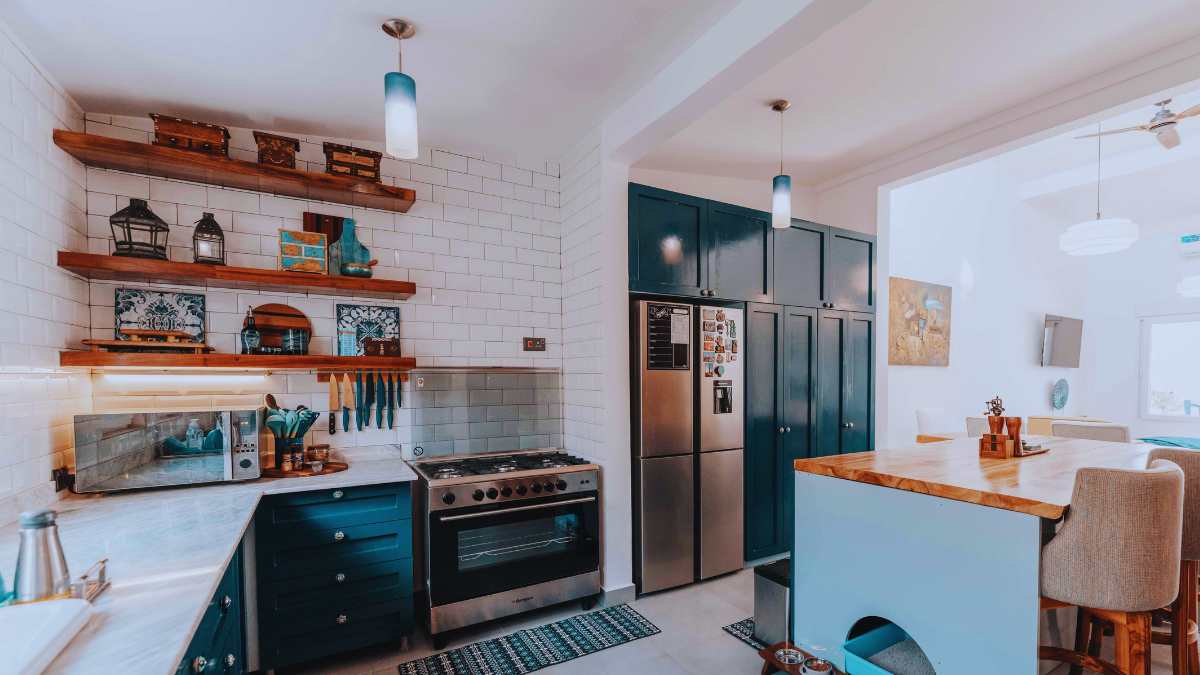
In recent years, two opposing alternatives have been widely disseminated. The first is i full height wall unitswhich reach up to the ceiling and completely close the space. The second, more radical, is remove them completely or reduce them to a minimumleaving the wall free and working mainly on the bottom.
Boffi and Arclinea, two of the most influential references in the field of project kitchens, work frequently kitchens with almost no cabinetscompensating with deep drawer units, fitted columns and very slim open shelves. The result is a kitchen that looks larger, more airy, where the eye flows without interruption.
The problem of the gap in the middle
The space above traditional wall units is not neutral. In a small kitchen or an open space where the kitchen is visible from the living room, this space becomes a active element in the perception of the room. And almost never in a positive sense.
If the wall units are dark, the contrast with the light ceiling further enhances the sense of weight in the upper part. If the cabinets are clean, the vacuum above them still creates a discontinuity that the eye registers as a disturbanceeven when everything else is perfect.
This is why many interior designers, when working in an existing kitchen without the possibility of replacing the furniture, recommend first of all faced this gap. Not necessarily to fill it, but to consciously decide what to do with it.
Solutions that really work
Bringing the wall units up to the ceiling is the most obvious solution. Requires work on existing furniture, but it completely transforms the perception of the kitchen. The space seems higher, not lower, because the vertical continuity leads the eye upwards instead of blocking it halfway up the wall. IKEA with the Metod series allows you to do this at low cost by adding extra elements on top of the existing wall units.
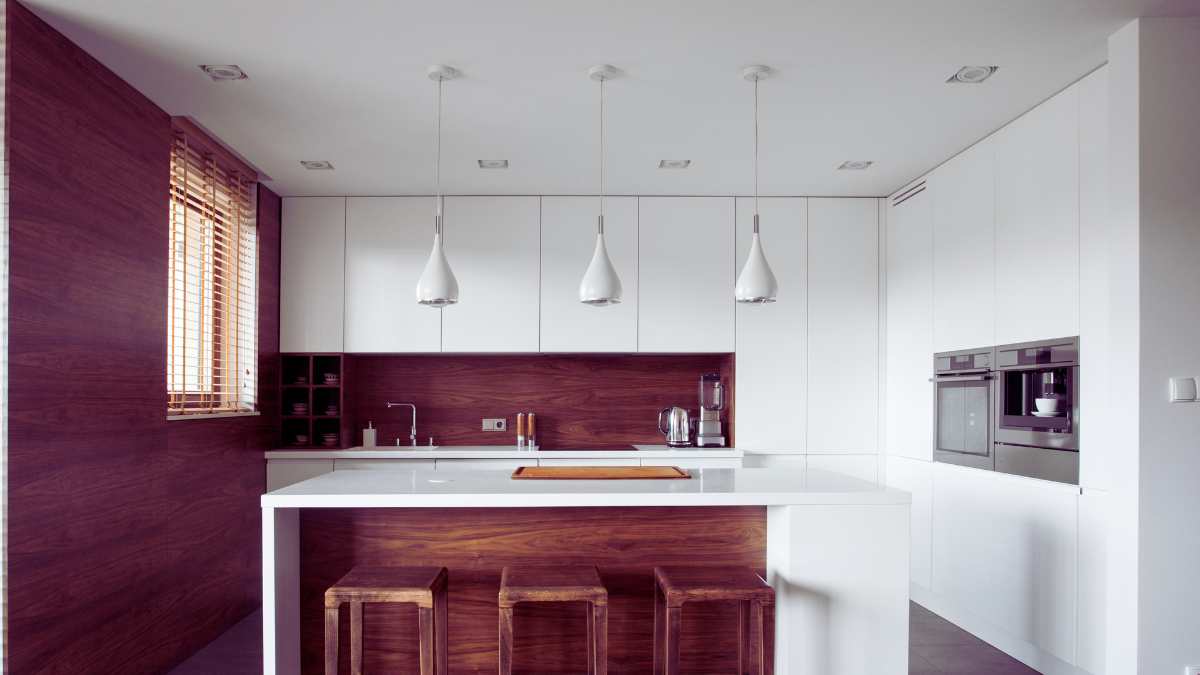
Those who do not want to interfere with the furniture often work on the color. Paint the wall above the cabinets the same color as the ceilinginstead of leaving it in the general color of the walls, it visually reduces the space and makes it look like part of the ceiling. It’s a simple, almost invisible trick, but it works.
I open shelves as an alternative to traditional wall units they prevail even in the most ordinary kitchens, not only in designer kitchens. A slim and well-proportioned solid wood or painted metal shelf takes up the same space as a closed wall unit, but it does not weigh down the wall. It allows you to see what’s on top, requires a lot of attention to the arrangement of items and gives the kitchen a character that closed cabinets rarely manage to convey.
The gap above the furniture is not a problem that needs to be solved quickly. It’s one of those details that, with care, can change the whole atmosphere of the kitchen without moving a single piece of furniture.



