
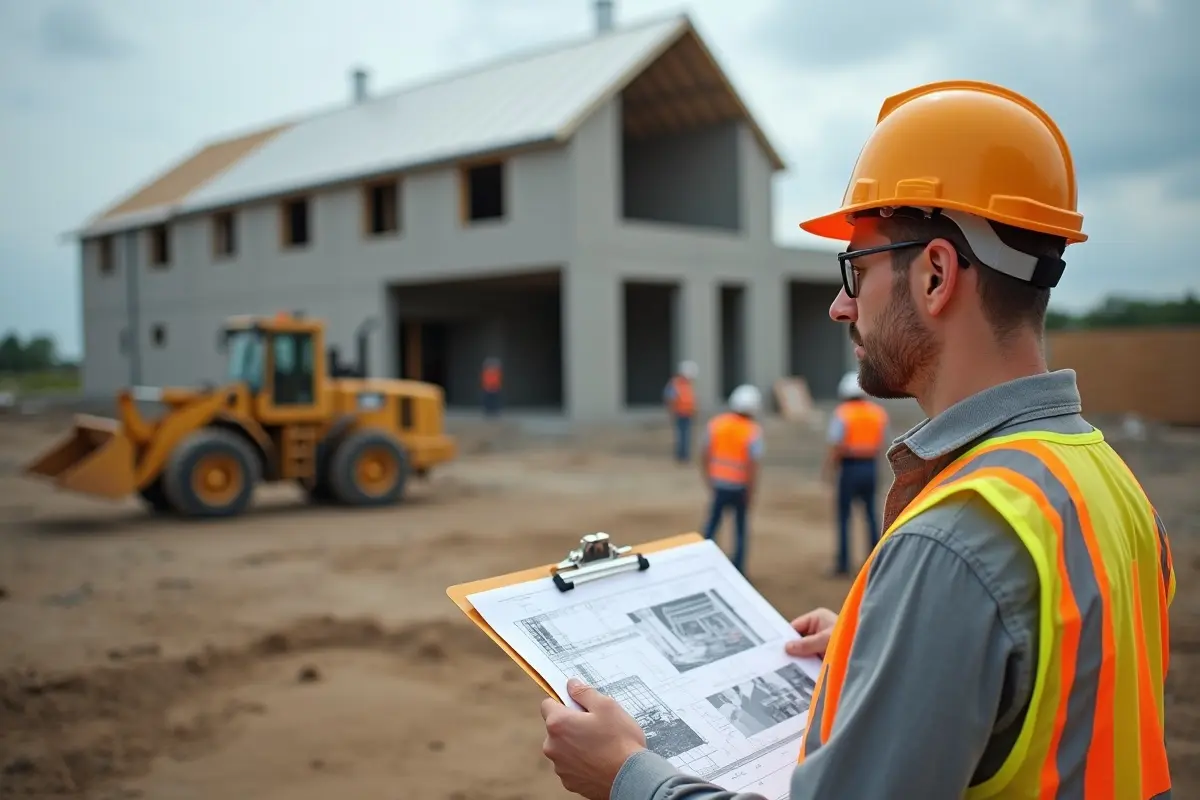

The majority of project managers are overwhelmed with the amount of data they have. Whether it’s schedules, submittals, RFIs or punch lists, data is constantly being generated. But the issue is not the volume of data. It’s that most of it doesn’t provide real-time information about what’s currently unfolding on the construction site in a digestible format.
Virtual site walks reduce supervision time without cutting supervision
One of the most practical changes to the way PMs manage active sites is the move to regular “virtual site walks” using high-resolution images. Instead of driving two hours to check a feed or confirm that a subcontractor hit a milestone, a manager can check a set of time-stamped photos or drone footage from his office.
This does not replace physical site inspections. It changes their purpose. When you show up, you’re there for decisions and quality checks – not just to confirm that the job was done.
Sequential imaging is key here. Taking the same angles at regular intervals creates a visual timeline that is searchable, shareable, and much harder to dispute than anyone’s written account.
A visual file is the backup copy of your dispute resolution
Disputes between subcontractors regarding milestone completion occur more often than project owners would like to believe. For example, if pouring concrete or applying waterproofing is disputed, the dispute often boils down to “your word against my word” – or more accurately, your written logs versus my written logs.
A photo or video recording can resolve such disputes more quickly and with less damage to intercompany relations. High-resolution images become the sole source of truth – not because someone planned to have an argument, but because they documented with discipline.
In particular, however, photography is important for recording work items to be covered. Structural connections, waterproofing membranes, under-slab utilities, etc. are not all visible when the drywall is installed or the concrete is poured. A photo taken before the next job covers an item is the only way to demonstrate compliance or quality without demolition.
Drone data and BIM are more useful together than separately
BIM models are created based on specific conditions. The drawing shows how the construction is supposed to look. Aerial photogrammetry taken via drones shows how the construction actually appears at any stage of construction.
By comparing these two aspects, like live drone data with the BIM model, a project manager considers one construction site time delay it can detect deviations in the actual scenario which can be corrected in time at lower cost. For example, a column offset by six inches, a wall line not according to the design, the wrong quality, etc. are the kind of issues that lead to costly rework if found in later stages of construction.
Inaccurate data and ineffective website communication lead to reprocessing of approximately $31.3 billion worldwide each year (FMI Corp). Most of this repetition can be avoided. The issue is not the lack of technology but the consistent application of that technology to compare the plan with the current scenario.
Long-term progress tracking gives stakeholders something they can actually read
Gantt charts and earned value reporting may work well internally. However, for most investors and clients, it is not easy to digest with little. What they can immediately grasp is the transformation from a clean site to a structural frame to a weathertight facade.
A professional jobsite time lapse compresses months of work into minutes, giving your offsite stakeholders a full understanding of project health without having to interpret a timeline. For milestone reports, investor briefings, or even executive-level reviews, a visual summary like this can deliver the information faster than a status report.
It also becomes a permanent record of the project life cycle, an invaluable resource for as-built documentation, future work and post-project analysis.
Cloud collaboration bridges the gap between the field and the office
Liaison between field crews and office staff is usually responsible for scheduling delays and misunderstandings. Any visual data is only useful if it is available to the right person at the right time.
With cloud-based platforms, photos, drone video, and images with signs and notes are updated in real-time, and you can be sure that a project manager on a different site or in a different city can see what a foreman is looking at in minutes. Decisions are made faster. No problem is left unattended waiting for them to enter the email queue.
Making visual documentation a system, not an afterthought
The six methods discussed here are effective because they are continuous, not because they are occasional. For example, a site photo taken once a month will not provide you with the sequential images necessary to detect a frame discrepancy. Drone data collected at significant intervals, but not all the time, will not be able to contribute to a BIM comparison when you need it most.
Visual documentation proves to be a valuable project management solution when you approach it the same way you do planning or budgeting – as a process that happens consistently, not as a one-time activity that occurs when someone decides to take a photo.



