
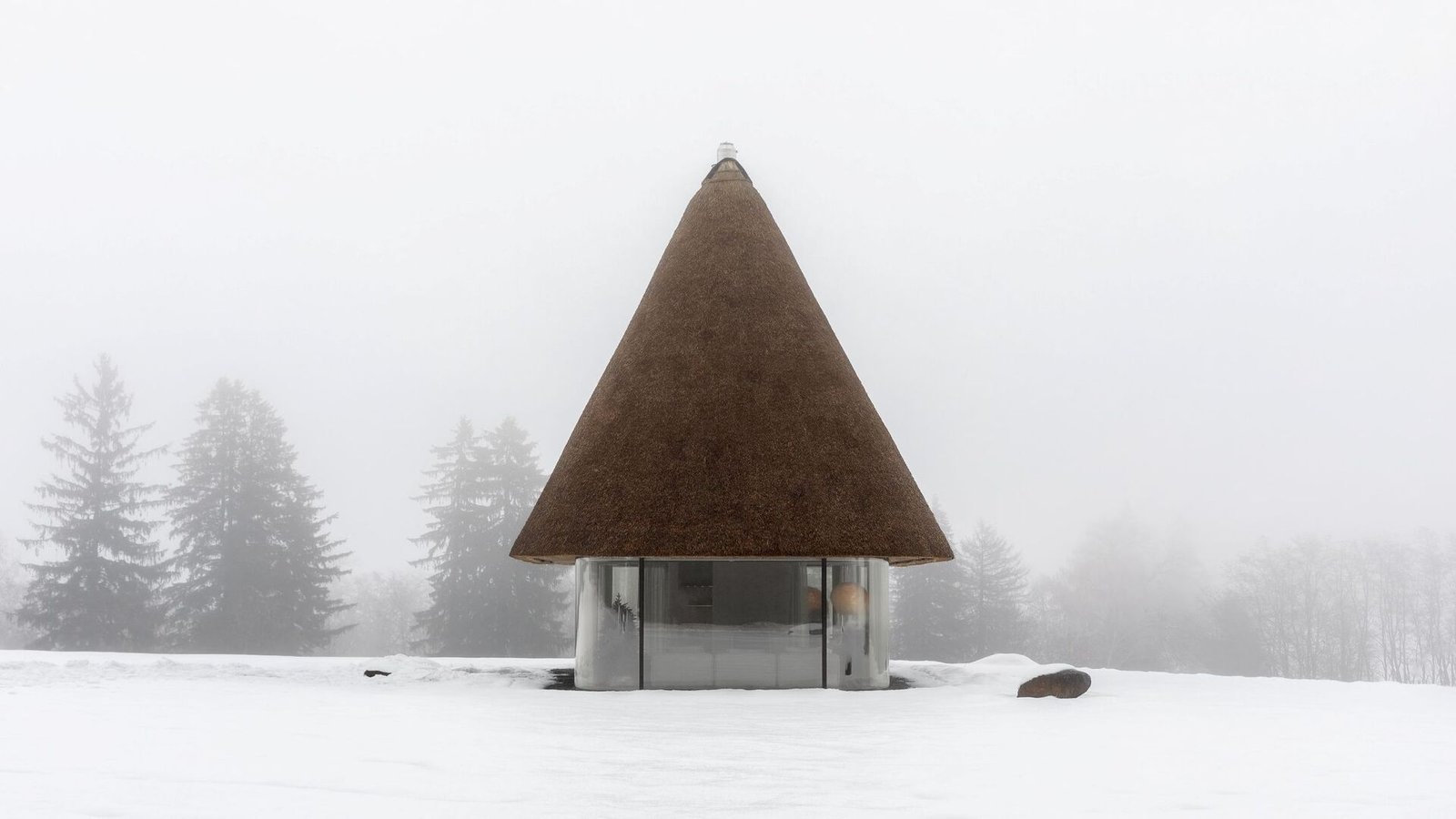

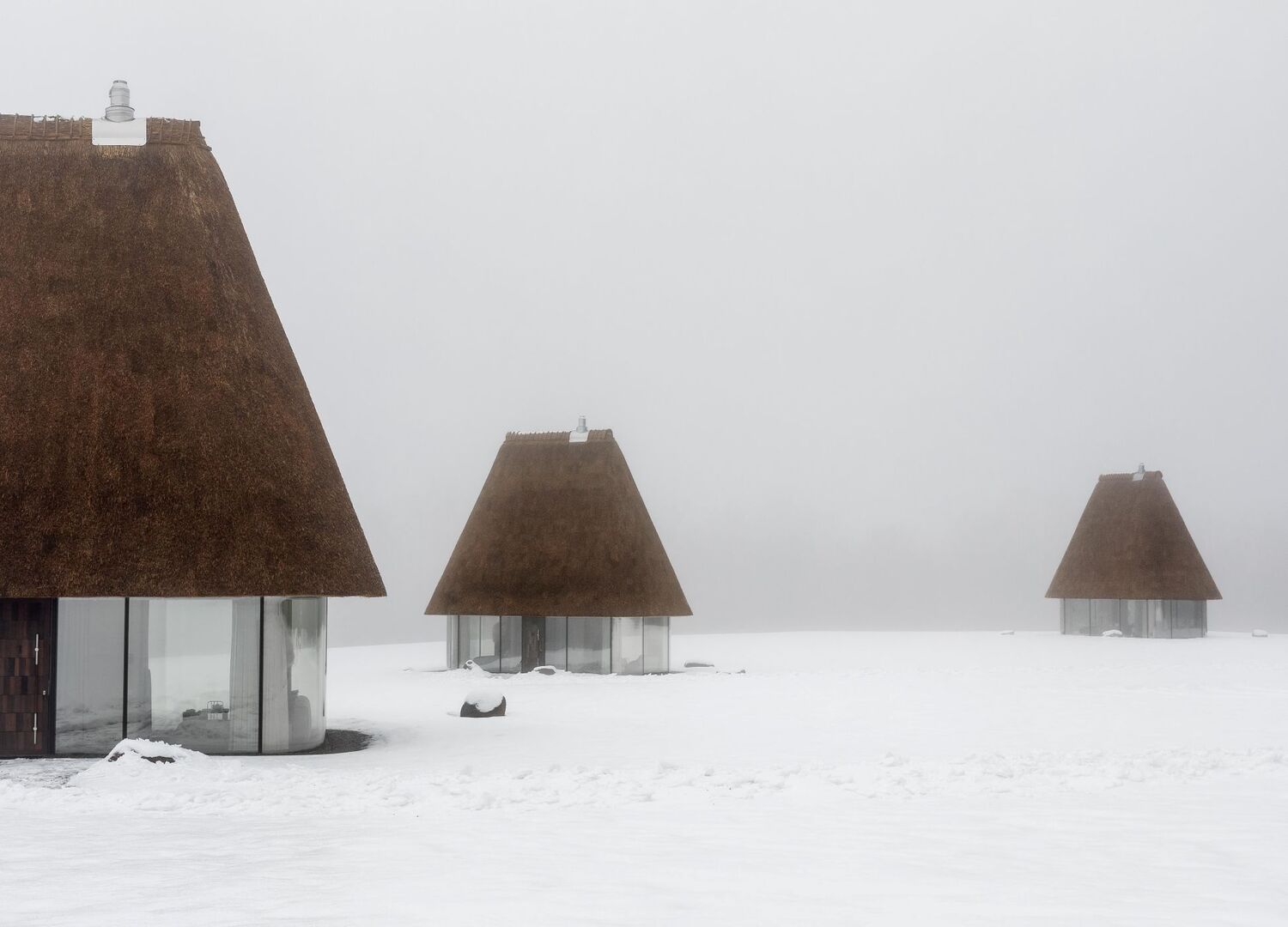
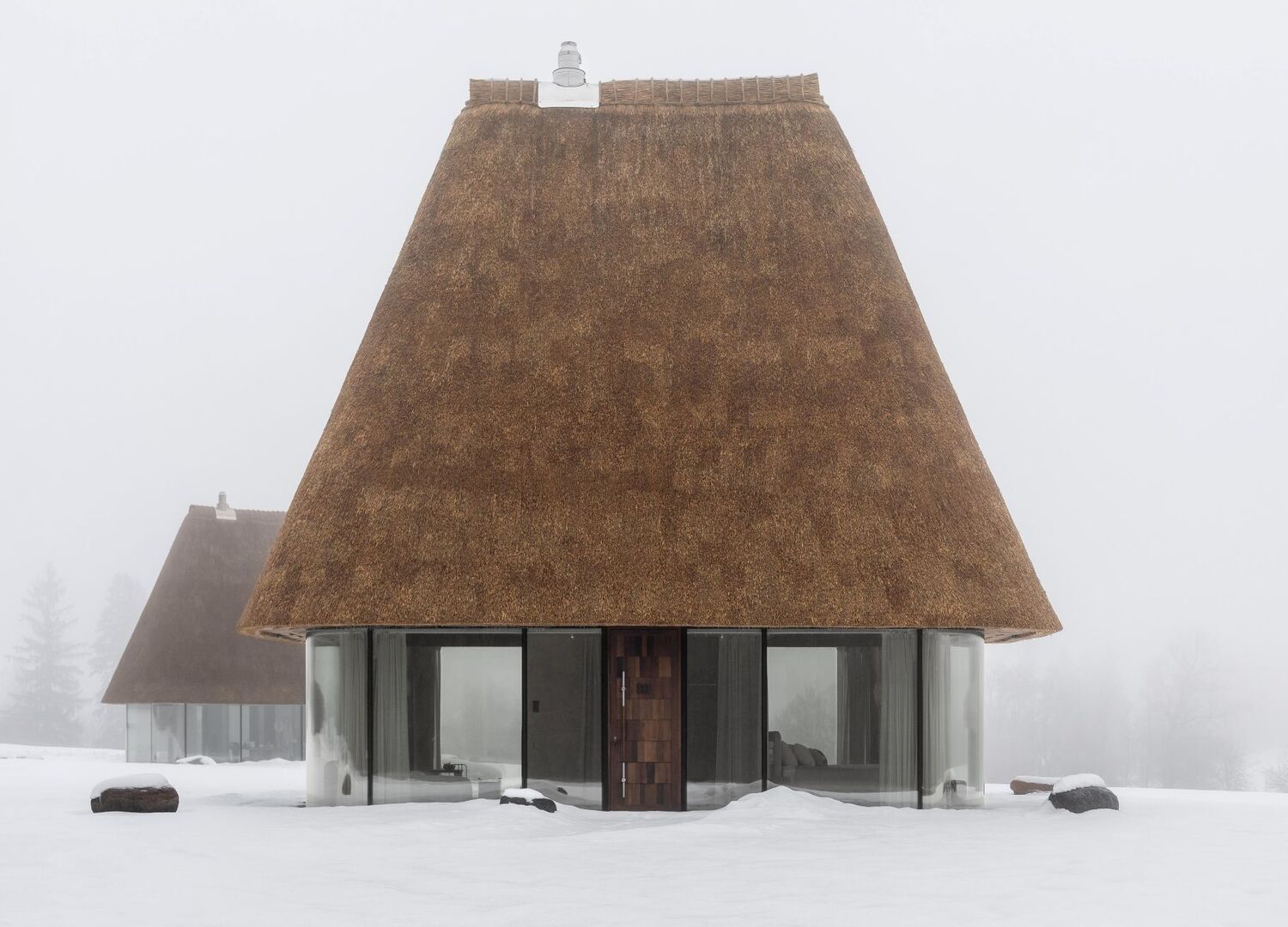
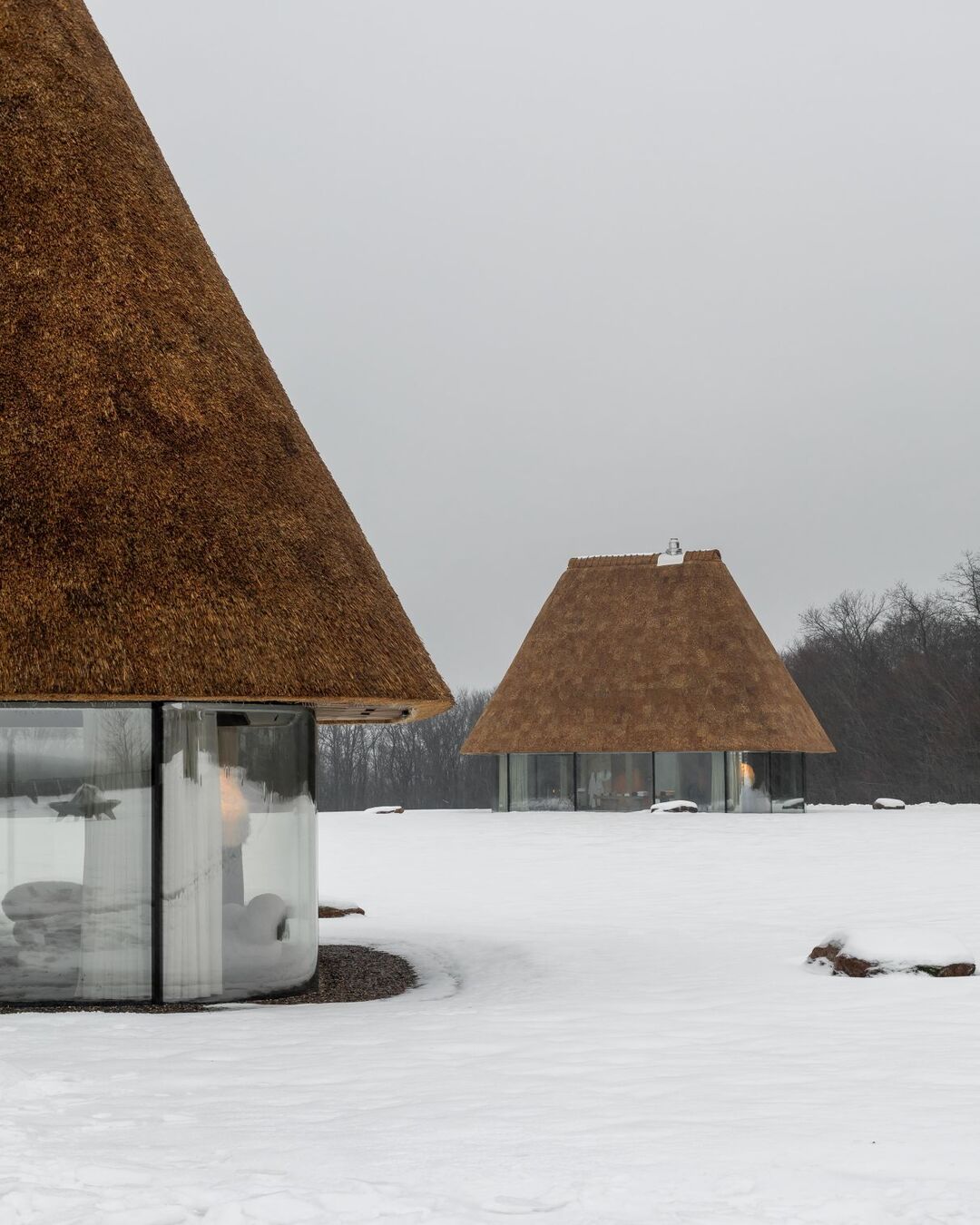
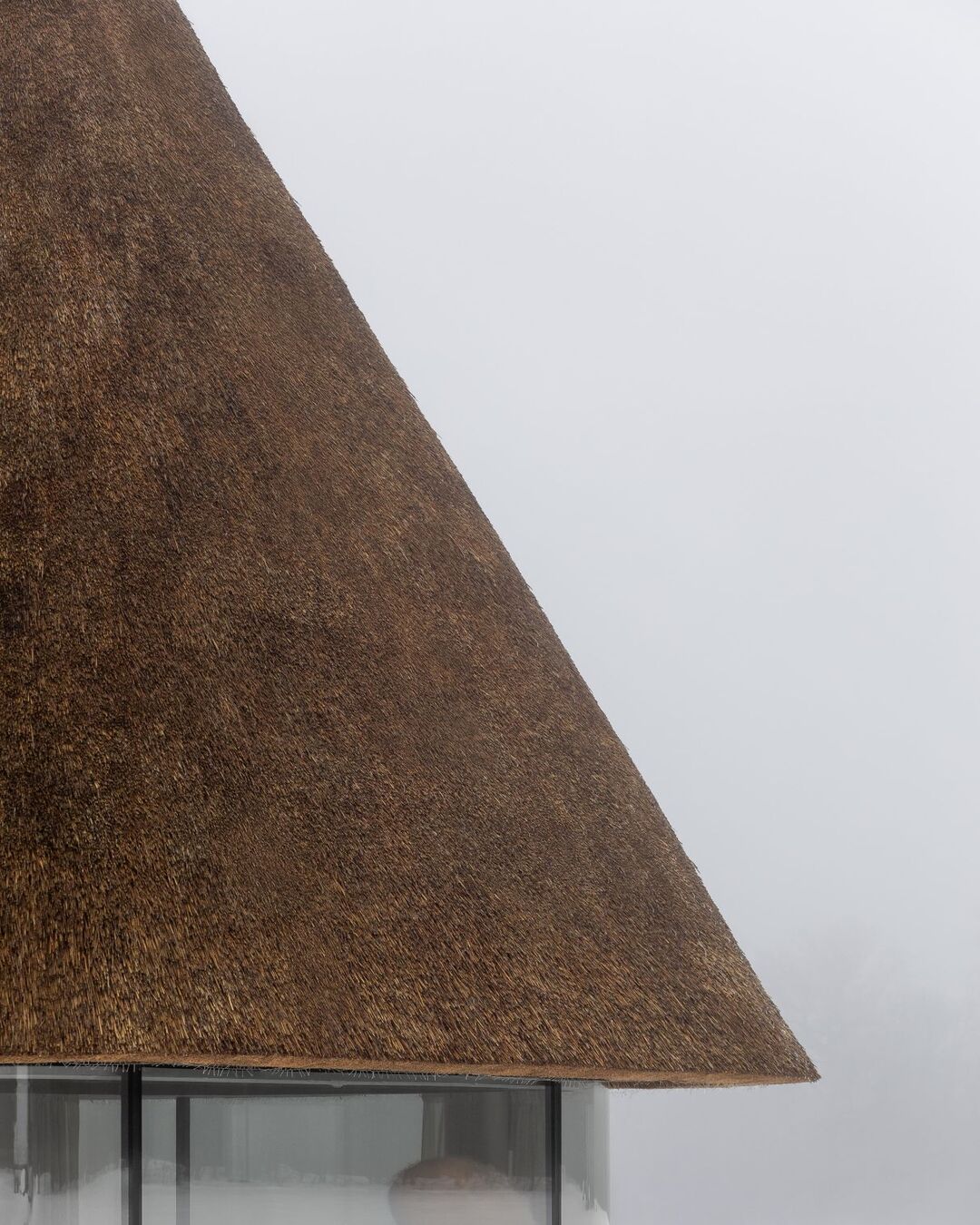
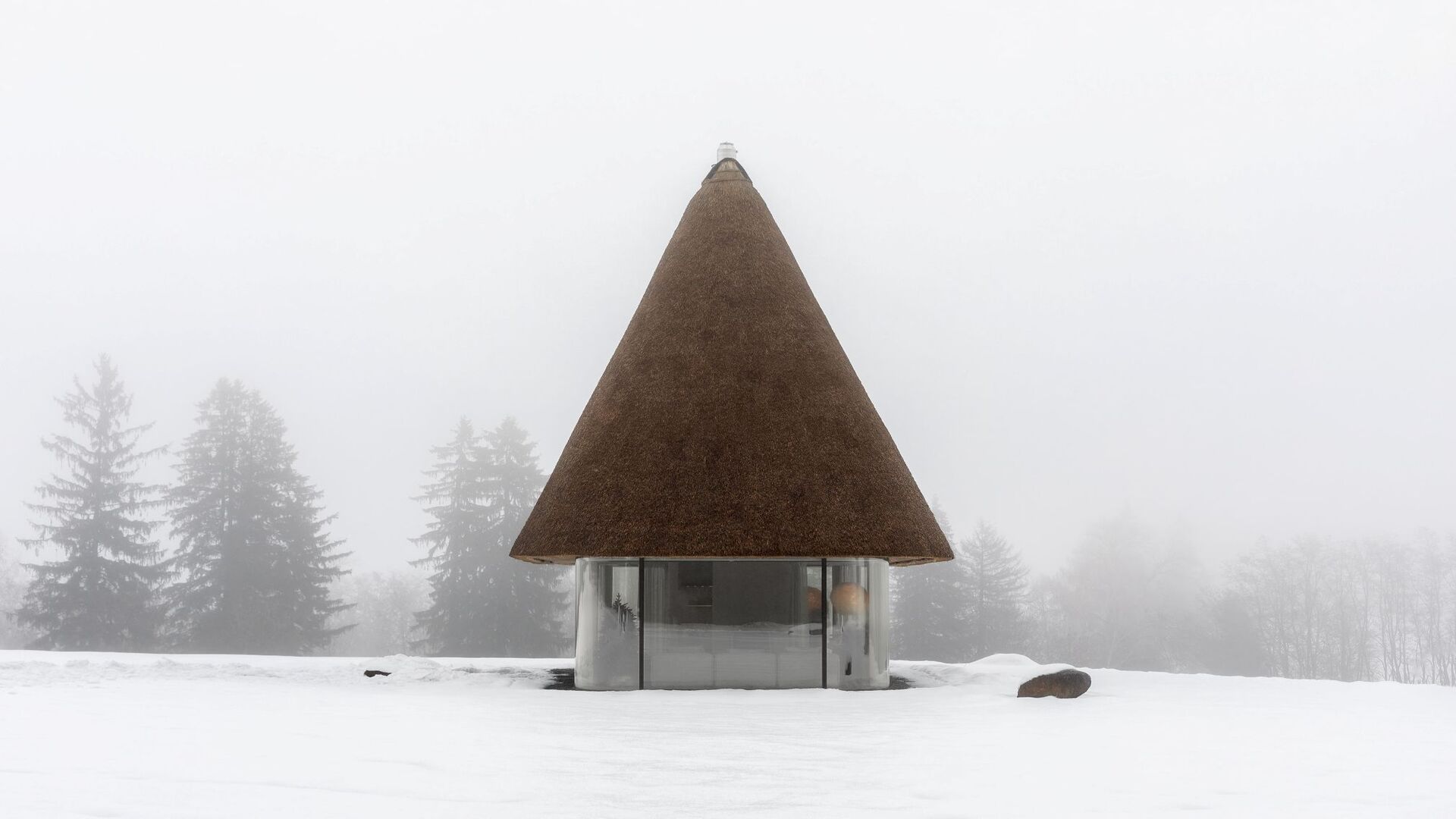
Transforming a historic rural typology into an architecture that is both iconic and disarmingly simple, Under the thatched roof from Ukrainian studio YOD team challenges familiar Western aesthetic frameworks. And it is precisely this unexpected perspective that makes the work so exciting. Located on a private estate in central Ukraine, the project consists of a series of guest houses of approximately 50 sq.m. each, reinterpreting the traditional Hata-Mazanka – the Ukrainian peasant house – through local materials, extensive glazing and a distinctive silhouette that becomes an instantly recognizable architect’s gesture.
The roof line recalls both the tall traditional hat of Ukrainian culture and the shape of a large mushroom emerging from the ground, turning the building into a striking presence in its natural environment.
Under the Reed Roof by YOD Group @ Mykhailo Lukashuk
Under the Reed Roof by YOD Group @ Mykhailo Lukashuk
Under the Reed Roof by YOD Group @ Mykhailo Lukashuk
Under the Reed Roof by YOD Group @ Mykhailo Lukashuk
Under the Reed Roof by YOD Group @ Mykhailo Lukashuk
Under the Reed Roof by YOD Group @ Mykhailo Lukashuk
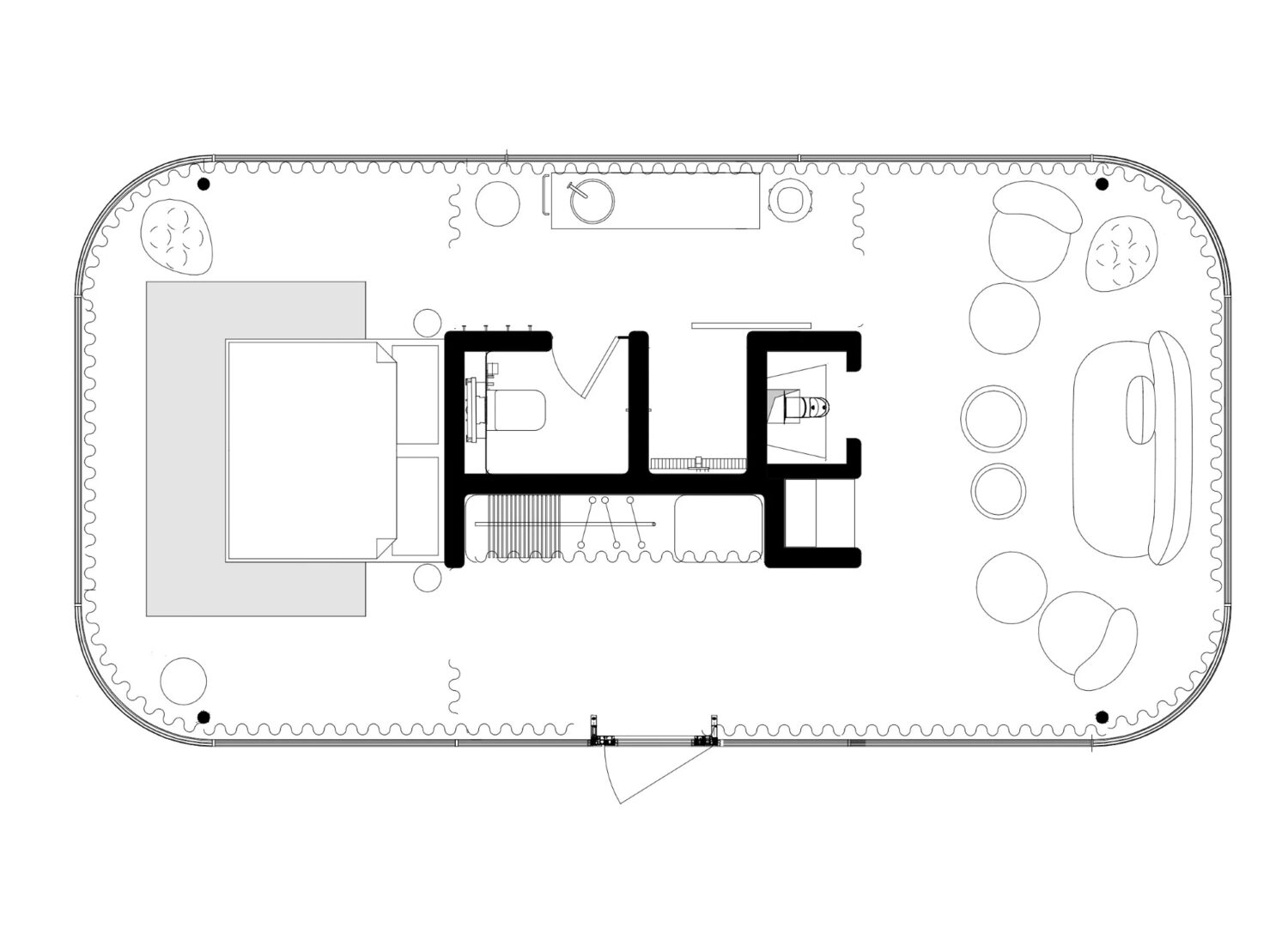
Floor plan Hata-Mazanka @ YOD Group
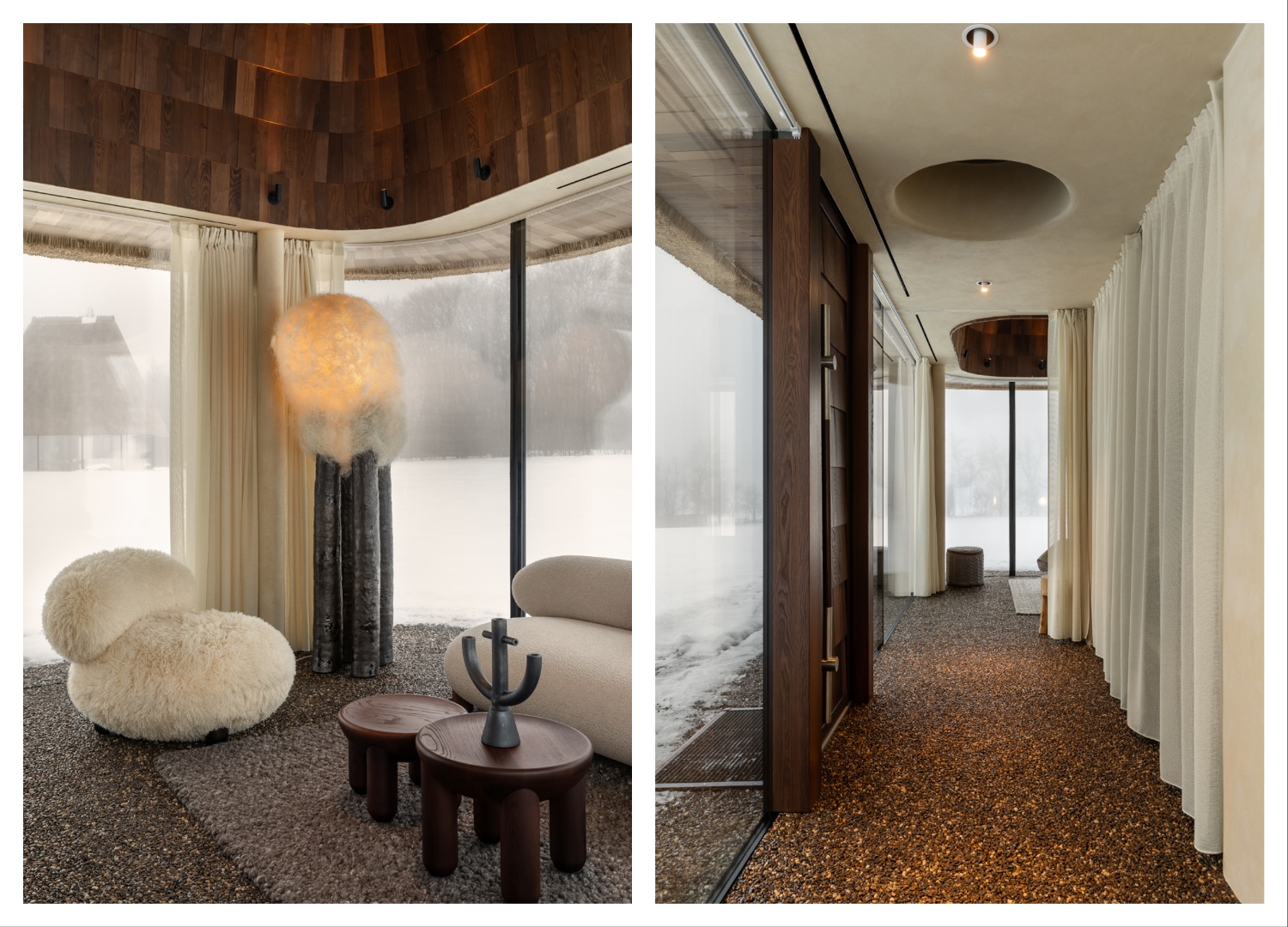
Under the Reed Roof by YOD Group @ Mykhailo Lukashuk
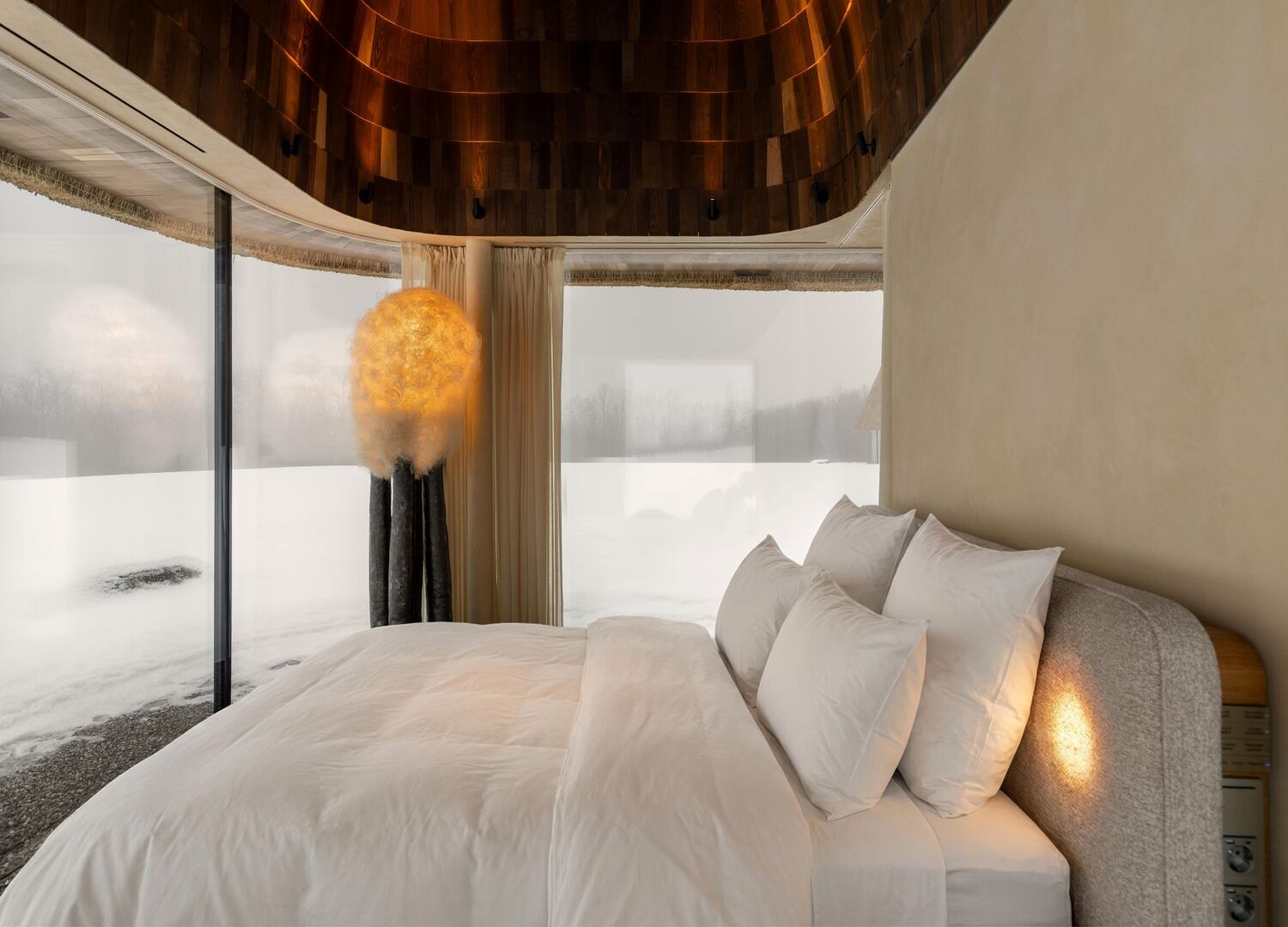
Under the Reed Roof by YOD Group @ Mykhailo Lukashuk
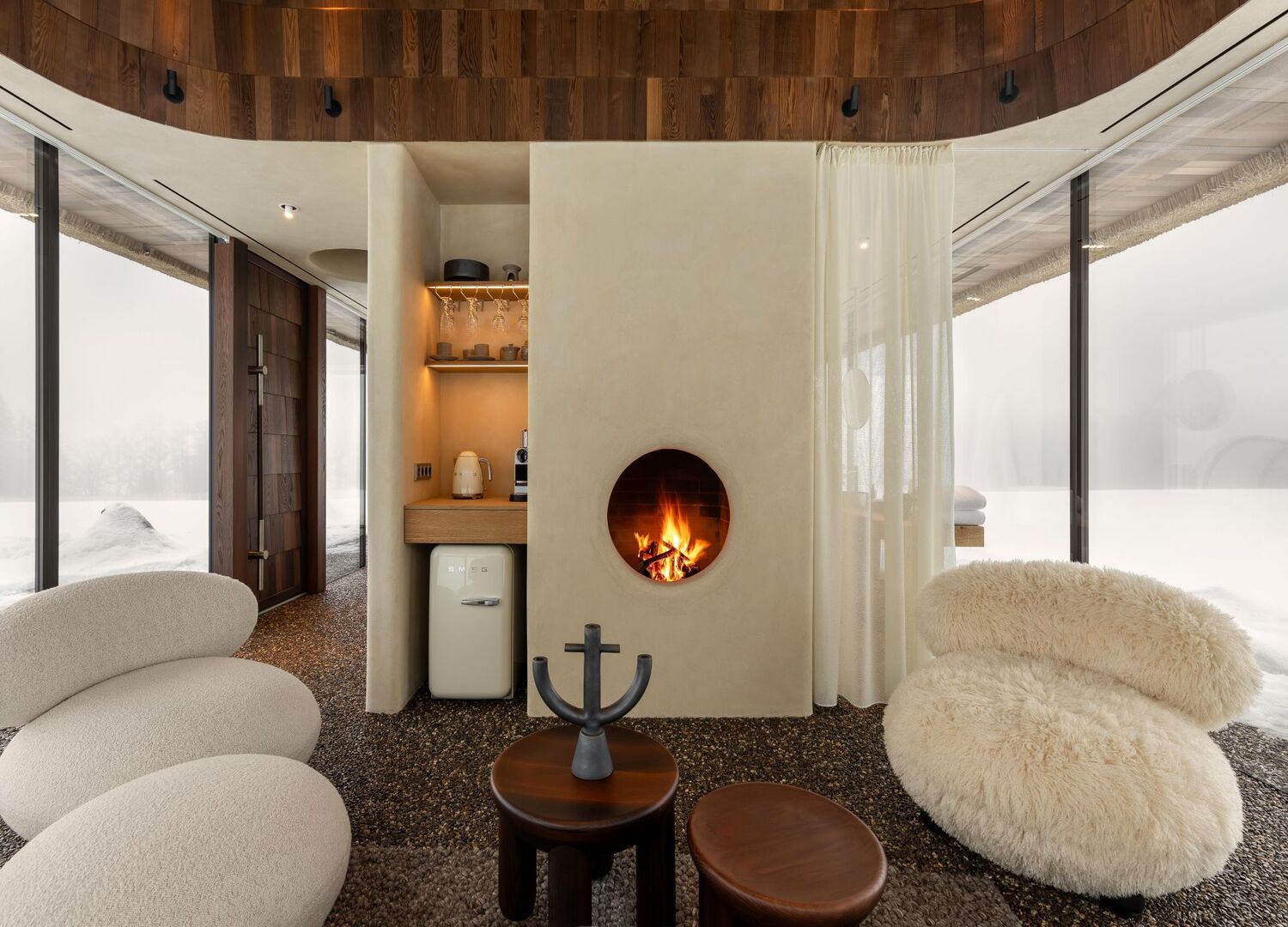
Under the Reed Roof by YOD Group @ Mykhailo Lukashuk
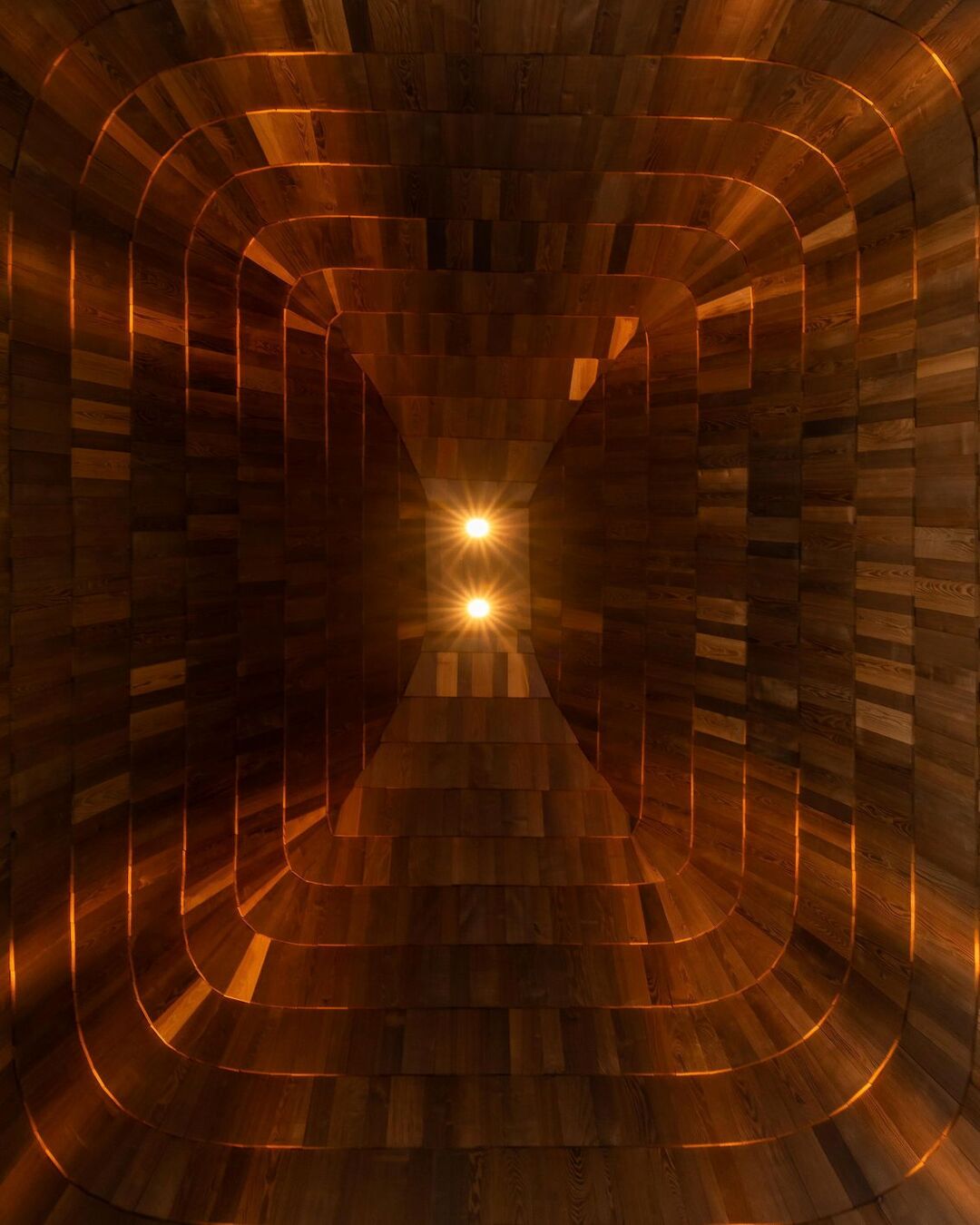
Under the Reed Roof by YOD Group @ Mykhailo Lukashuk
Historically seen as simple structures defined by white plastered walls and steep thatched roofs, Hata-Mazanka houses were more than simple shelters: they embodied a way of life deeply connected to nature and craftsmanship, shaping a wider cultural model and responding to climatic conditions and daily rituals.
This deep understanding of local history and local culture is a foundation for YOD teamthe Ukrainian architecture studio behind the project, whose expertise in hospitality and leisure design allows them to translate tradition into contemporary architectural language. Founded in 2004 by Volodymyr Nepiyvoda and Dmytro Bonesko, the studio has over 21 years of experience, more than 200 completed projects worldwide and over 30 international awards.
As Nepiyvoda explains: “Our philosophy of terroir design goes beyond the use of local materials or familiar forms. It is about discovering the essence of a place and decoding its meanings. We studied the image of the traditional Ukrainian house, distilled its key features and reinterpreted them through our own lens to create a contemporary architectural object.”
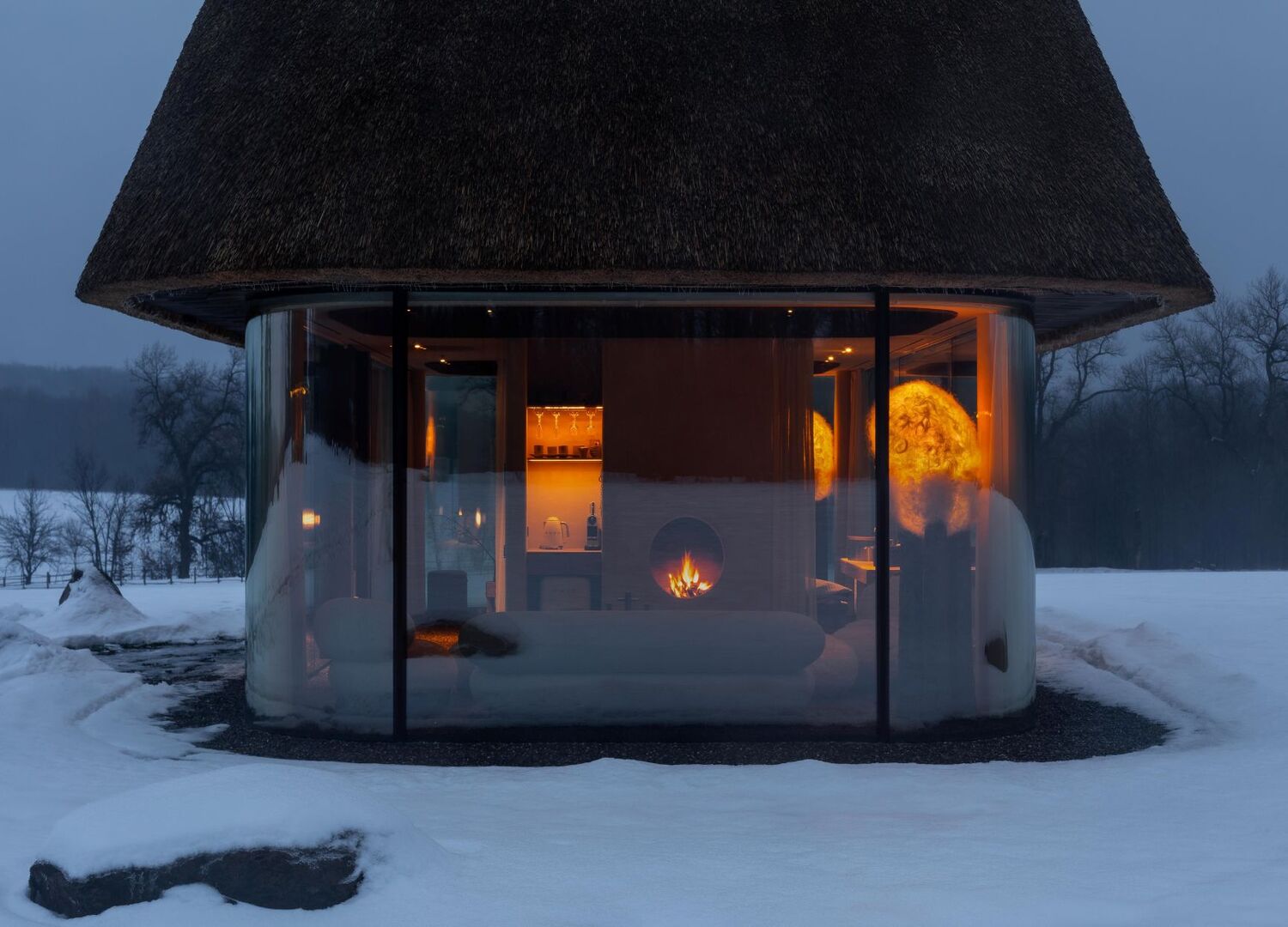
Inside, the layout revolves around a central concrete core containing the bathroom, with the bedroom and living room positioned on either side, all defined by a substantial and understated atmosphere. Here, a minimalist circular fireplace serves as a modern reinterpretation of the traditional Ukrainian stove—the heart of domestic life—and defines the space while encouraging relaxation. Materials also echo local tradition, such as the polished stone floor that runs seamlessly from interior to exterior, enhancing the sense of spatial continuity.
Furniture and objects – from Noom seats in black clay decorations from Guculiyatogether with handmade ceramic and natural fiber lamps – complete an eco-minimalist and tactile interior. A subdued color palette and textured surfaces help create a calm environment that is in harmony with its surroundings. For added privacy, automated curtains can be designed without compromising the exterior view.
The dome-shaped ceiling, which reaches 10 meters at its highest point, not only evokes tradition through the interior cladding of small wooden shingles, but also integrates all the technical systems of the building, keeping the walls visually clean and ensuring maximum comfort.
It is precisely in this balance between memory and design experimentation that the project finds its most fascinating dimension. Under the Reed Roof is not just about Ukrainian vernacular architecture; reinterprets it through a modern lens, reusing and transforming traditional materials into a contemporary architectural language. The thatched roof, wooden surfaces and the use of clay and stone are not simple folk gestures, but elements that shape a distinct life experience.
The result is a retreat-like structure that shows how tradition and innovation can coexist without nostalgia: home rooted in local culture but firmly oriented to the present, able to transform a historical rural typology into an iconic space defined by its essential character.



