


When you decide to work on your home, the same doubt always arises: do you need an architect or is an interior designer enough? We often tend to confuse the two figures, thinking they do more or less the same thing. In fact, the difference is very specific and is not only about what they do, but also about type of result that can be achieved.
Figuring out who to invite isn’t just about budget, it’s about goals. Because changing the look of a room is one thing, really transform the space it is another.
What an architect really does
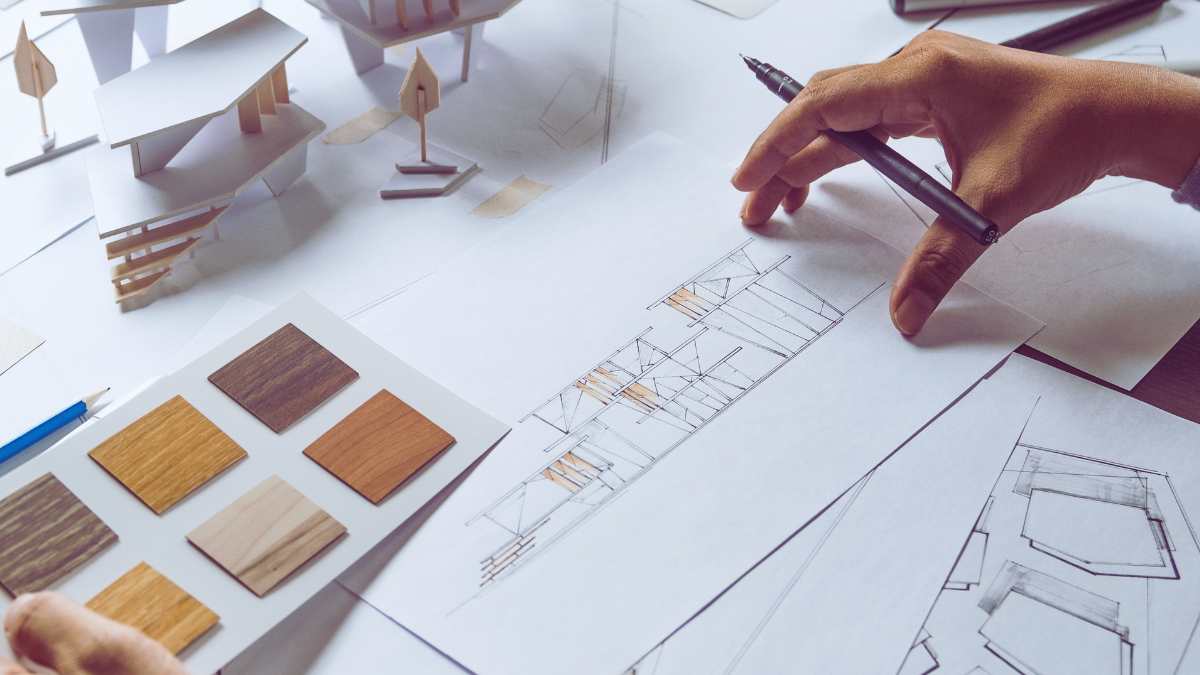
The architect is not limited to “designing houses”but it intervenes in a specific way in everything that concerns the structure and function of the spaces. He is the figure who analyzes the house as a whole and understands how it can be modified safely, legally and effectively.
If you want to knock down a wall between the kitchen and the living room, it is not enough to decide where: you need to check if it is load-bearing, if it can be removed and how to do it without compromising the stability of the building. The same goes for moving a bathroom, which involves drains, slopes, plumbing and precise technical constraints.
The architect designs the new distribution of the rooms, decides where to place doors, walls, light points and electrical outlets in a functional way. But not only that: it also takes care of all the bureaucratic aspects, such as building practices, permits and mandatory communications, necessary for proper operation.
During operations, he can coordinate the companies, verify that everything is going according to plan, and intervene if problems arise. It is, in essence, the figure that holds together technique, legislation and organization, turning an idea into something truly feasible, without avoidable mistakes or unexpected events.
What does an interior designer really do?

The interior designer does not intervene in the structure of the house, but works on everything that defines its appearance, its perception and the way it lives every day. His task is not just to choose “beautiful” furniture, but to build a coherent, functional and visually balanced ensemble.
It always starts from a reading of the existing space. Analyze proportions, natural light, critical points and potential. From there he sets a precise direction: color palette, materials, style, but also furniture distribution. Even without moving walls, it can completely change the perception of a room by working on the layout, volumes and focal points.
An interior designer decides where to place the sofa to enhance the spacewhat kind of lighting to use to create atmosphere, how to combine fabrics and surfaces to avoid a flat or messy effect. It addresses often undervalued elements such as curtains, rugs, lighting, accessories and decorative details, which are what really make the difference between a “furnished” home and a thoughtful home.
In many cases he also prepares mood boards, renderings or visual proposals that help imagine the end result before even buying anything. This allows you to avoid costly mistakes such as choosing furniture that doesn’t work together or that is out of scale.
Another key aspect is the choice of products. The interior designer knows where to look, how to combine pieces from different ranges and how to achieve a cohesive effect even with limited budgets. He doesn’t just follow trends, he builds customized solutions for the space and those who live in it.
In short, it is the figure that transforms an already functional home into a space that really works on an aesthetic, emotional and everyday level.
When to call an architect
There are situations in which the choice is forced. If you have to intervene in the structure, there are no alternatives.
When you’re modifying walls, moving rooms, or redoing systems, you need a person who has technical skills and can also manage the bureaucratic aspects. Even in cases where the space does not work, for example poorly distributed rooms or underutilized environments, it is the architect who can find concrete solutions.
In these situations, an interior decorator alone is not enough, because it cannot intervene at a structural level.
When to call an interior decorator
If the house is already functional but you are not satisfied, this is where the interior designer comes into play.
When you want to change style, make an environment more welcoming, improve what you already have or avoid buying mistakesthis number becomes fundamental. Even if you’re on a tight budget, it can help you make smarter choices and avoid unnecessary expenses.
It is especially useful when you have a hard time imagining the end result or combining different elements without creating confusion.
When it makes sense to call them both
There are projects in which the combination of the two figures is the best solution.
When dealing with a complete renovation, for example, the architect can take care of the technical part and the distribution of spaces, while the interior designer intervenes in the next phase to they set the atmosphere.
This approach allows you to get a more complete result. On the one hand, it operates a house, on the other a house that you really like.
How the cost changes
The cost also varies depending on the type of intervention and the practitioner.
An architect may work on a percentage of the cost of the job or on a per-project fee. Costs tend to be higher because they involve technical expertise, site management and legal responsibilities.
An interior designer, on the other hand, may have more flexible formulas. Sometimes it works with a fixed cost per room, others with an hourly consultation or with complete packages that include design and furniture selection.
The difference is not only in the price, but in the type of service. One intervenes in the structure, the other in the structure perception.
How to understand if you have a valid professional in front of you
Beyond the title, the real difference is the quality of the work.
A good architect does not limit himself to proposing technical solutions, but manages to actually improve them sustainability of the spaces. It explains options, anticipates problems and offers concrete solutions.
A good interior designer, however, doesn’t just follow trends. Listen, interpret and make a coherent project with those who will live in the house. It does not impose style, but adapts it.
In both cases, it is necessary to look at completed works, not just returns. Perfect pictures are of little use if they don’t correspond to actual results.
The right choice depends on what you want to achieve
There is no absolute best figure. There is the right one for the type of intervention you have in mind.
If you need to change the structure of the house, the architect is essential. If you want to transform the atmosphere and make the space more harmonious, the interior designer is the most effective choice.
And when the task is greater, combine the two skills it can really make the difference between a simply renovated house and a house thought out in every detail.



