Physical Address
304 North Cardinal St.
Dorchester Center, MA 02124
Physical Address
304 North Cardinal St.
Dorchester Center, MA 02124

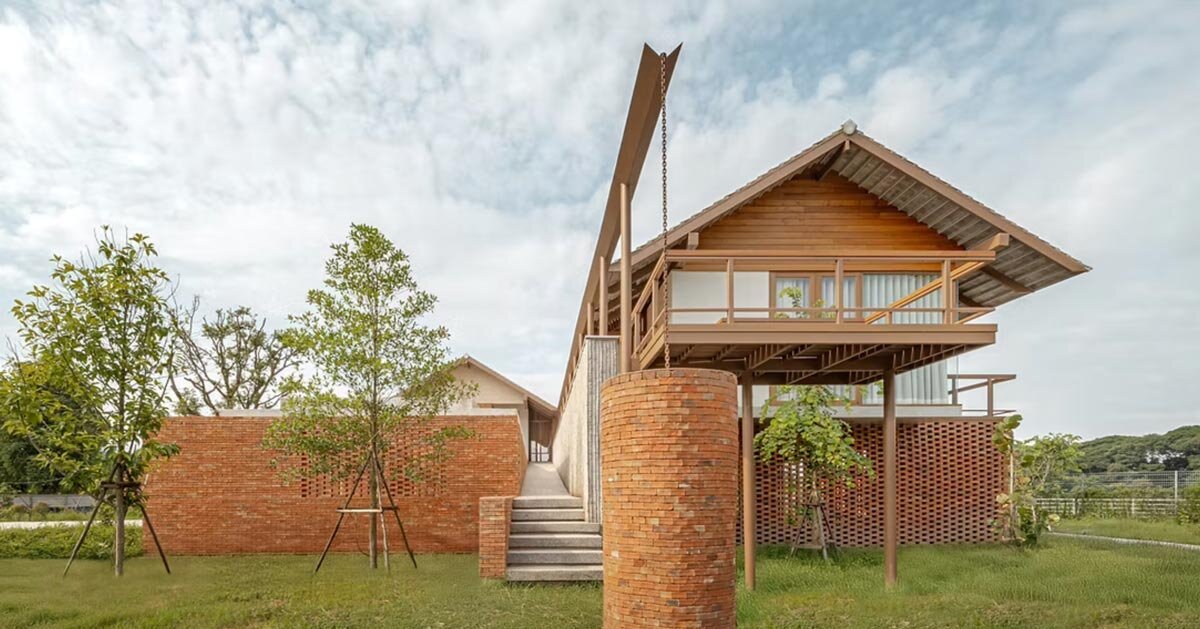
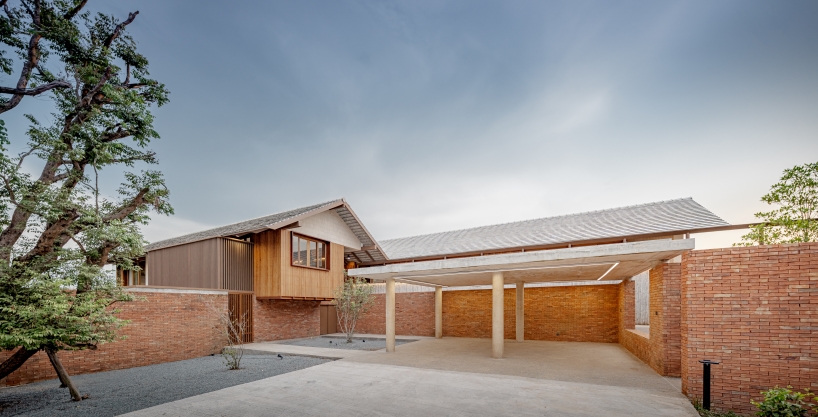
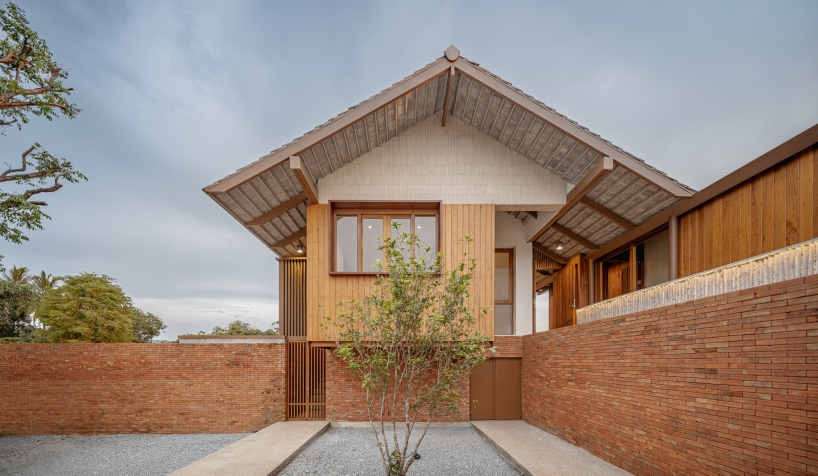
Located in Chiang Saen along the Mekong River, SiamBaan SudSaenSuk is private residence with BodinChapa Architects which interprets vernacular Lanna architecture through a contemporary context. The project is based on the cultural and architectural context of the region, integrating traditional principles with current spatial and environmental requirements. The design refers to local house typologies, particularly the Ka Lae house, adapting its spatial organization and climate response. The building is oriented along a north-south axis to reduce sun exposure and align with prevailing environmental strategies found in traditional models. The end of the gable faces south, creating visual connections to the river and surrounding mountains while maintaining controlled exposure to sunlight.
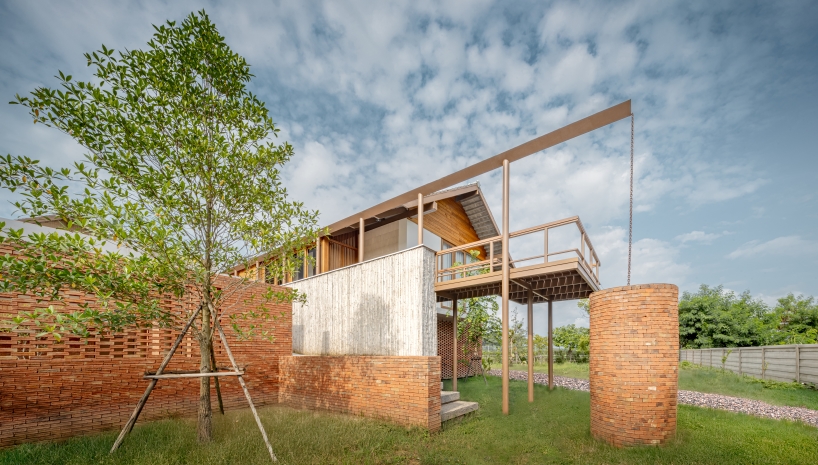
The axis of the building is rotated relative to the site boundary to avoid direct alignment with the adjacent public walkway. This adaptation allows landscape elements to act as visual buffers, supporting privacy while maintaining exterior views. The house is raised above ground level, improving natural ventilation, reducing heat gain and creating a shaded basement that accommodates service functions and additional uses. The scheme is divided into two main volumes following a ‘double house’ configuration, separating the sleeping areas from the kitchen and service areas. This arrangement supports operational clarity while limiting heat transfer between zones. The two volumes are connected by a continuous gutter system that collects rainwater and directs it into brick cisterns located at each end of the house, allowing it to be reused for irrigation.
all images by Shootative – Witsawarut Kekina
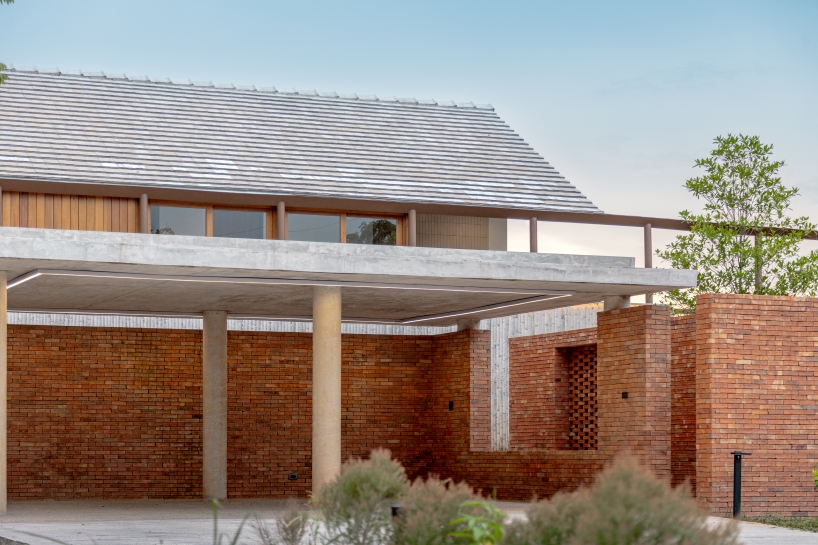
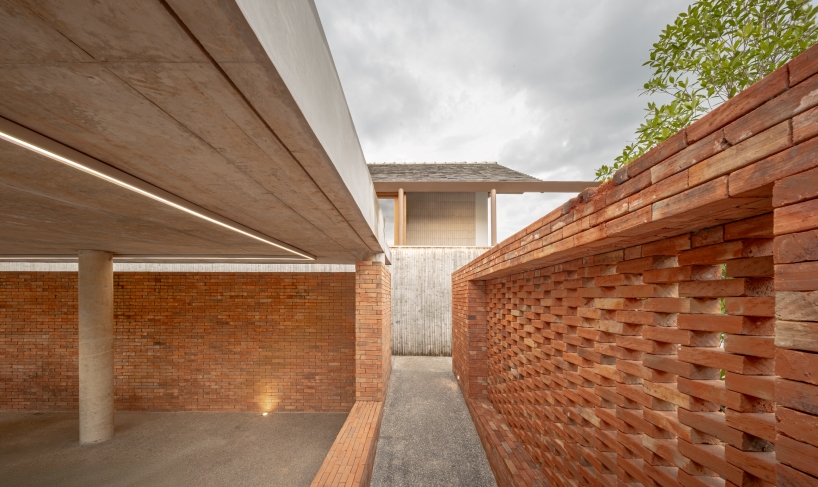
Transitional spaces play a central role in the environmental performance of the home. The ‘chan’ (outer terraces) and ‘tern’ (semi-open hall) act as intermediate zones between the indoor and outdoor environments. These spaces facilitate cross ventilation, provide shaded areas for daily activities and reduce reliance on mechanical cooling. Circulation is organized through these semi-outdoor spaces, enhancing spatial continuity and environmental performance. The facade incorporates reinterpreted “fa lai” elements, which act as sliding wooden panels that filter light, regulate air flow and enhance privacy. Through material selection, BodinChapa Architects Studio further supports the environmental approach. Brick walls and earthen landscape features contribute to the thermal mass, moderating internal temperatures, while textured cast concrete surfaces with bamboo formwork reference local construction techniques.
The incorporation of landscape elements, including planted courtyards and perimeter greenery, supports microclimatic regulation and enhances the connection between built form and environment. These strategies collectively contribute to a design approach that prioritizes passive performance, resource efficiency, and contextual responsiveness. Baan SudSaenSuk demonstrates how municipal knowledge can inform contemporary residential design, translating traditional spatial and environmental principles into a context suitable for today’s living.