
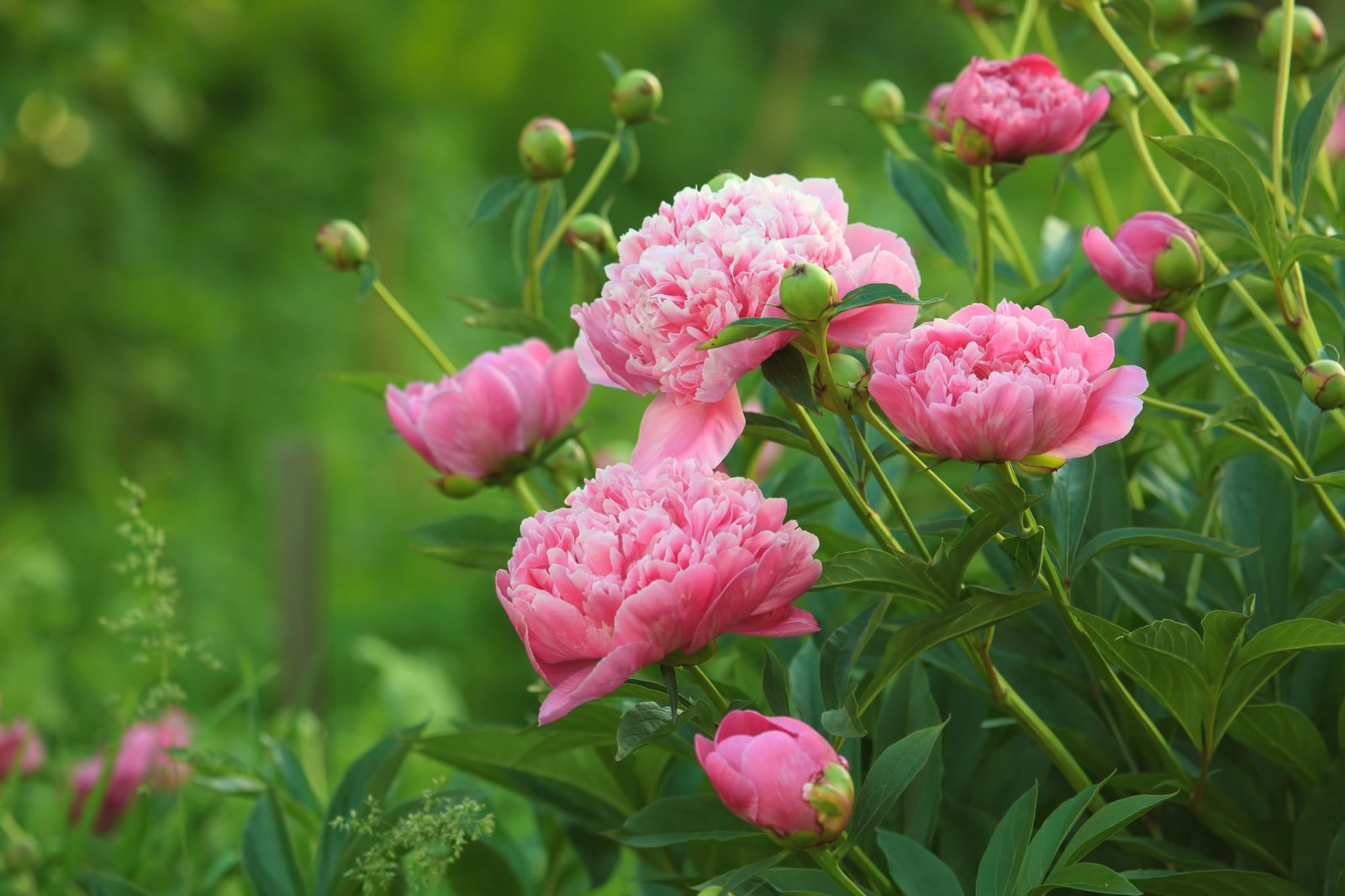

Few flowers in the garden match the magnificence of blooming peonies, and if you do this simple task when you spot spring shoots sprouting from the ground, you’ll enjoy more flowers, and bigger flowers to boot! For centuries, peonies have been cultivated for their luxurious blooms and all species new flower forms they have been bred to give 21st century gardeners the lovely ruffles of petals we all love. Some modern peony flowers can reach 10cm in diameter with over a hundred petals!
Now, I know it’s not good to be greedy, but there is a very easy way to encourage your peony plant to grow even more, even bigger flowers. Peonies are dormant during the winter, retreating completely underground while they wait for warmer weather to return. It’s always an exciting time in the spring garden to spot distinctive red peony shoots emerging from the ground in spring. And now is the time to act and feed your peony to fuel a year of blooms.
When is the best time to feed peonies?

(Image credit: Getty Images)
The optimal time window to feed peonies for more blooms is when the emerging shoots are about 3 inches tall to when they are about a foot tall. If the weather is warm, growth is rapid, so watch closely.
The article continues below
What is the best food for peonies?
Choose a balanced, slow-release all-purpose food that supports all-round growth, not just flower production, such as Burpee Organic All Purpose Food, available directly from Burpees and through Amazon.
Look at the three numbers on the fertilizer package that show the ratio of nitrogen (N), phosphorus (P) and potassium (K), always in that order. A fertilizer that has the same number for all of these is perfect to give peonies a spring feed. If you already have plant food that you would like to use, then it is good to use one with a slightly higher level of phosphorus or potassium, as these encourage root and flower growth. But whatever you do, don’t use a feed with a higher level of nitrogen, as this prioritizes leaf and stem growth over flower production.
What is the best way to fertilize peonies?

(Image credit: Getty Images)
Slow release feeds are usually granular so wear gloves such as those from Amazon to spread as some fertilizer ingredients can irritate the skin. Following the dosage on the package, sprinkle the granules in a circle around your peony. Aim for your plant’s canopy – this is the perimeter diameter of your peony at ground level, or where its shadow would fall if the sun were directly overhead when the bush is in full growth. This is where most feeder roots will be located. Don’t worry if you can’t remember how big your peony grew until last year, it doesn’t have to be exact.
Now use a small hand rake with stiff tines to work the grains into the top inch or so of soil, being careful not to disturb any roots. A claw rake like this one from Amazon it is perfect as it is strong enough to cope with any compacted terrain. Try to spread the grains inward a bit from the circle, but don’t stick on or anywhere near the crown (the shoots). Water well to activate plant food.
Should I soak too?
If you put on leaves in the fall, you shouldn’t mulch now. In fact, it’s best to pull any old mulch away from the crown in spring: the most common reason peonies don’t flower well is that the crown is buried too deep.
If you haven’t, then it’s not necessary to mulch now, but it will help lock moisture into the soil and provide more nutrients to the peony roots in the long run. You should only apply a thin one-inch layer of a general-purpose mulch or fertilizer, such as this one from Amazonthough, and keep it well away from the crown.

(Image credit: Getty Images)
And you’re done! All you need to do now is support the stems if needed and water during dry spells, trying to wet the soil rather than the plant and look forward to a great bumper flower show.
If you want to try to grow seriously huge peony bloom, then we go to division. You can isolate just one stem to see what’s going on, some or all of the stems. Simply pinch or twist the small side buds as they form on the stems, using small snips or your index finger and thumb. Leave the main, terminal bud alone. Your plant will now devote all its energy to growing that one flower, instead of all the ones you removed by peeling, so you’ll have a much bigger bloom – but just one! However, it is a fun way to create some showy flowers for a vase or bouquet.

(Image credit: Getty Images)



