

Living rooms that are all the same, even when the furniture is beautiful: in other words, how boring! Sofa, TV cabinet, coffee table and maybe even a bookcase all in the same color, same material, same style. The result is neat, yes, but also predictable, flat, characterless.
A successful living room, however, works when elements communicate without being identical. When there is a visual tension, a balance between the differences that makes the space interesting. The sofa, in this sense, is the starting point. It doesn’t have to ‘fit in’, it has to lead.
Playing with different materials to create depth
One of the most effective ways to avoid the catalog effect is to work in materials. A sofa made of soft fabric, perhaps slightly material, completely changes the perception when combined with a metal coffee table or a piece of furniture made of natural wood.
The contrast should not be forced, but noticeable. A light bouclé sofa next to smooth surfaces creates an interesting visual tension. Similarly, a linear sofa can be enhanced by a coffee table with a rougher or irregular finish.
When everything is the same material, space flattens out. However, when the surfaces are changed, the living room gains depth.
Use color as a common thread, not a limitation
Another common mistake is to think that everything should be the same color. In fact, color works best when binds different elementsnot when it does them evenly.
A neutral sofa, for example, can coexist perfectly with darker or warmer furniture, as long as there is appeal. A pillow, a rug, a decorative detail can do the trick bridge between different tones.
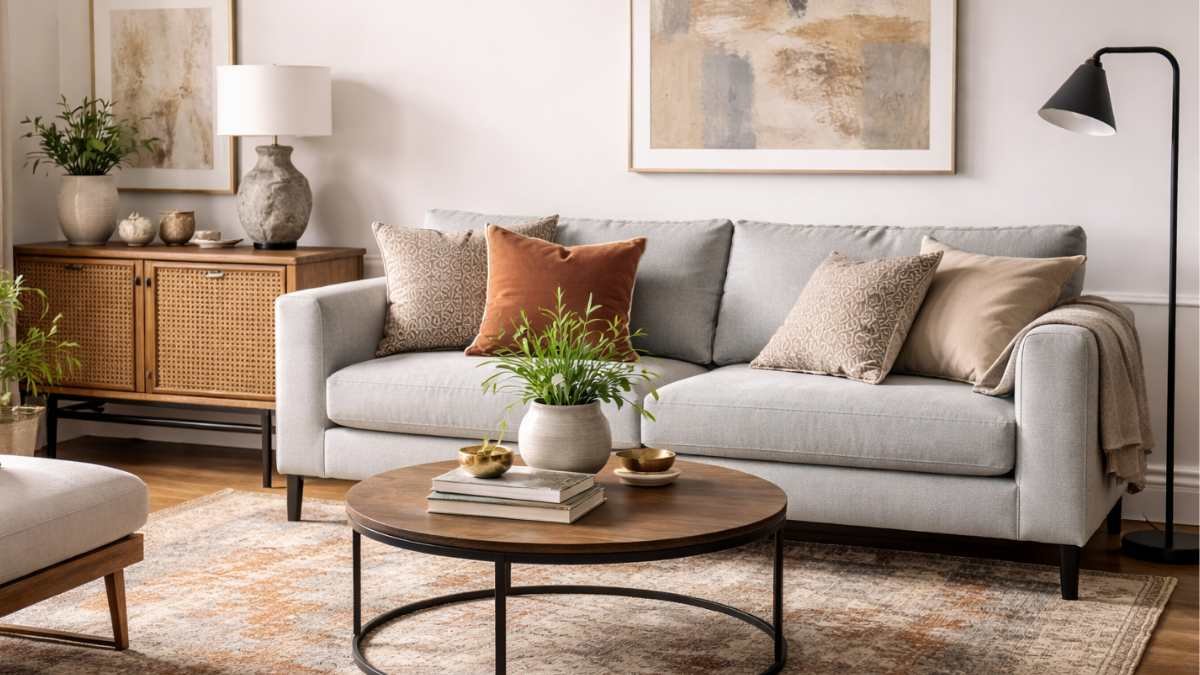
To really understand how it works, just imagine some specific combinations. A light gray sofa can be combined with warm wooden furniture and a carpet with beige and rust shades: gray remains neutral, while the other elements warm the room without creating forced contrasts.
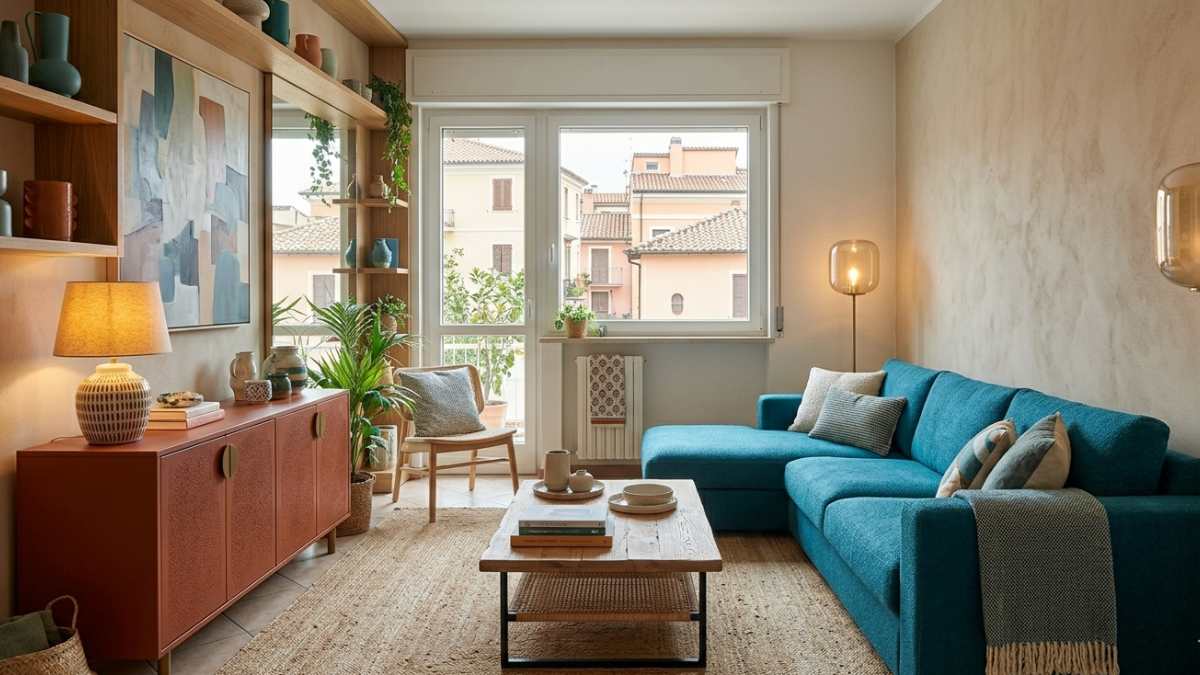
Petrol blue sofaOn the other hand, it can dialogue very well with light furniture and brass or gold details, creating a sophisticated but balanced effect. Even more different is the case of a sofa in sand or dove color, which can be mixed with subtle black elements and accessories in natural shades, such as the green of the plants or the brown of the wood, to obtain more modern but never rigid environment.
The secret is to avoid occasional conflicts. Color should be present, but distributed. It’s not necessary for everything to match, but for everything to speak.
Mix styles without creating confusion
One of the most successful combinations is that between different styles. A modern sofa can work very well with a more classic piece of furniture, or with one vintage piece.
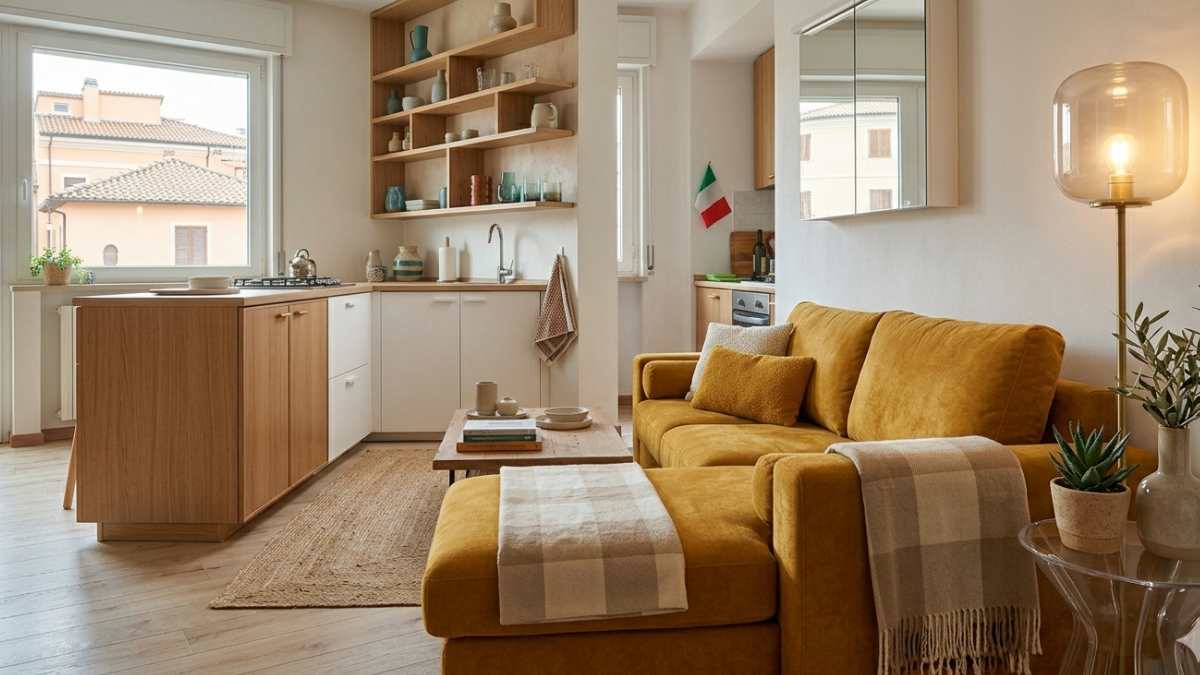
This type of mix creates character, but must be managed carefully. You always need an element that holds the whole together. It can be the color, shape or material.
For example, a sofa with clean lines can be combined with a more decorative coffee table, as long as there is consistency in shades or proportions. When this balance is missing, the result becomes random. When present, the space appears constructed.
Work with proportions, not just combinations
We often focus only on colors and materials, but the real difference is the proportions. A large sofa combined with furniture that is too small create one apparent imbalance.
Similarly, elements that are very similar in size cancel each other out. THE game of height, depth and volumes it is necessary to give rhythm to the space.
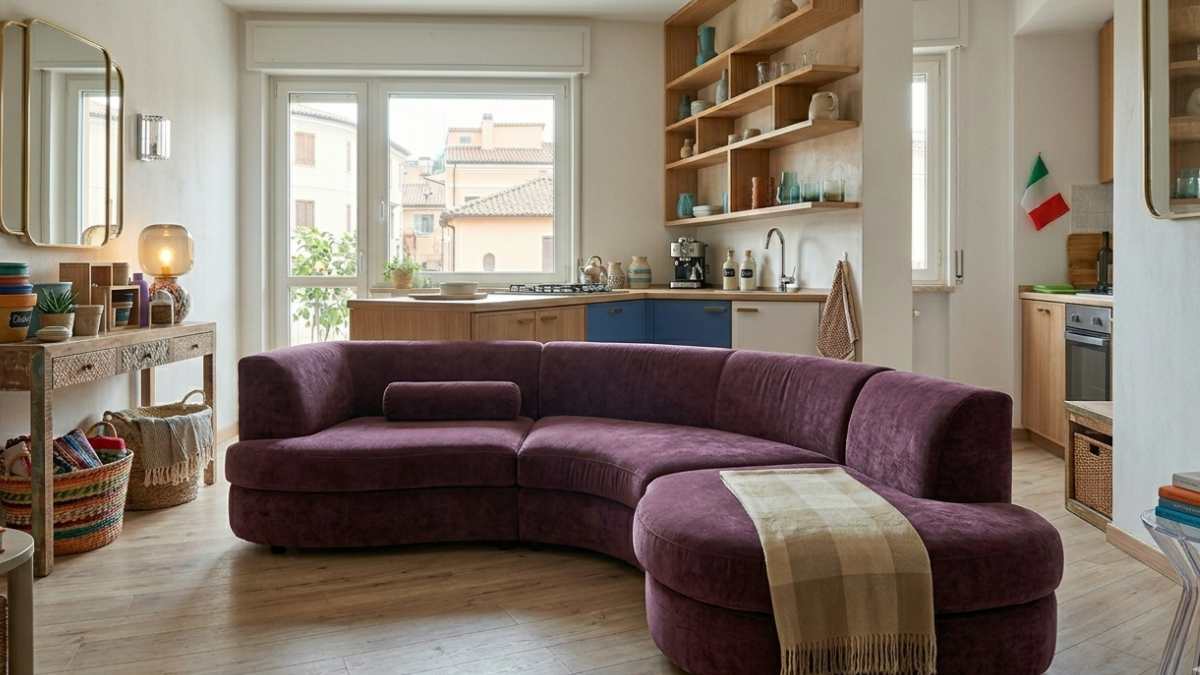
A low table in front of a deep sofa, a tall lamp next to a solid seat, a long piece of furniture under a free wall. These relationships are what make the salon dynamic.
Give the environment room to breathe
Finally, one of the most underrated aspects: empty space. When you try to coordinate everything, you also tend to overfill.
A living room with too many elements, even if well combined, loses its lightness. THE The sofa must have room around it to come out. Furniture should be distributed, not crowded together.
Leaving areas free doesn’t mean you have an unfinished room, but you allow the elements to strengthen. It is exactly that breathing that distinguishes a neat environment from a simply furnished one.
When the living room stops looking like it’s “already seen”
The difference is immediately noticeable. There is no longer that feeling of “already seen”, but a space that seems studied, built over time.
The sofa is no longer an element to be combined, but to be interpreted. And everything else moves accordingly.
He is in it balance between coherence and difference that a living room with personality is truly born.



