Physical Address
304 North Cardinal St.
Dorchester Center, MA 02124
Physical Address
304 North Cardinal St.
Dorchester Center, MA 02124

For some time now, a new habit has taken hold in many homes: cleaning without resorting to classic chemical detergents bought at the supermarket.
The reasons are different: health protection, respect for the environment, the desire to reduce plastic or simply the desire to save money, but the result is always the same: clean floors with simple and natural ingredients.
This is not a passing fad, but an increasingly widespread and conscious approach. With a few items already found at home, it is possible to achieve effective and satisfactory cleaning, suitable for the daily routine.
The most popular natural floor cleaning solution is also the simplest: warm water and white vinegar. For a three to five liter bucket, simply add a glass of vinegar or apple cider vinegar if you prefer a more subtle aroma. For persistent odors or more stubborn dirt, you can also add two tablespoons of baking sodawhich helps to neutralize bad odors and dissolve stubborn residues.
The method of use is equally important: before mopping it is necessary to sweep or vacuum the floor to remove dust and crumbs, then dip a microfiber cloth in the bin, wring it out well and proceed in long, regular passes.
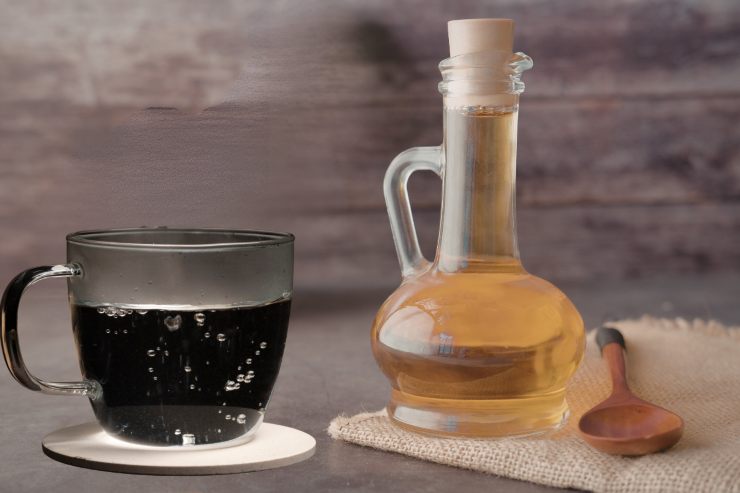
Mopping too wet is one of the most common mistakes and can damage some surfaces. Once the cleaning is done, it is recommended to ventilate the room: the strong smell of vinegar, in fact, tends to disappear quickly with a little ventilation.
Before systematically adopting any natural remedy, it is essential to understand what type of floor you are dealing with. Vinegar, although effective on tiles, stone and terracotta, is not suitable for all surfaces: its acidity can irreparably damage marble, granite and parquet, dull the finish or affect the material over time. For wood and parquet, the ideal solution is warm water with a little Marseille soap and a spoonful of bicarbonate, applied with a well-wrung cloth and without rinsing. Marble, however, needs even more care: it tolerates only warm water with a small amount of Marseille soap, followed by immediate drying to avoid streaking. A good practice, whatever product you intend to use, is to test it first on a hidden corner of the floor to check that it does not damage the surface. With the right precautions, cleaning naturally is not only possible: it’s also more mindful and sustainable.




