
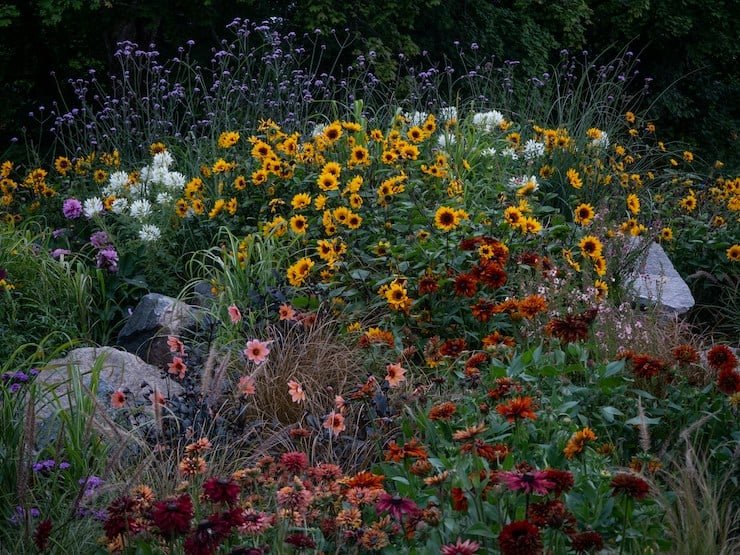

Permaculture gardening is a holistic and sustainable approach to growing plants, inspired by natural ecosystems found in the wild. Rather than working against nature, permaculture encourages gardeners to work with it, creating self-sustaining landscapes that require minimal intervention. Want to learn more? Read on – we’ll tell you everything you need to know!

Permaculture Definition: What is Permaculture Gardening?
Permaculture is not a very well or clearly defined concept, so it has taken on different meanings to different people. Along the way, the ideas expanded, gathering ideas of sustainable agriculture and landscape design under its umbrella. Most would agree, however, that permaculture gardening is a system of sustainable agriculture designed to create self-sufficient ecosystems that work in harmony with nature. The term “permaculture” was coined by Bill Mollison and David Holmgren in 1979. They wanted a defined method that eschewed industrialization and modernization at the time, focusing instead on a more nature-focused approach. For more information on the history of permaculture, check out wikipedia page on the subject – it’s the most comprehensive summary I’ve seen!

Permaculture aims to mimic natural processes, promote biodiversity, conserve resources and cultivate healthy soil. This approach is highly adaptable, whether applied to large farms or compact backyard gardens, making it an inclusive and versatile method for anyone looking for a more sustainable way to grow food and grow plants. The great thing about these ideas is that when you work with natural cycles in your environment, you do less work! Below, we’ll discuss some of the basic principles, methods used, and then share some easy ways you can incorporate permaculture practices into your own garden space.
Basic Principles of Permaculture
Permaculture gardening is based on fundamental principles that ensure a sustainable and efficient ecosystem. By applying these principles, gardeners can create spaces that work in harmony with nature while remaining productive and resilient.
1. Observe and interact:
Note your local environment and how natural systems affect your own garden space. This can include wildlife, water flow or weather. The best way to start? Keep a garden journal!
2. Capture and store energy:
It seems like common sense – we tap into resources when they are in peak abundance – but we often neglect to do so. One way to do this is by collecting rainwater.
3. Get performance:
Your efforts should be focused on producing something useful. This could mean edible plants, flowers or providing wildlife habitat – and this could be through your landscaping or your kitchen garden!

4. Apply self-regulation and accept feedback:
If something isn’t working, stop trying to push it. If you do too much work to maintain your garden, it may not work efficiently. In permaculture design, your garden should work with nature to create efficiency.
5. Use and value of renewable resources and services:
Focus on reducing your consumption through saving resources. This can be as simple as mulching to retain moisture or starting a compost pile to use your kitchen scraps as compost.
6. Do not produce waste:
As in the previous point, your garden should not produce waste, but rather produce a sustainable yield. Even materials that might normally be thrown out can often be put to better use.

7. Design from patterns to details:
After making your observations of your environment, start drawing around the big picture patterns you notice, slowly working your way down to smaller details.
8. Integrate rather than segregate:
While we as humans find organization and clear boundaries calming and satisfying (a well-manicured raised garden, for example), nature needs to cooperate. This can mean more companion planting and incorporating a variety of plants into a sustainable design.
9. Use small and slow solutions:
Basically, don’t overcomplicate things or try to rush the process.
10. Use and value of diversity:
Use a variety of plants to prevent common problems – diseases and pests spread more easily if they can move directly from one plant to another of the same type. Again, think about how things grow in nature, all together.
11. Use edges and value the marginal:
Where one part of your garden meets another is where nature can work its magic. This is similar to the concept of companion planting – different plants can work together.
12. Use creatively and respond to change:
You will constantly need to adapt to changes in your garden and environment – use this as an opportunity to improve!

Benefits of Permaculture for Home Gardeners
Permaculture methods offer many advantages, especially for home gardeners who want to create sustainable, productive and beautiful spaces. See how this approach benefits both you and the environment.
Permaculture gardening is low maintenance
Permaculture gardens are designed to be largely self-sustaining, mimicking natural ecosystems that require minimal intervention. By focusing on using perennials, using rotting topsoil and encouraging natural pest control through biodiversity, you reduce the need for constant weeding, watering and fertilising.
Ecological
By prioritizing sustainability, permaculture significantly reduces waste and promotes local biodiversity. Organic practices eliminate the need for synthetic fertilizers and pesticides, while careful garden design creates habitats for pollinators, birds and other wildlife, making your garden an active part of the local ecosystem.

Water saving
Permaculture incorporates water-saving techniques such as mulching to conserve soil moisture and creating rain gardens to capture runoff. Rainwater harvesting systems can also be added, ensuring efficient use of water even in times of drought. These practices not only conserve water but also reduce reliance on municipal supplies.
Improved soil health through Permaculture methods
Healthy soil it is the foundation of any successful garden and permaculture places great emphasis on its construction and maintenance. Composting organic waste enriches the soil with nutrients, while no-till gardening and using cover crops it maintains its structure and microbial life, leading to richer, more productive soil over time.

Elasticity
Permaculture gardens are inherently adaptable, designed to thrive in the face of changing weather conditions. By promoting plant diversity and creating interconnected systems, these gardens can better withstand drought, heavy rainfall and other challenges, ensuring long-term sustainability.
Practical Permaculture gardening techniques to try at home
Permaculture gardening is both practical and sustainable, with a variety of techniques that can transform any space into a thriving, self-sustaining ecosystem. Here are some basic techniques to incorporate into your garden.
Plants perennial plants
This might be my favorite way to embrace permaculture at home. love incorporating edible plants into landscaping;and of course I love having fruit trees to enjoy! However, it’s not just about cultivating sweet delights. Fruit trees can help encourage pollinators and birds to enjoy your garden. It is important to choose plants suitable for your climate and stick to them drought tolerant perennials if it doesn’t rain a lot.

Composting
Composting is the cornerstone of permaculture, turning organic waste like kitchen scraps, yard clippings and leaves into nutrient-rich soil. By recycling organic materials, you reduce waste and provide your garden with a natural fertilizer that improves soil health and encourages plant growth.

Maltsara
Mulching involves covering the soil with organic materials such as straw, wood chips or grass clippings. This simple technique conserves soil moisture, suppresses weeds and enriches the soil as the mulch decomposes. It also helps regulate soil temperature, making it particularly useful for protecting plant roots in extreme weather conditions.
Huge culture
Hugelkultur is a method of building garden beds using layers of wood, organic matter and soil. The decaying wood in the core acts as a sponge, holding moisture and slowly releasing nutrients over time. This technique is particularly beneficial for areas with poor soil or limited access to water, as it reduces the need for irrigation.
Companion planting
Companion planting it involves strategically pairing plants that benefit each other. For example, marigolds deter pests, while beans fix nitrogen in the soil, benefiting nearby plants like corn. This technique improves plant health, increases yields and reduces the need for chemical fertilizers or pesticides.

Pest management in permanent cultivation
Permaculture focuses on natural pest control by encouraging beneficial insects such as ladybugs and lacewings, which prey on harmful pests. Planting flowers such as dill or yarrow can attract these beneficial insects. Avoiding chemicals not only protects your garden ecosystem but also promotes biodiversity and soil health.
Add Permaculture gardening techniques to your home garden!
Permaculture gardening offers an inspiring, sustainable approach that transforms your home garden into a thriving, self-sustaining ecosystem. By adopting techniques like composting, mulching, overcropping, and companion planting, you can create a low-maintenance, eco-friendly space that benefits both you and the environment.
Start small, observe your garden and let nature guide you to a more sustainable and abundant way of gardening!



