

Kitchens change, follow trends, adapt to new ways of living at home. However, there are some models that resist the passage of time, not because they are “neutral”, but because they manage to evolve without losing their identity. They are those kitchens that never get tired, that work today as they will work in ten years and are easily adapted to different styles.
The secret is not in the impressive design, but in thebalance. Clean lines, versatile materials and a solid design base that lets you change everything else without having to start from scratch.
The linear kitchen: simple, clean, always up-to-date
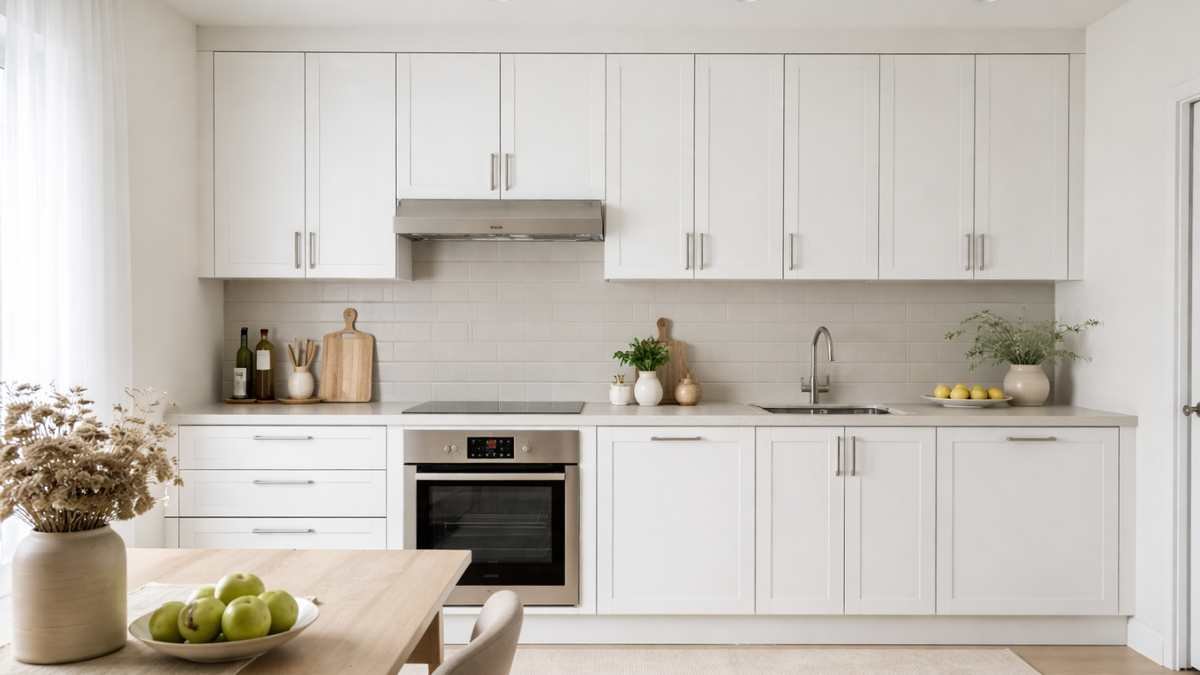
The linear kitchen is perhaps the most underrated, but also one of the smartest. All grow on a single wall, with a regular and continuous composition that makes them immediately readable space.
This model works because it doesn’t intrude. It is perfect in small environments, but also in open spaces where the kitchen needs to communicate with the living room without imposing. The straight lines and compact layout create a clean visual effect that is hard to tire of.
From an aesthetic point of view, it lends itself to many interpretations. A linear kitchen in matte white can be warmed up with dove gray or warm beige walls, avoiding an overly cold effect. If you choose a wood-effect finish instead, you can work with light and slightly desaturated walls for maintaining brightness.
The combination with bolder colors, such as a sage green or a powder blue on the back wall, is also very interesting. In this case, the kitchen remains neutral but acquires character through the context.
The kitchen with the island: pleasant and timeless
The kitchen with the island has become a symbol of the modern homebut it is not a passing fad. It works because it responds to a real need: experiencing the kitchen not only as a functional space, but as meeting place.
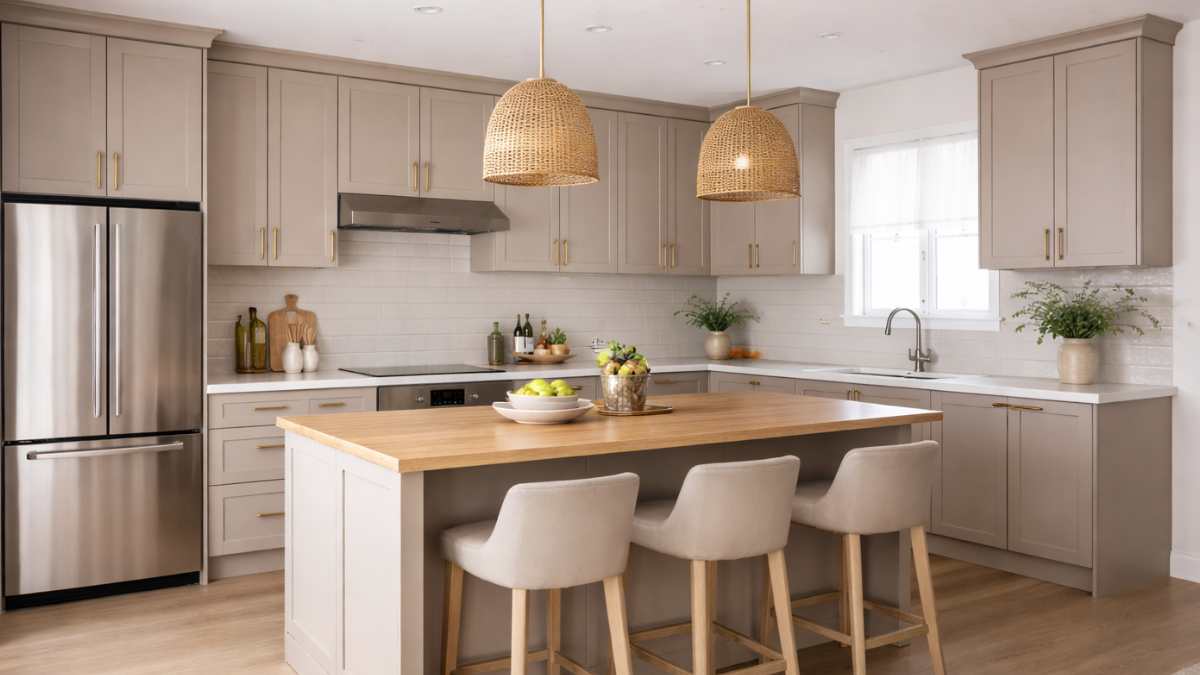
The island becomes the center of the room, a point around which everything else moves. It can be used for cooking, working, eating or just being together. And it is precisely this flexibility that makes it so relevant over time.
Aesthetically, it allows for interesting games. You can choose an island that contrasts with the rest of the kitchen by creating a more dynamic effect. For example, light-colored bases paired with a darker island, perhaps in charcoal or deep blue hues, create depth without weighing it down.
For walls, it works very well to keep a neutral base, such as a warm white or grey, and introduce material elements such as wood or stone to avoid an overly cold effect. The lighting above the island also becomes an integral part of the project, helping to set the atmosphere.
The L-shaped kitchen: the right balance between functionality and transparency
The L-shaped kitchen is one of the most versatile solutions. It spans two walls, creating a corner that allows you optimize the space without closing it.
It is an ideal choice when you want to keep a good work surface but also leave free space in the room. Its strong point is precisely its balance. It allows you to organize functions in a logical way, creating well-defined areas without interrupting the flow of the space.
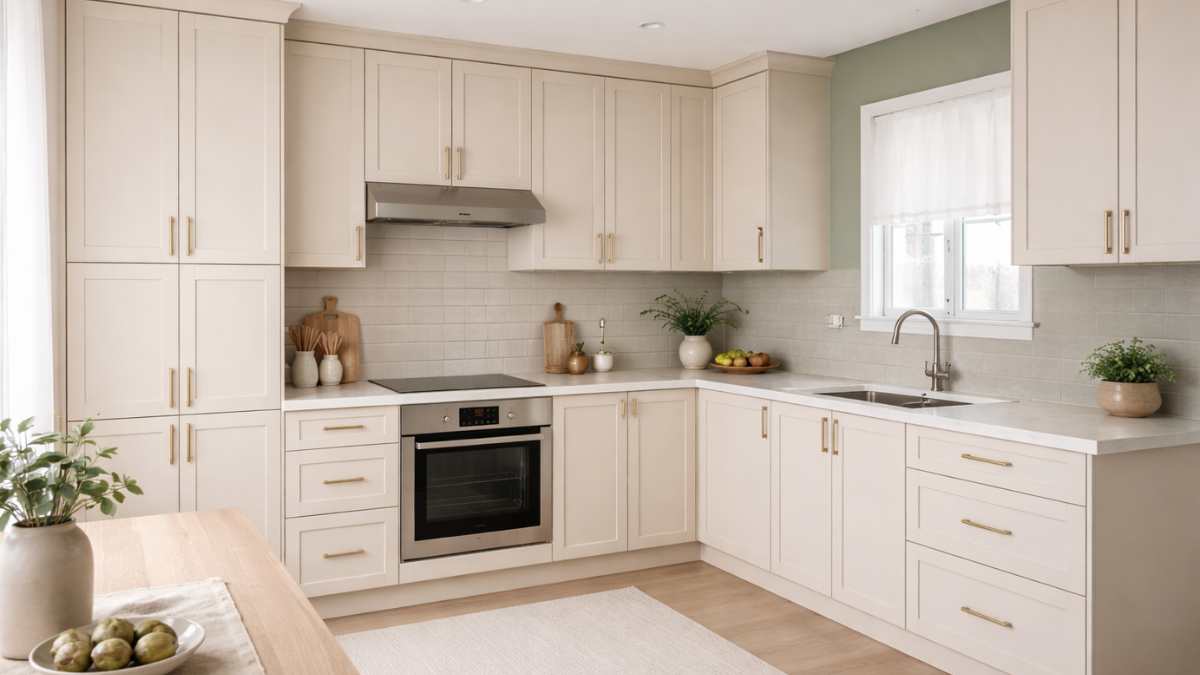
From an aesthetic point of view, it offers many possibilities. An L-shaped kitchen in a light finish can be enhanced with a bolder wall on one side, creating a focal point without weighing down the entire room. For example, a warm gray or a soft green can add depth without closing the space.
If, however, you choose a darker or more material kitchen, it is important to keep the walls lighter, perhaps with neutral and warm tones, to avoid an overly solid effect.
Because these kitchens never go out of style (and it’s not because of the design)
These kitchens do not resist fashion by accident. The point is that they are not created to immediately surprise, but to work in everyday life, even when tastes, habits and even the house around them change.
They have a non-binding structure. They do not impose a very precise style, but leave room for development. That’s why, even after years, they don’t look dated: because they were never built on an instant effect. The real difference is seen precisely over time. An over-characterized kitchen is tiring because it leaves no scope. These, however, allow you to intervene without overturning everything. The light changes, the colors of the walls change, the objects change… and the kitchen continues to work.
It is not a matter of aesthetics, but of balance. When a kitchen is well designed at the base, everything else can change without it break the set. And that’s what makes it really relevant, even as time passes.



