
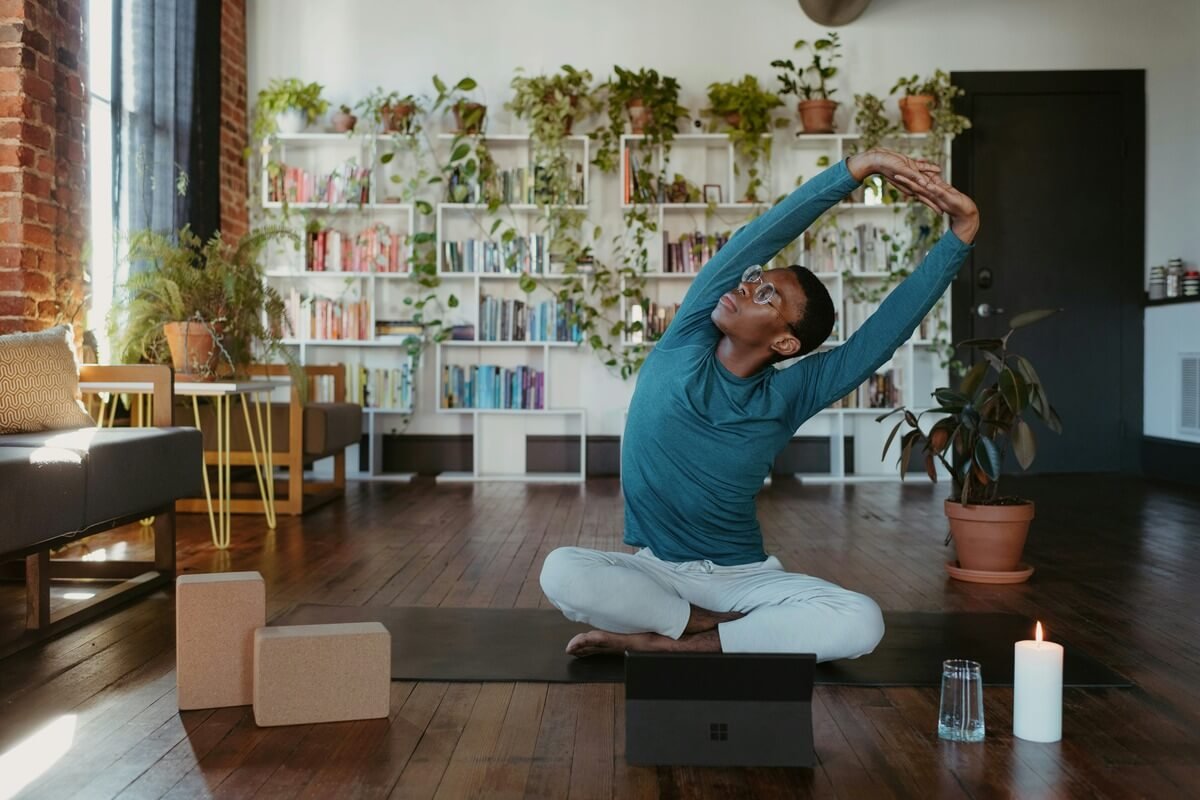

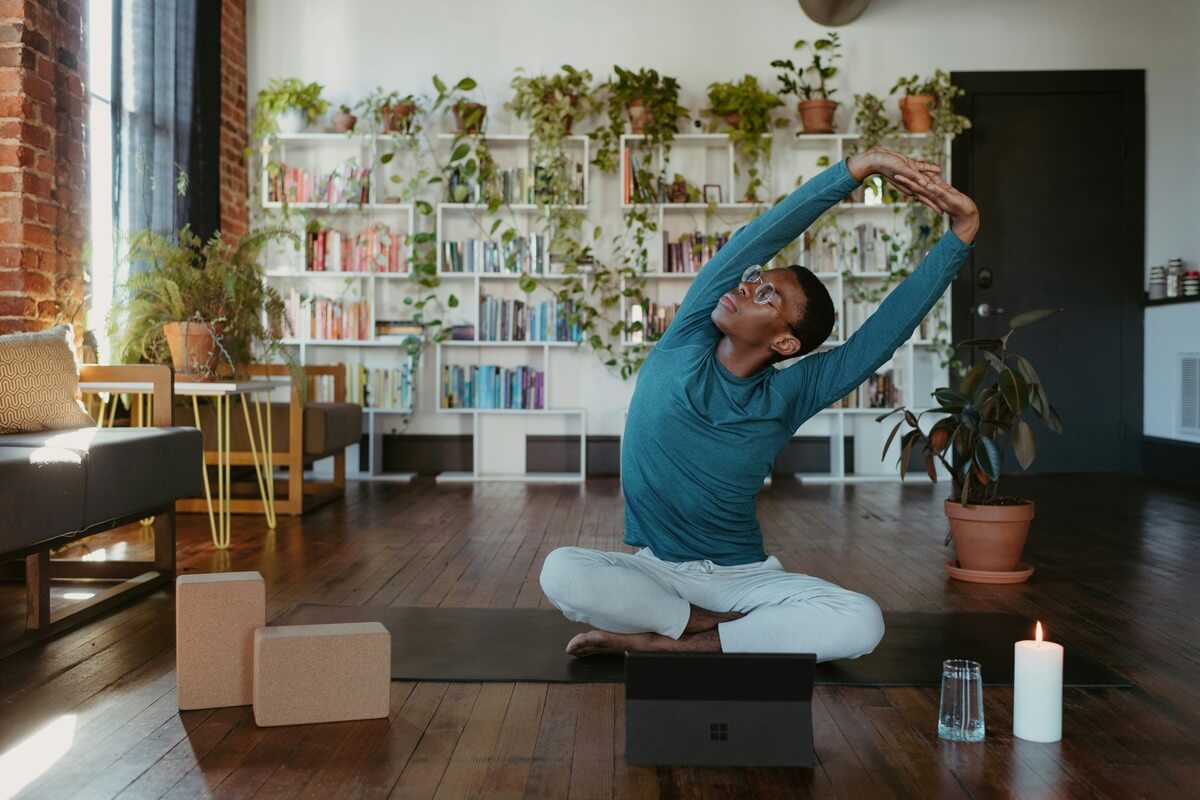
With a few simple changes, your home can become a more flexible space that fits both your professional and personal lifestyle.
Whether you work remotely or want to stay in shape without leaving your home, setting up a home office or gym can seem complicated. However, with a little creativity and some strategic changes, you can create flexible spaces in your home that suit your needs.
Whether you live in a small apartment or a larger house, with smart design and practical storage solutions, it is possible to balance work and fitness needs in a functional space. Here are the best tips for doing just that – let’s get to work!
1. Determine your priorities
Before you reorganize your home, take the time to prioritize what you really need. If remote work is part of your routine, a desk should be your primary focus. On the other hand, if your goal is to stay in shape, building a home gym might take priority.
A home office typically requires a desk, chair, and document storage, while a workout space requires space for exercise equipment. Depending on the type of training you do, this could be as simple as a yoga mat or as complex as a weight bench with room to move.
2. Evaluate and optimize your space
Once you’ve decided what you need, thoroughly assess each area of your home to identify those nooks and crannies or rooms that aren’t being used or can be more efficiently reorganized.
The goal is to find spaces that you can transform to serve new functions, such as a home office or a gym, without major remodeling. Look for areas of your home that are not being usedsuch as guest rooms, attics, basements or living rooms.
3. Classification and classification
To create functional spaces at home, it is necessary to do a thorough cleaning and organize your belongings. So after choosing the space that will become your next office or training space, sort the items you have into different categories: The ones you should keep, donate, sell or discard.
This process will allow you to clear the area and leave only the essentials, making it easier to create space for work or exercise. Additionally, by reducing clutter, your home will become more efficient and harmonious, allowing every corner to have a clear purpose.
4. Prioritize storage space
For items you don’t want to part with but don’t use regularly, consider investing in storage solutions. Personal storage units it’s a great choice for keeping things safe while freeing up space at home.
Likewise, you can use creative storage options such as boxes under the bed, built-in cupboards or containers hidden under desks or tables. multifunctional furniture, such as an ottoman or bench with internal storage, can help you make the most of available space while keeping your home tidy.
5. Maximize vertical spaces
Don’t forget to look up! Vertical space can be used for additional storage and organization. Shelves, hooks and wall cabinets can store books, office supplies or exercise equipment, all within easy reach.
Perforated boards and hooks are ideal for hanging items such as yoga mats or fitness accessories, freeing up valuable floor space.
6. Consider having a dual-use space
For small houses, work and exercise areas can be combined in a dual-purpose room. A living room can serve as a home office placing a desk and computer on one wall, while small exercise equipment such as an exercise bike or hand weights can be placed in another corner.
If your bedroom is spacious enough, you can also create a small one training area or office there, making the most of the available square meters.
7. Use creative solutions to divide your spaces
Even homes with very limited space can accommodate an office or gym with a little creativity. Room dividers or folding screens can help separate part of a living room in a workplace or training area.
Little-used spaces, such as attics, basements or even forgotten corners, can be transformed into functional spaces with minimal effort. Small corners under the stairs or nearby windows with good natural light it can be perfect for a compact office when there are no larger rooms.
Learn about setting up a home office or gym!
Creating a flexible space in your home, whether for work or exercise, doesn’t have to be an overwhelming task. With good planning, optimization of available space and use of multifunctional furniture, it is possible to adapt any corner of your home to suit your daily needs.
Ultimately, the most important thing is that the place where you live reflects your lifestyle and offers you the comfort you seek, allowing you to maintain a healthy balance between your professional and personal responsibilities without leaving home.
Whether you work remotely or want to stay in shape without leaving your home, setting up a home office or gym can seem complicated. However, with a little creativity and some strategic changes, you can create flexible spaces in your home that suit your needs.
Whether you live in a small apartment or a larger house, with smart design and practical storage solutions, it is possible to balance work and fitness needs in a functional space. Here are the best tips for doing just that – let’s get to work!
1. Determine your priorities
Before you reorganize your home, take the time to prioritize what you really need. If remote work is part of your routine, a desk should be your primary focus. On the other hand, if your goal is to stay in shape, building a home gym might take priority.
A home office typically requires a desk, chair, and document storage, while a workout space requires space for exercise equipment. Depending on the type of training you do, this could be as simple as a yoga mat or as complex as a weight bench with room to move.
2. Evaluate and optimize your space
Once you’ve decided what you need, thoroughly assess each area of your home to identify those nooks and crannies or rooms that aren’t being used or can be more efficiently reorganized.
The goal is to find spaces that you can transform to serve new functions, such as a home office or a gym, without major remodeling. Look for areas of your home that are not being usedsuch as guest rooms, attics, basements or living rooms.
3. Classification and classification
To create functional spaces at home, it is necessary to do a thorough cleaning and organize your belongings. So after choosing the space that will become your next office or training space, sort the items you have into different categories: The ones you should keep, donate, sell or discard.
This process will allow you to clear the area and leave only the essentials, making it easier to create space for work or exercise. Additionally, by reducing clutter, your home will become more efficient and harmonious, allowing every corner to have a clear purpose.
4. Prioritize storage space
For items you don’t want to part with but don’t use regularly, consider investing in storage solutions. Personal storage units it’s a great choice for keeping things safe while freeing up space at home.
Likewise, you can use creative storage options such as boxes under the bed, built-in cupboards or containers hidden under desks or tables. multifunctional furniture, such as an ottoman or bench with internal storage, can help you make the most of available space while keeping your home tidy.
5. Maximize vertical spaces
Don’t forget to look up! Vertical space can be used for additional storage and organization. Shelves, hooks and wall cabinets can store books, office supplies or exercise equipment, all within easy reach.
Perforated boards and hooks are ideal for hanging items such as yoga mats or fitness accessories, freeing up valuable floor space.
6. Consider having a dual-use space
For small houses, work and exercise areas can be combined in a dual-use room. A living room can serve as a home office placing a desk and computer on one wall, while small exercise equipment such as an exercise bike or hand weights can be placed in another corner.
If your bedroom is spacious enough, you can also create a small one training area or office there, making the most of the available square meters.
7. Use creative solutions to divide your spaces
Even homes with very limited space can accommodate an office or gym with a little creativity. Room dividers or folding screens can help separate part of a living room in a workplace or training area.
Underutilized spaces such as attics, basements or even forgotten corners can be turned into functional spaces with minimal effort. Small corners under the stairs or nearby windows with good natural light it can be perfect for a compact office when there are no larger rooms.
Learn about setting up a home office or gym!
Creating a flexible space in your home, whether for work or exercise, doesn’t have to be an overwhelming task. With good planning, optimization of available space and use of multifunctional furniture, it is possible to adapt any corner of your home to suit your daily needs.
Ultimately, the most important thing is that the place where you live reflects your lifestyle and offers you the comfort you seek, allowing you to maintain a healthy balance between your professional and personal responsibilities without leaving home.



