Retail stores often take a more-is-more approach, filling their spaces with an overwhelming variety of products, so that when one has just the right combination of products and aesthetic appeal, it can give the retailer an edge. That’s what MUJI in Cambridge, Massachusetts.
In North America, the Japanese company is evolving from a stationery supplier to a full lifestyle retailer. For its new location in the greater Boston metropolitan area, Mapos Architectsin collaboration with ACTWO Architectswas tasked with renovating the Design Research building in Harvard Square—in just 10 weeks.
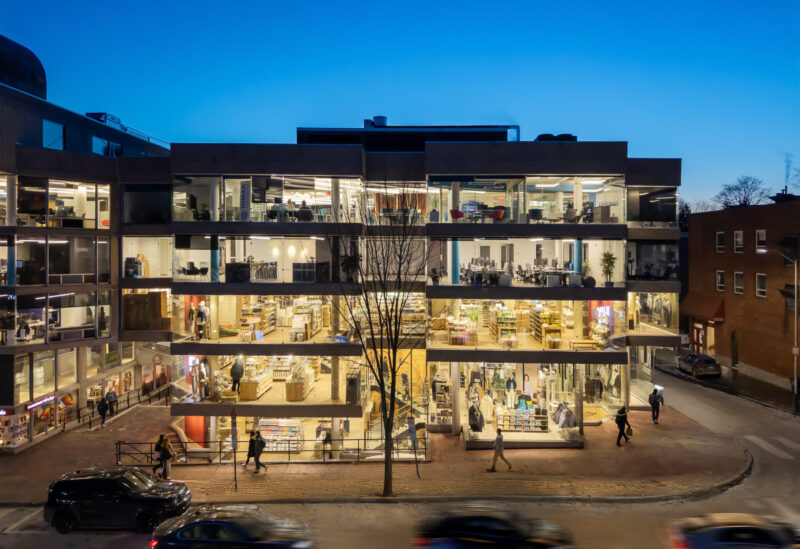
Photo: Gunnar Glueck, Flaunt Boston.
When the Design Research building opened in 1969, it served as a storefront for architect Ben Thompson’s store, which featured European and Scandinavian homewares. For MUJI’s renewal, the architects took a deliberately light approach, revealing rather than replacing the building’s defining architectural elements.
“We uncovered the existing textures to capitalize on what was already there and bring back the original beauty of the space,” says Colin Brice, co-founder and partner at Mapos Architects.
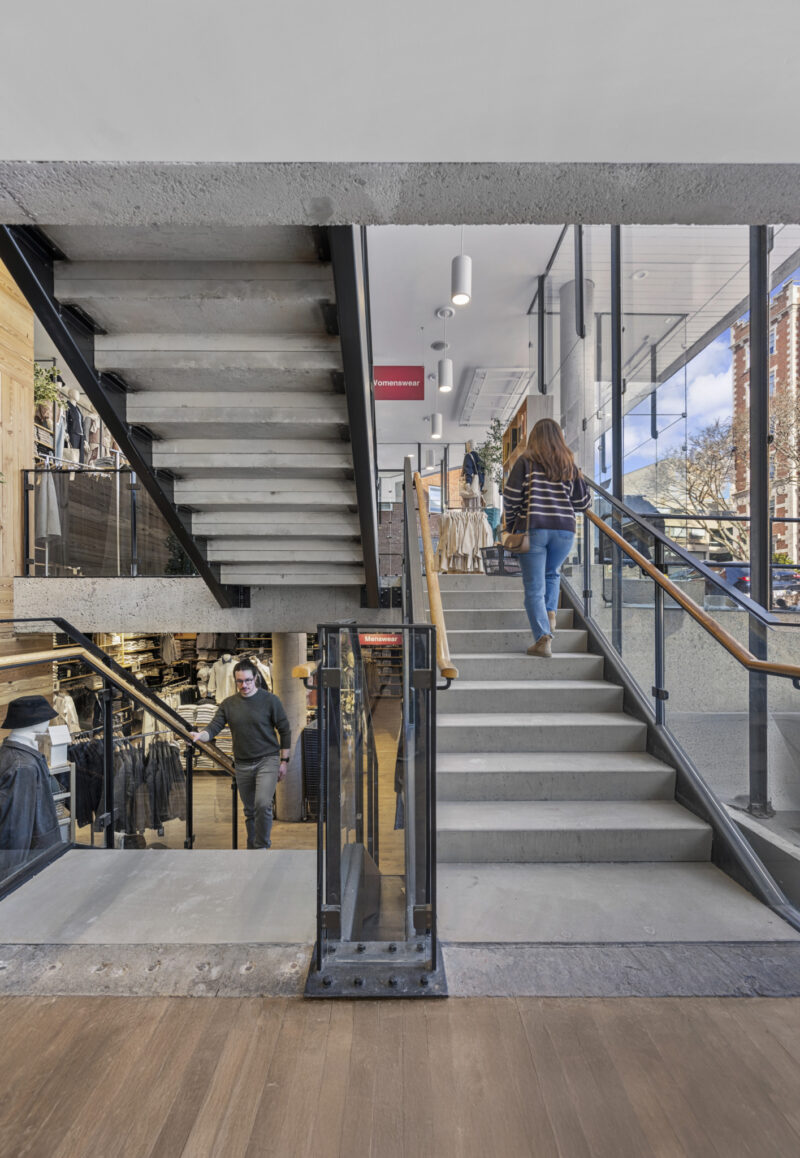
Photo: Gunnar Glueck, Flaunt Boston.
With a lightness untypical of the period, the structure boasts a balance of concrete and glass curtain walls, forming a jewel-box-like setting that feels surprisingly contemporary and welcoming.
“It’s really a great example of Brutalist architecture and how open it can be,” explains Caleb Mulvena, co-founder of Mapos Architects and managing partner of the project. “The entire storefront opens up to the community and customers can start shopping from the street as they look in.”
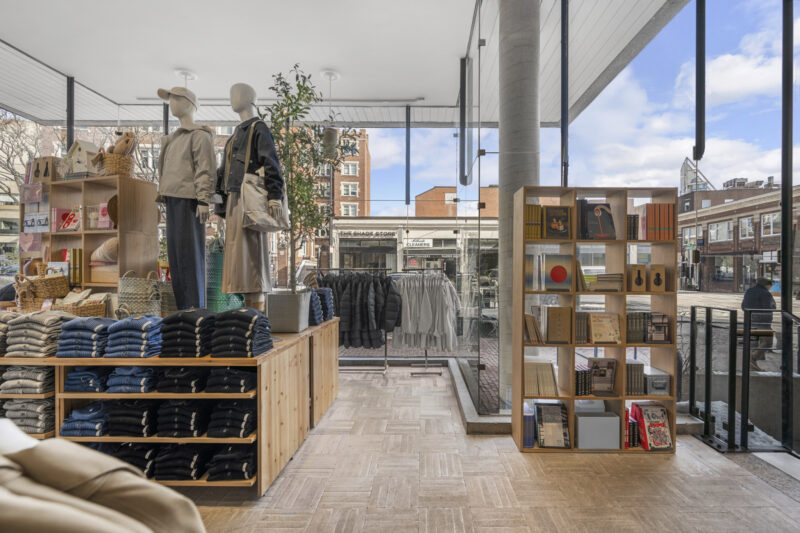
Photo: Gunnar Glueck, Flaunt Boston.
Improvements begin in the entryway, where the brick floor retains its patina, complemented by upgraded lighting and ceilings. Concrete columns, concrete masonry walls and floating staircases were exposed to give character to the interior. White and gray tones are combined with green tones and MUJI’s signature red. Locally sourced heart pine accent walls add warmth and align with the brand’s commitment to sustainable reuse.
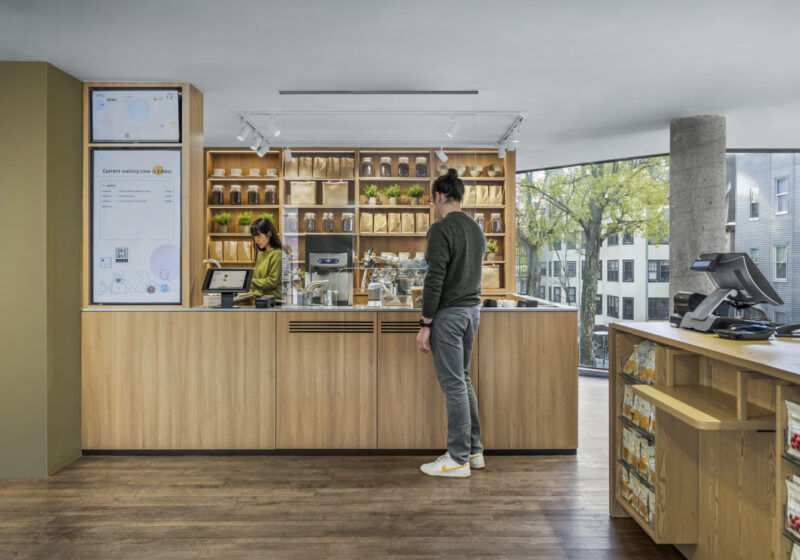
Photo: Gunnar Glueck, Flaunt Boston.
Set over four levels, the 12,000 square foot store encourages easy movement through an expansive, retail-like layout. At the rooftop cafe, shoppers will find a robot barista, presenting a hospitality-inspired experience that reflects MUJI’s growing emphasis on stores as destinations rather than just places to shop.
“It was really about leaning into the space as we found it,” adds Mulvena. “By keeping our touch light, we were able to celebrate these characteristics.”
It is this simplicity, rather than ostentatiousness, that has the greatest impact. As the first step in MUJI’s broader North American evolution, the Cambridge location demonstrates how thoughtful restoration can strengthen a brand’s identity.
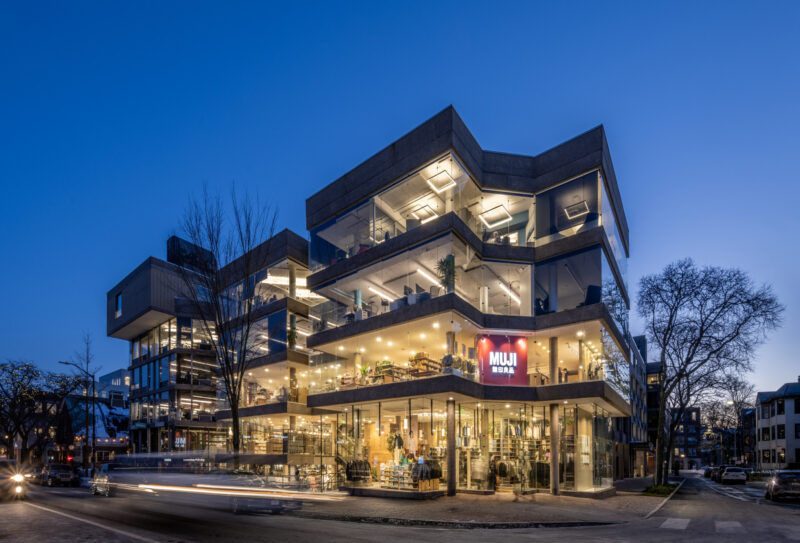
Photo: Gunnar Glueck, Flaunt Boston.
MUJI Harvard Square is open daily from 10am. until 8 p.m. (11 a.m. to 7 p.m. Sundays) at 48 Brattle Street in Cambridge, Massachusetts.