

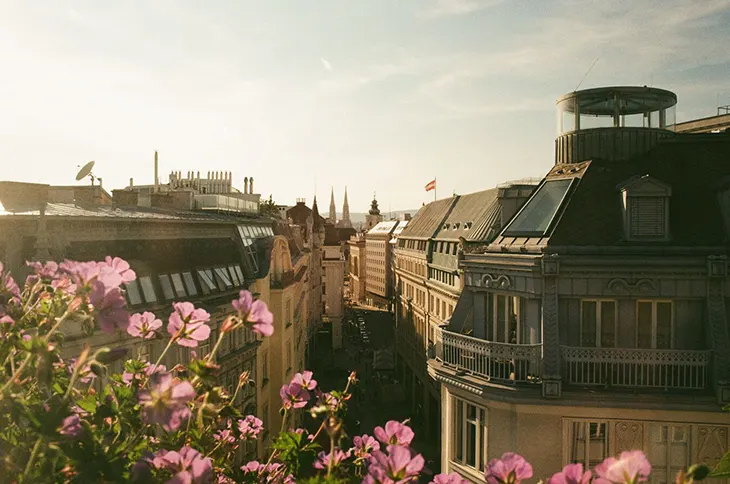
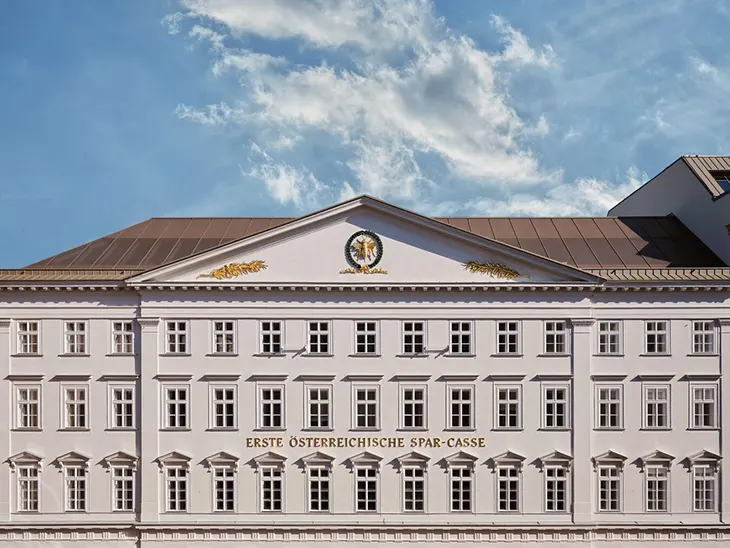
Rosewood Vienna enters the city with a clear position, based on architecture and shaped through a precise understanding of place. The hotel is located in the Old Town and is housed in four interconnected 19th-century buildings, which were renovated and reconstructed by BEHF Architects into a single, continuous system. The project preserves the neoclassical facades that define the street while reorganizing the interior with a modern spatial logic. This approach allows the building to remain anchored to Vienna’s architectural identity while supporting a new program based on movement, light and proportion.
From the first moment in, the experience unfolds through sequence rather than spectacle. The spaces transition with intention, guiding visitors through a multi-layered environment that seamlessly connects public and private spaces. Material selection, surface treatment and object placement create a sense of order that is carried throughout the property. The design does not rely on excessive or visual noise. Instead, it builds atmosphere through containment, where each element contributes to a larger structure that feels cohesive and controlled.
Location
Rosewood Vienna is located near Petersplatz and offers direct access to the city’s cultural and architectural landmarks. The location allows direct connection to the daily rhythm of Vienna, with museums, galleries and historic streets within walking distance. This proximity shapes the hotel experience, eliminating the need to separate destination and accommodation. Morning walks move seamlessly through the city, while evenings return to a quieter version of the same streets, creating a natural balance between activity and retreat.
The placement also reinforces the architectural logic of the project. Remaining fully integrated into the Old Town, the hotel functions as part of the urban fabric rather than as an isolated destination. Sight, sound and movement from the surrounding streets continue to inform the interior experience, maintaining a solid connection between the interior and the exterior.
Plan
BEHF architects approach the project with clarity, bringing four historic structures into alignment through careful intervention. The preserved facades preserve the original presence of the buildings, while the interior introduces a new order defined by proportion and material continuity. Movement within the space is purposeful, guided by changes in scale, light and surface.
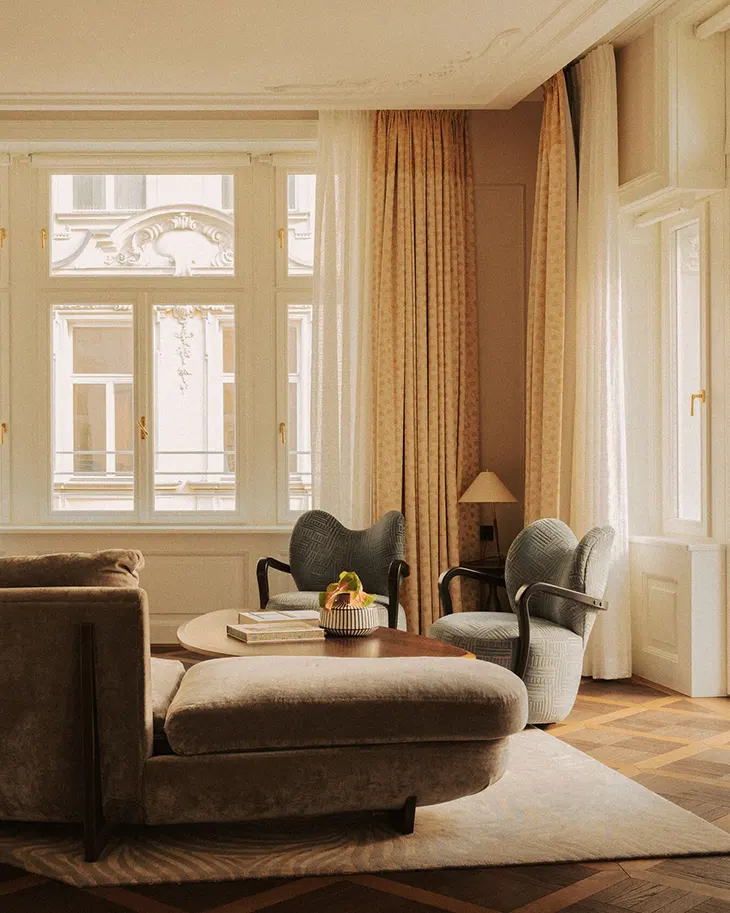
Salon Aurelie defines one of the central moments of design. A hand-painted mural wraps the room, creating a continuous visual field that anchors the space. Lobmeyr chandeliers distribute light precisely, while Backhausen fabrics introduce texture without interrupting the overall composition. A ceramic installation referring to the Danube adds another layer of context, connecting the interior directly to the geography of Vienna. These elements work together as part of a structured system, reinforcing the architectural framework rather than competing within it.
Rooms
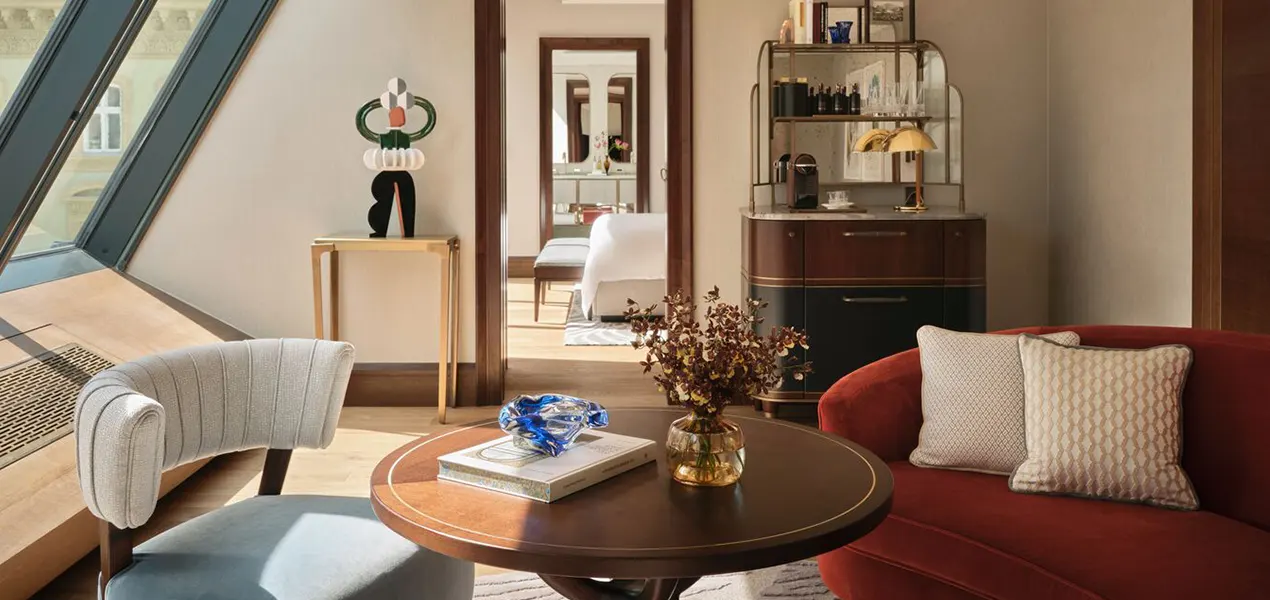
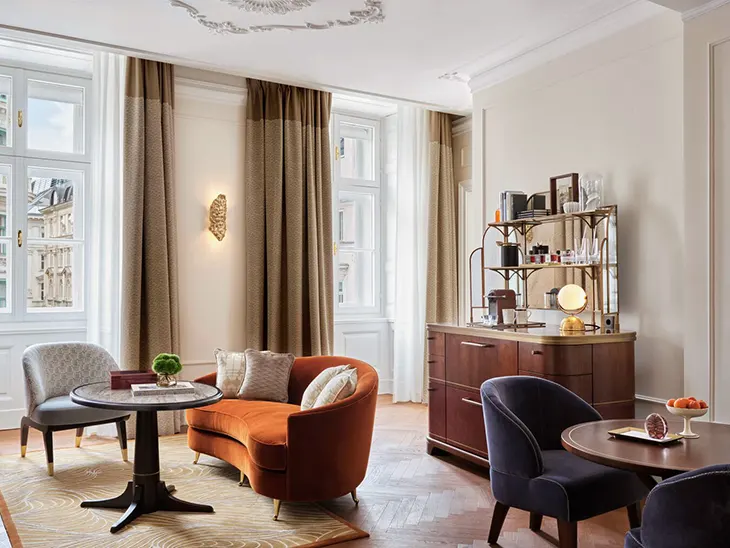
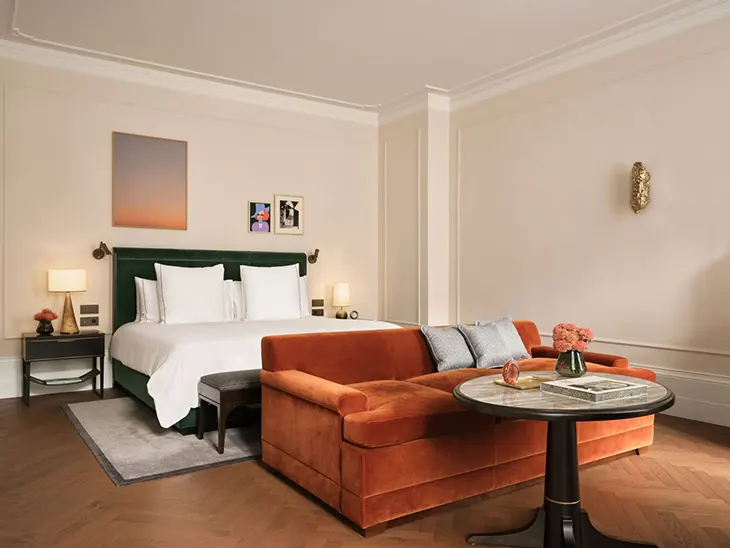
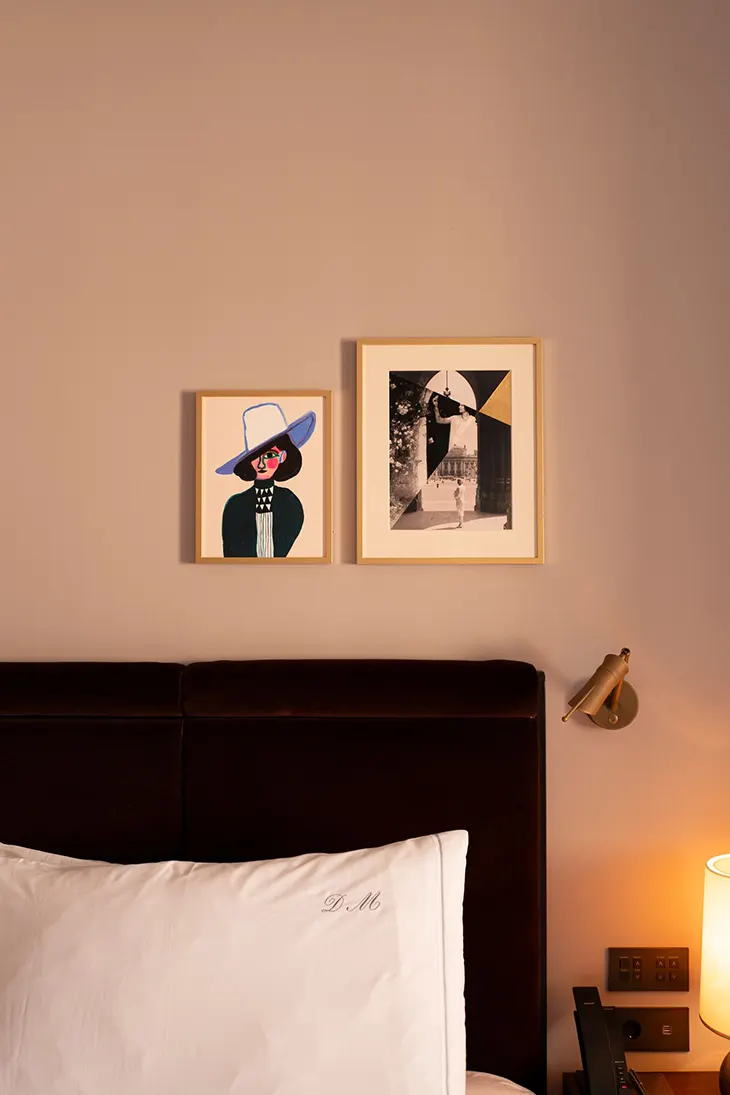
The rooms and suites extend the same design logic to more private settings. The layouts prioritize proportion and clarity, allowing any space to function with ease. Furniture placement aligns with architectural lines, creating a sense of order that supports both movement and rest. Materials remain consistent with the wider design language, ensuring continuity throughout the property.
There is a strong sense of balance within each room. Light enters in a controlled manner, surfaces remain defined and transitions between different areas are natural. The result is an environment that supports everyday use while maintaining a clear architectural identity.
Wellness
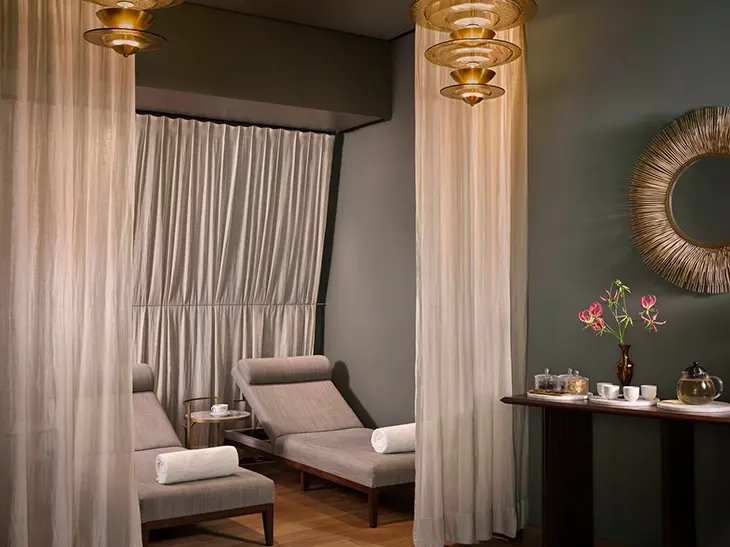
Asaya Spa it introduces a quieter, more contained atmosphere within the hotel. The design focuses on controlled environments, using light, proportion and material to create a sense of calm. The spaces change gradually, leading visitors to treatment areas, sauna, steam room and experiential showers.
The treatments follow a research-driven approach, developed in collaboration with Augustinus Bader. The experience is structured and precise, with attention to both physical and sensory details. The massage stands out as a defining moment, providing a high level of care that aligns with the broader attention to detail found throughout the hotel.
Refectory
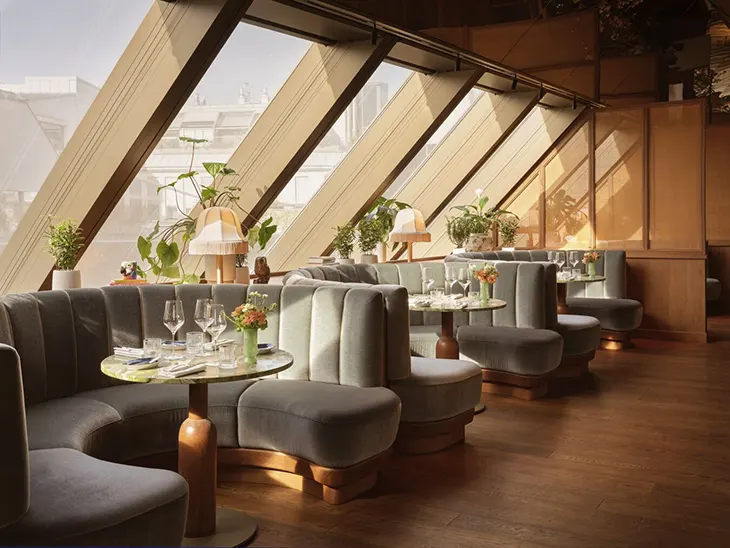
Dining at Rosewood Vienna takes place in spaces that extend the architectural narrative of the building. New Highness Restaurant and Bar it sits above the city, offering wide views across Vienna while maintaining a controlled indoor environment. The menu focuses on Austrian cuisine, interpreted through seasonal ingredients and a clear approach to preparation.
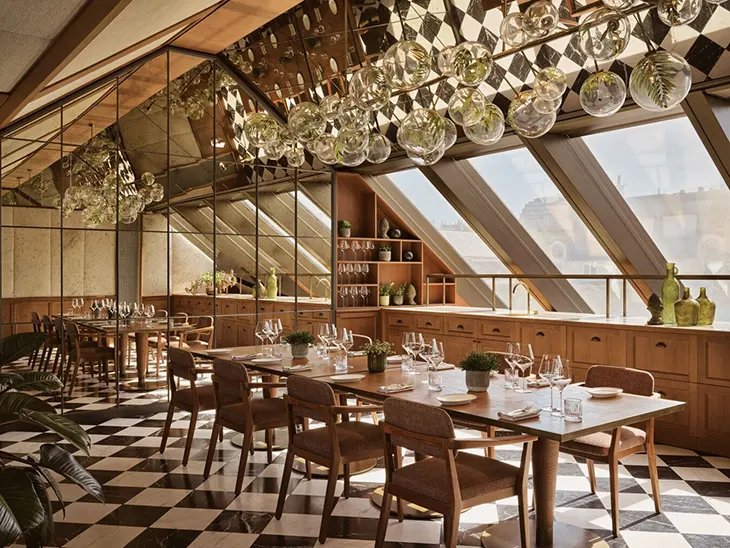
The rooftop setting introduces a different pace as the day progresses, transitioning from structured dining to a more relaxed evening atmosphere. The space adapts through light and use, maintaining its identity while hosting different moments. Every element, from layout to service, contributes to a cohesive experience that ties into the hotel’s overall design.
Rosewood Vienna presents a fully thought-out approach where architecture, design and hospitality work in a single system. Each element aligns with a clear structure, allowing the experience to develop with consistency and purpose.
Rosewood Vienna
Peterspl. 7, 1010 Vienna, Austria
vienna.reservations@rosewoodhotels.com
+4317999888
www.rosewoodhotels.com



