
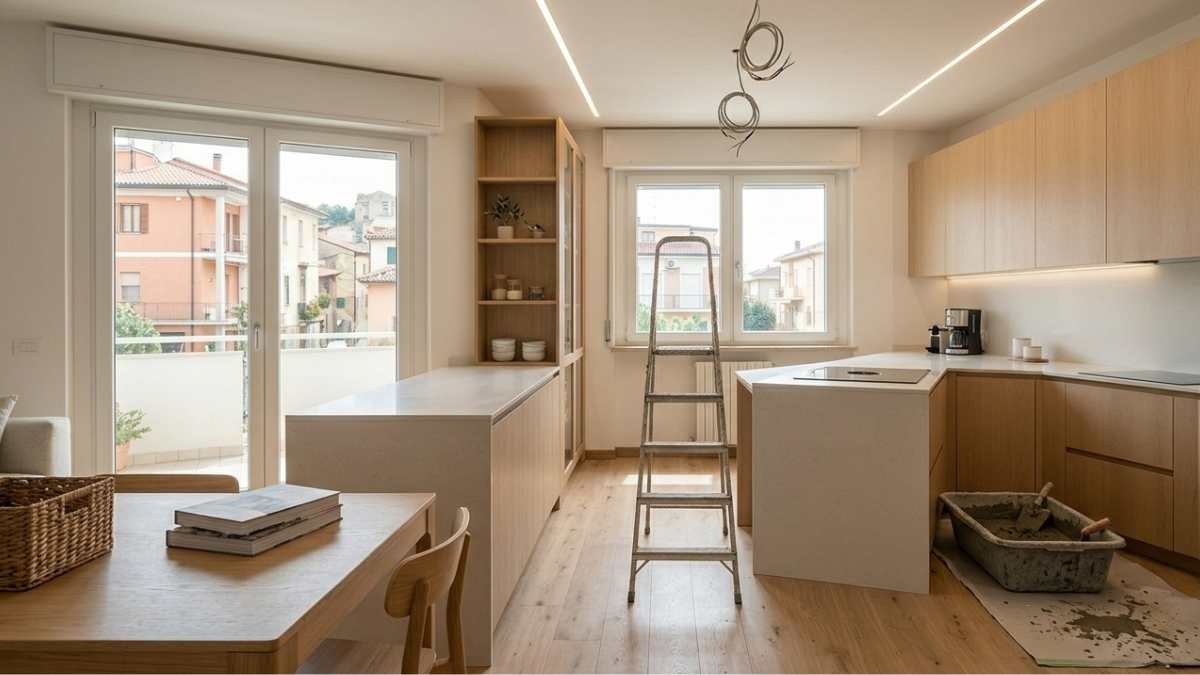

When you decide to renovate a room, the first thing you do is a quick calculation: flooring, paint, maybe some new furniture. The result seems manageable, often even lower than expected. Then the work starts and the budget changes. Not a little, but inside important way.
The reason is simple: we focus on what we see, but underestimate everything behind it. And that’s exactly where it is more insidious expensesthose that do not appear in the initial estimates but that really affect the final cost.
The systems: the cost that changes everything without you seeing it
One of the most underrated aspects concerns the electrical and plumbing systems. As long as everything works, we tend to ignore it. But as soon as you open a wall or work on floors and walls, problems immediately appear necessary adjustments.
Old cables, inadequate sockets, poorly placed lighting points. Even simply moving an outlet or adding a switch involves an intervention that has a cost. If the system is old and not updated, the situation changes completely. In this case, it is no longer about small adjustments, but about a real makeover.
And here the budget can go up quickly, without there being a visible change in the aesthetics of the room.
Debunking: a voice that is always forgotten
Demolition is easy to imagine, but rejection is not. However, it is one of the most specific and inescapable voices.
Old tiles, plaster, rubble, rubbish. Everything must be collected, transported and disposed of according to precise rules. It is not a small detail, because it requires time, labor and often even transport and landfill costs.
Many initial estimates do not clearly include this element or underestimate it. The result is that it comes later, as an addition that has more impact than you think.
The unexpected events behind the walls
As long as the room remains intact, everything seems under control. But as soon as we intervene, details emerge that were not seen.
A wall that conceals dampness, a background to reformpoorly positioned pipes or worn materials. These are common situations, especially in older homes.
The problem is that these unexpected events cannot be completely avoided. They can be partially predicted, but not eliminated. And that is precisely why they represent one of the main ones causes of budget increase.
Small changes that become big costs
During a renovation it is normal to change your mind. Move a light point slightly, change the position of an element, choose a different material at the last minute.
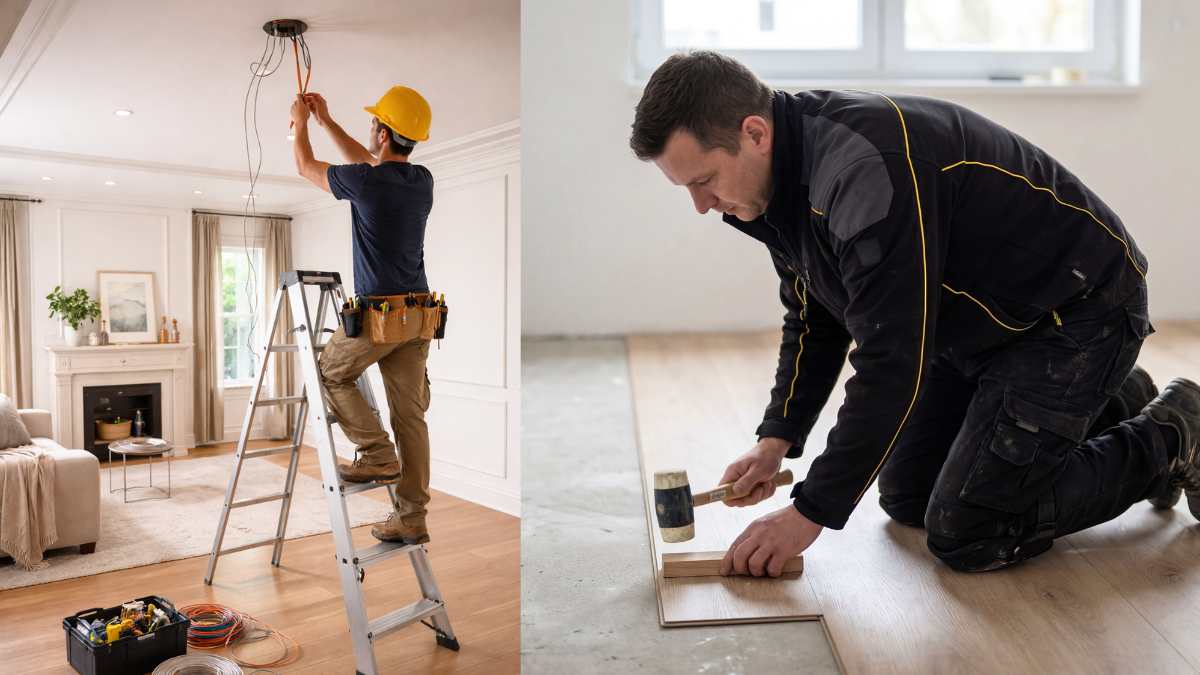
These are decisions that seem minimal, but have a definite impact. Each variation requires additional time, adjustments and often new processes.
The result is that the final cost is not increased for a single major intervention, but for one sum of small changes that accumulate.
Working hours and site management
Another aspect that is often underestimated is time. The more work is done, the more indirect costs increase.
Human resources, organization, any delays between one phase and another. Even an extra day can have an impact, especially if it involves more professionals.
In addition, the Site management requires coordination. When precise planning is lacking, pauses, overlaps or inefficiencies are created which are reflected in the final cost.
How much do these costs really affect the total?
There is no single number that applies to everyone, but there is one fact that often comes up: the “invisible” costs can significantly affect the overall budget.
In many cases they represent a significant part of the final cost, precisely because they are not taken into account at the beginning. And that’s why a seemingly simple renovation can turn out to be more demanding than expected.
How to prevent your budget from getting out of control
There is no question of eliminating these costs, because they are unavoidable. It’s about predicting them.
You have one margin in the budgetknowing about systems in advance, asking for detailed estimates, and always considering a contingency fee are fundamental steps.
Approaching the project with a clear vision also helps reduce changes during construction, which are among the main causes of increased costs.
The difference between estimate and actual cost
Ultimately, the distance between the imaginary cost and the real one depends on exactly these elements. They are not seen, they are not immediate, but they are the ones who really make the difference.
A well-managed renovation is not one that costs the least initially, but one that avoid surprises along the way. And it is precisely by knowing these expenses that you can face your work more consciously.



