
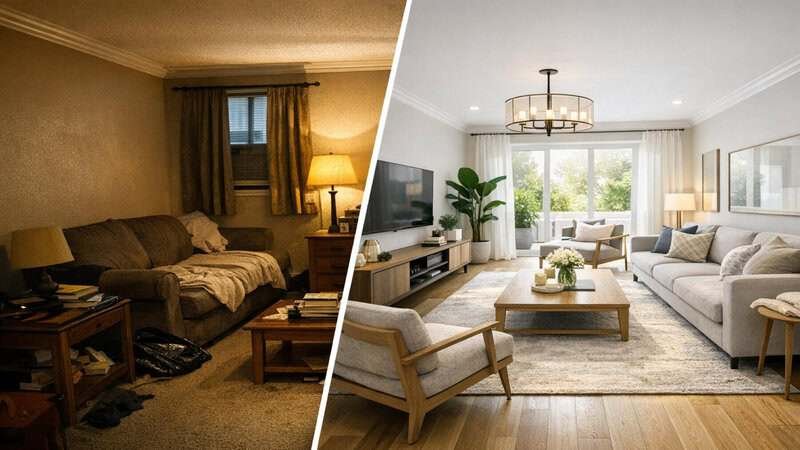

1. Use light, neutral colors

Painting walls in light shades such as white, cream or soft gray reflects more light, making rooms feel open and airy. Conversely, dark colors can make a space seem closed in on itself. For example, Scandinavian interiors often use light, neutral tones to create a feeling of spaciousness. (architecturaldigest.com)
2. Maximize natural light

Allowing sunlight to flood your space can make it feel more open and airy. Replacing heavy curtains with sheer curtains or removing them entirely lets in more light. Placing mirrors near windows reflects sunlight deeper into the room, enhancing brightness. HGTV suggests using light-filtering shades and keeping windows clear to maximize natural light. (lowes.com)
3. Incorporate mirrors strategically

Placing large mirrors opposite windows or in dark corners amplifies light and creates the illusion of double space. Unlike standard furniture, mirrored pieces reflect the surroundings, enhancing depth and openness. For example, a mirrored wall can make a narrow hallway appear wider. Spruce offers information on mirror placement to maximize these effects. (thespruce.com)
4. Choose multifunctional furniture

Choosing furniture pieces that serve dual purposes, such as ottoman storage or sofa beds, helps keep spaces clutter-free and maximizes functionality. For example, a convertible coffee table can be turned into a desk or a dining table, adapted to different needs. This approach is particularly beneficial in smaller rooms where space is limited. For more ideas at multipurpose furnitureconsider exploring resources that specialize in multipurpose furniture solutions for small spaces.
5. Hang the curtains high and wide

Placing curtain rods closer to the ceiling and extending beyond the window frame creates the illusion of higher ceilings and larger windows, making the room more spacious. This technique draws the eye up and out, enhancing the perception of height and width. For more expert advice on hanging curtains, consider exploring resources that offer guidance on hanging curtains to maximize space and light in your home.
6. Select Furniture with exposed legs

Choosing sofas and chairs with exposed legs allows for more visible floor space, making a room feel less crowded compared to bulky skirted furniture. For example, mid-century modern pieces often have thin legs that create an airy atmosphere. As noted by Apartment Therapy, elevating the furniture off the ground lets light under the piece, enhancing the perception of space. (apartmenttherapy.com)
7. Clean and simplify the decor

Reduction of visual clutter minimal accessories and organized shelves create a more expansive look. Embracing minimalism over maximalism can significantly affect spatial perception, making rooms feel larger and more peaceful. For practical tips on downsizing, consider exploring resources that offer guidance on simplifying your home’s decor to enhance its spaciousness.
8. Use large-scale artwork or rugs

Incorporating large artwork or a large area rug can anchor a space and guide the eye, making boundaries seem further away than they are. For example, a large painting can create a focal point, while a gallery wall can overwhelm a small room. Likewise, a generously sized rug unifies the furniture arrangement and visually expands the floor surface. As noted by House Beautiful, a large rug can make a room feel larger by anchoring the space and guiding the eye. (housebeautiful.com)
9. Embrace the vertical lines

Incorporating vertical elements such as tall shelves, vertical stripes or floor-to-ceiling moldings draws the eye upwards, enhancing the perception of height and making a room appear more spacious. For example, vertical walls of shiplap can add texture while elongating walls. As Elle Decor notes, using vertical lines in small spaces can create the illusion of greater height and depth. (elledecor.com)
10. Choose Glass and Lucite tones

Incorporating transparent furniture, such as glass coffee tables or Lucite chairs, maintains an open visual flow, preventing the space from feeling blocked. For example, Lucite side tables they are less visually intrusive than solid wood pieces, allowing more of the floor and walls to be seen. This transparency creates a feeling of openness and airy atmosphere in the room. For more information on using clean materials in interior design, consider exploring resources that specialize in furniture and decorating ideas.
11. Use Monochrome Color Palettes

Decorating with shades from the same color family creates seamless continuity, making boundaries fade and spaces visually expand. For example, a monochromatic blue room provides a cohesive and relaxing atmosphere, while a combination of many colors can introduce visual breaks that can make the space feel more fragmented. As Benjamin Moore notes, using multiple shades of a color can soften the look of a monochromatic palette, infusing a relaxing energy into any space. (benjaminmoore.com)
12. Keep the floor stable

Using the same floor in adjacent rooms or in a studio apartment eliminates visual breaks, enhancing a sense of flow and openness. For example, continuous wood or tile flooring creates a seamless transition between spaces, making the area appear more expansive. As noted by Bob Vila, solid flooring can make a small room appear larger by eliminating visual breaks. (bobvila.com)



