
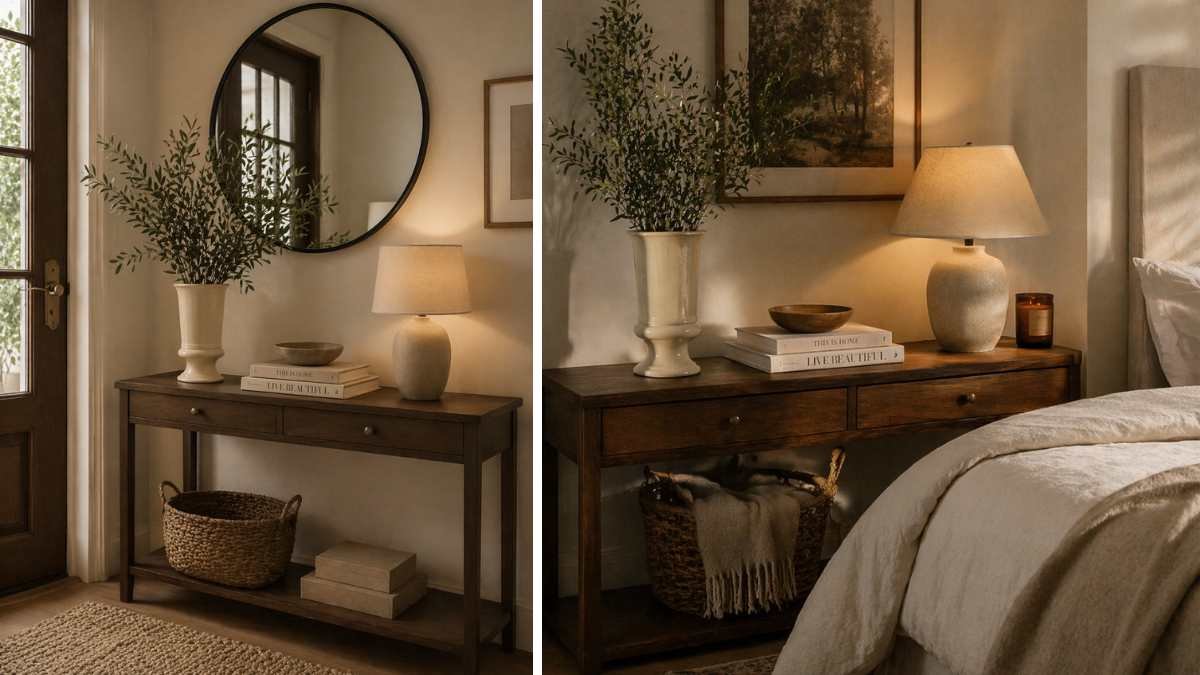

It is not rare that you enter a furniture store and see vases that seem to come from a craft workshop, with irregular surfaces, deep colors and imperfect shapes. What is surprising, however, is to find the same result in an item that costs less than 20 euros.
The reactive terracotta vase from H&M Home attracts attention for this very reason. At first glance it doesn’t look like an industrial product. It has that imperfect, material presence usually associated with handmade ceramicsand on the contrary it is accessible, simple to introduce in any environment and above all very flexible.
The surface that changes everything
The detail that really makes the difference is reactive glazing. It is not a uniform finish, but a process that creates irregular shades, slight color variations, glossier areas and more opaque ones. This means that each piece looks slightly differenteven if mass produced. And it is precisely this controlled imperfection that gives the artisanal effect.
In a modern home, where everything is often very precise and linear, this type of surface introduces an important visual variation. It is not an object that fills space, but one that enriches it.
Where it really works (and why)
This vase does not need to be “justified” with substantial flowers or elaborate arrangements. It works by itself. A console in the entrance, for example, immediately becomes a focal point. Placed next to a mirror or a lamp, it creates a little visual balance without weighing it down.
In the living room, on a coffee table or shelf, it combines perfectly with neutral environments. With beige walls, open sofas and natural materials, the vase adds depth without breaking the harmony. In a modern kitchen, especially if it is clean and minimal, it can be the only visible decorative element. And for this reason it acquires even greater value.
The combinations that really enhance it
It’s not just the vase that matters, but the frame you place it in. With light woods and natural fabrics, it creates a very Scandinavian, clean and relaxed effect. With darker materials, such as walnut furniture or black details, it becomes a stronger contrasting element.
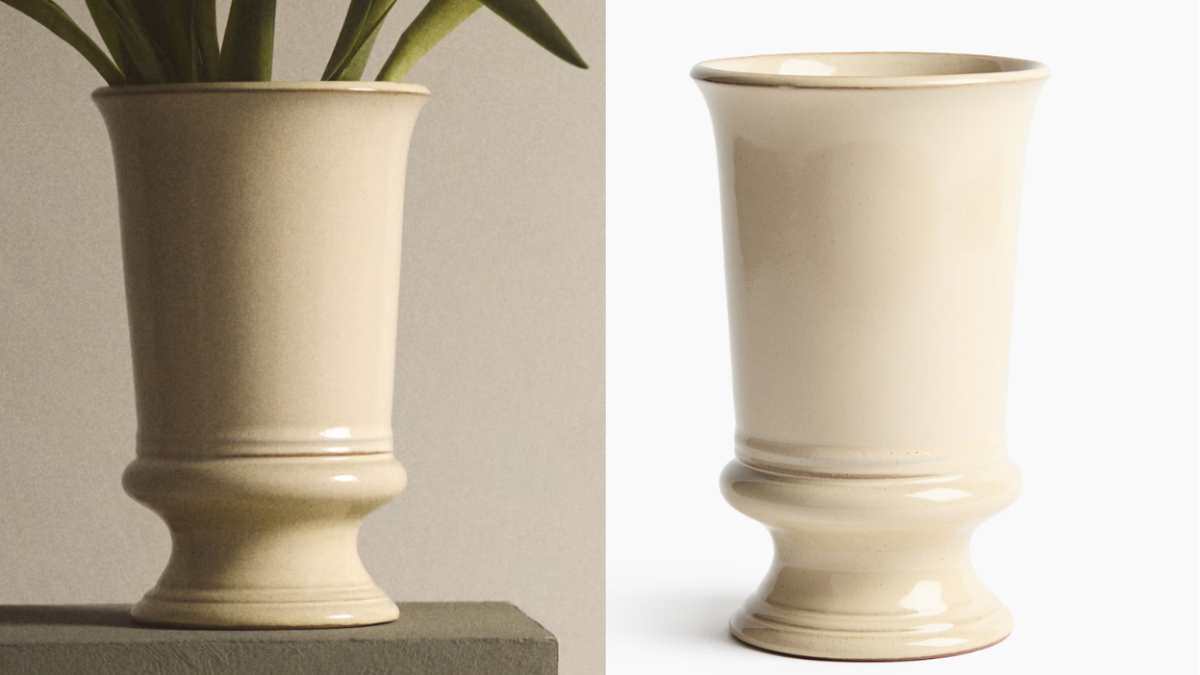
It also works very well with simple elements: a dry branch, a few green stems or a completely empty one. In some cases, Adding nothing is the best optionbecause it lets the shape and the surface speak.
Light also plays a role. Placed near a window or under a warm lamp, the glazing reacts and creates different reflections during the day. It is an object that changes slightly over time, never appearing static.
Because it looks more expensive than it is
The reason is simple: it exactly replicates the characteristics we usually associate with craftsmanship. Shapes not perfectly symmetrical, irregular surfaces, uneven colors. They are all elements that the brain reads as “handmade”, even when they are not.
H&M Home works on just that. He does not try to create fancy objects, but visually reliable elements, able to fit into already sophisticated environments without lowering their level. And the result is clear: a cheap item that doesn’t look cheap.
The real reason people like it so much
It’s not just a matter of price. It’s a matter of balance. This vase manages to stay in the middle between design and accessibility. It’s not very discreet, but it’s not anonymous either. It does not dominate the space, but completes it. And that’s exactly what works in homes today: simple objects, but with a precise identity, that don’t force you to rethink the entire furnishing. Because in the end it is not the cost that makes the difference. AND how an object manages to stay in space.



