
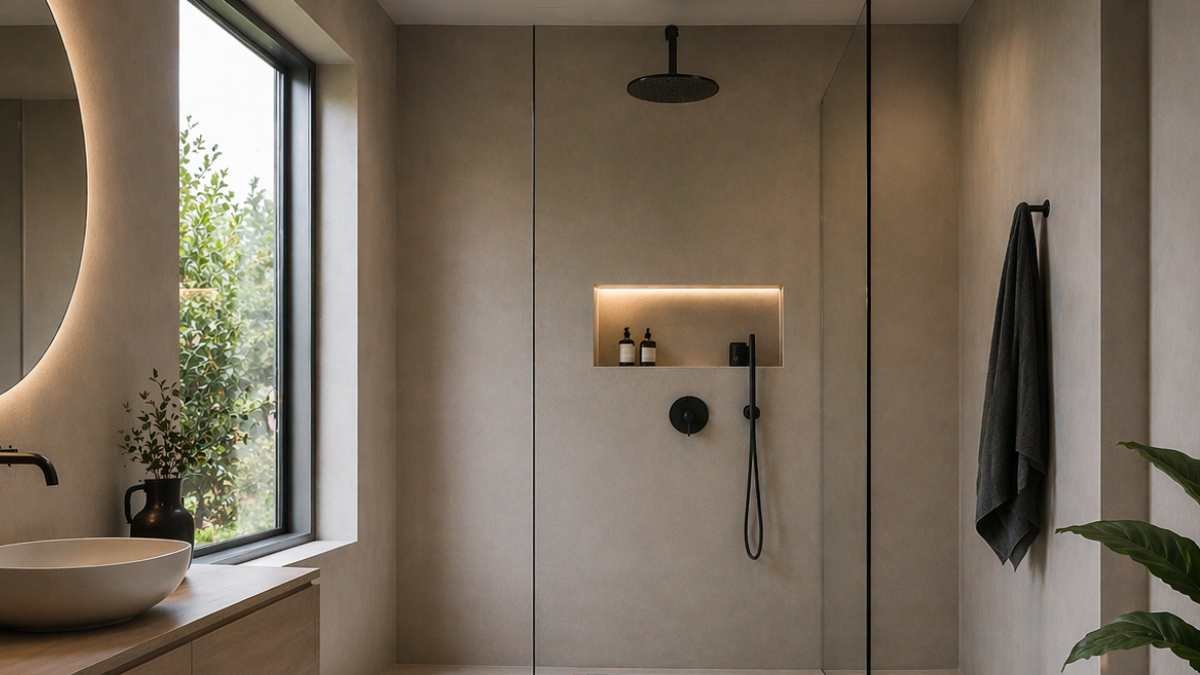

In recent years, resin flooring is increasingly entering bathrooms, even in regular homes and not just in design environments. Continuous surfaces, without joints, neutral colors and a very clean visual effect have made it one of the most talked about alternatives to classic tiles.
But beyond aesthetics, the real question is different. Is it really a practical and long-term solution or is it an option that only works in the beginning?
What does it mean to have a resin floor?
The resin is not a “single” material, but a system consisting of multiple layers applied directly to the existing support. This is one of the most interesting aspects, because in most cases it is not necessary to demolish the old floor.
You work on the tiles that are already there, creating a continuous surface that completely eliminates joints. The result is very uniform, almost monolithic and immediately changes the perception of the space. The bathroom looks bigger, neater, more modern. But precisely because it is a continuous surface, it all depends on how it is constructed. It is not material that is placed, it is material that is built.
The real benefits (what makes you choose resin)
The first advantage is obvious as soon as you enter the bathroom. The absence of leaks eliminates one of the main critical points traditional surfaces. Therefore, there are no interruptions dirt does not accumulate in the spaces between the tiles and cleaning becomes easier.
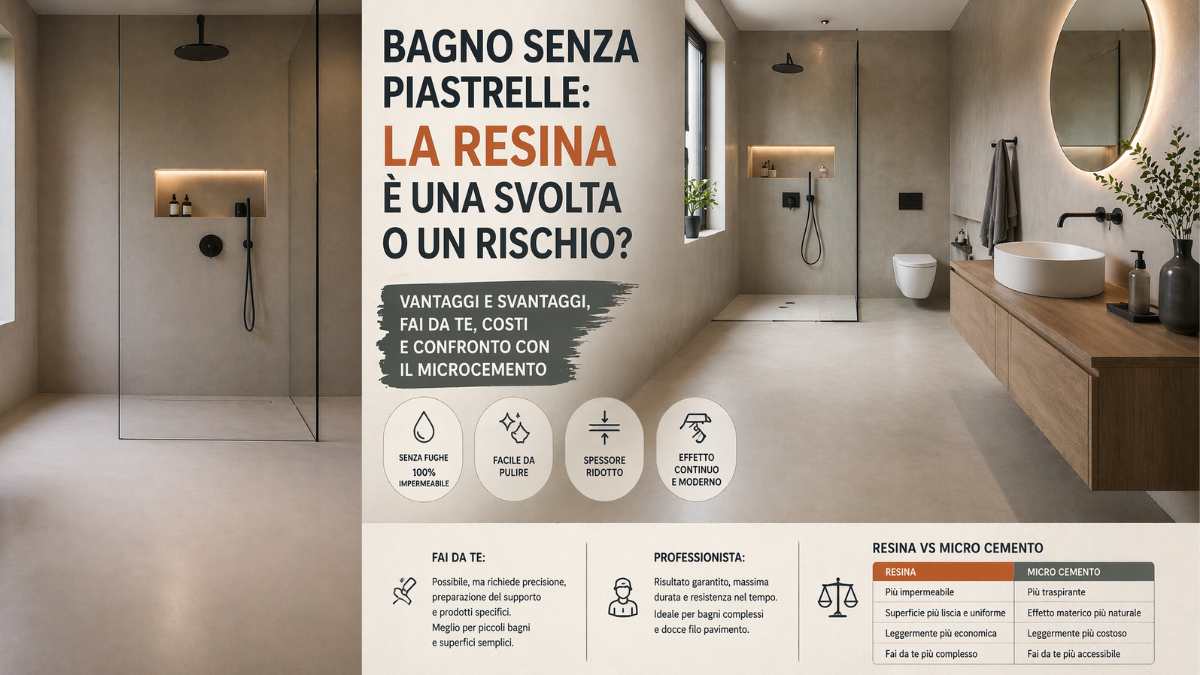
Even from an aesthetic point of view, the resin has a strong impact. It allows you to create uniform surfaces, with continuous colors and without visual gaps. This makes the bathroom more modern and visually larger. Another important aspect is the reduced thickness. The resin is applied in just a few millimeters, so it’s perfect for renovations where you don’t want to change doors or heights. Finally, if properly constructed, it is waterproof and moisture resistant, therefore suitable for an environment such as the bathroom.
Limits (those that are often discovered later)
The finer point of resin is its sensitivity to installation. He does not forgive mistakes. If the bottom part is not completely stable or if the application is not done well, cracks may appear over time. It’s not common, but it’s one of the scariest problems.
Scratches are also something to consider. Resin is durable, but not indestructible. In a bathroom it is subject to less pressure than in other environments, but it is still a surface that needs to be treated with care. Another often underestimated element is tactile perception. It is not cold like ceramic, but it also lacks the materiality of other materials. It is a smooth, continuous, very even surface. Finally, the cost. It is not a cheap solution, especially if it is done by professionals.
Do it yourself: is it really possible?
In recent years, DIY kits for resin floors have been on the rise, and on paper they seem like an affordable solution. In fact, the problem is not so much the hardware as the preparation and application. The support must be perfect, without cracks, without movements. The application must be uniform, without errors in timing or thickness.
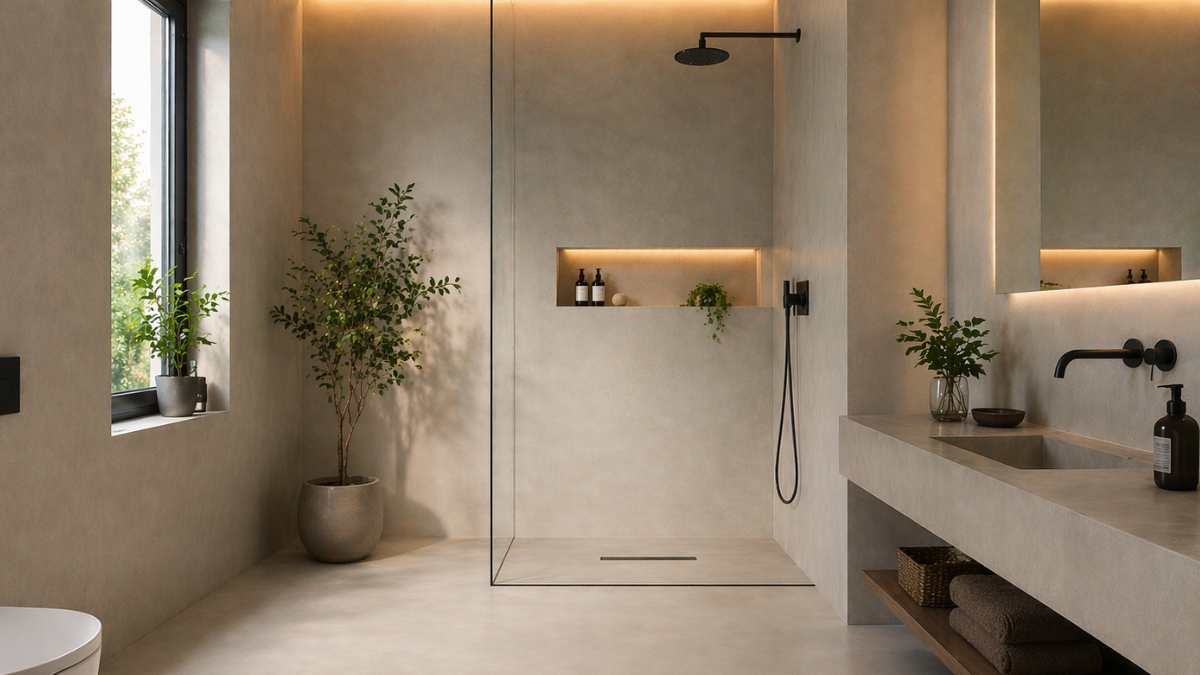
Even small defects are immediately visible, precisely because the surface is continuous. There are no joints or breaks that could “hide” imperfections. For this reason, DIY can only work in very simple environments and with good manual skills. In a bathroom, where humidity and water are constant, Relying on a company is almost always the safest option.
How much does it really cost?
The cost of resin varies greatly depending on the quality and complexity of the work. For professional work, it generally starts at around €70–100 per square meter and can go up to over €120–150 for more specific finishes.
“Do-it-yourself” reduces the cost of materials, but does not eliminate the risk of errors. And redoing a poorly designed resin floor can cost more than doing it right away.
Resin or microcement: what changes?
The comparison with microcement is inevitable, because the visual effect is similar. Microcement has a made more materialslightly more “alive” to the touch and sight. Resin, on the other hand, is more uniform and continuous.
In terms of cost, they are pretty much in line when it comes to professional work. There is no clear difference, but microcement can be slightly more expensive in some processes. When it comes to DIY, microcement is generally more manageable. It still requires care, but is less “rigid” in final performance and can be more tolerant of small mistakes. The resistance is also slightly different. Microcement tends to be more breathable, while resin is more waterproof.
So is it worth it?
Resin is not a passing fad, but neither is it a one-size-fits-all solution. It works very well when you want a clean, continuous, grout-free bathroom with a contemporary aesthetic. But it needs attention, especially in the application.
The real issue is not choosing resin or other material, but figuring out if you are willing invest in the right attitude. Because everything is judged there. If done well, it lasts over time and maintains its effect. If done poorly, problems appear quickly. And in a bathroom, where water is always present, it is not a detail.



