
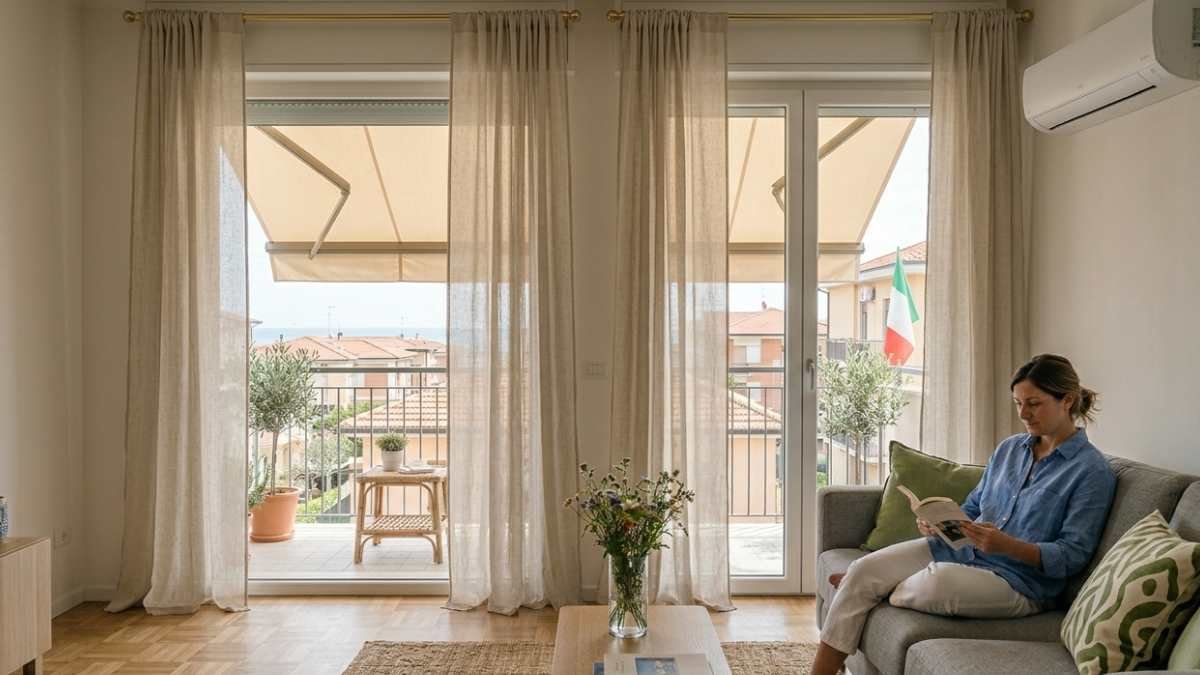

When you think of awnings, the most common image is that of a small shade on the balcony or terrace. In fact, their role is much more important and, above all, much more specific than it seems. They don’t just make an outdoor space more livable, they directly intervene in it interior comfort of the houseaffecting the temperature and, consequently, the energy consumption.
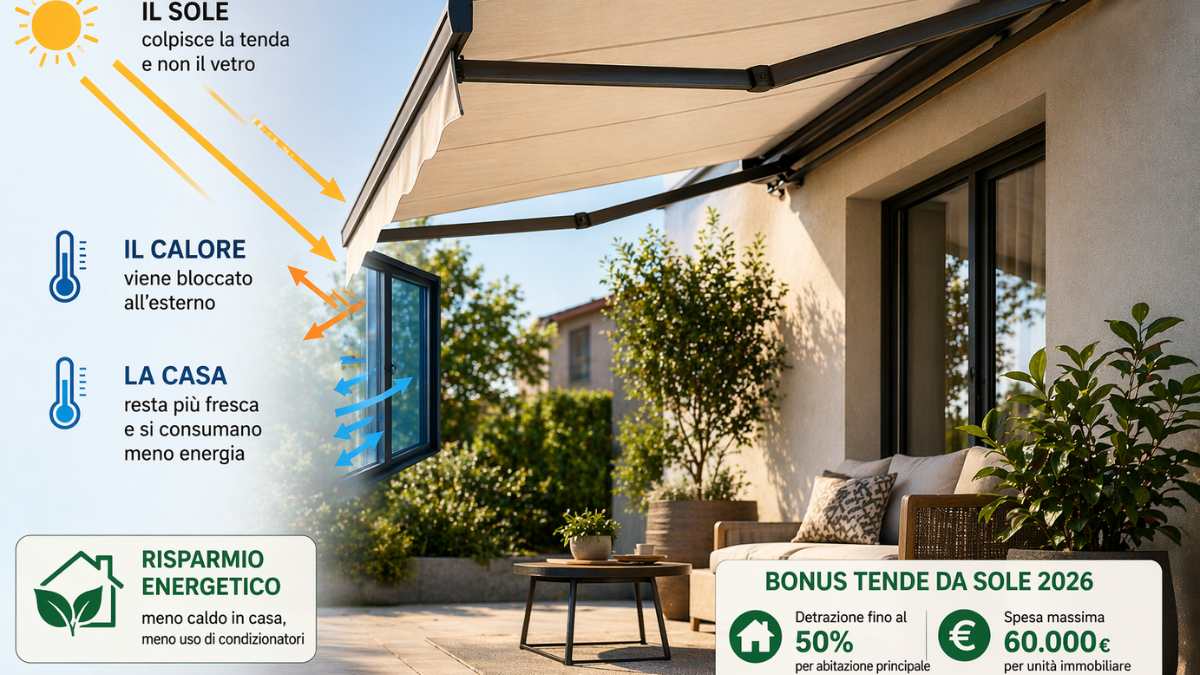
The central point is to understand how heat enters environments. It’s not just a matter of direct light. When the sun hits a window, the glass heats up and transmits energy to its interior. This heat is trapped and accumulated, causing the temperature to rise even when the windows are closed. The tents they work precisely because they are introduced before this process, creating a external barrier that blocks solar radiation and prevents the glass from overheating. This is where the real difference comes in compared to any in-house solution.
How thermal shielding actually happens
The operation is seemingly simple. An effective awning not only blocks visible light, but significantly reduces the amount of solar energy reaching the glass surfaces. When the radiation stops outside, the glass stays cooler and the air inside doesn’t overheat.
This means that the house maintains a more stable temperature during the day. Even in the hottest hours, the environment remains more sustainable without having to use the air conditioner all the time. It is a phenomenon that is immediately noticeable, especially in environments exposed to the south or west, where the sun is more direct and prolonged. Internal curtains, on the other hand, intervene very slowly.
At that point the heat has already entered and spread into space. That’s exactly why external screens are considered much more efficient from an energy point of view.
Materials: the real element that makes the difference
Not all awnings work the same way, and much of the effectiveness depends on the fabric used. The most common materials are technical, such as acrylic and treated polyester, designed to withstand the sun while reflecting some of the radiation.
The fabric surface is never neutral. THE light colors they tend to reflect a greater amount of light and heat, helping to keep the area below cooler. Darker colors, on the other hand, absorb more, but can be effective if the material is designed to dissipate heat without transferring it internally. The plot also plays a fundamental role.
And very light fabric It lets more light and therefore more energy through, while a denser weave improves shielding ability. Some more advanced fabrics have special treatments that increase reflection or reduce absorption, making the scene perform better without compromising aesthetics.
This is precisely where the quality of the product comes into play. At first glance the tents may look similar, but the behavior under the sun can be completely different.
Mechanisms: why structure matters as much as fabric
In addition to the material, the structure of the tent directly affects the efficiency. THE awnings with extendable arms they are among the most popular because they allow you to adjust the tilt and adjust the view during the day. This means you can track the movement of the sun, improving protection at the most critical times.
Vertical awnings are more suitable for directly exposed windows, especially when the sun comes in from the side. In this case the shielding is more direct and protects the interior better. Pergolas and pergolas represent a more structured solution. They don’t just cover a window, they create onecontinuous shaded area which also protects exterior surfaces, further reducing the heat that can build up near the house.
An increasingly widespread aspect is motoring. Automated awnings, equipped with sun and wind sensors, adjust the opening independently. This is not just an extra comfort, but a way armor optimization all day long, even when you’re not at home.
Practical solutions: what to choose based on your home
The choice of the stage depends largely on the exhibition and the configuration of the premises. In a home where the sun hits balconies or windows directly during the hottest hours, a well pitched awning can make an immediate difference, creating a shaded area that protects both the outside and the inside.
However, if the problem involves side-facing windows, one vertical or folding awning it is often more effective, because it blocks the sun more directly. In larger environments, such as terraces or gardens, pergolas allow you to better manage light and heat, creating a living space even on the hottest days. In all cases, the logic remains the same. It’s not about adding a decorative element, it’s about placing a screen in the right place where it can actually intercept the sun before entering the house.
How much are you really saving?
The effect on consumption is one of the most interesting aspects. By reducing heat input, the need to use the air conditioner is reduced. This translates into more limited use of cooling systems and, consequently, a reducing bills.
Savings depend on several factors, such as the exposure of the house, the quality of the awning and its use during the day. But in general, good solar shading allows you to significantly reduce it thermal load of the environments, making the home more efficient without invasive interventions.
Awning Bonus 2026: what you need to know
In 2026, awnings are still among the incentivized interventions, precisely because they help improve energy efficiency. You can get one significant tax deduction on the expenses incurred, in particular for the main residence.
To access the benefits, scenes must meet certain exact characteristics. They must be mounted on glass surfaces, adjustable, and have a true grid function. So not just any cover is enough: it has to be a solution designed to reduce heat input. The spending ceiling is quite large and allows you to cover more structured interventions, such as pergolas or motorized systems.
The payback is made over time, in the form of a tax deduction, making the investment more affordable. At the moment conditions are still favorable, but it is possible that in the coming years the rates will decrease, making intervention less convenient.
Ultimately, what really changes is not just the presence of the scene, but the way it is chosen and placed. When the the armor is properly designedthe sun ceases to be a problem and becomes a manageable element, improving the comfort of the home and specifically reducing consumption.



