
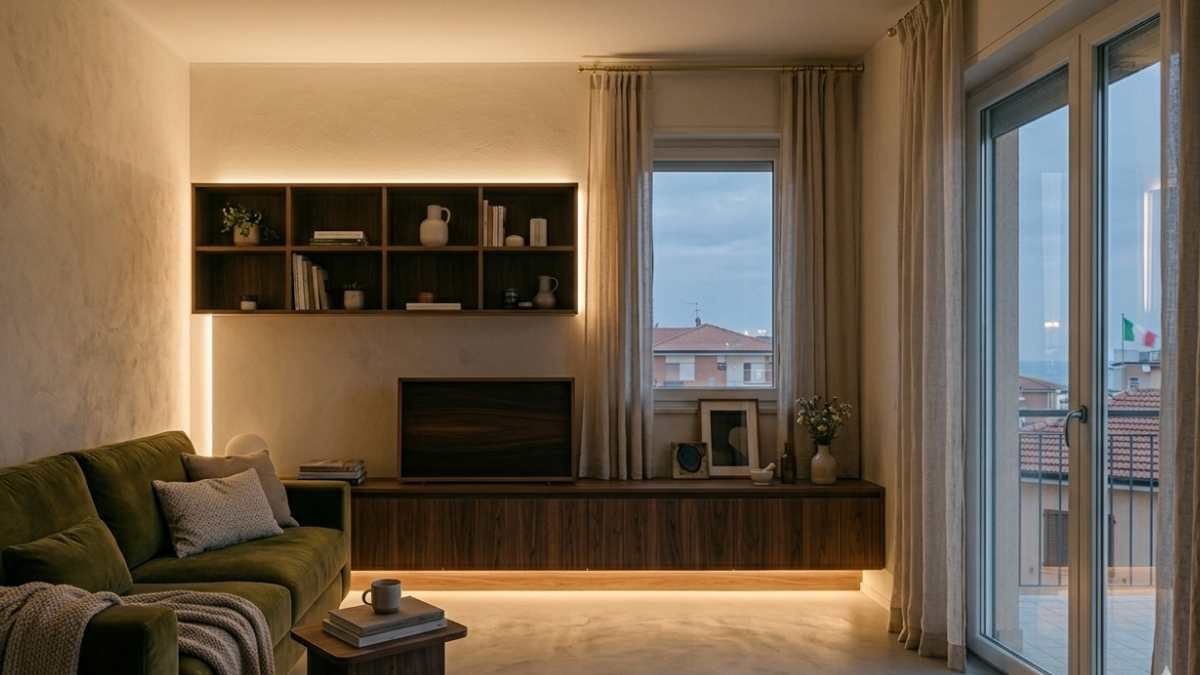

At first glance it looks like a strip of plastic with small bright dots. Nothing particularly interesting, in fact, often sold as a secondary, almost decorative accessory.
In fact, what is called a “hidden LED light” is one of them the most used tools in modern interior design. It is not a lamp in the traditional sense of the term, but a linear, thin, flexible light source, designed to installed invisiblyalong edges, under surfaces or in small recesses.
Its operation is very simple: a sequence of micro LEDs distributed along a continuous strip emits a uniform light. When this strip is placed under a wall unit, behind a panel or inside a niche, the light never reaches the eyes directly. It is reflected from surfacesand that changes everything.
It doesn’t illuminate, it designs the space
The main difference compared to a traditional bulb is in the way the light behaves. A central light illuminates everything evenly, but tends to flatten. It doesn’t create depth, it doesn’t highlight materials, it doesn’t separate visual layers. Everything seems simpler, more “flat”.
The hidden LED light, Anti, works with reflection. When placed, for example, under a wall unit, the light glides along the back and worktop, highlighting textures, materials and lines. If it is placed behind a piece of furniture or a headboard, create one subtle bright aura which detaches the object from the wall. In practice, it is not only useful to see better, but also to visually construct the space.
Where is it installed (and why there)
The point is not to “put light on”, but to understand where it can work best. In the kitchen, under the cabinets, it is probably the most efficient place. Here the light hits directly up and backwhich is one of the most important surfaces in the room. If these materials are continuous, the light enhances them and makes them visually more “expensive”.
In the living room, it is often hidden under a shelf or behind a low piece of furniture. In this case it does not serve to illuminate, but to create a light line separating elements and gives depth to the wall. In the bedroom, the most interesting place is behind the headboard or under the bed. Here the light is softer, almost diffuse and helps to create a relaxing environment, very different from classic direct lighting.
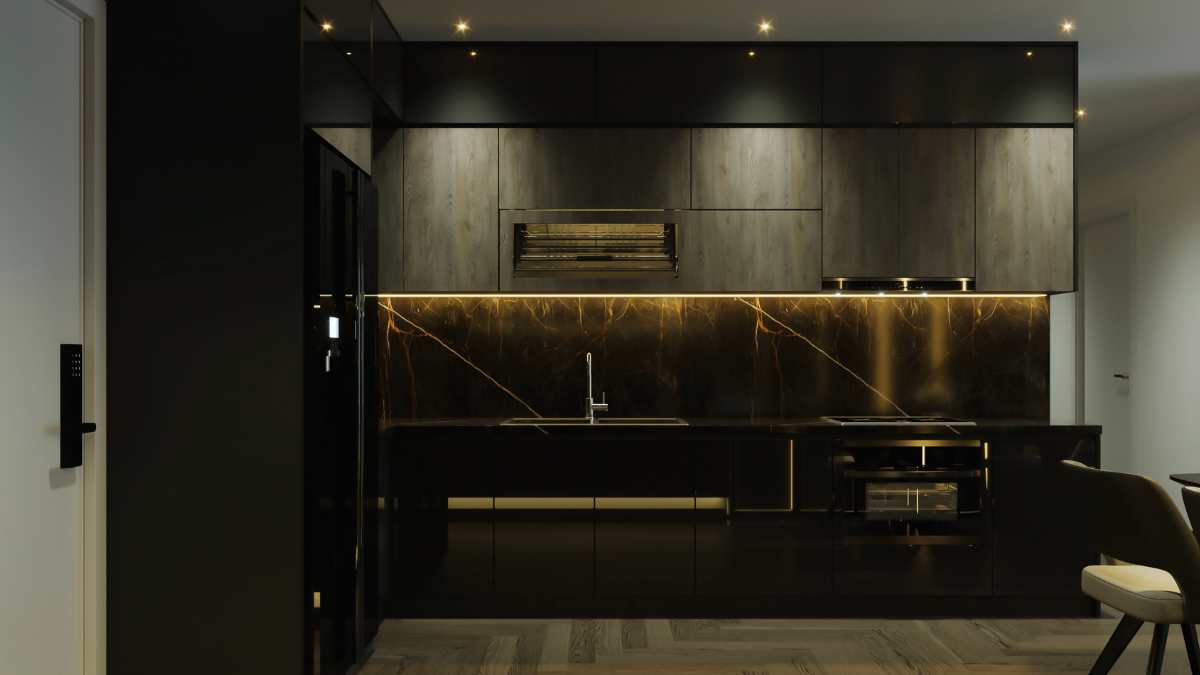
In the bathroom, however, it finds space under the sink cabinet or in niches. Here its role is twofold: on the one hand it illuminates functionally, on the other makes the space cleaner and more modern.
Because it makes everything look more “expensive”
The reason is not immediate, but it is always the same. Hidden light introduces a second level of lighting. There is no longer just a source, but a layering. And our eye automatically associates this complexity with a designed environment.
Also, label the ingredients. Even a simple surface, if grazing litit gains depth. Imperfections disappear, textures become more interesting, lines more precise. This is exactly what happens in hotels or high-end interiors. They are not necessarily full of expensive items, but they are is lit in the right way.
What type of light to choose
Not all LED strips give the same effect. Cheap ones tend to have a very cold or patchy light, with isolated spots of light visible. The result is less elegant. The best versions have more even light and above all one warm temperaturearound 2700K or 3000K. This type of light is softer, more natural and much more suitable for domestic environments.
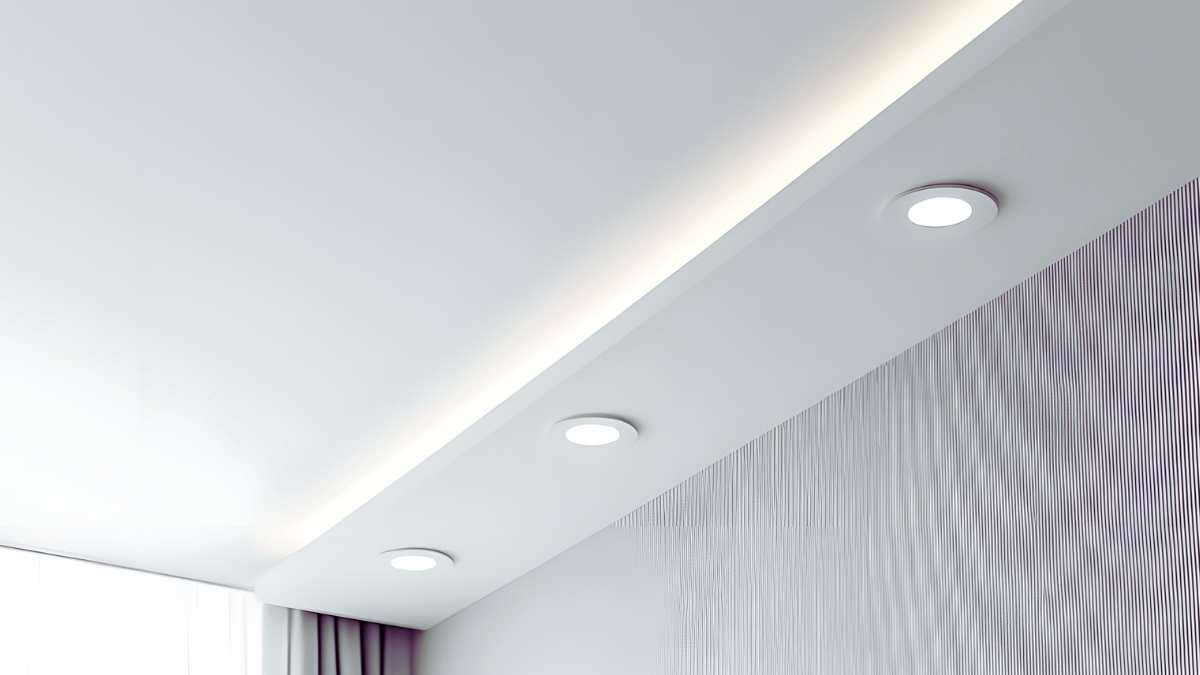
Another important detail is support. Adhesive strips are the simplest to install, but if inserted into a small aluminum profile with opaque diffuserthe light becomes even more uniform and clearer.
The mistake that ruins everything
Leave the strip exposed. When you see the individual LEDs or the base, the effect changes completely. An elegant solution becomes a technical, almost improvised addition. Light must be perceived, but the The source must remain hidden. This is the basic principle.
Because it is one of the smartest choices
It does not require complex work, does not involve changing furniture and does not have a high cost. However, it interferes with one of the most important aspects of a home: the perception of space. It’s one of those details that doesn’t immediately attract attention, but makes you say, even if unconsciously, that this house takes better care. And precisely because it seems banal, it is also one of the most underrated. But when used well, it’s hard to go back.



