
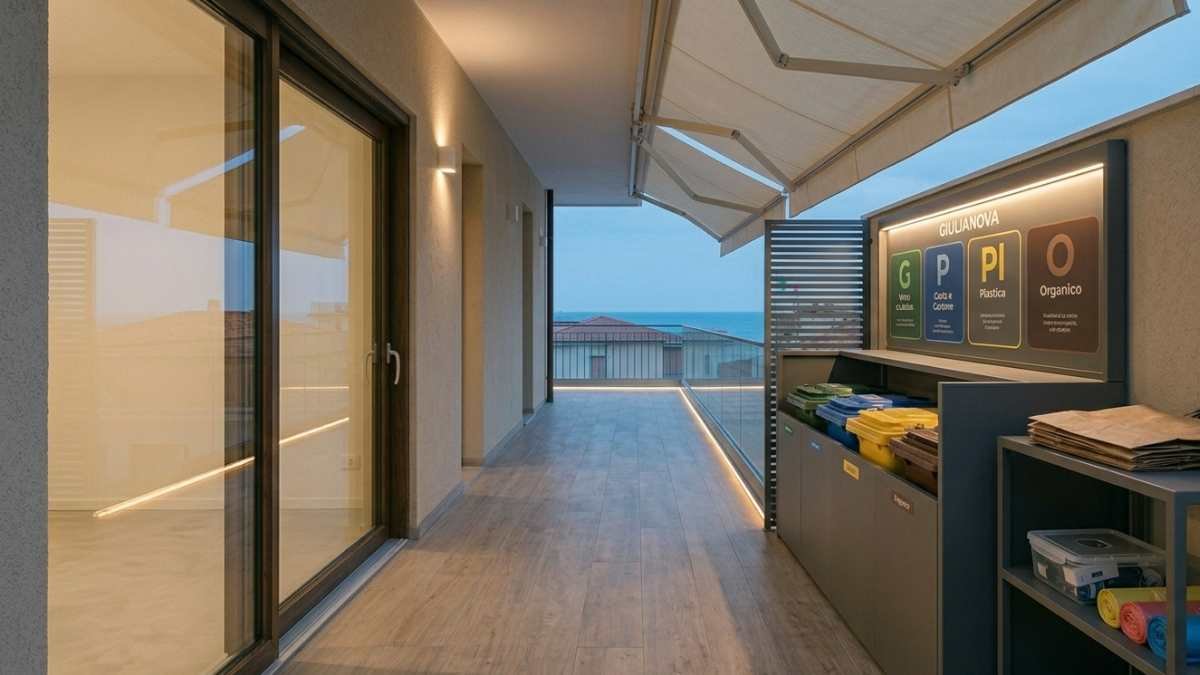

A balcony can also be well furnished, with neat plants, a well-chosen table and solid colors, but one odd detail is enough to spoil it all. Collection bins are just that: necessary, unavoidable, but visually unwieldy.
The problem is not only aesthetic. When they are placed “wherever it happens”, often near the railing or next to the furniture, they break up the space, create disorder and make the balcony look smaller than it is. The temptation is to hide them completely, but doing it the wrong way leads to another problem: you close the space and lose lightness.
Because hiding them badly makes it worse
The first reaction is often to buy any container and put the buckets inside. The result, in most cases, is a closed, bulky block, which occupies visual space and interrupts the continuity of the balcony.
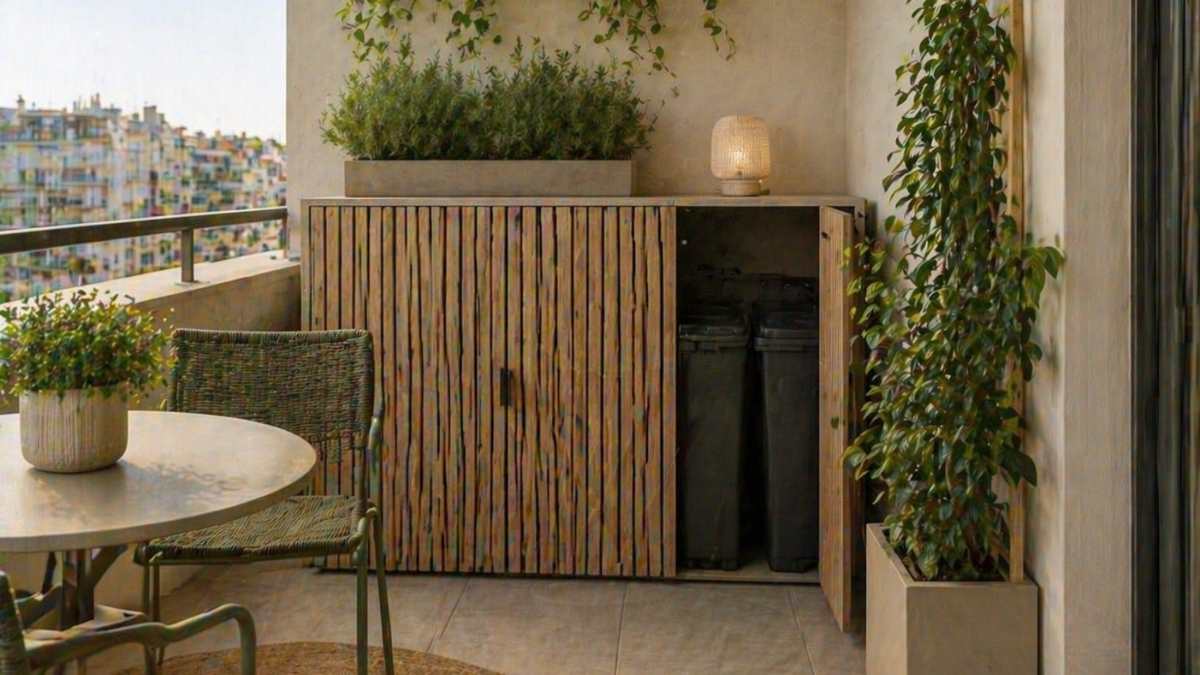
A container that is too tall or too deep creates an obstruction. If placed along the short side of the balcony, it shortens it even more. However, if placed along the railing, it blocks the light and weighs the whole thing down. Even improvised solutions such as plastic covers or sheets do not work. They don’t really solve the problem, they just make it less noticeable, but the mess remains.
The solution that really works
Bins should be hidden, but without becoming a dominant element. To do this, you need to work on two aspects: height and optical transmittance.
A an effective solution is that of light panels, perhaps of wood or composite material, which shield the view but allow air and light to pass through. They do not create a closed block, but a softer separation. Placed along one side, they allow you to “isolate” the bin area without closing the balcony.
Storage furniture works too, but only if chosen carefully. They must have reduced depth, simple lines and colors that are consistent with the rest of the space. If they look like an element by themselves, they don’t work. If, however, they are integrated with the floor and furniture, they become almost invisible. Another very interesting solution is the exploitation of height with thin structures, which rise upwards instead of widening. In this way, it occupies less surface and the space remains freer.
The role of plants (but without exaggeration)
Plants can help shield, but must be used judiciously. They should not become an occasional obstacle. A tall plant, placed in the right position, can cover the view of the bins without creating confusion. However, if you fill the balcony with jars to hide, you have the opposite effect: the space closes in and becomes more cluttered.
Fewer elements are better, but well placed. A structured plant, perhaps with vertical leaves, works much better than lots of small ones distributed haphazardly.
Where to place the bins so that they are not weighed down
Where they are placed is critical. The ideal is always a less visible area, perhaps near a wall or in a corner that isn’t the first point you see when leaving. Avoid placing them in the center or along the most visible side of the balcony. Even a few centimeters of movement can completely change perception.
If the balcony is long and narrow, it is better to keep them to one side and leave the passage free. If it’s more square, it’s better to gather them in a corner and build a light shield around it.
Color makes a difference
Even if they seem like small details, colors help a lot. Dark bins on a light colored balcony create a strong contrast. If they can’t change, it’s important that everything around them is consistent. A neutral panel, a piece of furniture in similar shades to the floor or walls helps to reduce the visual impact. The point is not to make them stand out.
When bins are integrated the right way, they stop being the first thing you notice. The balcony becomes readable, tidy and lighter again. They don’t actually disappear, but they stop weighing visually. And that’s what makes the difference between a space that works and one that always seems unfinished.



