
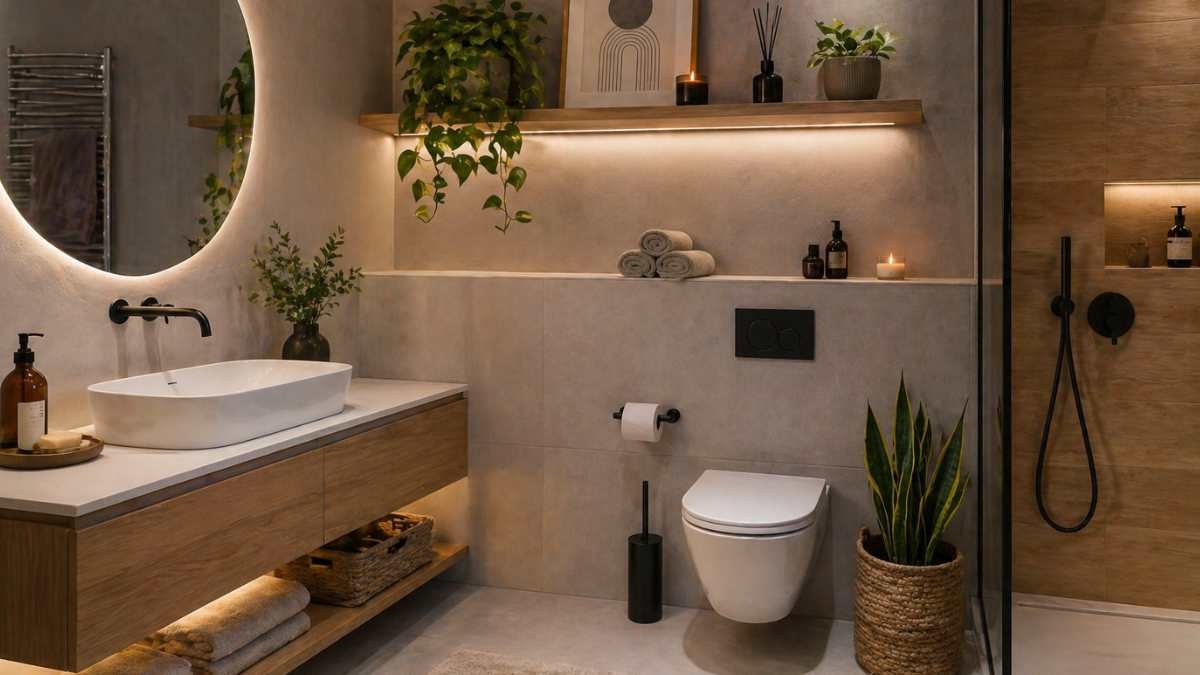

When furnishing a bathroom, attention is almost always focused on the main elements. The sink, the shower, the bathroom accessories, the choice of tiles. Everything is designed to be functional and tidy, but often a detail is forgotten that alone can completely change the perception of the space. It’s what designers informally call the “blank spot”: a section of wall that remains bare, not by choice, but by habit.
The result is there for all to see. Even a well-designed bathroom can look unfinished, almost cold, when certain areas are left without character. It is not a matter of decoration, but of visual balance. And that’s exactly where the difference between a simply functional bathroom and a truly sophisticated bathroom appears.
The Point Everyone Ignores (But That Changes Everything)
In most cases, this space is located above the bathroom fixture, next to the mirror or on that part of the wall that does not have a direct function. It’s left empty because it doesn’t seem necessary to fill it, but that’s exactly the problem.
A completely bare surface, especially in an environment made of ceramic and reflective materials, tends to make everything stiffer. The bathroom loses depth and looks more “technical” than the residential one. Even when it’s clean and tidy, something is missing.
Intervening at this point does not mean that you fill the space randomly, but give it a precise visual function. This is where the way designers work in environments comes into play: not by adding elements everywhere, but by improving those that are usually overlooked.
A matter of depth, not just aesthetics
When this space is treated in the right way, the bathroom immediately changes perception. Just enter a thin shelfperhaps in natural wood or matte black metal, to break the continuity of surfaces.
This simple intervention creates a more dynamic effect. The wall is no longer a uniform block, but becomes an active part of the space. Depth is created, monotony is broken and the environment takes on a more interesting dimension.
It’s not an obvious change like a renovation, but it’s one that you can notice right away, even without understanding exactly why.
The role of materials and surfaces
Another way to reinforce this point is to work on the surface itself. Installing water-repellent wallpaper, choosing a finishing material or introducing a different texture to the rest of the bathroom allows you to transform this area into a feature.
This type of intervention works because it creates contrast. In an environment where smooth and uniform surfaces prevail, a slightly different wall attracts the eye without weighing it down. It’s a way to make the bathroom warmer and less impersonal.
Light also plays a fundamental role. These areas often remain in shadow, contributing to that dull effect that many bathrooms have. The introduction of a subtle light source, perhaps indirect, completely changes the effect. The wall comes to life, the space opens up and everything looks more refined.
How to bulk up without weighing it down
The danger, when you decide to intervene at this point, is to overdo it. The secret is not to fill, but to choose a few right elements.
One of the most effective solutions is the introduction of greenery. Moisture-tolerant plants, such as pothos or sansevieria, add movement and color without creating a mess. Place it on a shelf or let it hang slightly down, they break the rigidity of the lines and make the space more natural.
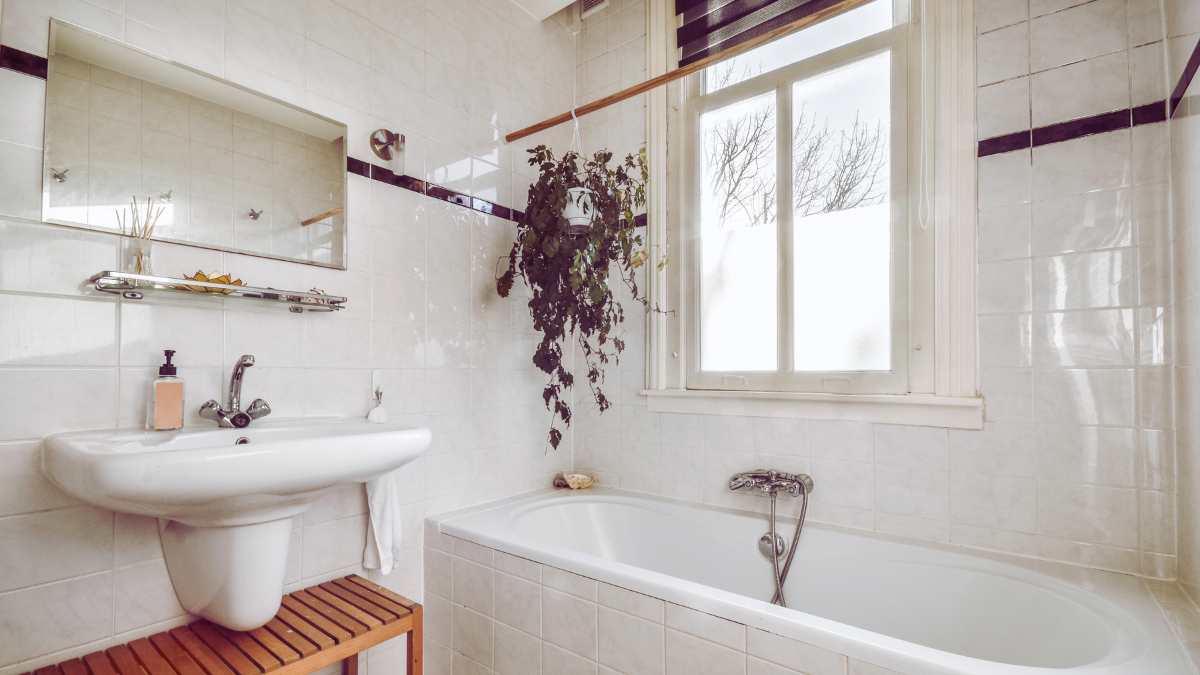
Mirrors can also be used differently than usual. Instead of a single large element, a composition of smaller mirrors, perhaps with soft shapes, creates games of reflections that enhance the light and make the wall more dynamic.
Another idea, which is used more and more, is to turn this point into a small area dedicated to well-being. A shelf of candles, diffusers or rolled towels creates a spa-like effect. It’s not just decoration, but a real atmosphere.
The detail that makes the difference
All of this only works if there is consistency. Colors, materials and objects must communicate with the rest of the bathroom. You don’t need to add much, but what you enter should make precise sense.
A bathroom in which every space is considered, even the one that is usually ignored, conveys a completely different feeling. It appears more refined, more harmonious, more “finished”. And this is exactly what distinguishes a carefully designed environment from a simply furnished one.
After all, the secret is not to add, but to leave nothing to chance. Even emptiness, when approached with intention, becomes part of the work. And in an environment like the bathroom, which is made up of details, it is often precisely where the biggest difference is made.



