
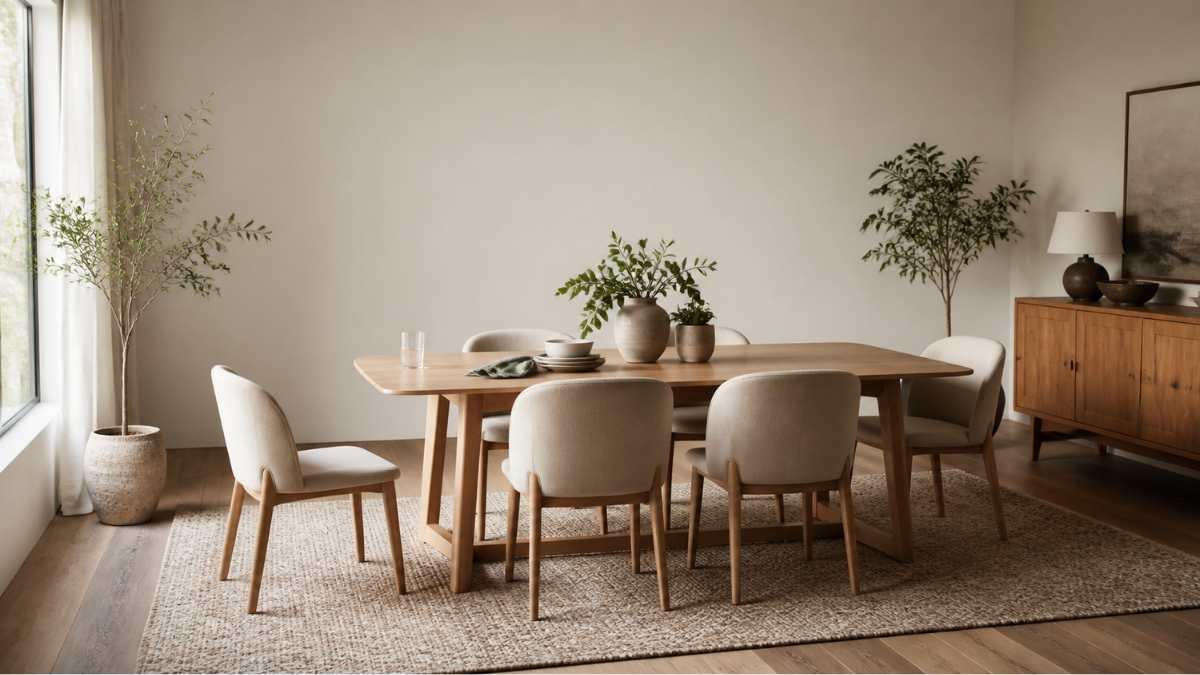

Choosing a rug for the living room is always a matter of balance, but when it comes to the area under the table the choice becomes even more delicate. It is no longer just an aesthetic question, because this part of the house is one of the most alive: you eat, you place objects on it, you move chairs constantly. However, right there, the carpet must remain stylish, consistent with the environment, never improvised or too “easy”.
For a long time it was believed that practicality and aesthetics could not really coexist. The durable rugs were often not very refined, while the nicer ones were difficult to handle in everyday life. Today this distinction is much less clear, because stain-resistant materials have reached a level that allows the combination of both without obvious compromises.
The new generation PVC, when practicality becomes invisible
PVC is probably the material who more than anyone else has changed perception in recent years. If it was once associated with cheap and careless solutions, today it presents itself in a completely different guise.
Modern vinyl and PVC carpets do not absorb liquids, do not hold stains and are extremely easy to clean, even with a simple damp cloth. This makes them ideal for an area like the one under the table, where daily use is inevitably intense. However, the real leap in quality is not technical, but aesthetic.
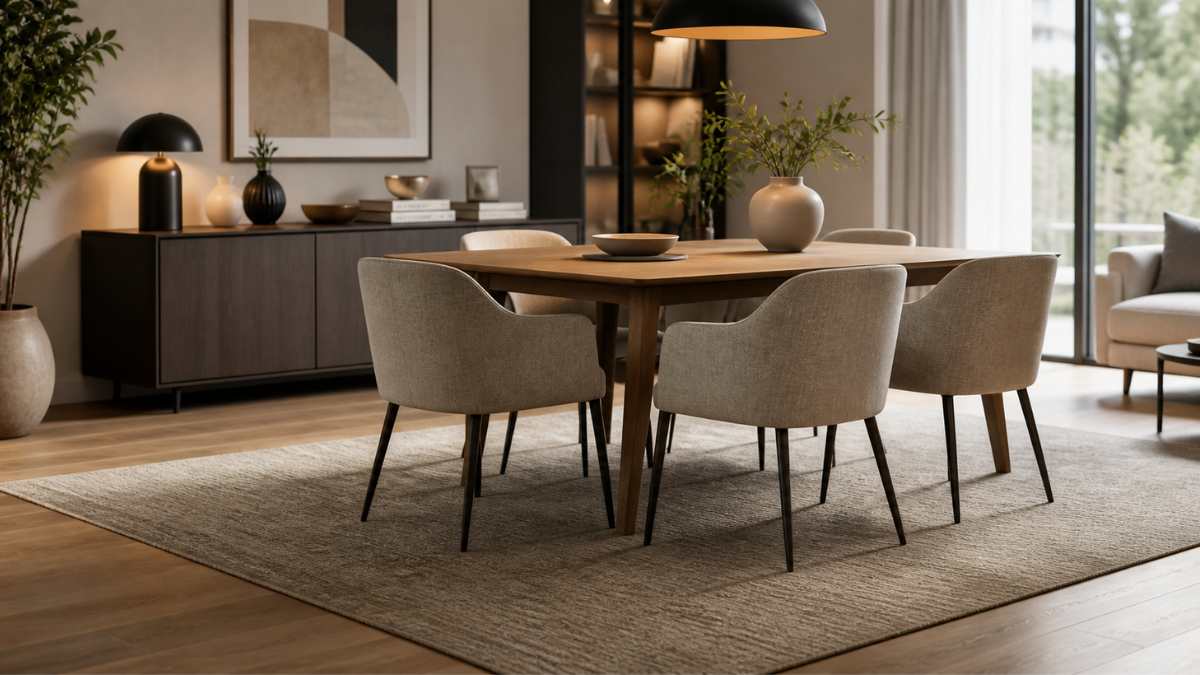
The most successful versions do not try to attract attention, but to subtly integrate. Sisal-effect surfaces, finishes reminiscent of light concrete or natural stone transform the rug into an elegant, almost neutral presence. It is precisely this ability to not look “technical” that makes PVC a much more interesting solution than you might think.
Brands such as those found on Amazon or more specialized companies such as Pietro Zanetti Home offer models that manage to maintain this balance, with often affordable costs and a surprisingly refined visual effect.
The technical fabric, when the carpet remains a carpet
If PVC represents the most practical solution, technical fabric is the most natural. At first sight, in fact, it cannot be distinguished from a traditional carpet. The difference can be seen in use.
These materials are treated to repel liquids and limit dirt absorption, while maintaining a soft and welcoming texture. The result is a carpet that retains all the sense of comfort that characterizes textile products, but with much simpler management.
In a living room, this option works particularly well because it doesn’t spoil the atmosphere. The space remains warm, inhabited, consistent with the furniture, but without that fragility that often characterizes the most delicate rugs. Some models can also be washed, such as those offered by platforms such as Benuta, and are a very specific solution for those who want a neat environment without sacrificing practicality.
Decorative vinyl, a subtle but effective solution
Between these two options is a third way, less obvious but increasingly popular: decorative vinyl. It is a solution that maintains the technical characteristics of PVC, but with a more design approach.
These are thin carpets, often characterized by surfaces that imitate natural materials or by very subtle designs. Their strength lies precisely in their visual lightness. They do not weigh down the space, do not create unnecessary volumes, but help define the area under the table with a measured presence.
This type of carpet is particularly suitable for modern environments, where continuity and visual cleanliness are sought. It is not a star element, but silent support that improves the overall balance of the room. Brands such as Leroy Merlin or some suggestions on Amazon offer accessible solutions that easily fit into different environments.
The mistake that ruins everything (even with the right carpet)
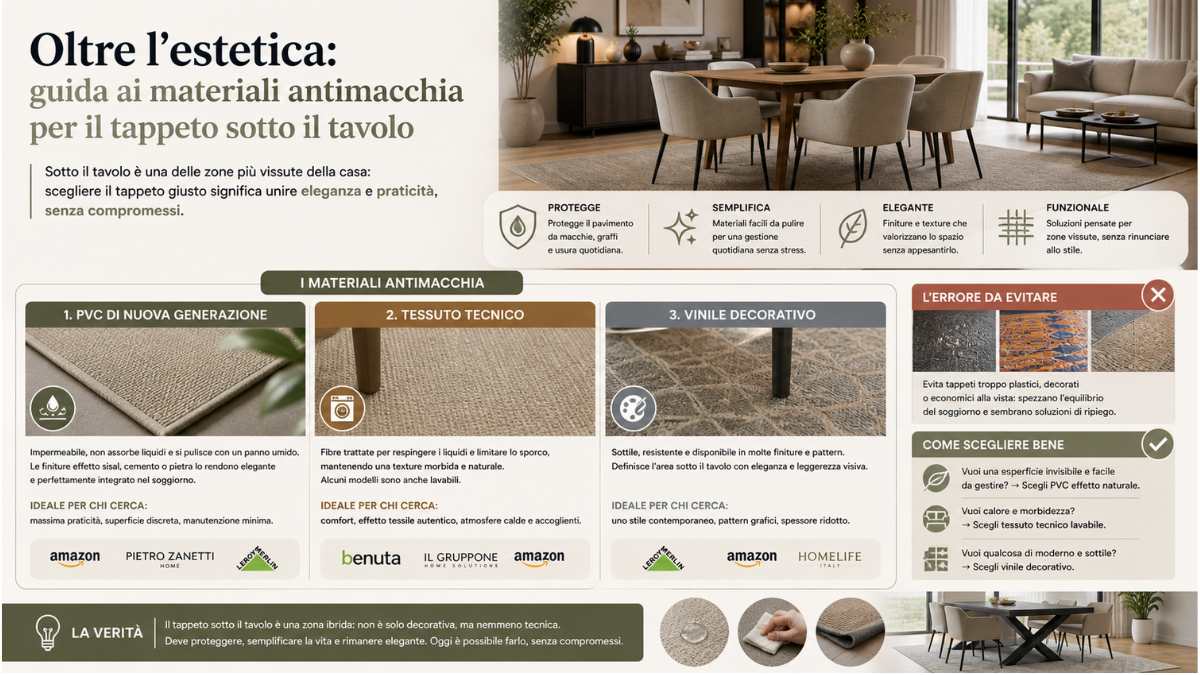
The biggest risk when choosing a stain-resistant rug is to be guided by practicality alone. Some models, especially cheaper or overly decorated ones, can be visually inconsistent with a sophisticated living room.
Excessively plastic surfaces, excessive colors or disturbing patterns compromise the balance of the environment. The result is a clear contrast between the rest of the furniture and an element that seems to belong in a completely different context.
The rug under the table should never feel like a makeshift solution. It must be part of the project, even if it serves a very practical function.
How to choose without making mistakes
The choice of material depends a lot on how you want to experience the space. If the goal is to have a surface that is easy to manage and almost invisible, PVC with a natural effect represents a very effective solution. If, however, you want to maintain a warmer and more welcoming feel, technical fabric offers an ideal compromise. Finally, decorative vinyl is a great fit when you’re looking for something subtle, subtle and contemporary.
In any case, what really matters is consistency. The carpet should communicate with the rest of the environment, not interrupt it.
An element that is not only decorative
The rug under the table is a hybrid area. It is not purely an aesthetic element, but not even a technical accessory. It must protect the floor, simplify daily management and at the same time maintain a certain level of elegance.
Today, thanks to the evolution of materials, this combination is finally possible. It is no longer a matter of choosing between practicality and style, but of finding the point where both things naturally coexist. And that’s exactly where you recognize a good choice.



