
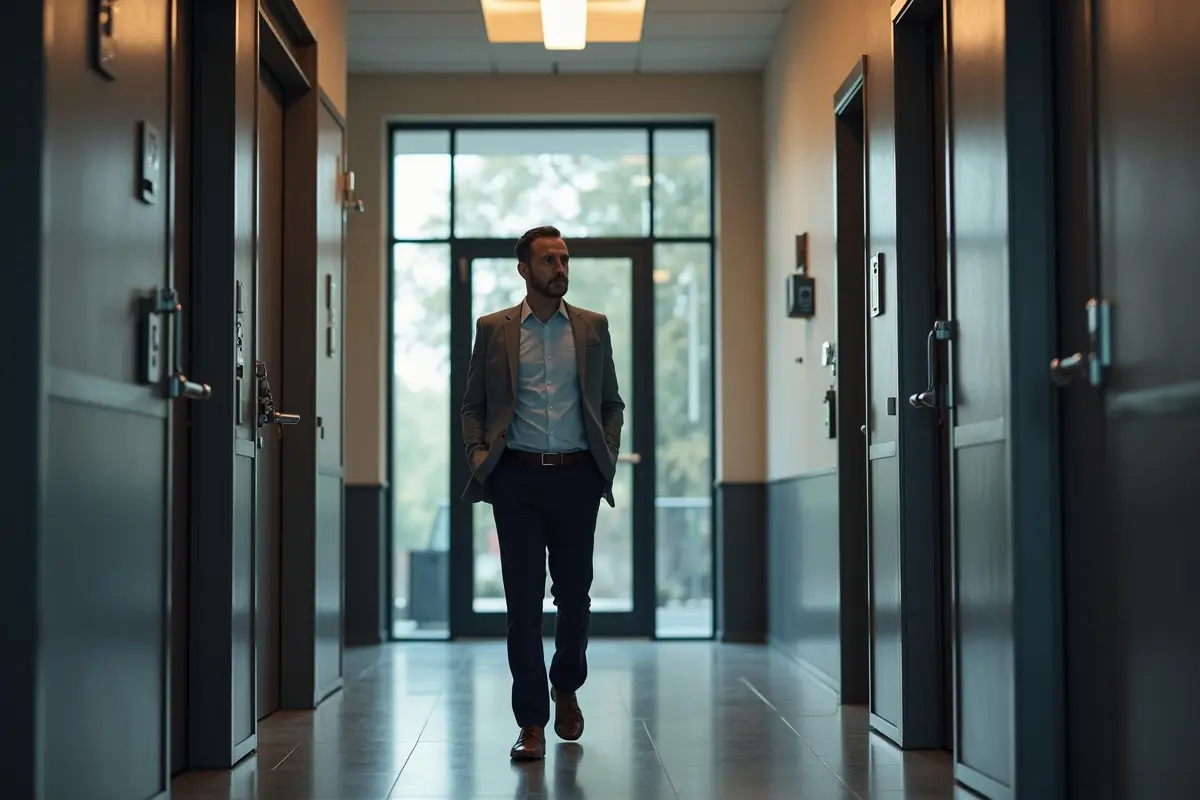

Many companies view physical security as an afterthought – something you install and then don’t think about until an incident occurs. This inevitably leads to vulnerabilities. Effective security does not depend on separate solutions. it is based on a holistic strategy where each level reinforces the others. The cost of a breach – in downtime, liability and lost trust – almost always exceeds the cost of prevention. Proper safety means thinking before something goes wrong, not after.
Start with a multi-layered security check
Before making any purchase, analyze the risks involved. A multi-layered control works from the outside in, viewing your facility as multiple concentric zones rather than just a single secure area.
The first zone will be considered the perimeter – it includes all types of fencing, vehicle access points and lighting at entry gates. The second zone will represent the building envelope – all the doors, windows, loading docks and other points that would meet your outdoor facilities and indoor space. The third zone is considered internal – it could include the server rooms, cash rooms and storage areas for high value inventory items.
Each of these zones will require its own individual threat assessment, as vulnerabilities may vary widely.
The Human Element
Technology can handle many things. But important decisions still need a human touch.
For example, an intrusion detection system can alert you when a door is opened. However, it cannot decide whether the person who entered appears suspicious, anxious, or is being followed by an unauthorized person. You need a man for that.
That’s why Choosing the right security guard company it’s an investment. You need to find a company with training, communication and reporting standards that integrate seamlessly with your current setup. This is more than just finding a warm body to stick between the door – if your guard can’t properly communicate a concern or isn’t sure how to interact with your existing security systems, you’re still leaving a hole in your defense.
And the classic human void – queuing – can be partially addressed with the right kind of guarding. Your staff is trying to be polite by holding the door for someone they don’t recognize. Give them regular reminders that it’s not just okay, but expected to challenge their unrecognized fellow guests.
CPTED and the built environment
Crime Prevention through Environmental Design is not a new concept, yet it remains largely unexploited by most businesses. The framework has three principles that are highly practical and that businesses should implement immediately.
First, physical surveillance: design spaces so that crime is easier to witness. Whether it’s good lighting in a car park, landscaped hedges next to a corridor or a slot positioned for full view of the door, these elements achieve this goal without spending a cent on a new surveillance system.
Second, territorial reinforcement. Use physical signs to show that a space is clearly owned and monitored. Signage, defined and understandable paths and clear distinctions between public and private zones achieve this. A visitor wandering beyond a clearly marked access boundary should feel completely out of place.
Physical access control. Drive traffic through entrances instead of leaving them wide and vague. One entrance, not four. A staff checkpoint, not an unguarded floor entrance from an alley.
Hardware integration and the audit trail
Access control systems, CCTV and intrusion detection Sensors are all standard now. What separates a functional security setup from a vulnerable one is whether these systems talk to each other and produce a usable record.
Each door access event should generate a time-stamped log associated with a specific credential. Each motion trigger after hours should be associated with camera footage from the same zone. This integration creates an audit trail that is useful both during and after an event when trying to piece together what happened.
Biometrics add another layer for high sensitivity areas. A key card can be borrowed or stolen – a fingerprint or face scan cannot. For server rooms or areas with controlled substances or valuable equipment, biometric access is worth it.
Asset tracking through RFID or barcode systems brings the same logic to physical inventory. If high-value equipment is moved, the system should know when, who moved it, and which checkpoint it passed through.
50% of organizations are now deploying combined physical and cyber security teams to address increasingly sophisticated threats (Genetec, 2023 State of Physical Security). Physical and digital logs fed into a common monitoring function is where most serious businesses are headed.
Safety culture is the missing layer
The best physical security system in the world can be degraded in no time if your people see it as their problem. Instead, safety culture means that staff know what to report, to whom, and are expected to do so without inconvenience.
This does not require long training programs. Clear emergency response protocols where people will read them, short regular updates after any incident, and management making a public show of support for safety procedures all combine to create a workplace where people are often in the know.
Done right, physical security isn’t a cost center, it’s what allows your operations to continue seamlessly. The businesses that get it right aren’t always the ones with the flashiest gadgets. They are the ones who have worked to minimize the distance between technology and its users.



