
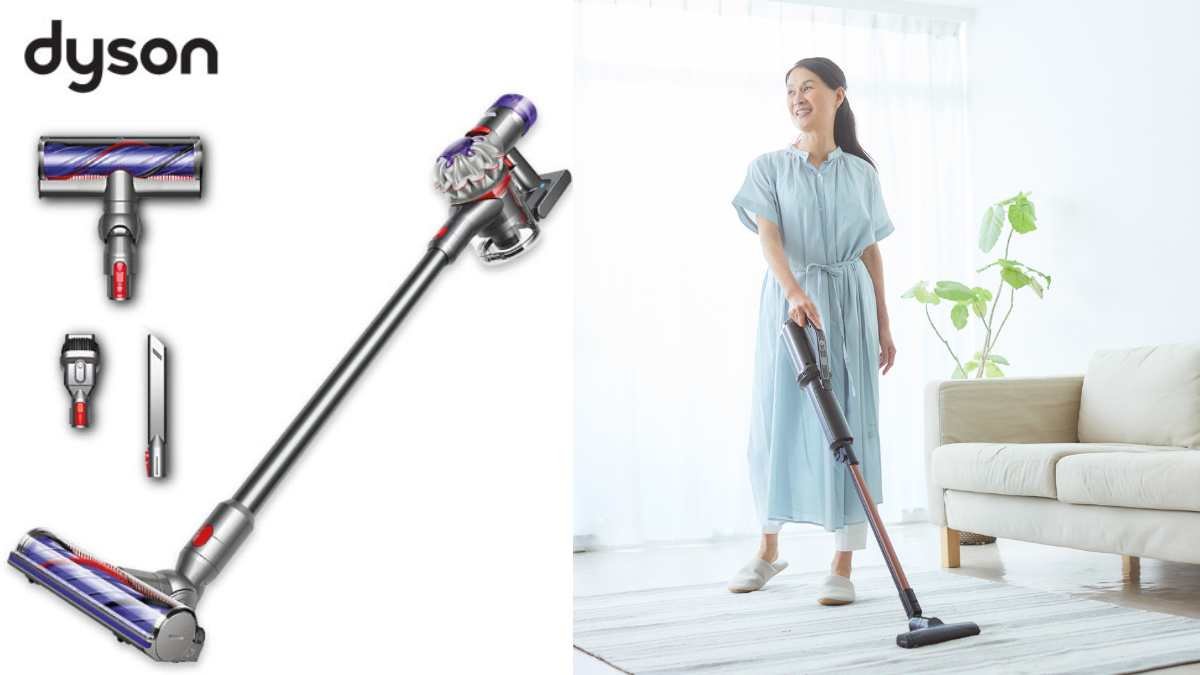

Dyson has become for many the undisputed king of household cleaning. Those who own it appreciate the suction power, the convenience of wireless operation and the technological design that makes it seem almost like a cult object. However, it happens much more often than you think: one day you turn it on and realize it the Dyson no longer vacuums like it used toit makes a weird whining noise or the battery dies within minutes.
When such an expensive device starts to fail, the disappointment is immediate. However, in most cases, the problem is not one catastrophic failure, but a series of factors related to maintenance or to minor structural defects known to those who use it daily.
Airflow blockage: the main reason for “hiccups”
Of most behaviors typical of a Dyson in difficulty it is the classic intermittent operation: the vacuum cleaner turns on, turns off after two seconds, emits a pulsating sound and a lock icon appears on the screen (on newer models). This is a safety system designed to prevent the engine from overheating.
The block can be hidden anywhere. Many simply empty the dust container, but often the dirt plug is created at the cyclone inlet, along the rigid pipe or at the brush joint Mr. A small piece of cardboard, a bunch of hair or a tiny toy is enough to block the channel and cause the device to go into protection mode.
Clogged filters: the invisible enemy of suction power
If the Dyson works but the suction power is noticeably reduced, the culprit is almost always the HEPA filter. Dyson recommends wash the filter at least once a monthbut very few do so with the necessary regularity. The very fine dust settles between the filter meshes, creating an impenetrable barrier to air.
A very common mistake that risks permanently damaging the device is Reinstall the filter when it is still slightly wet. The filter must be air-dried for at least 24 hours: if it is installed wet, the moisture is sucked directly into the engine, risking burning or, at best, creating a persistent and unpleasant musty smell every time it is cleaned.
The brush roller is blocked by hairs and fibers
Motorized brushes (such as the Fluffy or Direct Drive brush) require energy to spin. When we use the vacuum cleaner, hair, pet hair and threads are wrapped tightly around the roller and the side bearings.
If they are not regularly removed by cutting them with scissors, the friction becomes so strong that it slows down or completely stops the rotation of the roller. In this case, the Dyson’s motor senses too much pressure on the brush and cuts off power to prevent electrical damage, leaving the user with the impression that the vacuum is broken.
Battery degradation: the flaw that users complain about the most
By entering the dedicated forums and reading the reviews, the most common problem encountered is about battery life and longevity. Many users complain that, after a year or two of use, the battery life is drastically reduced or that the vacuum cleaner suddenly stops charging (often signaled by a flashing red light on the battery body).
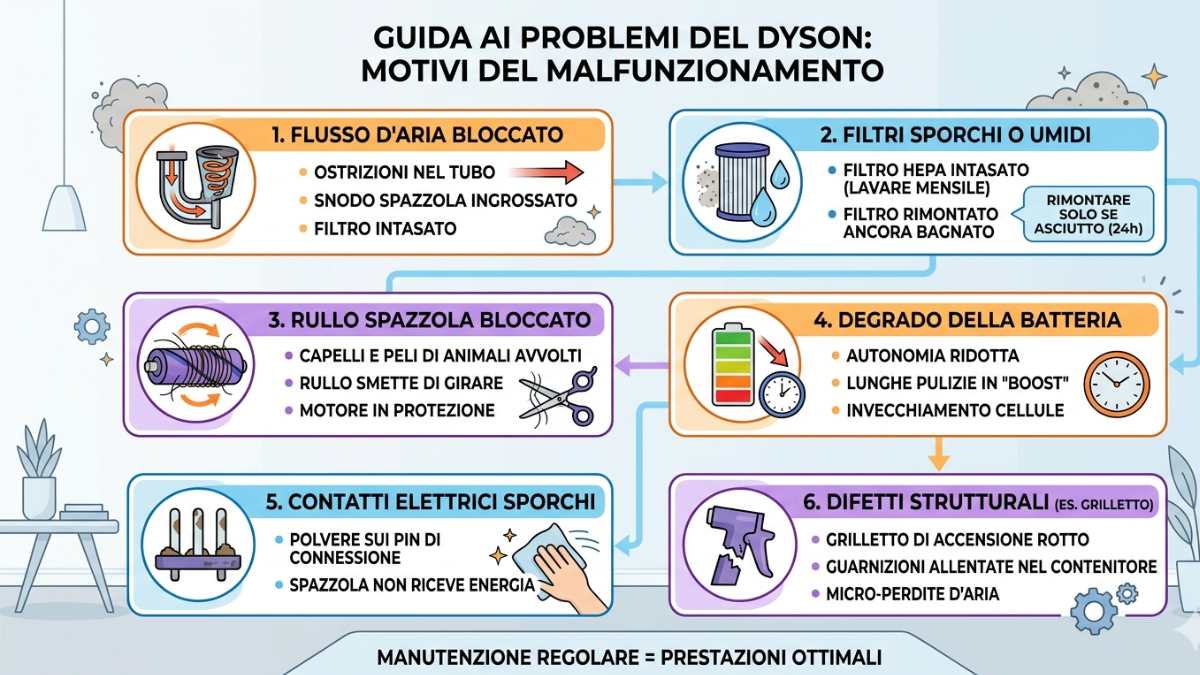
Lithium batteries are particularly sensitive to heat. Use the Dyson all the time “Boost” or “Max” mode. It quickly overheats the cells, accelerating their degradation. To preserve the battery, the maximum mode should only be used for a few minutes on the most stubborn dirt, preferring the “Eco” or “Auto” mode for daily cleaning.
Dirty electrical contacts and clogged sensors
Modern Dysons are focused on technology: tubes and accessories are not only used to transport air, but contain real electrical connections that carry current to the brushes. If the small metal pins mounted on the interlocks become dusty or oxidized, the brush will stop rotating.
In addition, on models equipped with automatic suction adjustment (which varies the power depending on the type of floor), the presence of dirt on the internal sensors can confuse the system, making the power transition unstable or ineffective.
Structural flaws: fragile plastics and trigger
In addition to maintenance, there are some structural details that users often cite as weak points. In models like the Dyson V10 or V11, one of the most common mechanical failures is breaking the ignition switch. Because it is made of plastic, constant pressure can damage the internal pin, making it impossible to activate the device without replacing the entire switch block.
Even the red rubber dustpan seals tend, with age and wear, to warp or lose their grip. When this happens, micro-air leaks are created which reduce the overall pressure of the intake system.



