
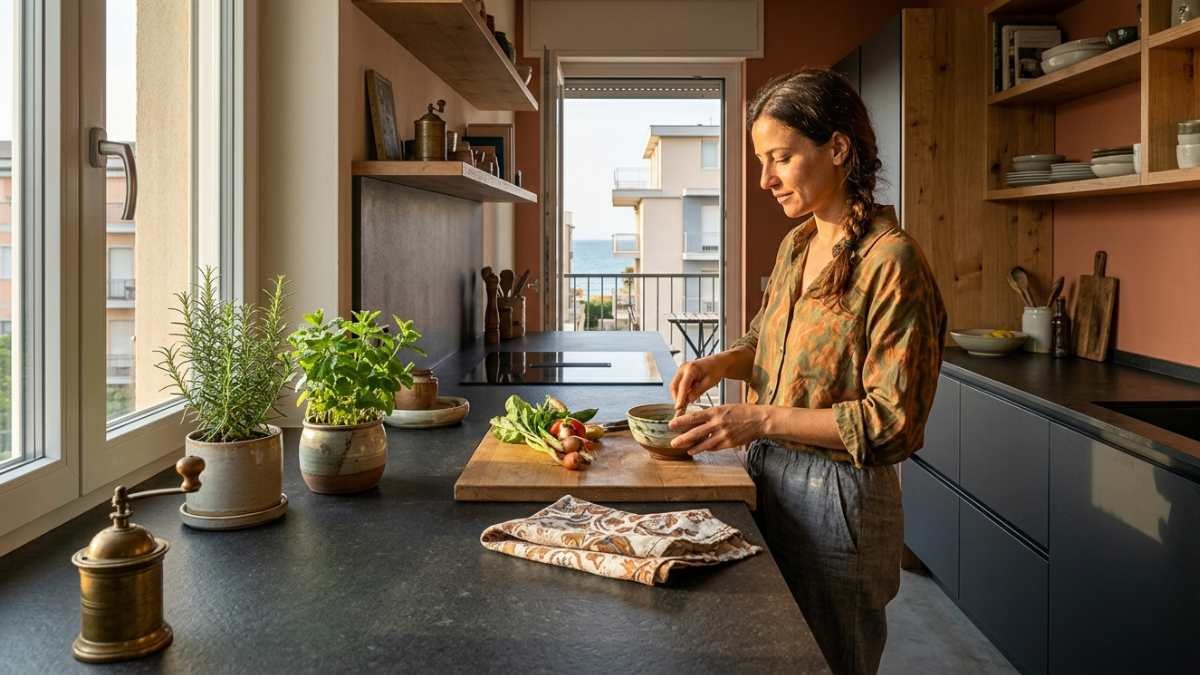

There are kitchens that once assembled look flawless. Smooth doors, uniform colors, continuous reflections, no visual interruptions. In the first months, everything looks extremely clear, almost staged. But then something happens. You just have to actually experience them to start noticing a different feeling: the environment seems colder, more rigid, sometimes even boring.
The problem occurs especially in very bright modern houseswhere every surface reflects light uniformly. During the day the effect can look elegant, but at night it changes completely. Fingerprints are more visible, reflections become more aggressive and the kitchen loses the homely feel it should have.
For this reason many people return less perfect surfaces. It doesn’t mean choosing dilapidated or rustic kitchens in the traditional sense of the term. It means the introduction of materials that have a visible texture, more matte finish, irregular detail able to interrupt the very “flat” feel of ultra-smooth kitchens.
It’s a change you notice as soon as you walk into the room. Kitchens with very uniform surfaces tend to look more photogenic than lived-in. They me slightly material materialson the other hand, they absorb light better, they hide the small everyday marks and above all they make the environment more visually stable.
It’s not just an aesthetic issue. It really changes the way you perceive cooking during the day. A less perfect surface manages to create light shadows, depth, variations which make the room seem less cold and more natural.
The problem is not the modern kitchen, but the overly uniform effect it creates in the space
In recent years, many kitchens have followed the same direction: doors without handles, neutral colors, smooth surfaces, absolute continuity between furniture and worktops. In some environments this style still works very well, especially when the house has warm materials or a strong presence of natural light. But when everything gets too even, the kitchen loses character very quickly.
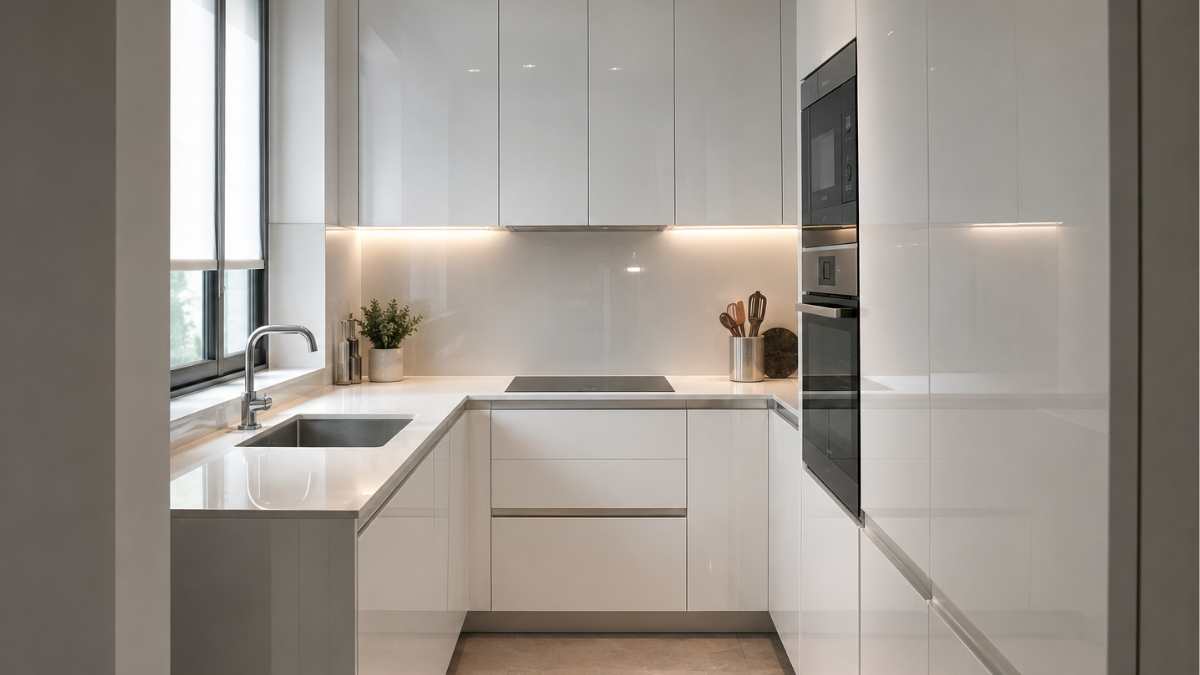
The problem is particularly noticeable in open spaces. If the living room and kitchen share the same light palette and smooth surfaces, the space risks looking flat. The eye does not find variations and the room it seems less welcomingeven if it is furnished with expensive furniture.
The new kitchens that are most interesting today often include minor imperfections are checked. Woods with visible grain, opaque stones, whitewashed surfaces, satin steels, less glossy ceramics. These are details that completely change the atmosphere without weighing down the kitchen.
Previously, many houses focused on the “flawless” result. Every surface seemed to have to remain identical over time. After a few years, however, small everyday marks were enough to break this balance: a fingerprint, a very strong reflection, the slightest scratch, the wrong light. The kitchen immediately began to look less beautiful.
With the more material surfaces almost the opposite happens. The environment changes during the day without losing harmony. Morning light creates bright shadows on the doors, while evening light creates light shadows on the doors makes cooking smoother and more relaxing. Even everyday objects, such as cups, cutting boards or tissues, seem to integrate better into the space.
In small kitchens this effect is even more apparent. A completely glossy surface tends to enhance any reflection and any detail out of place. More opaque or slightly irregular materials Instead they manage to create a calmer and more orderly perception.
How to use more material surfaces without making the kitchen heavy or too rustic
The most common mistake is to think that a less than perfect kitchen must necessarily look rustic. In fact, many of the most interesting solutions remain very modern. It just changes the way the surface reacts to light and time.
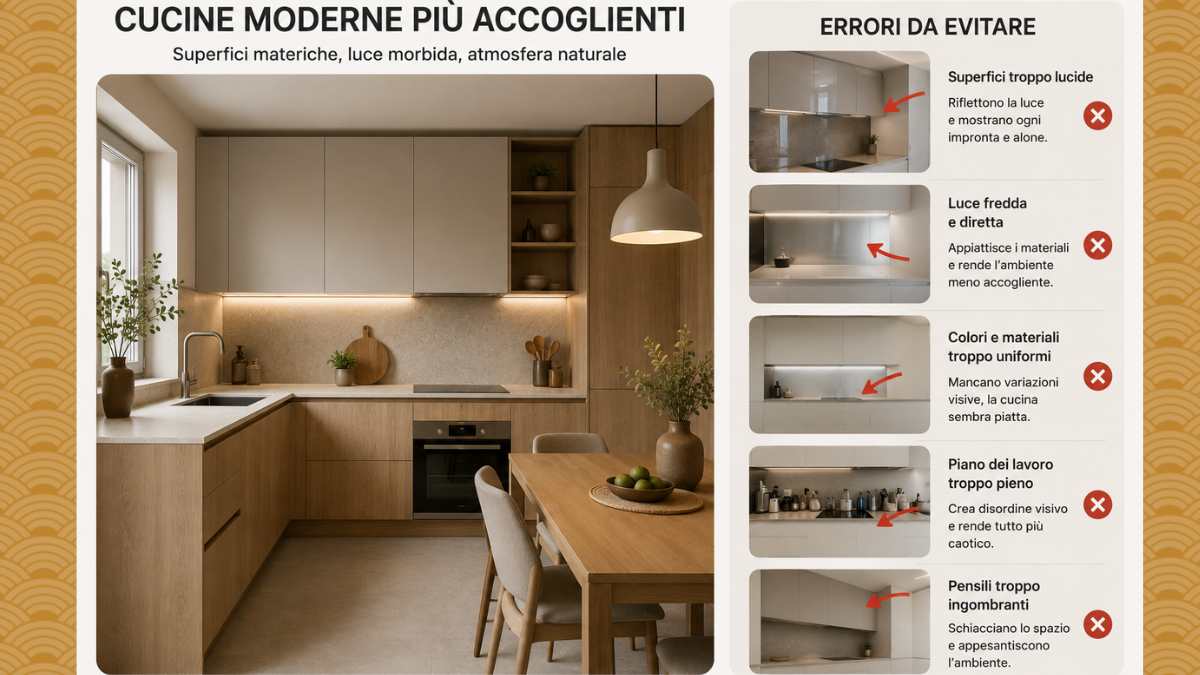
They work very well, for example, i light colored woods with visible natural grainespecially if combined with neutral colors that are not too cold. Even me matte stone top they are making a comeback precisely because they manage to make the kitchen more visually stable without weighing it down.
The problem is particularly noticeable in completely gray or all-white modern houses. When every surface is reflected equally, the environment loses depth. Enter one more apparent texture Instead, it allows you to create movement without overwhelming the room.
Even the lighting needs to be reconsidered. Extremely smooth surfaces tend to react badly to cold, direct light, accentuating any halos or reflections. With more opaque materials though, the light becomes softer and the atmosphere changes instantly.
Already many accessible solutions follow this direction with very targeted suggestions. In the catalogs of popular brands, in fact, one no longer finds only lacquered and smooth doors, but elements specially designed to break the monotony: they range from doors with a ribbed or slatted finishwhich create a beautiful game of vertical micro-shadows, up to top in split stone effect laminate or raw concretewhich reproduce the roughness of natural materials to the touch. Also his introduction open units in wood with warm grain and visible knots allows you to break the linearity of closed wall units, making the whole structure visually richer and deeper at a clearly low cost.
Even small changes can be enough. Sometimes you don’t need to replace the entire kitchen. All you need are chairs with more natural materials, less cold lighting, soft fabrics or opaque accessories interrupts this very uniform effect which makes some modern kitchens visually “tired”.
After all, the kitchens that work best today aren’t the ones that are perfect in every detail. They are the ones who make it they seem trustworthy even if they are really experienced. And often it all starts with a less flawless, but much more welcoming surface.



