
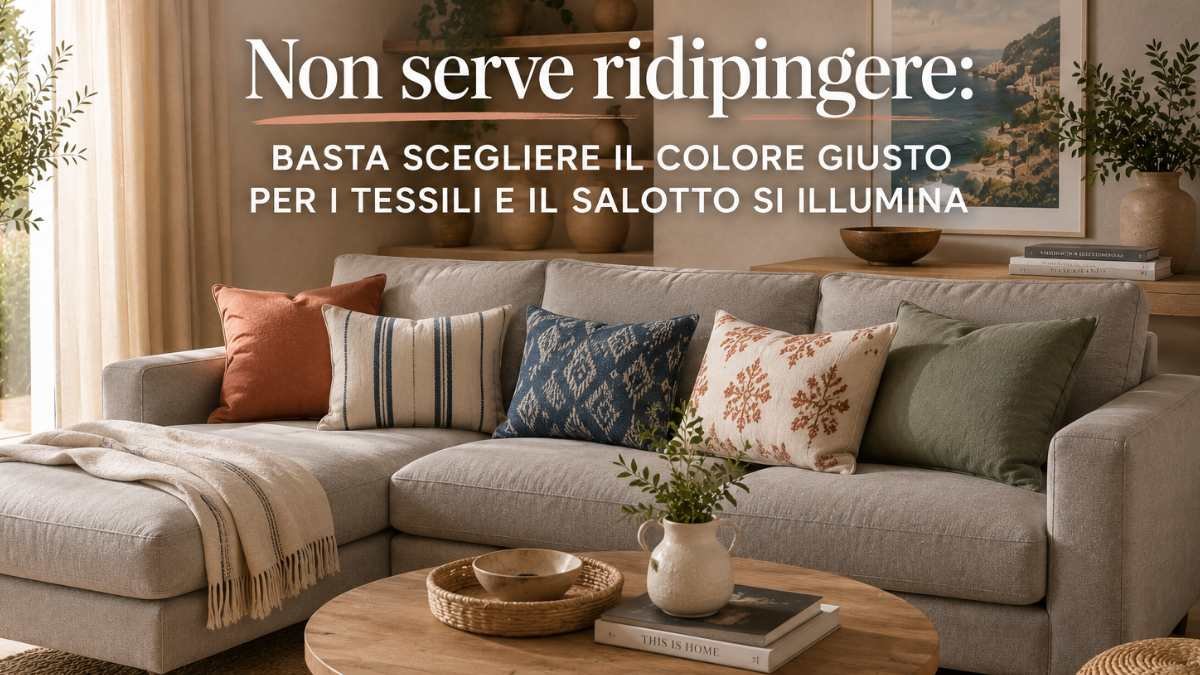

Summer light enters the house differently. It becomes more lateral, warmer, stays on surfaces longer and suddenly highlights details that went unnoticed during the winter. Some living rooms start to look too uniform: the sofa merges with the carpet, the curtains absorb the light instead of diffusing it, the cushions seem to disappear into the rest of the furniture. There’s nothing really wrong, but everything seems still, almost flattened.
It is precisely at these moments that i fabrics become interesting. Because they change the atmosphere without altering the structure of the room. A neutral living room can be done brighter, cooler or more comfortable simply through the color of a curtain, the texture of a light throw or the right combination of cushions.
The point is not to introduce bright colors randomly to “enliven” the environment. The risk, otherwise, is to achieve the opposite effect: a living room that suddenly looks messy or over-constructed. There the difference lies in the combinations. Some shades can better reflect natural light, others warm up cold materials, others give movement to very minimalist living rooms without weighing them down.
In recent years many homes have opted for extremely neutral palettes: cool beiges, very dusty greys, washed out dove greys, opaque fabrics without depth. An elegant aesthetic, which however ends up in some living rooms remove energy from the roomespecially when the good weather arrives and the house visually calls for something more lively.
Textiles work precisely because they allow you to introduce color in a less rigid way. A pillow changes the tone of the sofa. A the curtain changes the quality of the light near the window. A light rug makes the floor lighter. And suddenly the living room looks less static, without having really changed the furniture.
The colors that work best when the living room light changes
The most effective shades are those that already look like they belong at home. They should not dominate the living room, but accompany it. Warm sand, ecru, white butter, light terracotta, dusty green olive, washed blue and soft hazel they work very well because they interact easily with light woods, neutral floors and beige or cream sofas.

A very light living room gains depth with light rust or sage green cushions. A gray sofa completely changes character with oatmeal or washed denim blue fabrics. Even white can work better when it loses that very cold and visual effect it becomes more milk, flax or cream.
Then there are the combinations that return right to the brightest months of the year. THE Mediterranean stylefor example, works very well in warm contrasts: natural linen, terracotta, dusty blue, sand details and material textures. You don’t need to fill your living room with nautical decorations or fancy ceramics. Enough light curtains, a terracotta throw and some striped pillows to completely change the atmosphere.
Il more modern coastalinstead, use more airy colors: warm white, faded light blue, light beige, rope and desaturated blue. It works very well in living rooms with lots of natural light, especially if there are soft curtains and natural materials such as jute, linen or light wood.
Patterns are also making a comeback, but in a less rigid way than a few years ago. Thin stripes, light botanical patterns, small geometric patterns or prints inspired by handmade fabrics manage to give movement without filling the living room too much. There The key is to let the space breathe. A strong pattern works best if the rest stays cleaner.
At first the living room may seem correct but predictable: same colors everywhere, same intensity, no spots that really catch the light. Then, with a few well-chosen fabrics, the The room gains depth. The sofa is detached from the floor, the curtains accompany the light instead of blocking it and everything looks more dynamic.
Combinations that make the living room look more alive without creating chaos
The most common mistake is choosing colored fabrics without taking into account the materials already present in the room. A bright yellow on a cold sofa can look disconnected. A very bright blue next to light gray floors risks weighing everything down. THE colors work best when there is an element that already evokes them in the environment: wood, print, vase, natural light.
The houses that look more interesting today are a lot of work light overlays. Tone-on-tone pillows with a slight color variation. Neutral curtains with a colored border. Soft checks placed without rigidity on the armrest of the sofa. The fantasies are there, but they are unevenly distributed.
Even the the plot matters a lot. A slightly wavy fabric catches the light better than a completely flat surface. THE washed sheetsfor example, it instantly makes the living room visually softer. There the jute lights up the floor. Raw cotton avoids that glossy effect that many minimalist living rooms have started to have.
Proportions do the rest. In a small living room it is better to let the color remain concentrated in a few clearly visible elements. In a large space, however, you can be bolder with patterned rugs or slightly more presentable curtains.
The beauty of fabrics is that they allow the home to follow the rhythm of the season without becoming unrecognizable. In summer the living room can be made cooler, brighter and less static by simply changing the way colors interact with light.
When the living room looks dull, there is often a lack of furniture. One is missing surface able to reflect better the one who enters through the window.



