
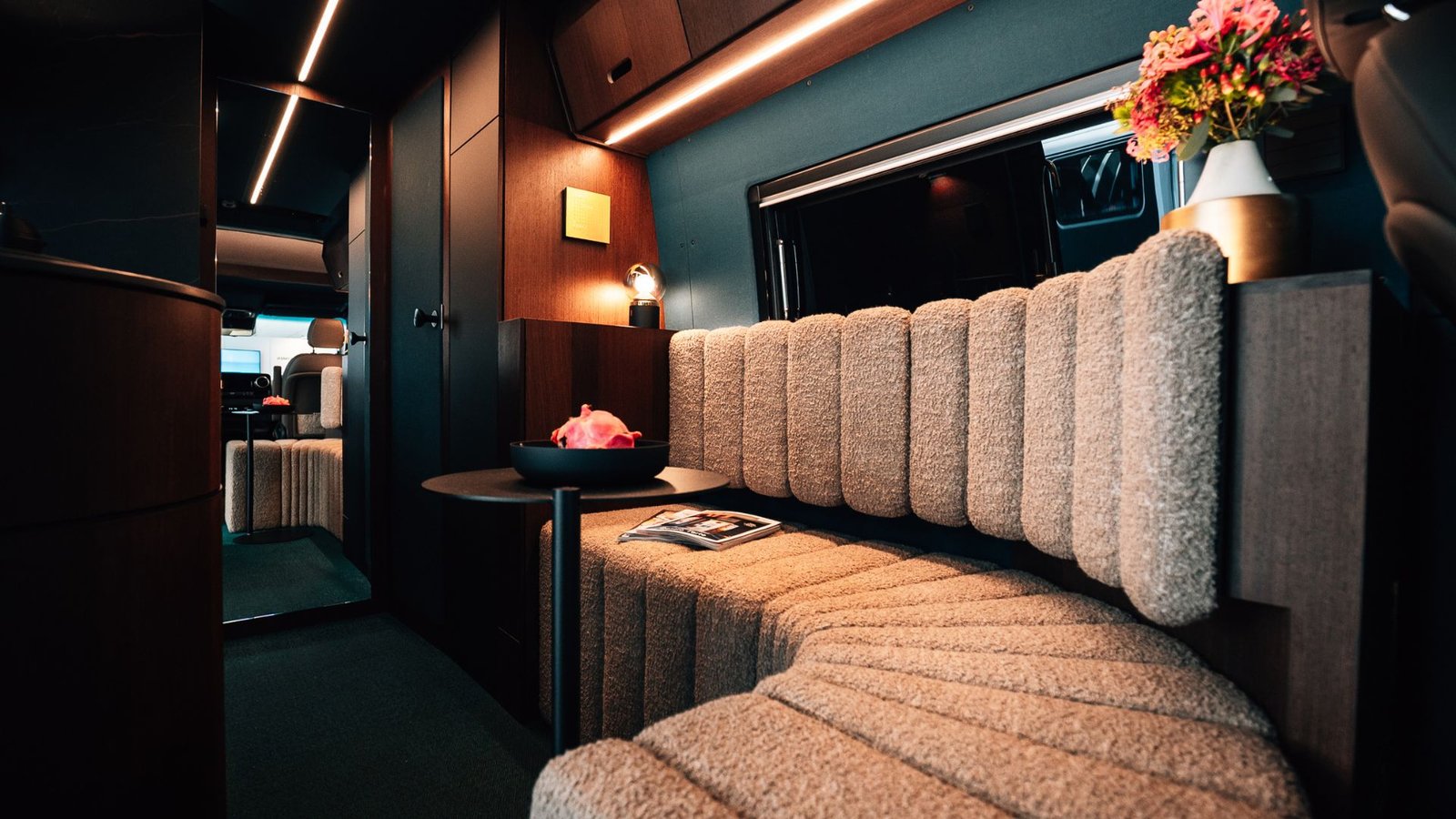

Vagabond Vans was founded in 2021 in Bad Tölz, a small Bavarian town at the foot of the Alps, Germany. The company has 10 people on the team and to date has built more than fifty bespoke vehicles, each based on the Mercedes-Benz Sprinter. In a market filled with gray laminates and folding compromises, Vagabond Vans works with Louis Poulsen lighting, Neolith stone surfaces, Rohi wool fabrics, Bolon textile floors. Partners are chosen for more than convenience. effectively operating as an architectural practice, the team seeks quality and values.
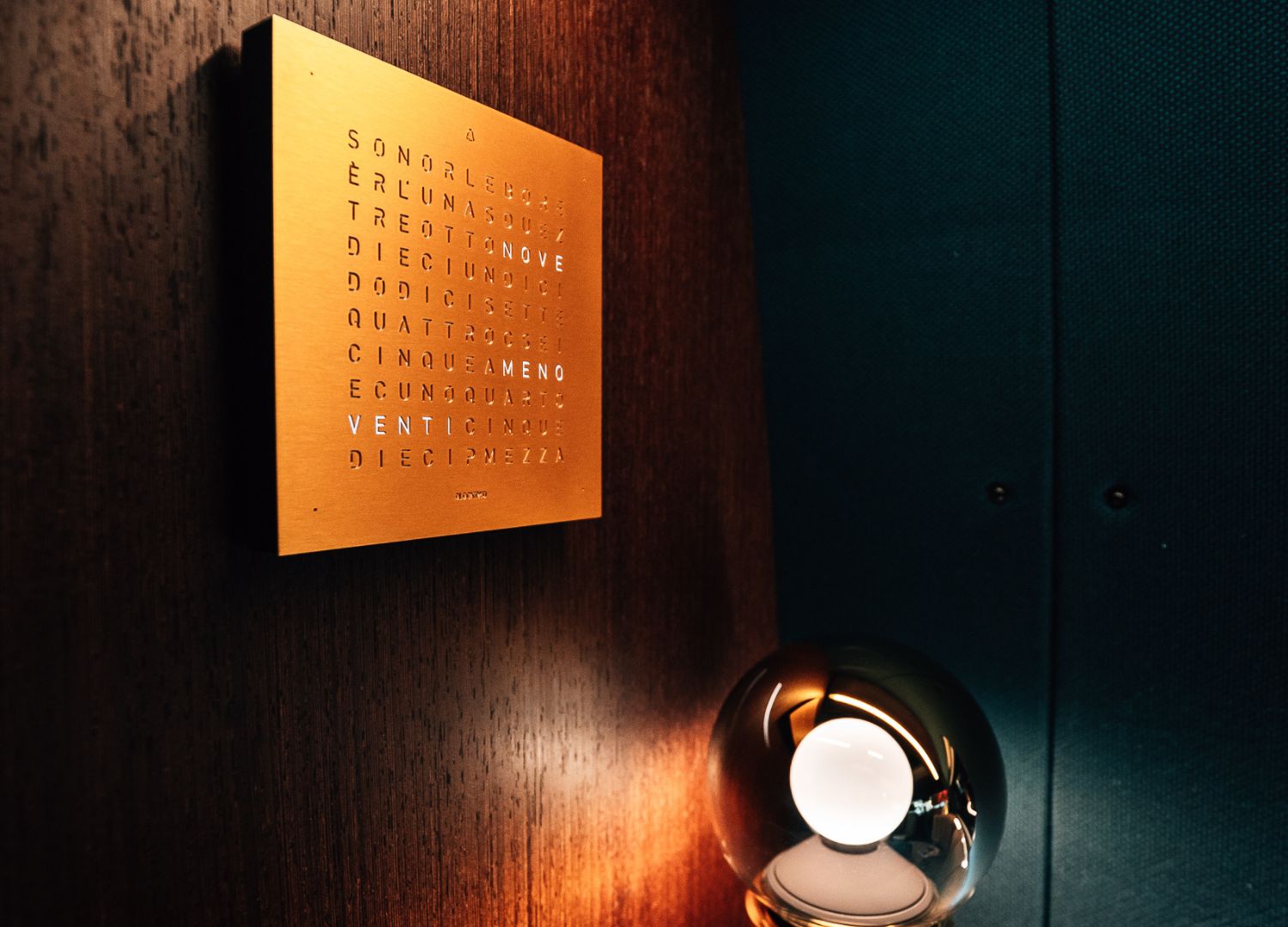
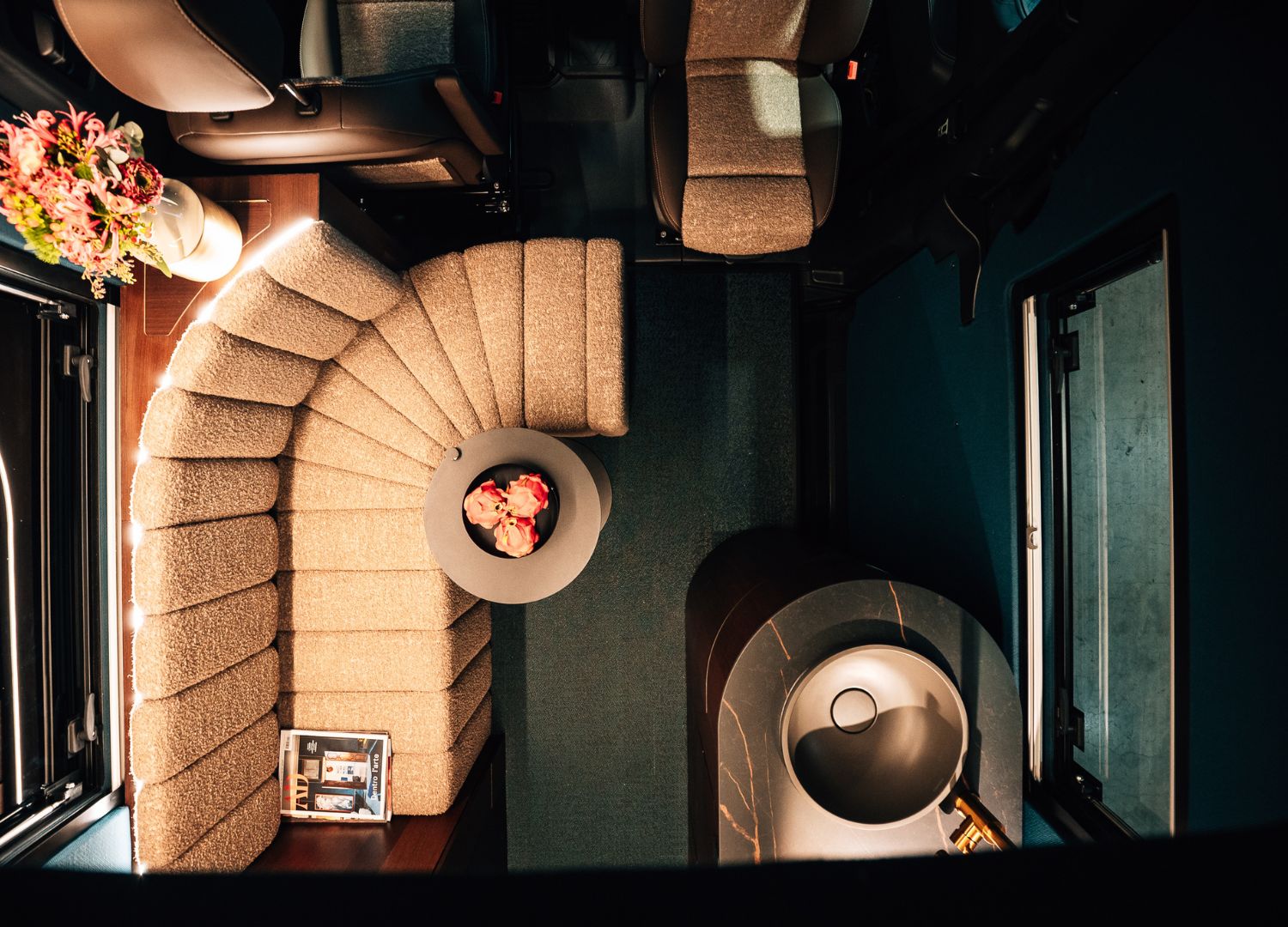
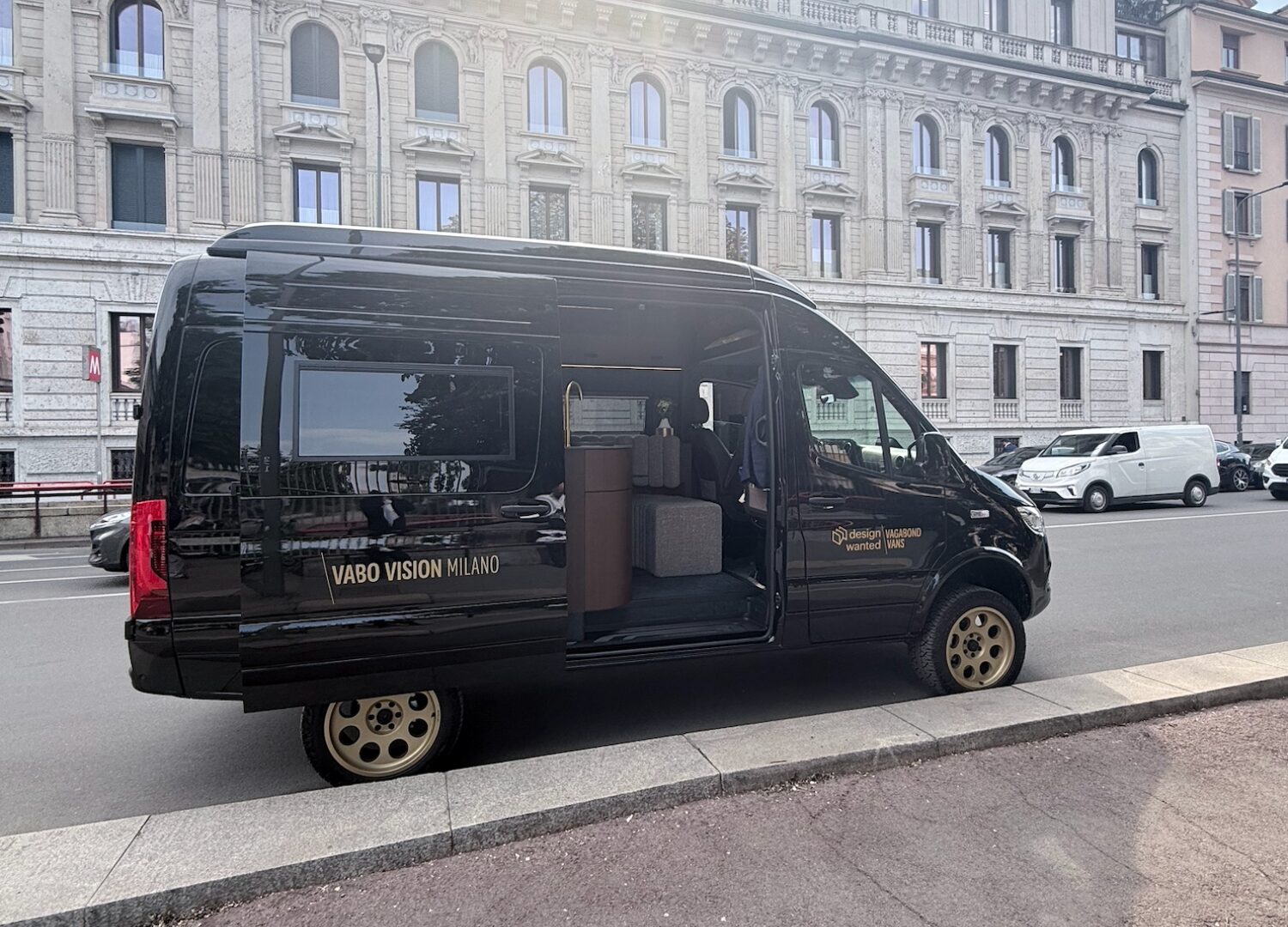
In 2023, Vagabond Vans was named Van Builder of the Year, an award that confirms the company’s quality and disruption in the sector. Every year, the company builds a prototype van inspired by a specific city, for example VABO Vision Copenhagen drew inspiration from Scandinavian spatial clarity. This year, they produced VABO Vision Milano, a special project unveiled for Milan Design Week in collaboration with DesignWanted, built as a tribute to daily Italian rituals: espresso in the kitchen, aperitivo in the living room, clothes pulled from a built-in wardrobe. We interviewed Andreas Strickerco-founder and creative mind behind VABO, to learn more about his vision and what he’s creating for the future of Vagabond Vans.
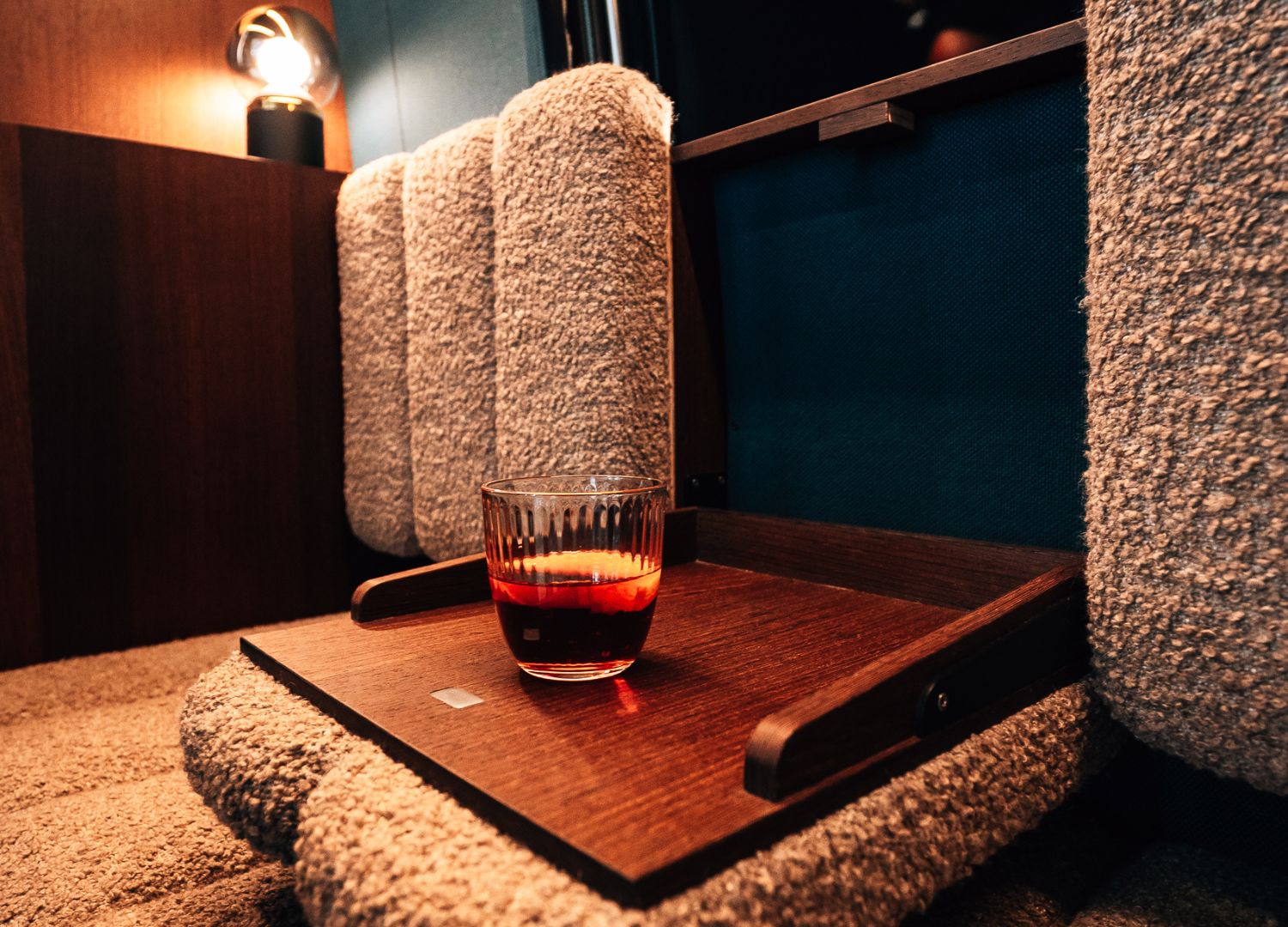
VABO Vision Milano © Vagabond Vans
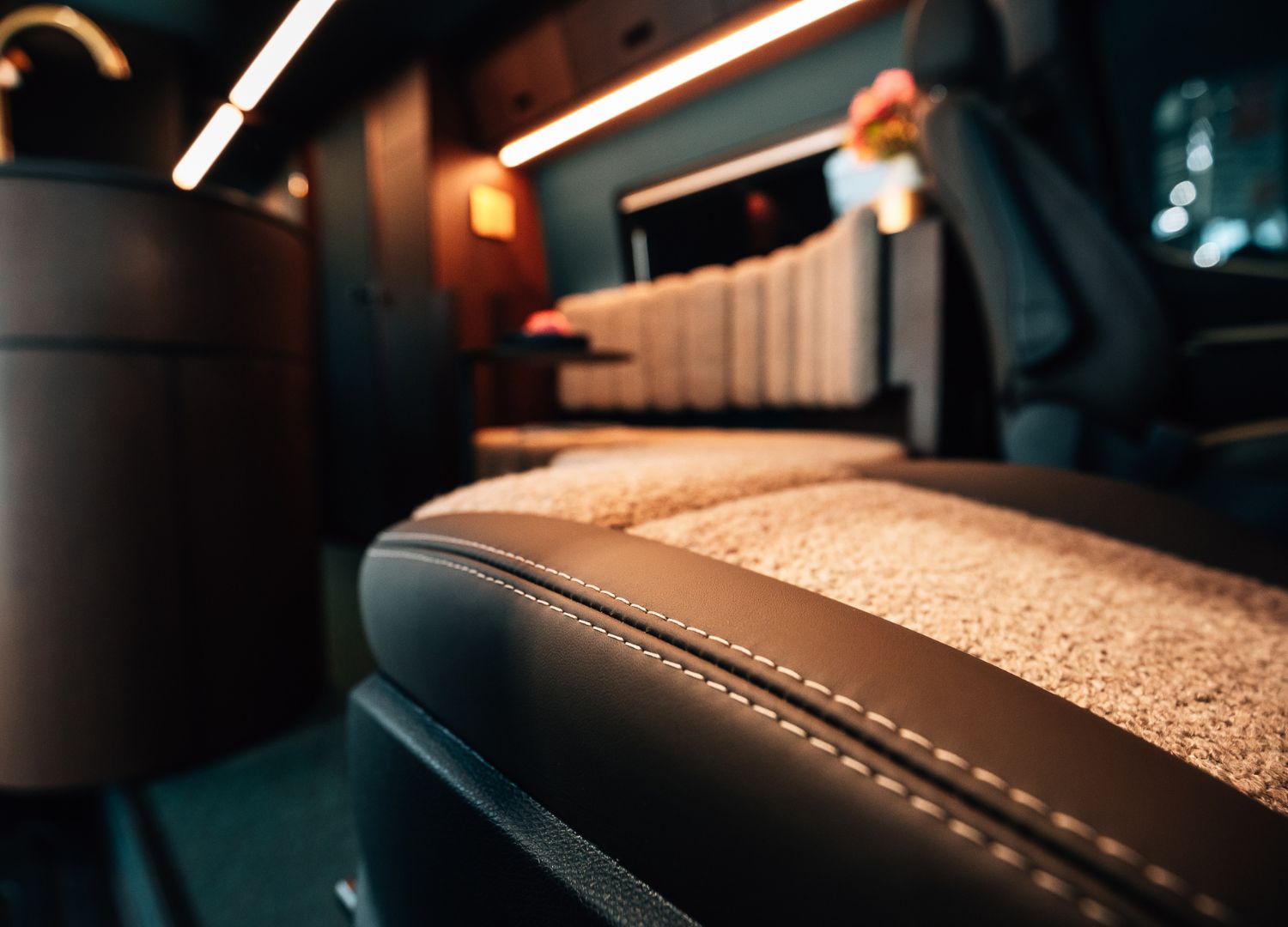
VABO Vision Milano © Vagabond Vans
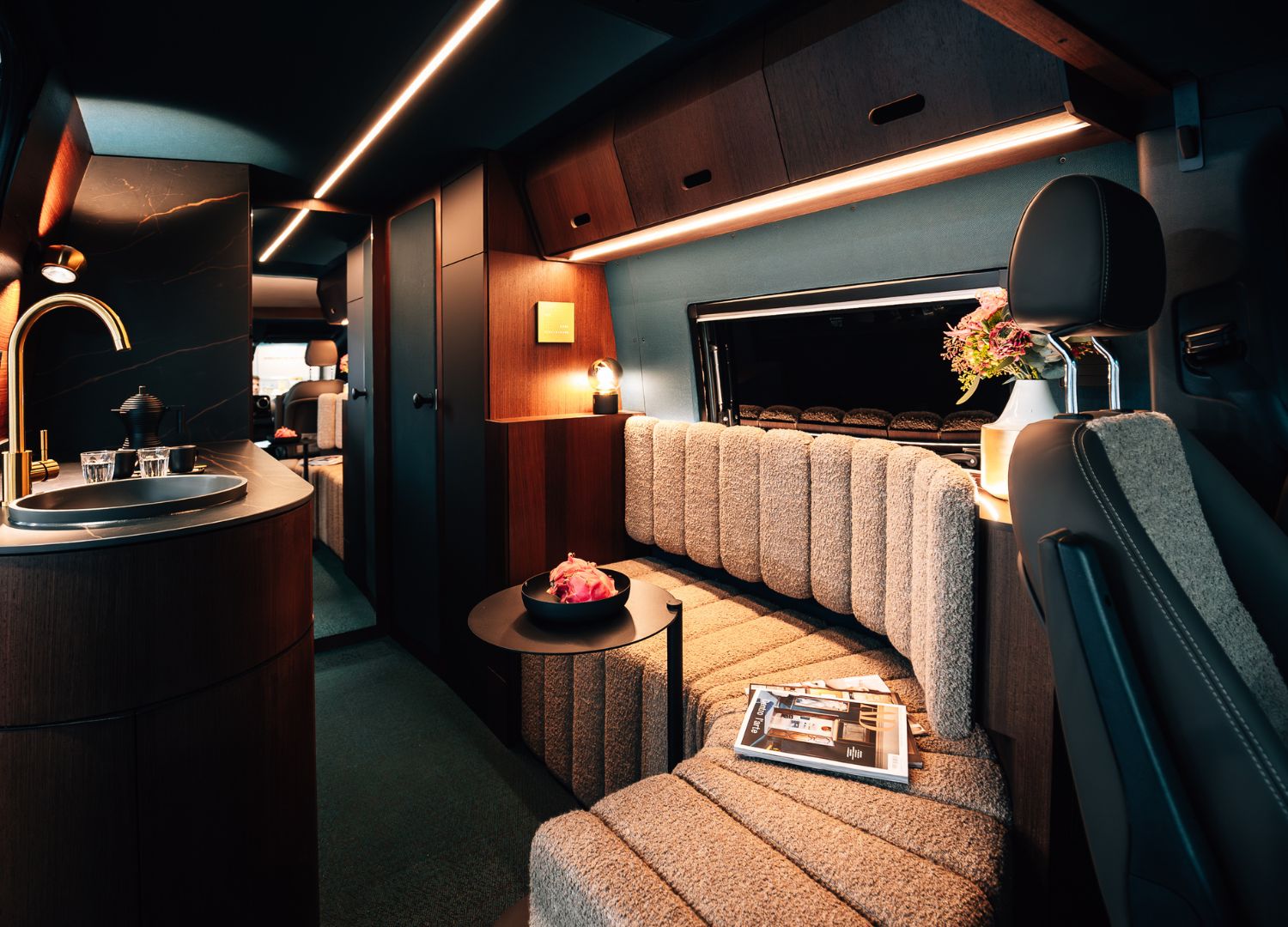
VABO Vision Milano © Vagabond Vans
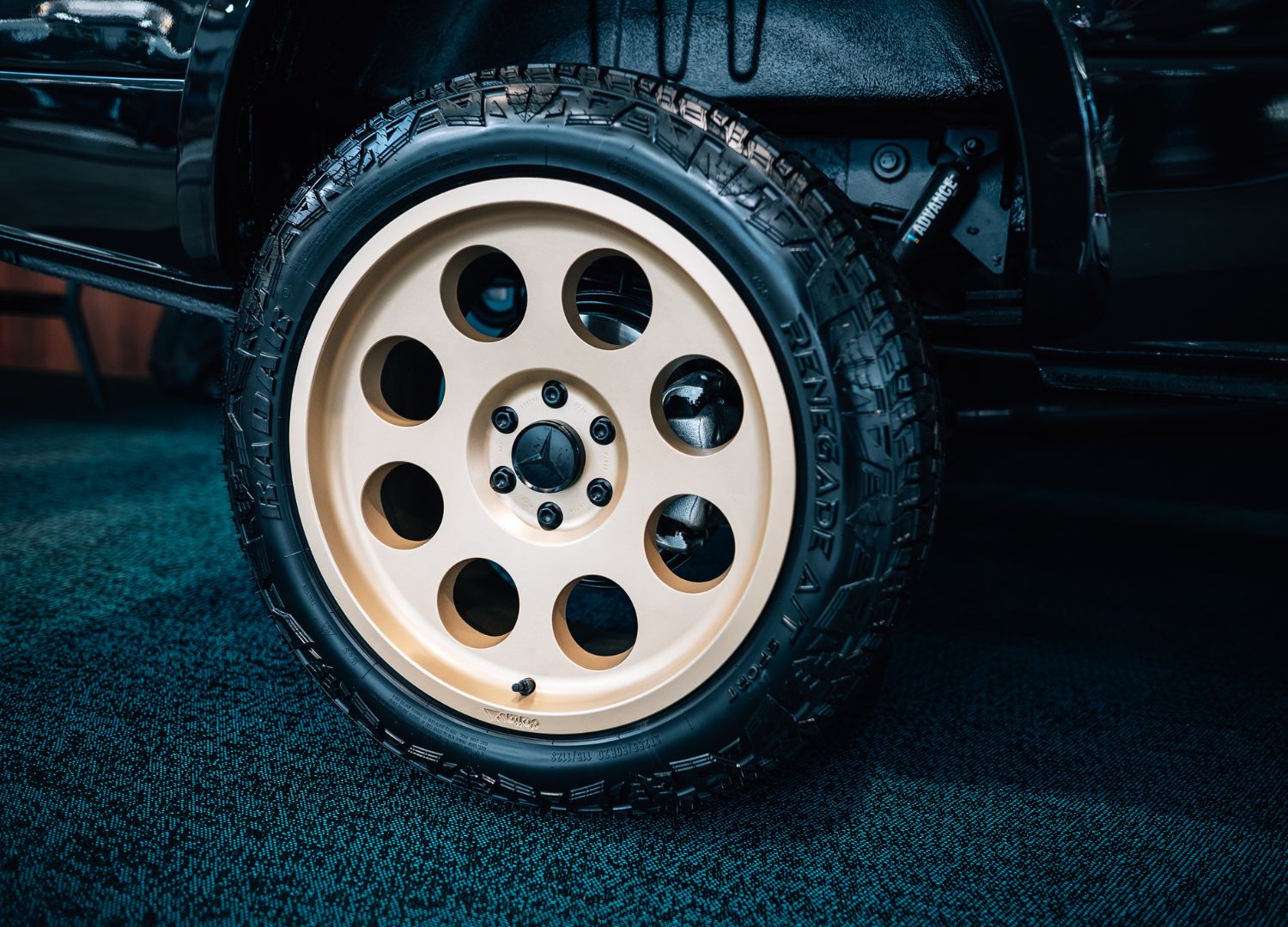
VABO Vision Milano © Vagabond Vans
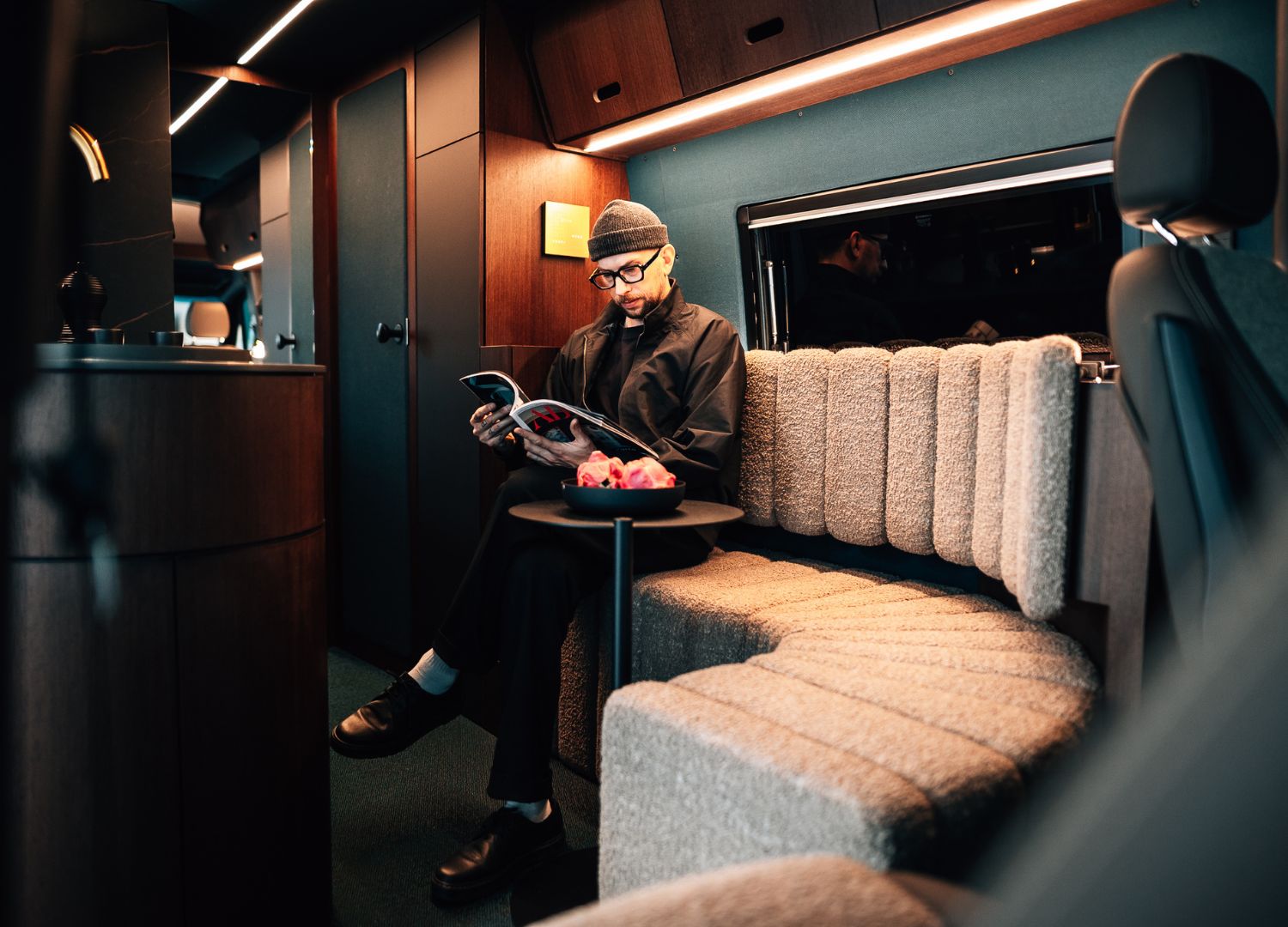
Andreas Stricker © Vagabond Vans
VABO Vision Milano © Vagabond Vans
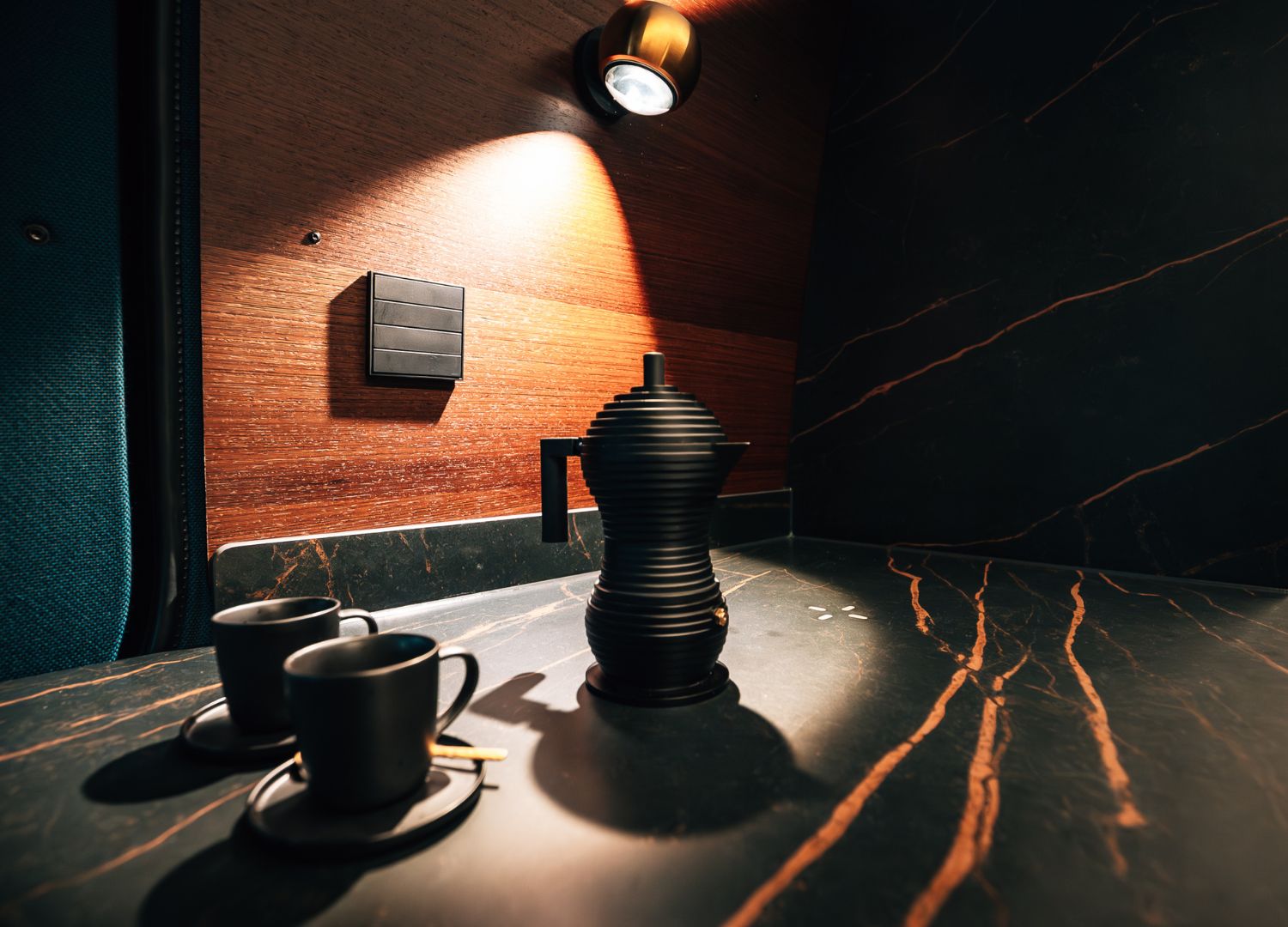
VABO Vision Milano © Vagabond Vans
VABO Vision Milano © Vagabond Vans
VABO Vision Milano © Vagabond Vans
VABO Vision Milano © Vagabond Vans
Where did your passion for trucks come from and how did you come up with this idea?
Andreas Stricker:
“It didn’t start with trucks. It started with spaces. I’ve always been fascinated by how environments affect the way we feel, think and move. Over time, this evolved into the idea of translating architectural and design principles into a mobile living space.
For my own creations — such as the VABO Vision Vehicles — I draw inspiration from design, architecture and art. Travel, visiting museums and immersing myself in global design culture constantly shape my perspective. Salone del Mobile and Milan Design Week is a creative reservoir that I mentally return to throughout the year.
For client projects, the approach changes completely. It’s about deep listening — understanding how people want to live, travel and experience space. Every bespoke van conversion starts with a dialogue and evolves through an iterative design process. VABO Vision Milano, for example, was inspired by the rhythm of Milan itself — capturing an urban weekend lifestyle where design, mobility and culture merge seamlessly.”
What does your design team look like? How would you describe your creative process?
Andreas Stricker:
“I am not only the founder of Vagabond Vans, but also the creative mind behind VABO’s design language. VABO is driven by passion — and defined by a clear ambition: to rethink campervan design as a form of mobile architecture. We stand for design, pioneering, individuality and authenticity. Our process is very close and we work with our personal customer. idea: Your Journey, Your Van The goal is not just the functionality, but the creation of a meaningful, high-quality space.
Everything starts in analog — sketches, materials, mood boards. It is important to start with something tangible, because the end result must be experienced physically. From there, ideas are digitally refined and translated into production. We focus on simplicity, quality of materials and clarity of space — using light, form and texture to create a luxurious van interior that feels intuitive and calm.”
What inspires your interior design choices?
Andreas Stricker:
“Every project starts with a story. For Vision Vehicles, these stories are often rooted in cultural and design contexts – cities like Copenhagen or Milan. Each concept acts as a narrative framework for the entire interior design of the van.
For customer vehicles, the inspiration becomes more personal. It can come from travel habits, passions or even existing homes. In many cases, we translate elements of a client’s architecture or interior into a custom van interior — creating a seamless extension of their lifestyle. In the end, it’s about turning identity into space.”
VABO’s designs deliberately reject the usually simple and utilitarian style that characterizes vanlife. How and why did you make this decision?
Andreas Stricker:
“We never wanted to be part of the traditional vanlife culture — we wanted to redefine it. The slash in our logo represents a cut. An escape from the everyday. A conscious step into a different state of mind. VABO is not about living in a van. It’s about the van experience.
Our customers don’t want compromise – they want continuity. The same level of design, ambience and quality they are used to in their homes, translated into a state-of-the-art van. That’s why we reject purely utilitarian design. Instead, we create spaces that feel purposeful, calm and elevated — sometimes minimal, sometimes bold, but always sophisticated.“
Could you describe your favorite projects from past VABO years?
Andreas Stricker:
“The first VABO in 2021 — a VABO Sport — was a defining moment. It introduced a new aesthetic to campervan design. What makes it special for me is its journey. After it was resold, it ended up with a Swiss architect, who is now a member of the VABO Circle. That’s what VABO is all about and the evolution of time — objects.
Since then, we have built more than 55 custom vehicles. Each one tells its own story. And many of these stories have turned into lasting relationships. From 2023, the owners gather every year at the VABO house in Bad Tölz for the VABO cycle. It’s where design, people and shared values come together — beyond the product itself.”
You came to Milan Design Week this year and many of your aesthetic choices are connected to the roots of Italian design. Where does this fascination come from and how do you translate it into an international market?
Andreas Stricker:
“Italy — especially Milan — is a symbol of design and dolce vita. There is a natural elegance and ritual in Italian culture that I find incredibly inspiring. VABO Vision Milano plays with these conventions by incorporating innovation. It creates a space that allows for rituals: preparing espresso in the kitchen, starting the day from a bar or atmosphere in a bar. with its doors to enjoy an aperitivo in a public space.
It is a tribute to the Italian way of life — sensual, purposeful and social. It’s not about translating it for an international market, it’s about creating a powerful, authentic concept that inspires globally.”
What’s a design idea you haven’t had a chance to create yet?
Andreas Stricker:
“All my design ideas will eventually find their way into the future VABO Vision Vehicles. Each of them follows a very clear and focused idea. The real challenge is not to overload these vehicles with ideas, but to use them precisely — for positioning and storytelling. In customer projects, we have the opportunity to constantly incorporate new ideas and technical innovations. This allows us to surprise the owner and the wider community again.
That said, one idea I’d still like to realize is a purely monochromatic vehicle — defined only through materiality and form, not relying on color contrasts.”
And finally, what does your dream van look like?
Andreas Stricker:
“In many ways, the VABO Vision concepts are already my dream trucks. They are uncompromising in their design and execution and reflect the evolution of our brand. Because of their clarity and consistency, they attract a lot of attention and strongly influence what our customers aspire to.
But the moment one Vision Vehicle is completed, I already feel the urge to create the next one. That’s why I like to pass them on to people who really understand and appreciate the concepts. It creates a cycle — new creations, passionate owners and a growing, unique brand story. I’m already looking forward to seeing all these vehicles come together at VABO’s ten-year anniversary in 2031.”
Whether the RV industry at large catches on to what Stricker is doing remains to be seen. The market grew dramatically during the pandemic years and has since cooled, but Vagabond Vans has never been competitive in this market. Its buyers are not escaping to a simpler life. they extend a complex, bringing their standards with them, expecting the same quality of light, surface and spatial experience that their homes and hotels provide.
What Vagabond Vans has understood is that its limitation vehicle it is not a problem to be managed, but a condition that makes the design interesting. When space is lacking, every design choice becomes more important, there is nowhere to hide, nowhere to be lazy. The ability to apply luxury interior design principles to such a space produces something that looks nothing like a caravan, allowing customers to travel the world in the comfort of home.



