
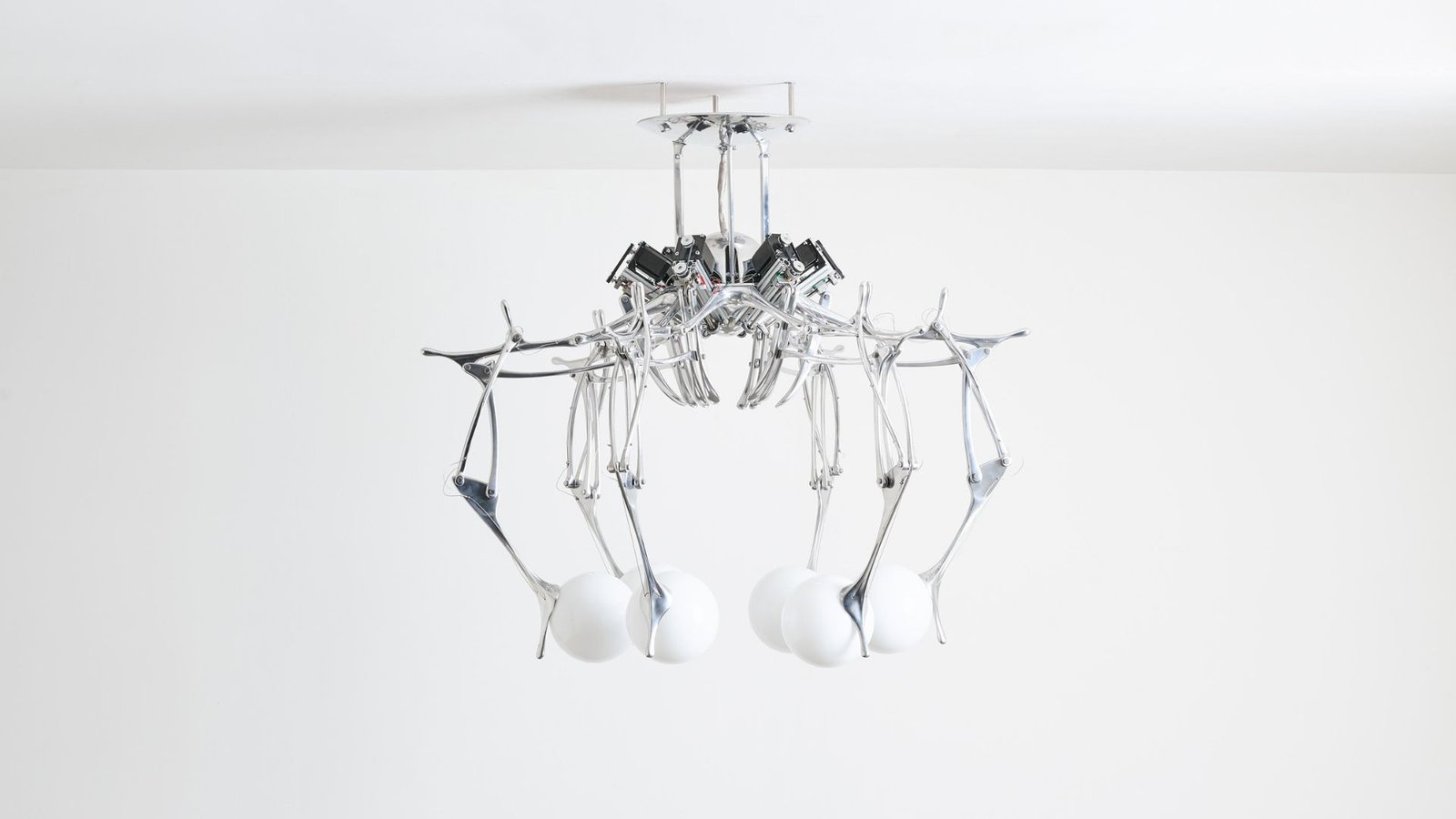

At Milan Design Week 2026, there was a strange irony between the exhibition widely known for its collective turn to the human hand, emphasizing art, texture, labor and also hosting many provocative meditations on technology and artificial intelligence. Hanging from a ceiling in Via della Spiga, inside By Nilufar historical gallery, LUMIACdesigned by Andrea Mancusoit is a chandelier that seems to be alive on its own.
LUMIAC is named after an acronym: Light Unit Mechanized Intelligence Apparatus Computer. The name deliberately refers to MANIAC, one of the first autonomous computers developed in the 1950s, a machine that marked the beginning of a new relationship between humans and electronic logic.
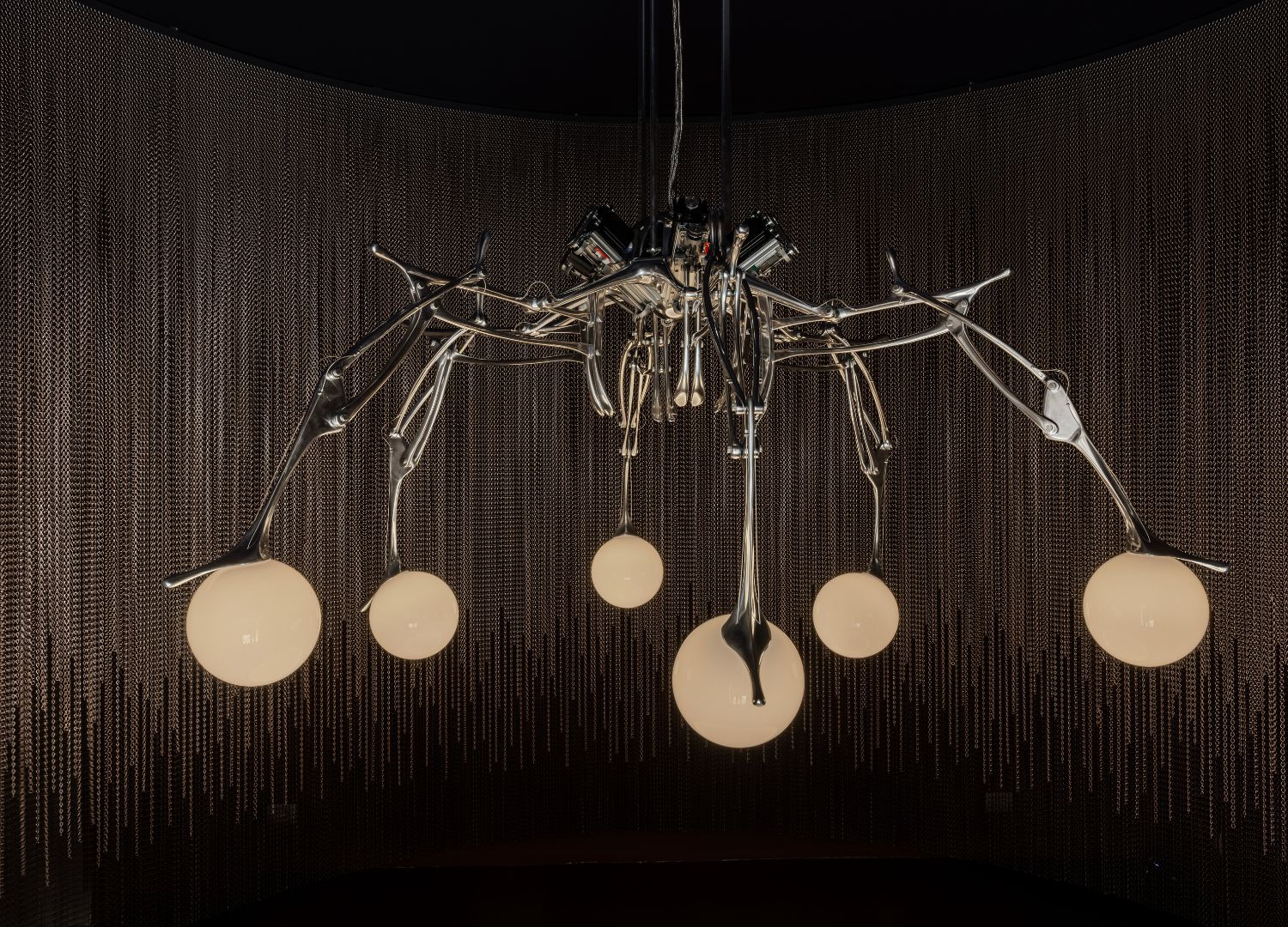
LUMIAC by Andrea Mancuso © Alejandro Ramirez Orozco
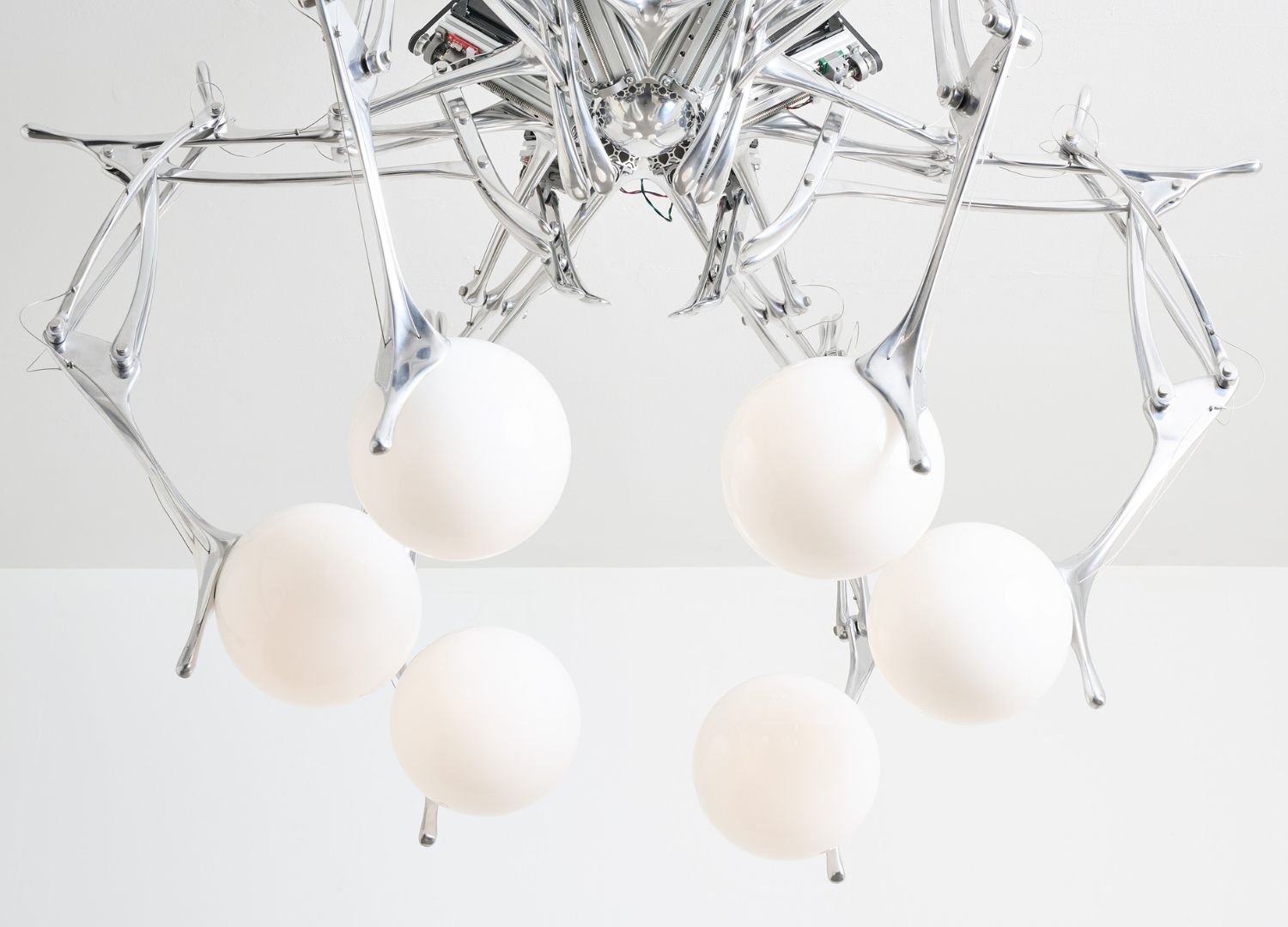
LUMIAC by Andrea Mancuso © Filippo Pincolini
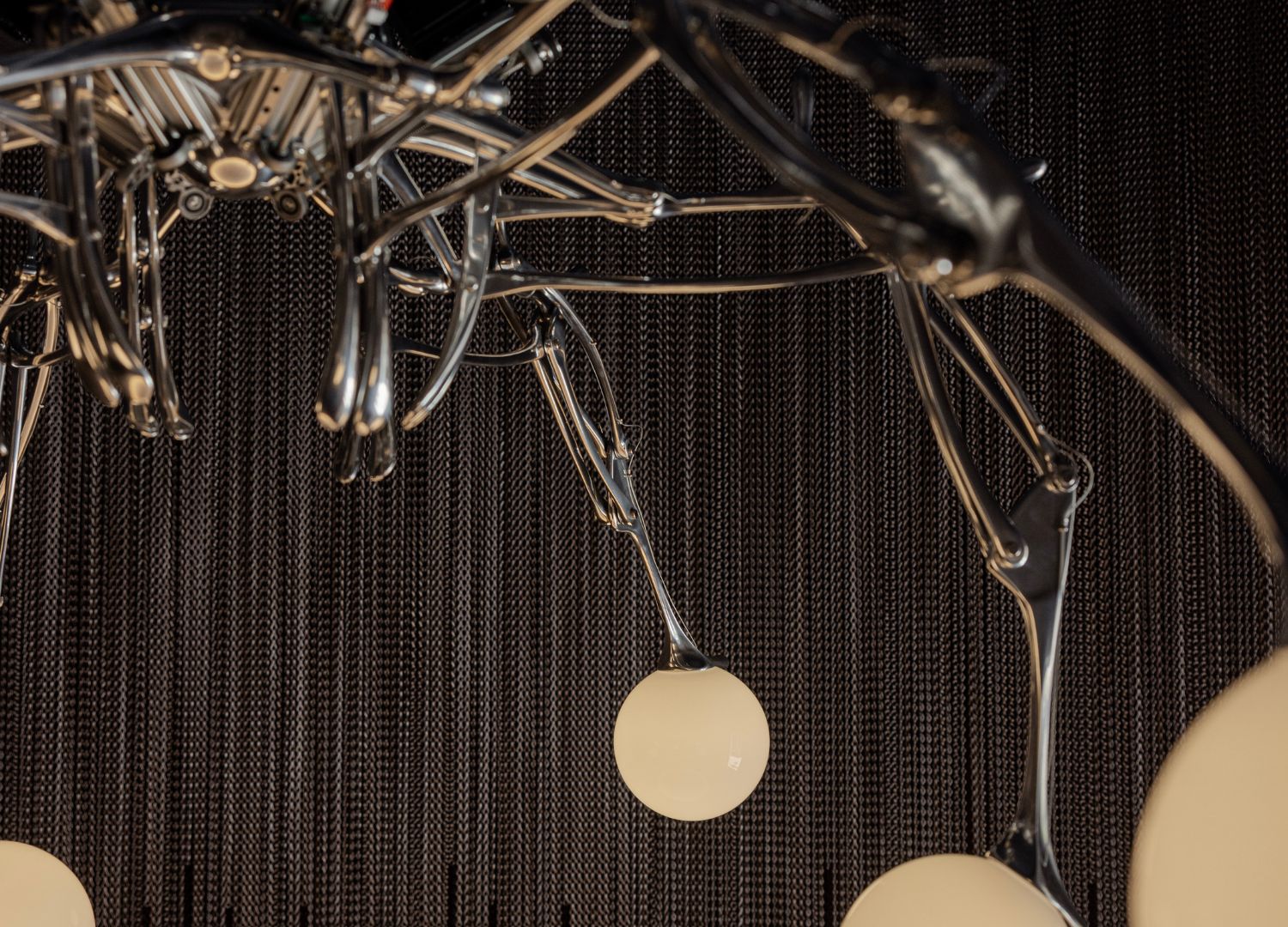
LUMIAC by Andrea Mancuso © Alejandro Ramirez Orozco
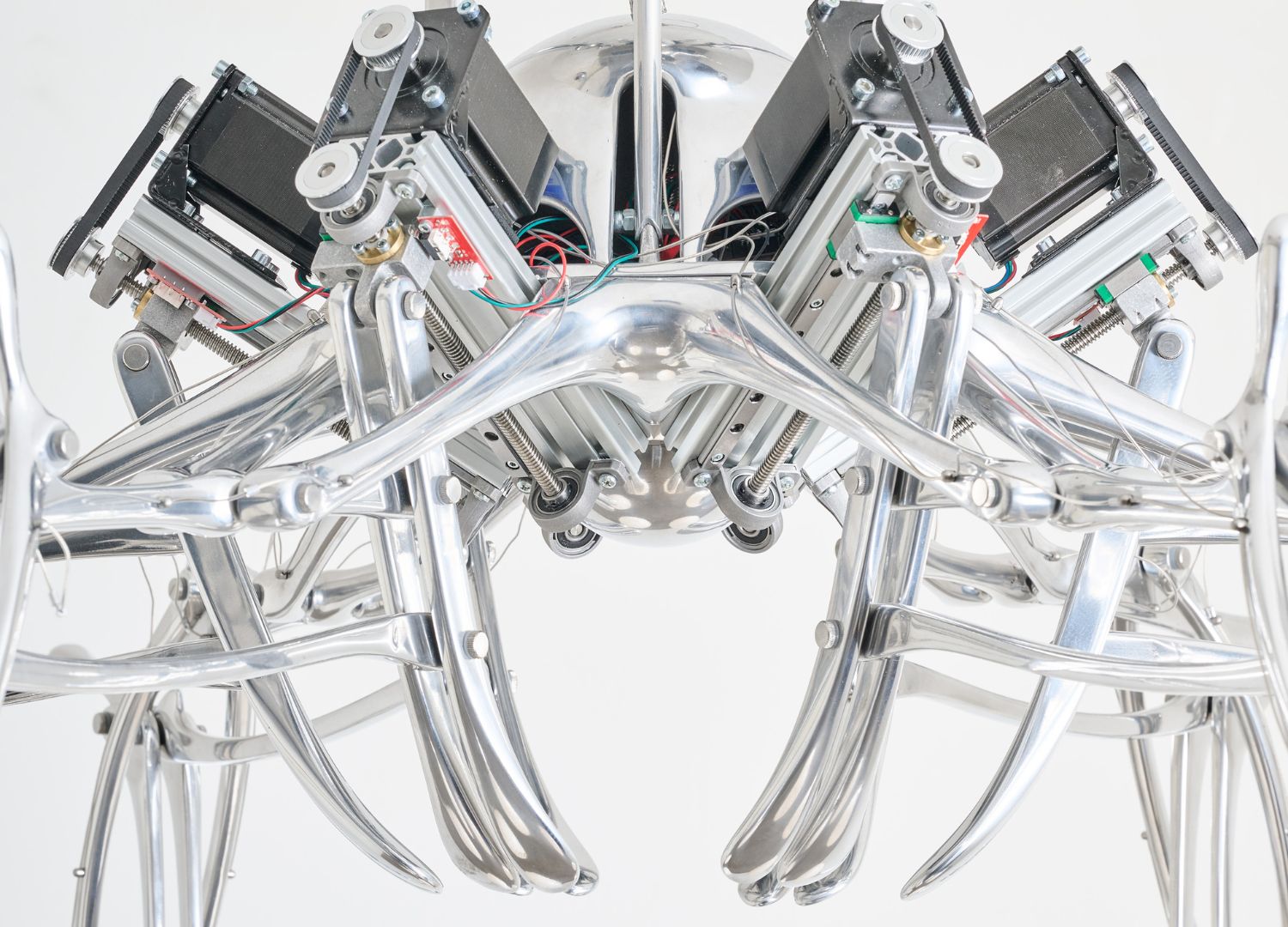
LUMIAC by Andrea Mancuso © Filippo Pincolini
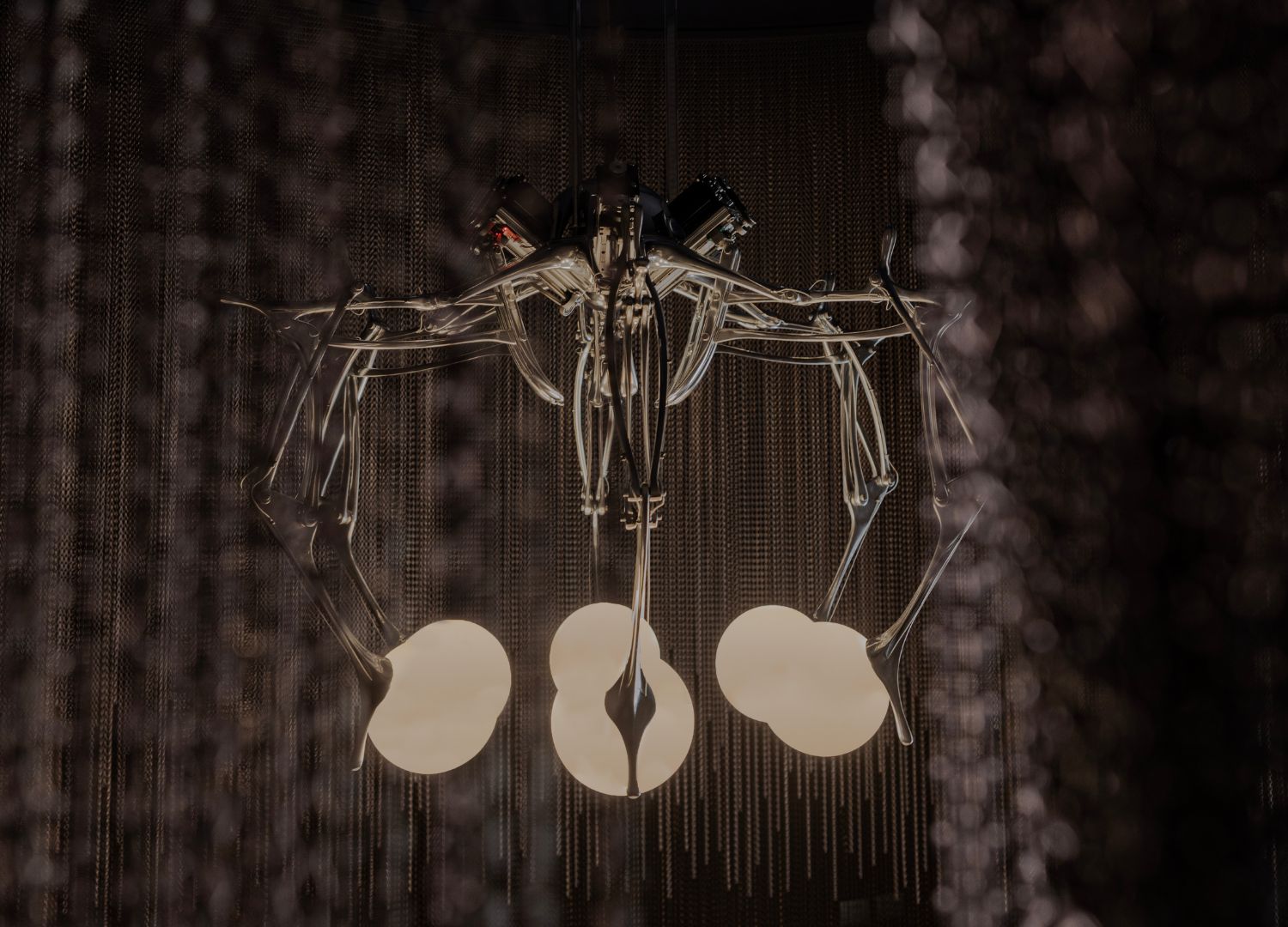
LUMIAC by Andrea Mancuso © Alejandro Ramirez Orozco
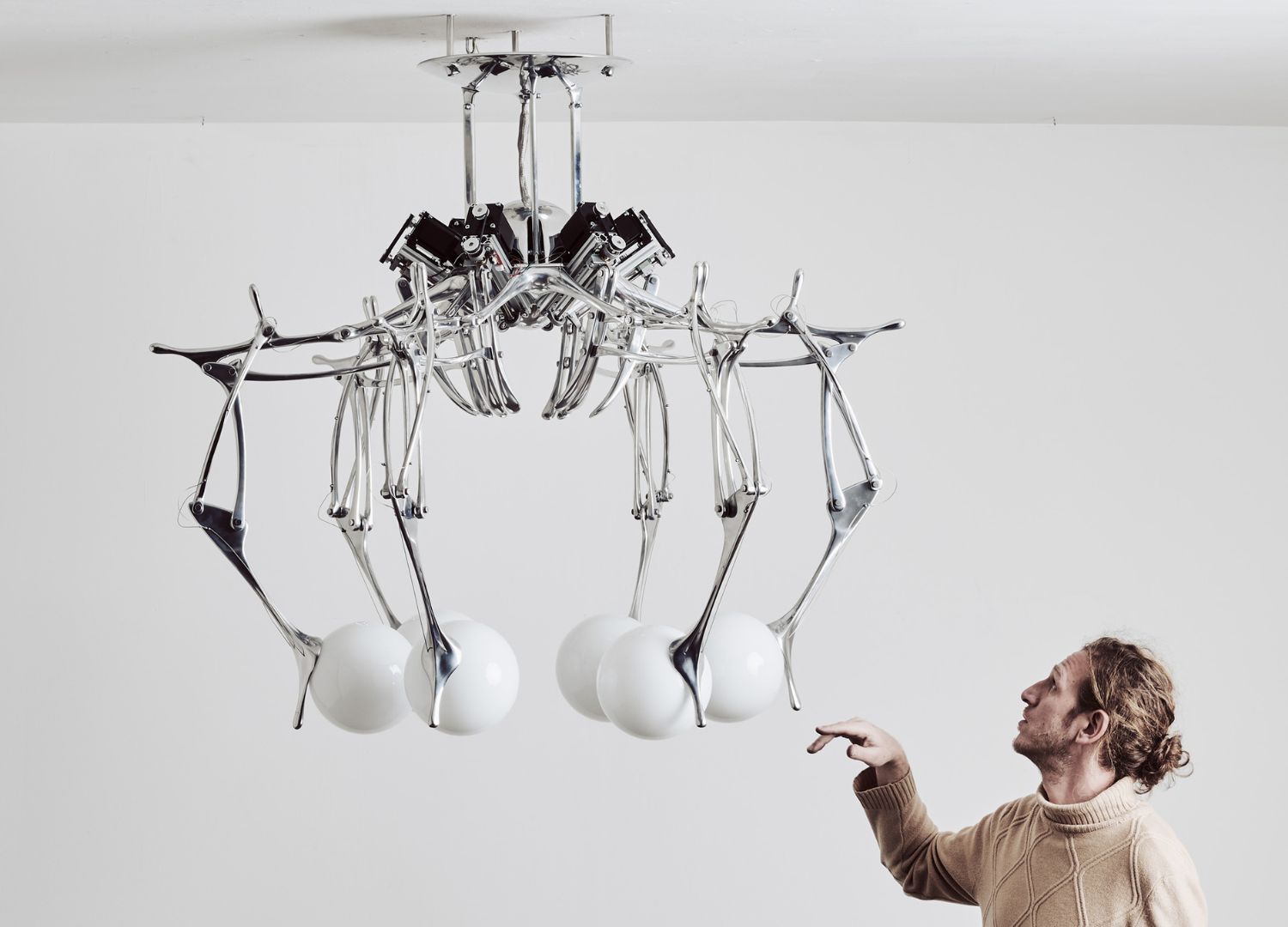
LUMIAC by Andrea Mancuso © Filippo Carandini
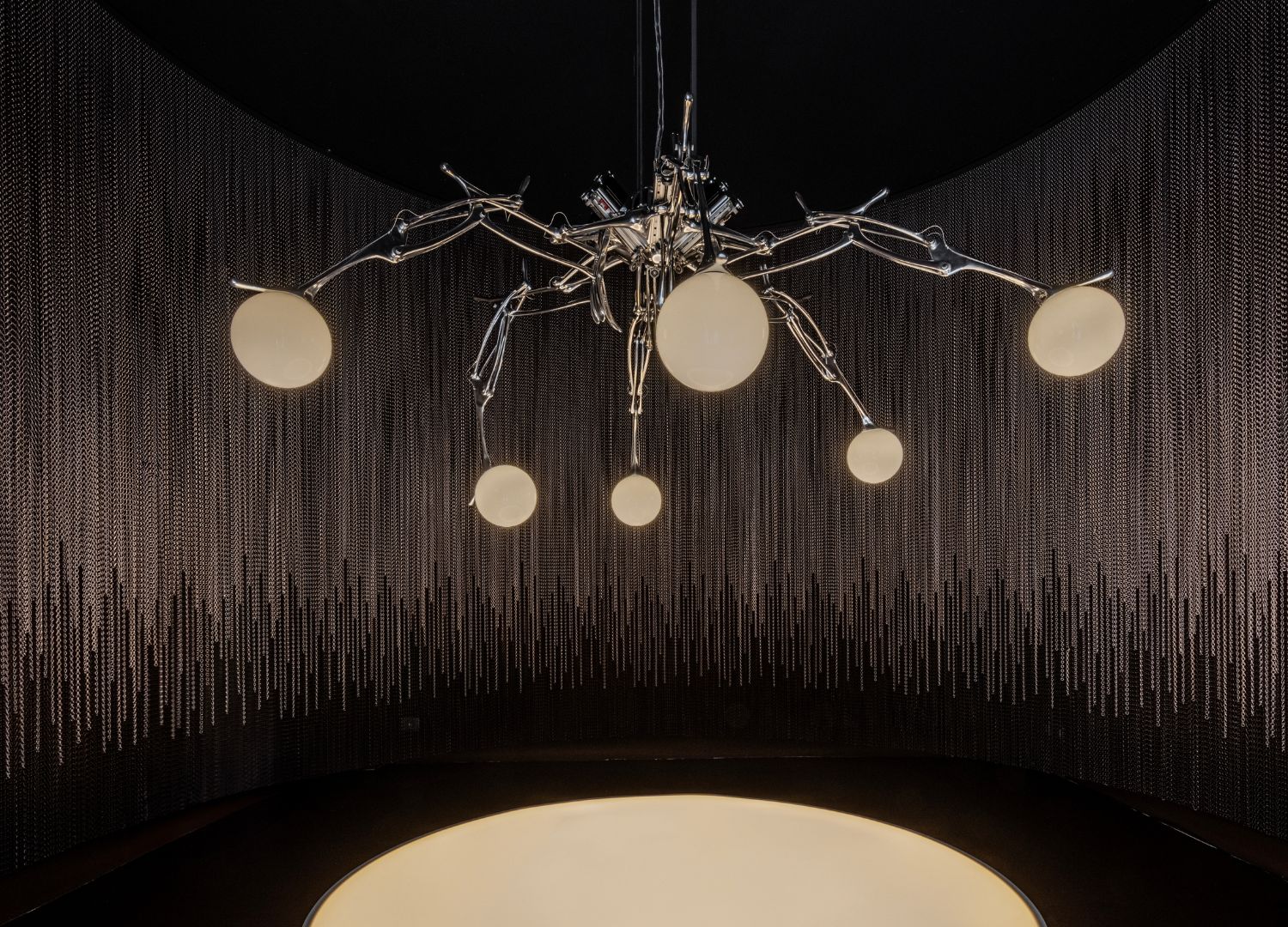
LUMIAC by Andrea Mancuso © Alejandro Ramirez Orozco
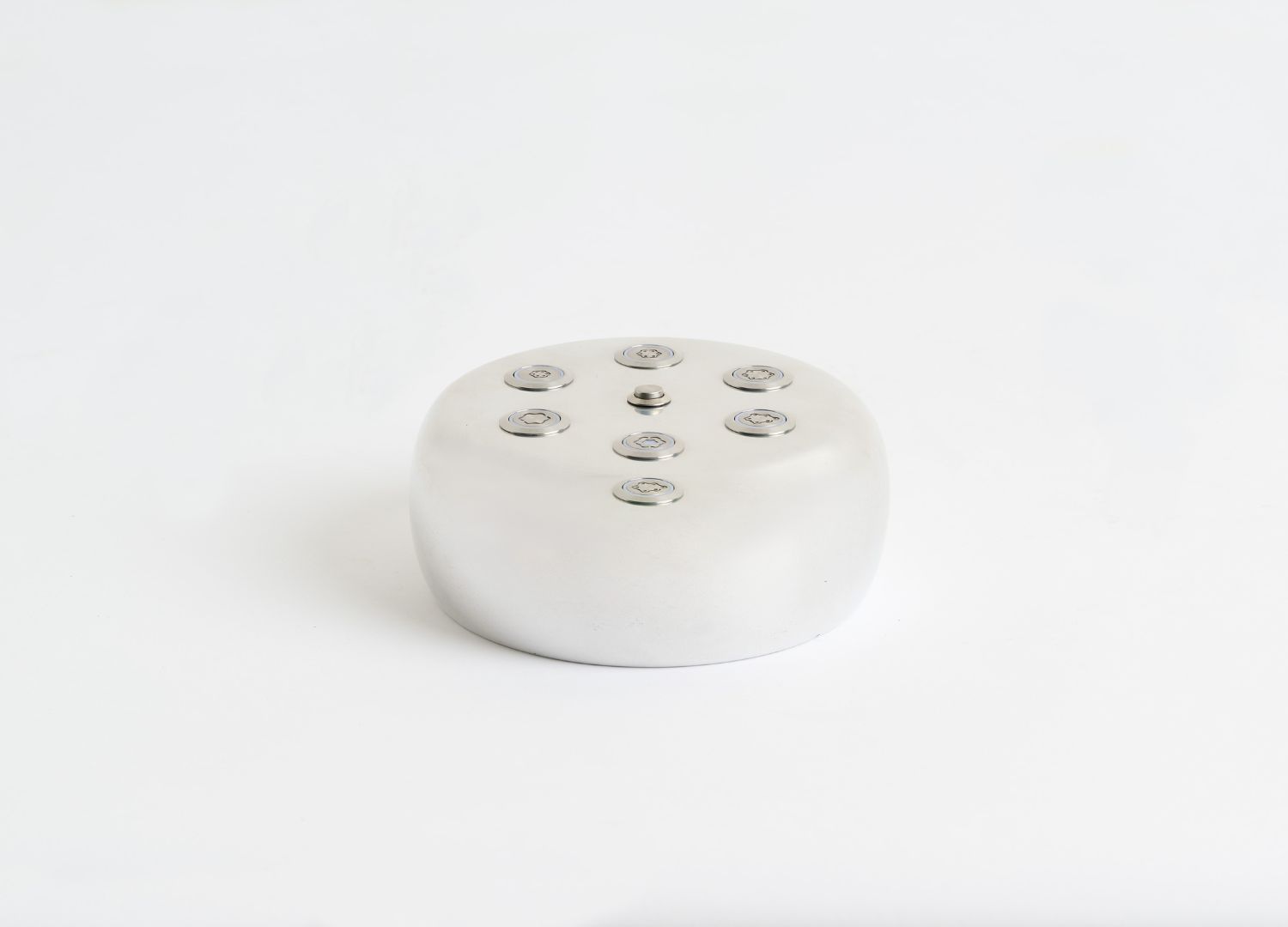
LUMIAC controller © Filippo Carandini
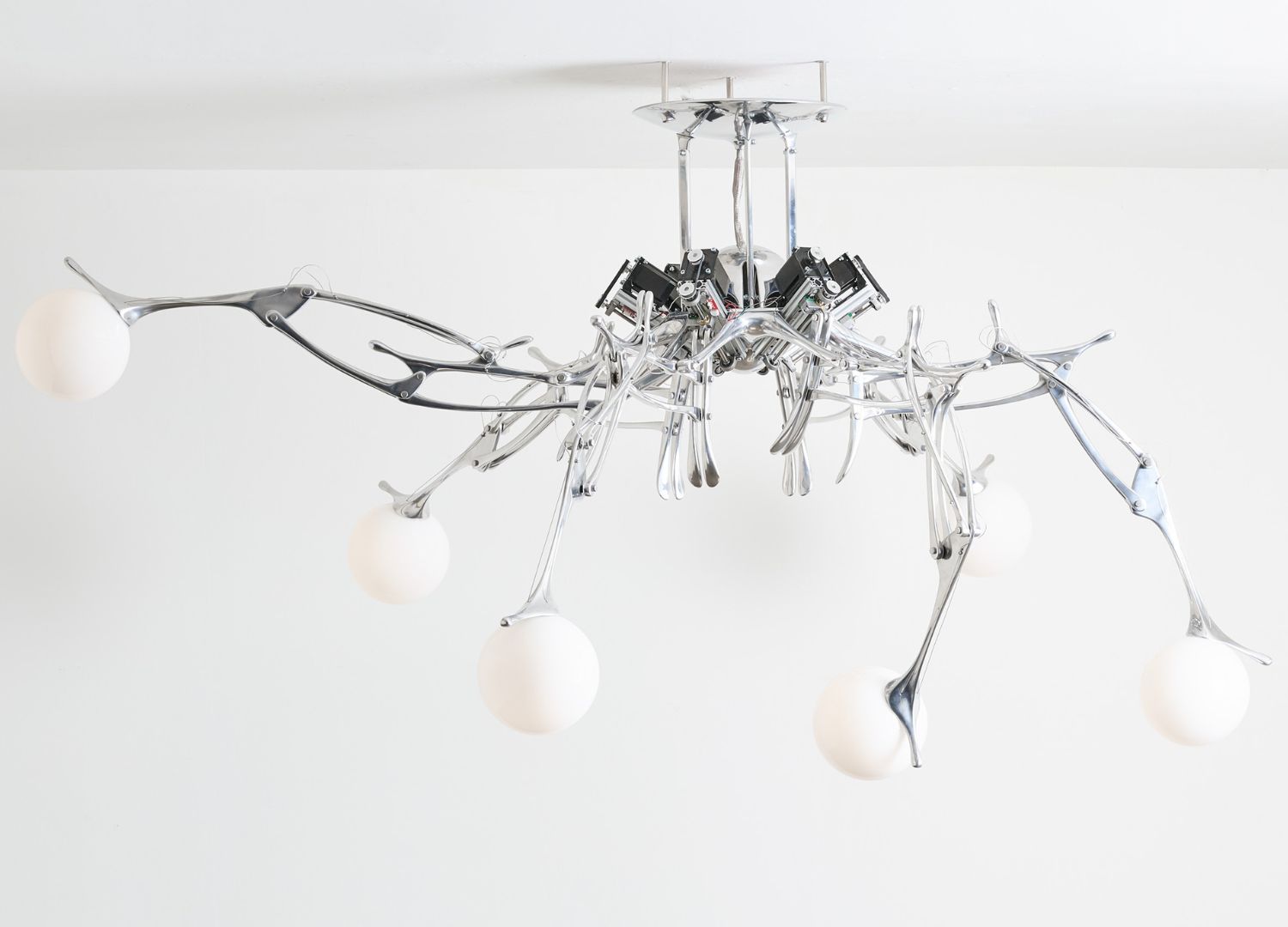
LUMIAC by Andrea Mancuso © Filippo Pincolini
LUMIAC by Andrea Mancuso:
LUMIAC and its structure
Cast aluminum arms extend from a central core in an arrangement that explicitly evokes the human anatomy, the bones radiating from a spine. Within this core, built-in motors control the movement of the arms, while glass spheres at their ends emit a soft, diffused light. A remote control synchronizes both movement and dimming so that structure and lighting respond together, as one system. The result is that of a creature, something that exists in time, something that performs.
While the designer’s previous works have been grounded in geological time, natural history, cave art and aquatic life, this one reaches for something more contemporary and unsettling: the question of what happens when machines start to behave. The movements of the chandelier place the object in a category of things that act rather than simply exist, asking the viewer to reconsider the boundary between tool and agent.
The collaboration with Kriskadecor
Mancuso collaborated on the installation Crisis decorationa Spanish company founded in 1926 in Montblac that has spent a century transforming aluminum chains into architectural materials. In LilyHis gallery, circular curtains of chains surround the chandelier, with an outer layer in brown tones to define the perimeter of the space and an inner curtain of amethyst to introduce color and translucency. Towards the base, the two layers blend and overlap in a gradient, enhancing the exposure’s immersion.
The company’s material has found widespread adoption among architects and designers because it animates surfaces that are technically static. The chains catch light, shift with air currents as well as people’s movements and produce subtle color transitions. For an installation built around a moving chandelier, the parallel is accurate.
Making a machine feel alive
Mechanical movement has its own grammar: regular, repetitive, smooth. Organic movement, on the other hand, is asymmetrical, hesitates, oversteps and corrects. To make the LUMIAC feel alive rather than automated, Mancuso had to work against the default outputs of the motors themselves, spending countless hours programming a sequence of movements that could actually read as a breathing, thinking, stopping creature.
In spite of chandelier obvious artificiality, his movements evoke real feelings in us, expressing some kind of sentimentality and spirit behind the machine. We are moved by something we know is not alive, using the same capacity for empathy that makes us read faces in electrical outlets and narratives in the clouds. At LUMIAC, Andrea Mancuso it does not set man against machine, but rather in a genetic relationship, where the purpose of one is to explore the limits of the other.



