
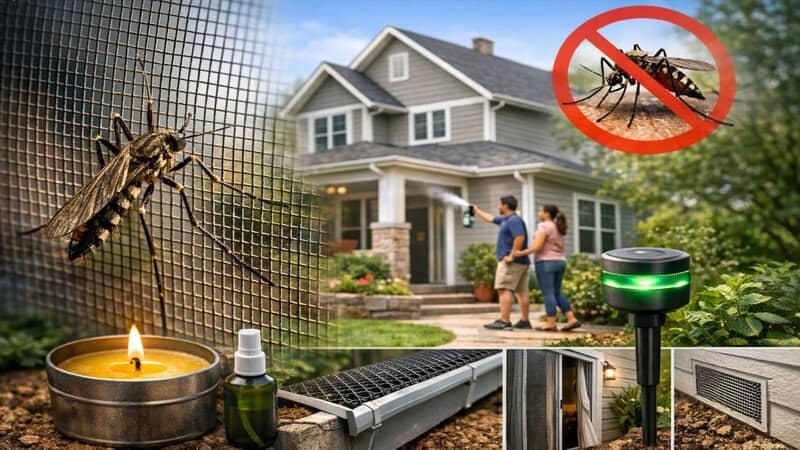

1. Install window and door screens

Installing mesh screens on windows and doors is an effective method to prevent mosquitoes from entering your home. Choose screens with mesh sizes small enough to block mosquitoes while still allowing fresh air to circulate. Make sure the screens are sturdy and free of tears or holes, as even small openings can allow mosquitoes to enter. Check and repair screens regularly to maintain their effectiveness. For more information on mosquito-proofing your home, see the EPA’s guidelines for windows that resist mosquitoes.
2. Seal cracks and gaps

Sealing small openings around doors, windows and foundations with caulk or weather stripping effectively prevents mosquitoes from entering your home. Silicone-based caulking is particularly durable and flexible, making it ideal for filling gaps. Check these seals regularly for wear to maintain their effectiveness. For more information on mosquito protection, see the CDC’s recommendations for mosquito control. (cdc.gov)
3. Use mosquito nets indoors

Hanging mosquito nets over beds and cribs is an effective method of protecting against mosquito bites, especially in areas where mosquitoes are prevalent or for infants. The World Health Organization (WHO) recommends the use of insecticide-treated nets (ITNs) to reduce malaria transmission. (who.int) Treated nets are more effective than untreated nets as they kill and repel mosquitoes, providing an extra layer of protection. It is important to ensure that the nets are properly fitted with no gaps to prevent mosquitoes from entering.
4. Install the door trash

Installing door sweeps effectively seals the gap under exterior doors, preventing mosquitoes from entering your home. Various styles are available, including glue-down and screw-on models, allowing you to choose the best fit for your door type. For detailed installation instructions, see This Old House guide to installing door sweepers.
5. Eliminate standing water

Mosquitoes breed in standing water found in birdbaths, buckets, gutters and plant saucers. To prevent breeding, empty and clean these containers weekly. This practice is among the most effective methods for mosquito control, as recommended by the American Mosquito Control Association. (mosquito.org)
6. Use natural repellants

Certain plants, such as citronella, lavender and marigolds, are believed to repel mosquitoes when placed near entrances. However, research shows that while the oils extracted from these plants can repel mosquitoes, the plants themselves are not effective in this regard. For more information on mosquito control, see the UC Statewide Integrated Pest Management Program guidelines. (ipm.edu)
7. Lawn and shrub maintenance

Regular mowing and trimming of shrubs reduces mosquito resting spots, making your property perimeter less attractive. This practice reduces the shade and humidity that mosquitoes require. For comprehensive landscaping tips for pest prevention, see the University of Florida IFAS Extension guidelines on Landscaping methods to prevent pests from entering your home.
8. Use fan barriers

Placing fans near entrances or patios creates air currents that disrupt mosquito flight, making navigation and landing difficult. This method is chemical-free and child-friendly, providing a safe alternative to traditional repellents. For more information on the science of using fans to repel mosquitoes, see Consumer Reports’ article on hitting the bugs.
9. Apply repellent safely

Before entering areas with mosquitoes, apply EPA-approved insect repellents containing active ingredients such as DEET, picaridin, or oil of lemon eucalyptus to exposed skin. These ingredients are effective in preventing mosquito bites. For more information on choosing the right repellent, see EPA’s guidance on finding the right repellent for you.
10. Install Yellow Bug Lights

Installing yellow “bug lights” can reduce the attraction of mosquitoes and other flying pests to your home’s entrances. These lights emit wavelengths less attractive to insects compared to standard bulbs. While they may not eliminate all bugs, they can reduce the number of insects around entry points. For more information on the effectiveness of yellow lights, see The Spruce’s article on bug zapper lights.
11. Keep trash cans covered

Hermetically sealing the bin prevents mosquitoes from breeding or hiding in the dampness of the bin. Keeping bins hygienic is also vital. For waste management tips, see the CDC’s container management guidelines. (cdc.gov)
12. Repair holes in screens immediately

Small cracks can render screens ineffective. Their immediate treatment is essential. For small holes, use waterproof glue to seal them. Apply sparingly to avoid drips. For larger tears, consider using a screen repair kit, which includes mesh pads and glue, or replace the damaged part entirely. For detailed instructions on repairing window screens, see The Home Depot’s tutorial repair or replacement of windows.
13. Install automatic door closers

Automatic door closers ensure that doors are not left ajar, minimizing inadvertent openings that can invite mosquitoes indoors. Options include hydraulic or spring mechanisms, each suitable for different door types and weights. For a comprehensive review of popular models, see Bob Vila’s article on the best door closers.
14. Secure vents and chimneys

Placing screens or louvered covers on attic vents and chimneys prevents mosquitoes from entering while maintaining airflow. It is recommended to use reinforced mesh to prevent tears. For more information on pest-proofing your attic, see the National Pest Management Association’s guidelines for attic pests.
15. Invite natural predators

Encouraging natural predators such as bats, birds and dragonflies can help control mosquito populations in your yard. Installing birdhouses or bat boxes provides roosting sites for these beneficial creatures. For more information on attracting wildlife mosquitoes, see the National Wildlife Federation’s guidelines for attracting mosquitoes.
Conclusion

Implementing a combination of physical barriers, such as window and door screens, and regular maintenance practices, such as eliminating standing water, is essential to keeping your home mosquito-free. Immediate action in these areas ensures lasting comfort and health for you and your family. For more information on mosquito control, see the CDC’s guidelines on mosquito control at home.



