
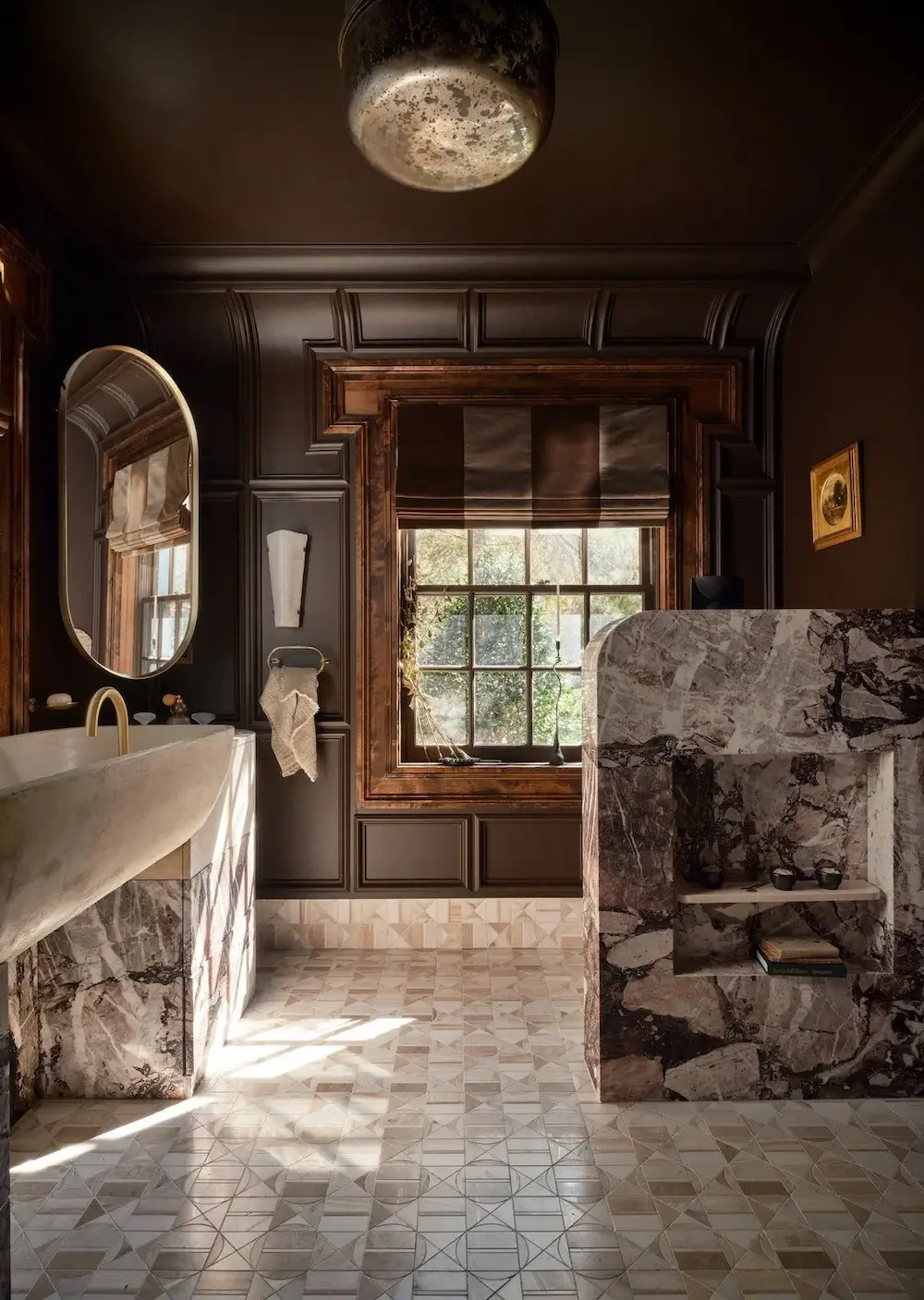

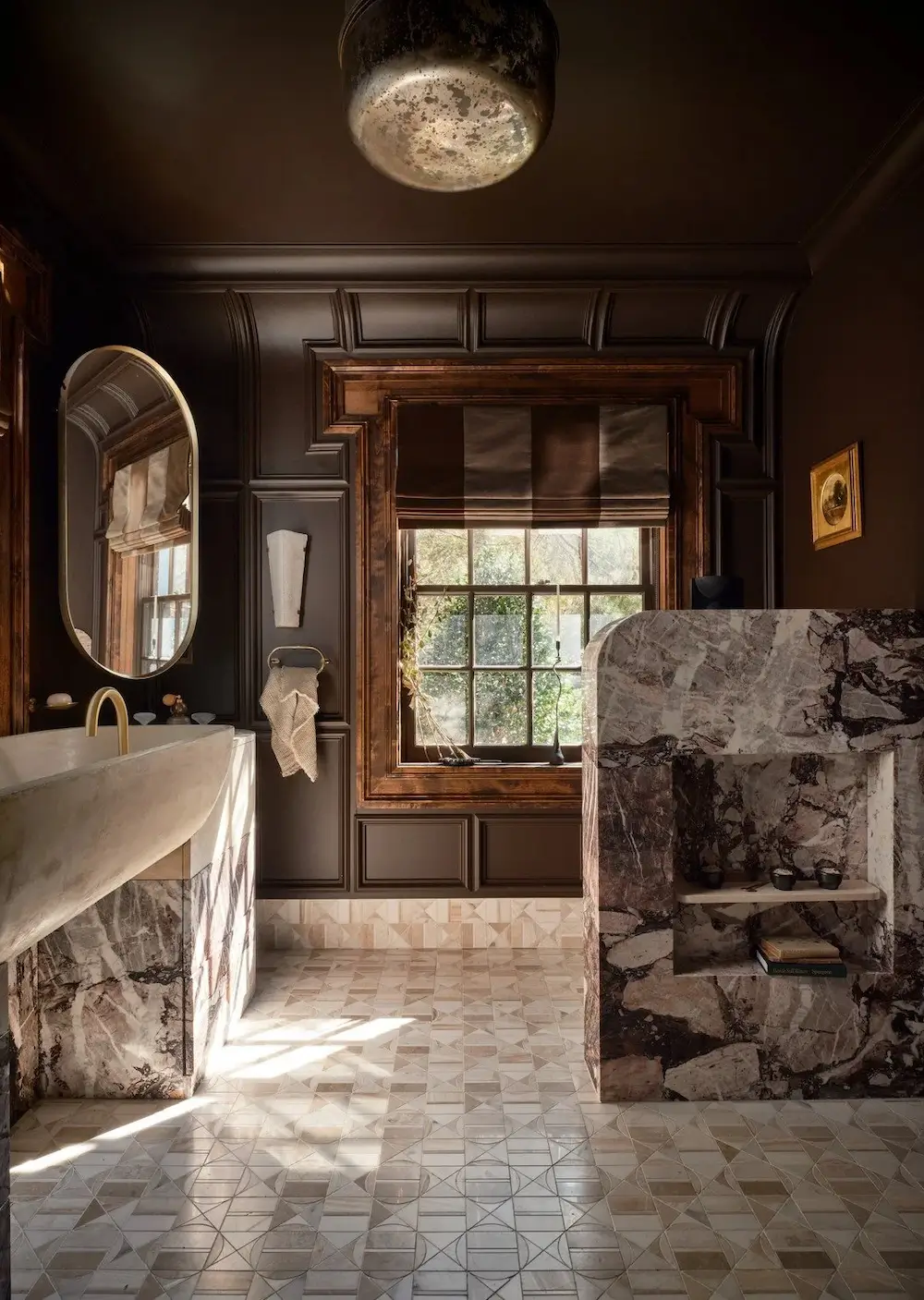
At first glance, this gray bathroom with Town Planning Plans for the Kips Bay Show House Dallas feels dramatic with rich brown walls, moody lighting and Roman-inspired materials. It’s the kind of place that stops you in your tracks immediately while scrolling.
But the detail that completely transforms the entire room is actually much more subtle.
And honestly? Once you notice it, you can’t unsee it.
Instead of sharp corners where the walls meet the ceiling, the designers used soft curved transitions that instantly make the bathroom feel calmer, warmer and much more luxurious. It completely changes the atmosphere of the place.
The room feels wrapped instead of boxy. Sculptural instead of rigid.
And this softness is even more important in a bathroom with such dark, saturated tones. Without the curves, the space could easily feel too heavy or heavy. Instead, everything is relaxed, organic and quietly expensive.
Moody Palette feels surprisingly calm
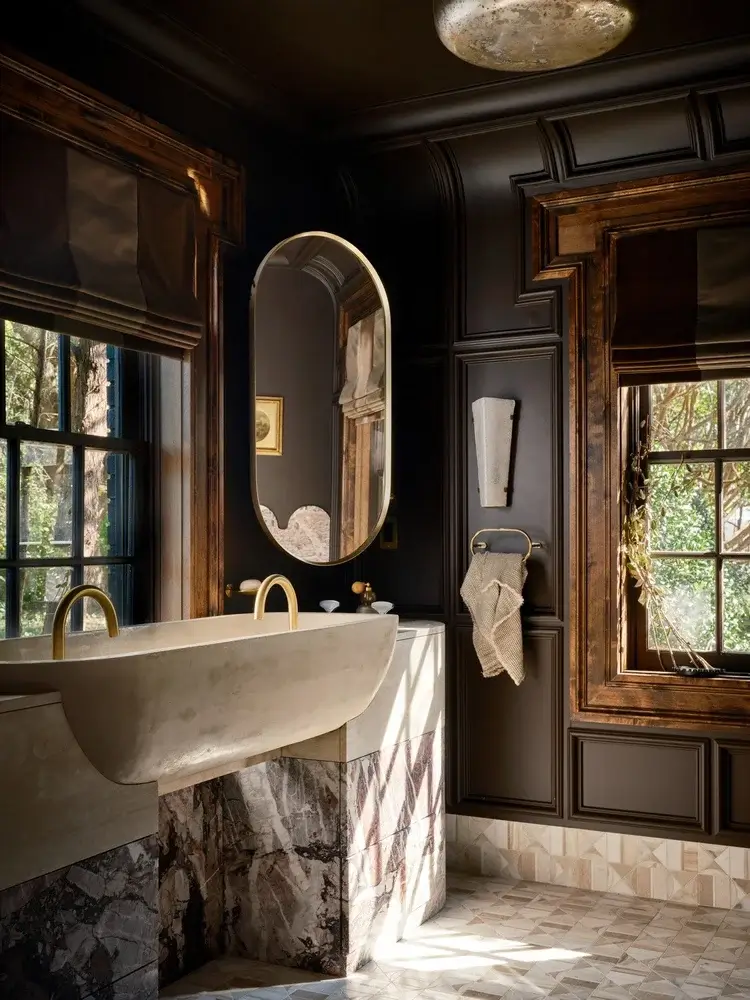
Of course, the architecture isn’t the only thing that makes this bathroom so beautiful. The deep chocolate brown walls create that cocoon feel that feels incredibly sophisticated without being overwhelming.
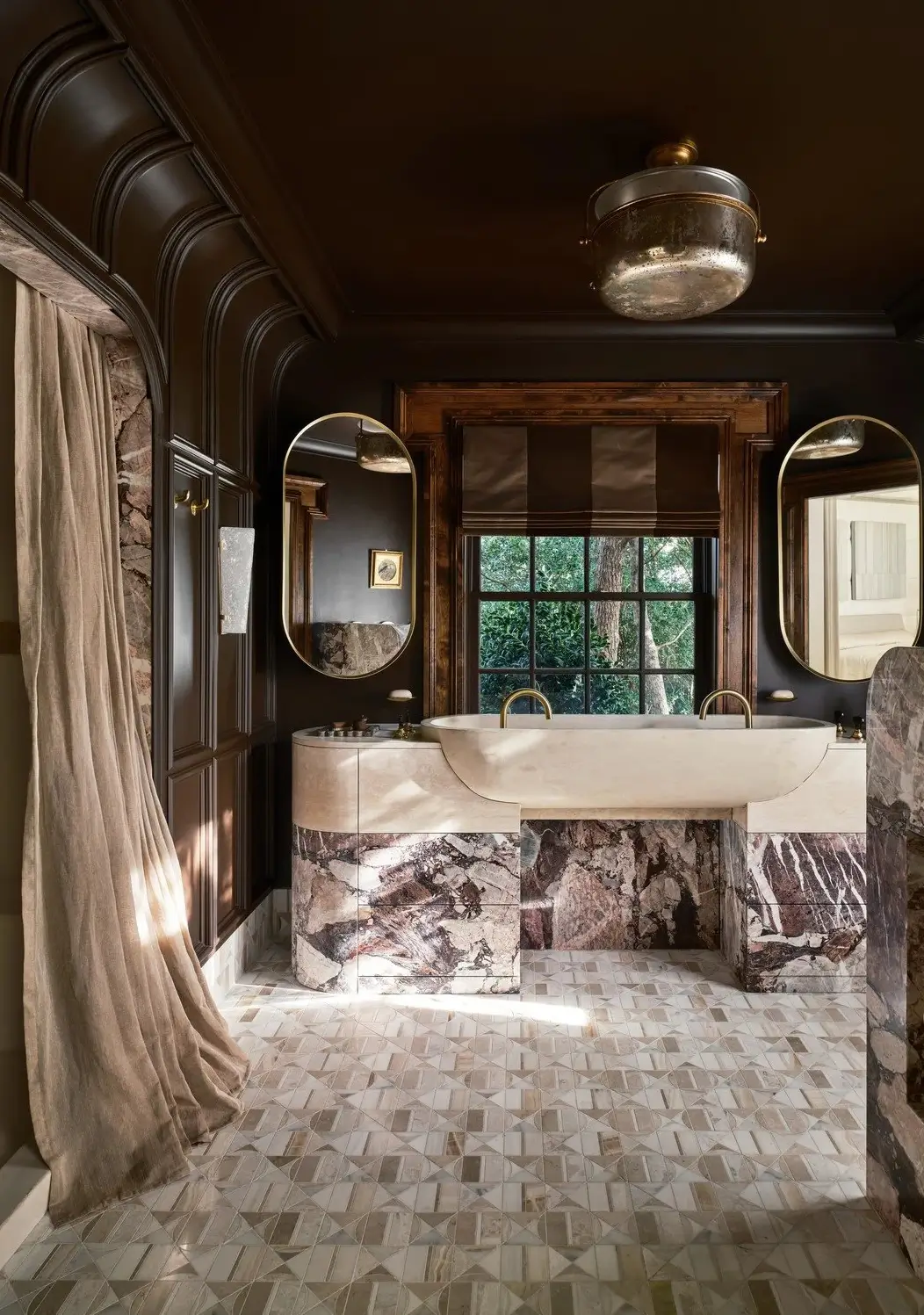
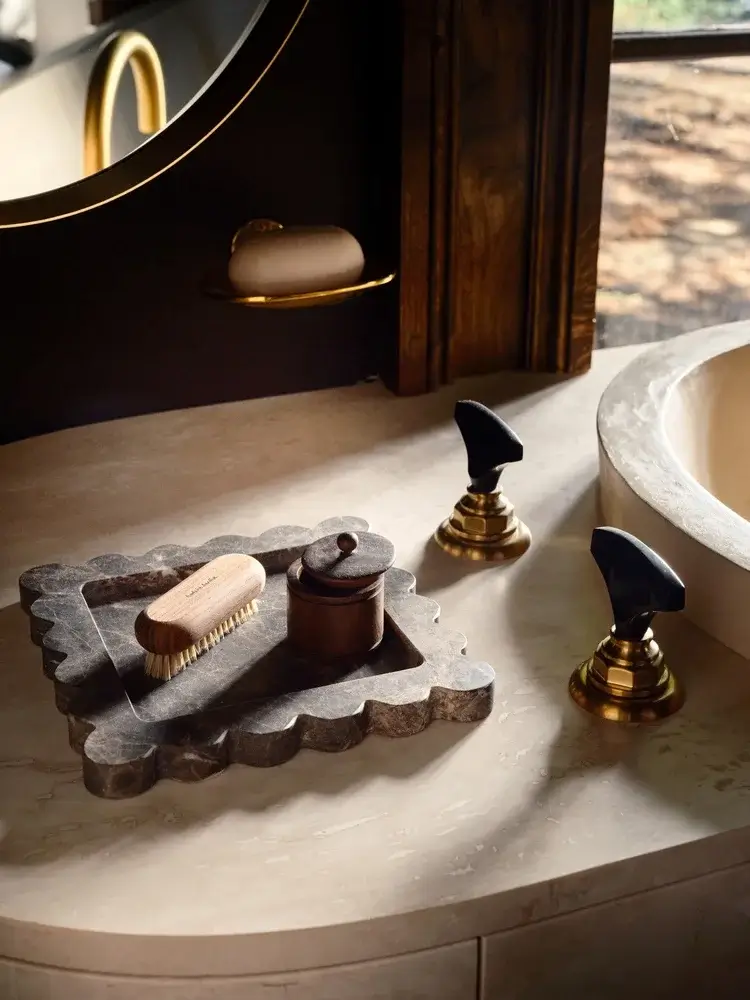
What makes it work is the layering of textures. Stone, plaster, wood and aged brass reflect light differently, which keeps the tonal palette visually rich and interesting.
It feels dramatic, but never harsh.
The stone sink looks like a sculpture
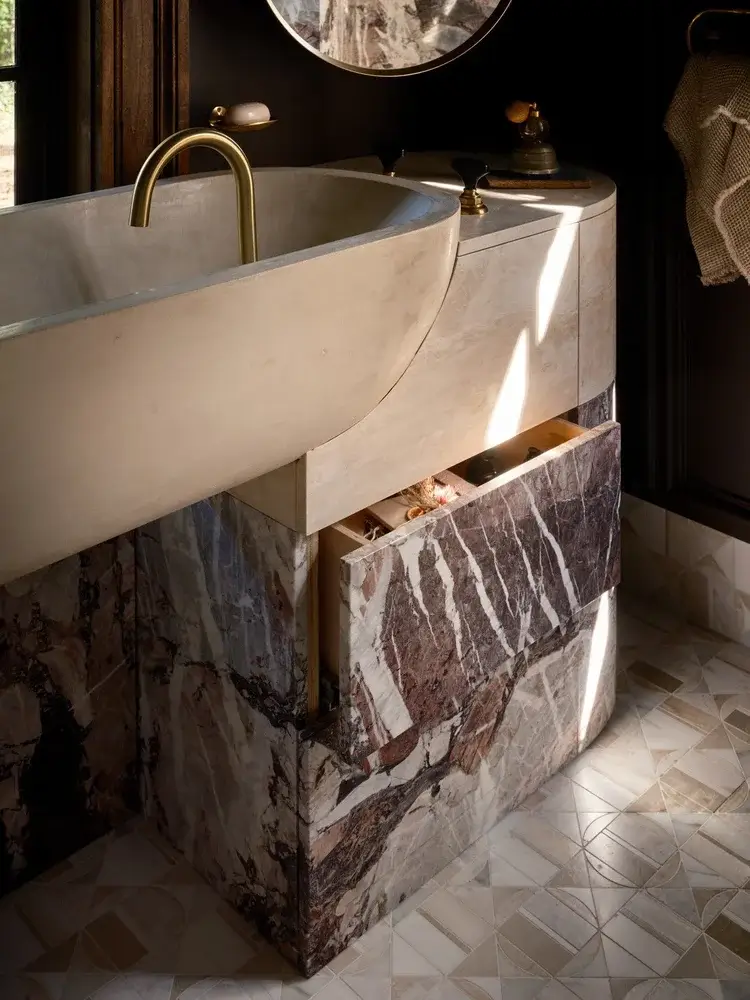
The massive limestone sink looks almost like an ancient artifact carved right into the room. It’s easily one of the strongest focal points in the entire space and reinforces that modern Roman bath feel that the urbane was clearly leaning towards.
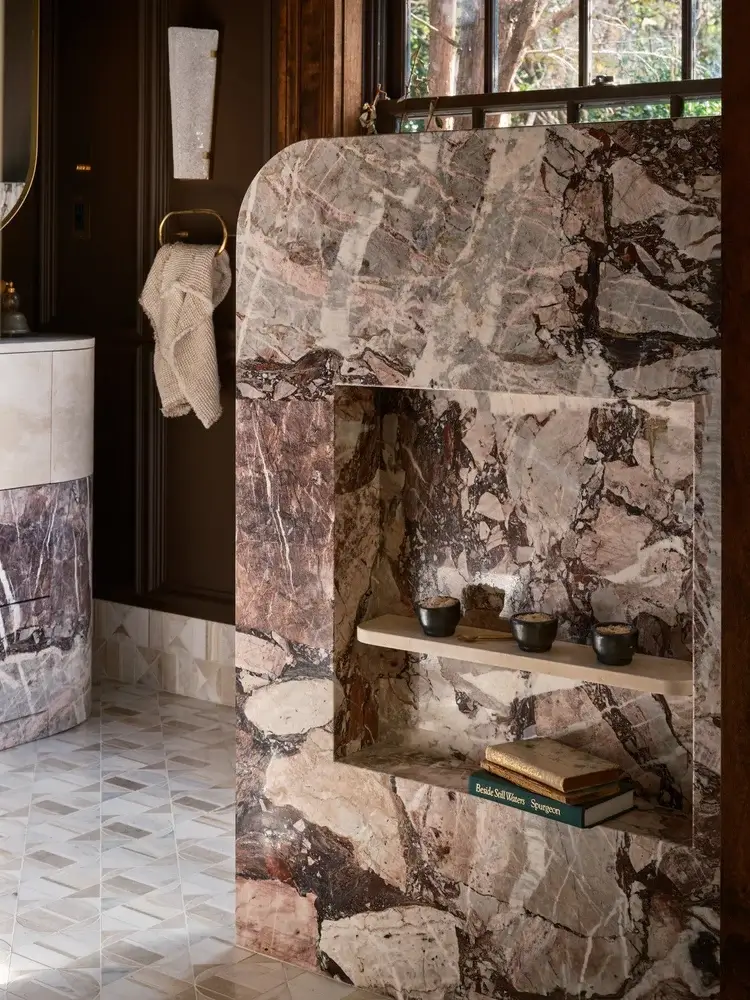
I also love how the rawness of the stone contrasts with the softer architectural lines throughout the bathroom. This balance between hard and soft is what keeps the design elevated and not overly thematic.
And the aged brass fixtures against the warm brown tones? So good.
Why the curved detail works so well
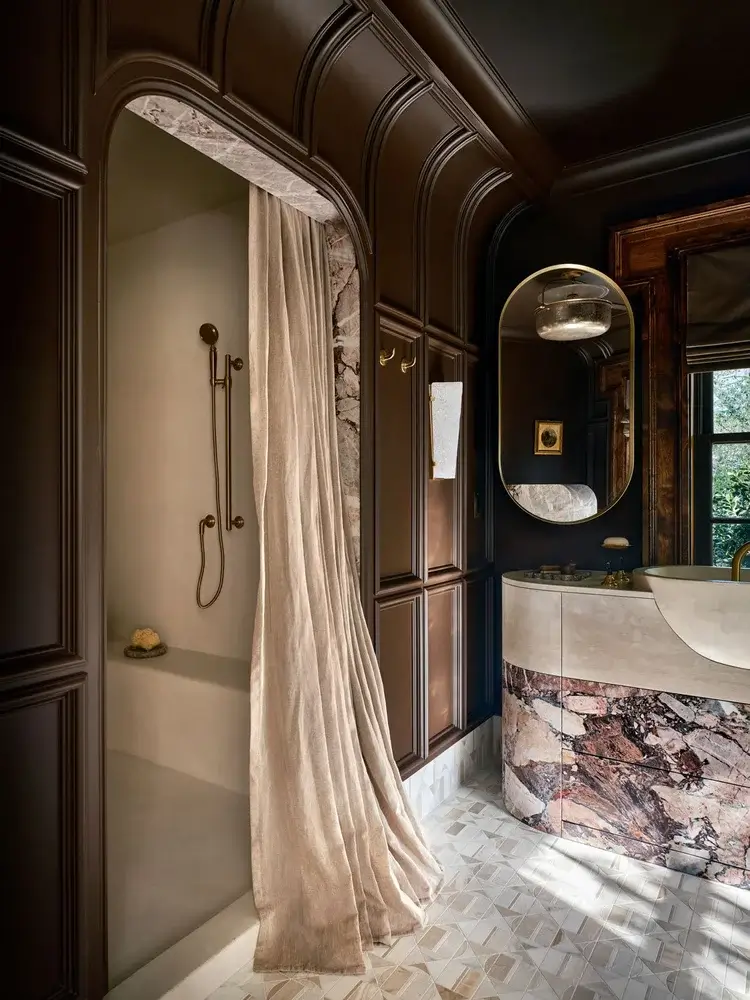
The curved transition from wall to ceiling is one of those architectural details that most people may not consciously notice at first, but it quietly changes the feel of the room.
Soft curves make spaces feel more inviting and fluid because the eye moves through the room more gently. Especially in this bathroom, they also refer to the old Mediterranean and Roman interior, where rounded forms were often used to create softness and warmth.
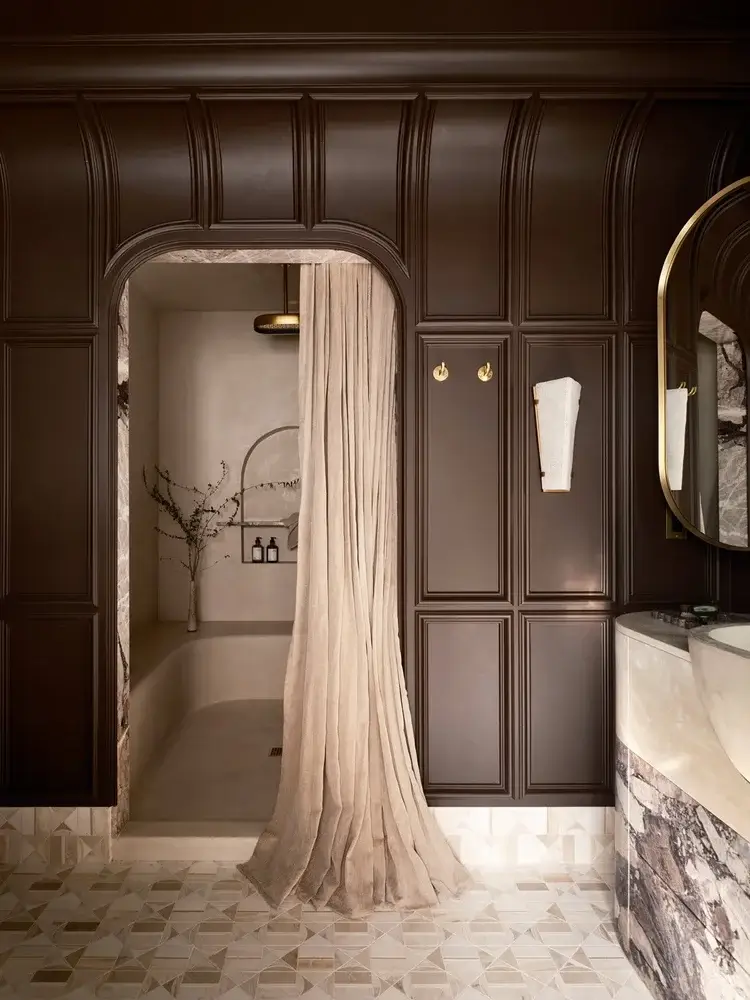
Honestly, I’d love to see more homes move away from hard corners and ultra-sharp minimalism and bring back details like this.
Because sometimes the smallest architectural decisions completely transform a space.
The biggest takeaway from this bathroom
This bathroom proves that luxury spaces don’t always need more decor or more ‘stuff’. Sometimes better materials, richer textures and softer architectural lines are all that’s needed.
And obviously… less sharp corners.
Discover more from Decoholic
Sign up to get the latest posts sent to your email.



