

design that starts below the surface
Rootfull develops lighting, textiles, sculpture and material studies from plant roots, bringing an underground growing system to the design space.
Founded by artist and photographer Zena Holloway, the London-based bio-design studio guides roots through hand-carved beeswax templates, allowing the material to form through time, water and living movement. What is enough is one biomaterial with the delicacy of lace and the firmness of a crafted surface, shaped by a process that calls for patience before calling for production.
The project is particularly suited to a time when design is called upon to slow down and listen harder. Rootfull does this through a material language grown from seed, guided by hand and allowed to convey the erratic intelligence of the plant. Every lamp, wall piece and fabric surface reveals the route of the roots as they seek, bond, thicken and hold. The studio sets the conditions and then lets biology complete the surface.

Material Ecologies, Rooted, Lowestoft Beach, First Light Festival, June 2025. image © Rootfull
from the submarine to the underground
Holloway came to Rootfull after more than twenty-five years as a self-taught underwater photographer, a background that still flows through the forms she makes today. Many pieces bear traces of coral, jellyfish and sea fans, with porous edges and pale threads reminiscent of life shaped by currents.
Her shift from imaging to biomaterials began in 2018, after years of witnessing the scale of plastic pollution in the ocean. He first explored the mycelium and then turned to the plant root as a medium with its own structural behavior.
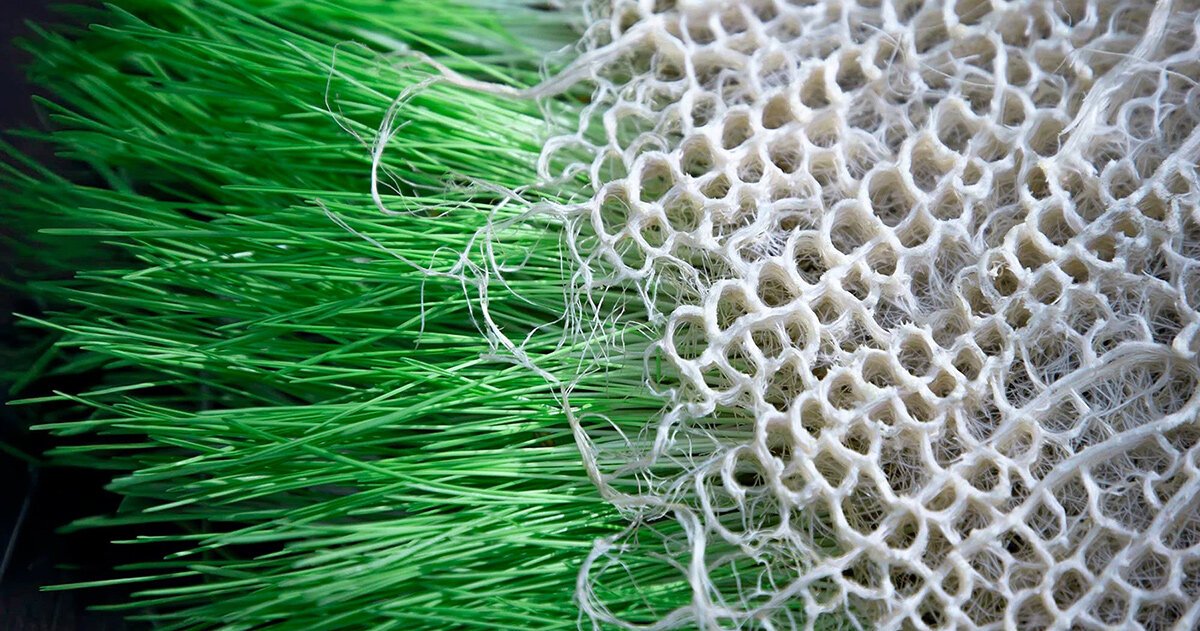
This biography gives the work its emotional charge without forcing it into emotion. Rootfull design grows out of concern, but stays close to technique. Holloway carves wax, sows seeds, monitors moisture and harvests the root structure after growth has done its job. In some projects, the wheatgrass grows for about twelve days as the shoots rise above and the roots tie down into a naturally woven fabric.

bio-material (detail), Rootfull. image © Rootfull
guiding growth to light
Swell Light is one of the clearest translations of this process from Rootfull to inner object. Its surface is made of a fossilized network of plant roots, grown in a coralline form that filters light through small gaps and fibrous seams. The piece reads as both a lamp study and a material, with illumination passing through a surface that was once actively developing.
Against the studio’s standing lamps, the roots become visible as structural lines. They focus on shades and vertical forms with a softness that comes from their origins, yet the objects hold their shape with surprising confidence. Rootfull treats light as a way of making visible the hidden work of plants. Glitter does more than decorate the surface. It reveals how the root can behave as fabric, diffuser and frame.

Swell light sculpture, Rootfull. image © Rootfull
wall pieces as developed designs
Wall works bring the process closer to drawing and textiles. The root-grown surfaces are paneled in fine weaves, with loose edges and slight variations that give each piece its own grain. Some are grown with Hessian thread, others are dyed with natural pigments such as coconut, turning the root material into a soft field of line and tone.
This is where Rootfull’s design language becomes highly architectural. The pieces read like studies of support systems, with each strand contributing to the entire surface. They propose a way of thinking about structure through touch and accumulation, where strength comes from many small connections working together.

Living Inlay, Rootfull, 2025. image © Rootfull
furniture, wool and circular interiors
full JUMPRootfull partnership with Delyth Fetherston-Dilkeextends the studio’s research from collectibles to furniture materials. The project explores how plant roots can bind British wool to wallpaper stuffing, offering a natural alternative to petrochemical foam and synthetic binders. The goal is a developed upholstery system that uses biodegradable fibers sourced from the UK.
Here, the practice moves from the poetic surface to a practical question about interiors. How can a cushion, panel or tapestry be developed through relationships between fibres, roots and local materials? In this context, the Rootfull design becomes a proposal for the furniture industry, where softness is natural, environmental and structural at the same time.

fullSPRING, Delyth Fetherston-Dilke and Rootfull, 2025. image © Rootfull
garments grown from seeds
Bio-tailoring projects push this idea towards the body. In Rootfull’s fashion collaborations, roots grow along patterns and bond with fabric to create lace-like panels and garment sections through cultivation. THE Collaboration Phoebe English produced a seamless dress with root-grown lace hanging from a torn cotton bodice and held in place by knots and ties.
Other experiments with ACIEN and Purified show how the studio is experimenting with radical material in fashion and footwear. Cleaned x Rootfull explored shoe soles designed to return to the earth after wear, using post-consumer waste as part of a development mechanism for future textile cultivation.
These projects keep the work speculative, but also make the questions seem tangible. What can a garment become when its material can be grown, worn and re-entered in a biological cycle?



